



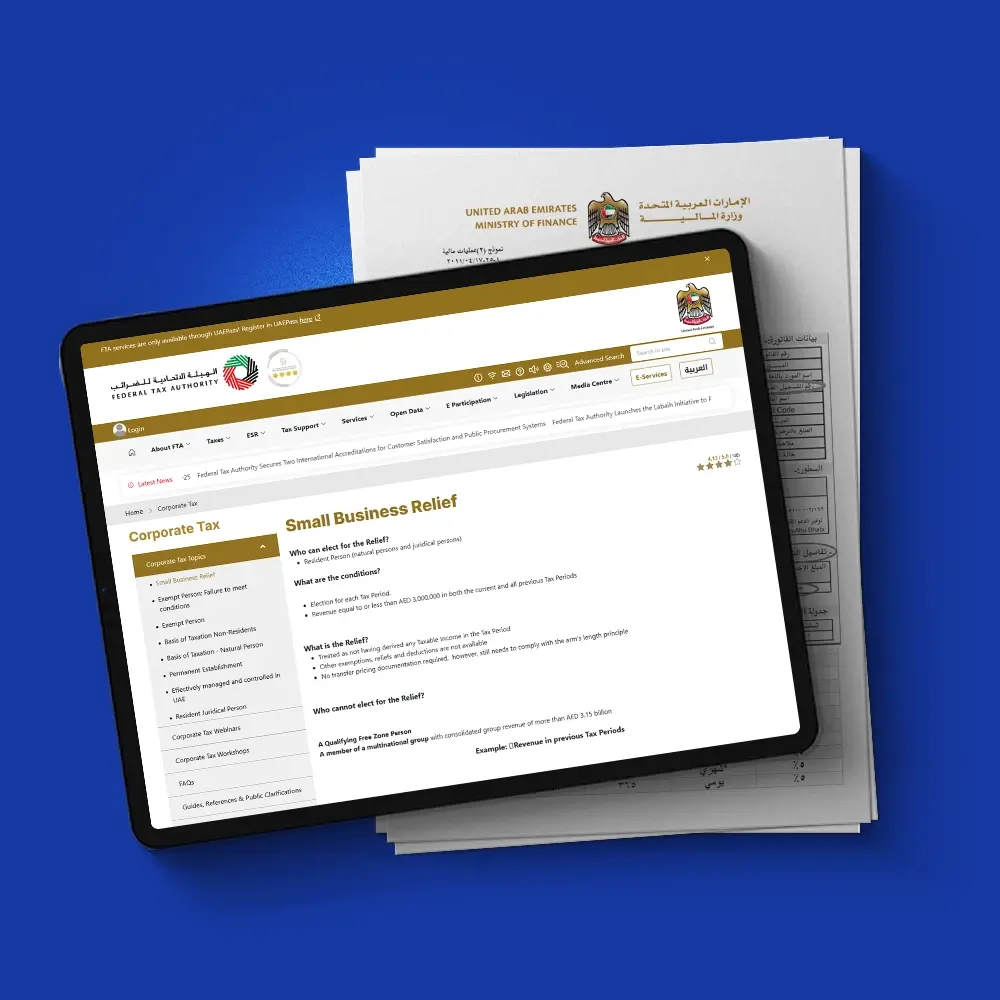
Table of contents:
- How to Register Corporate Tax in the UAE Through EmaraTax
- Documents Required for Corporate Tax Registration in the UAE
- Who Needs to Register for Corporate Tax in the UAE?
- Do You Still Need to Register if You Qualify for 0% Tax or Relief?
- Corporate Tax Registration vs VAT Registration in the UAE
- When Should You Register for Corporate Tax in the UAE?
- What Happens After You Submit the Corporate Tax Registration Application?
- Common Mistakes to Avoid During Corporate Tax Registration
- How Daftra Helps UAE Businesses Simplify Corporate Tax Registration and Compliance
- FAQs About Corporate Tax Registration in the UAE
- Conclusion
The implementation of Corporate Tax in the UAE represents a major step in the country’s evolving financial and regulatory framework. As the UAE continues to strengthen its position as a global business hub, companies operating in the Emirates must understand their Corporate Tax obligations to ensure compliance and maintain efficient financial management.
Registering for Corporate Tax is now an essential requirement for many businesses, including mainland companies, Free Zone entities, foreign businesses with a taxable presence in the UAE, and certain individuals conducting business activities. Understanding the registration process, required documents, eligibility criteria, and compliance obligations can help businesses avoid penalties and adapt smoothly to the new tax environment.
This guide explains everything you need to know about Corporate Tax registration in the UAE, including who must register, how to complete registration through the EmaraTax platform, the difference between Corporate Tax and VAT registration, and common mistakes businesses should avoid.
You will also learn about key compliance requirements, tax relief provisions, and how proper accounting and tax management solutions can simplify Corporate Tax compliance and reporting.
How to Register Corporate Tax in the UAE Through EmaraTax
Businesses in the UAE can register for Corporate Tax electronically through the EmaraTax platform managed by the Federal Tax Authority (FTA). The process is designed to help taxable persons comply with the UAE Corporate Tax Law and obtain their Corporate Tax Registration Number (TRN).
To begin the registration process, businesses must first log in to their EmaraTax account or create a new account if they are not already registered with the FTA. After accessing the dashboard, the applicant can select the Corporate Tax registration service and complete the required sections related to the business.
The registration form generally requires:
- Legal entity details
- Trade license information
- Business activities
- Ownership and shareholder details
- Authorized signatory information
- Financial year details
- Contact and address information
Applicants must also upload supporting documents and carefully review all entered data before submission. Once the application is submitted, the FTA reviews the information and may request additional clarification or documents if needed.
After approval, the business receives a Corporate Tax Registration Number, which is used to file tax returns, make payments, and communicate with the FTA regarding Corporate Tax matters.
Completing registration correctly and early helps businesses avoid administrative penalties and ensures compliance with UAE tax regulations.
Documents Required for Corporate Tax Registration in the UAE
When registering for Corporate Tax in the UAE, businesses are typically required to submit several supporting documents to verify their legal status and operational details. The exact requirements may vary by business entity type, but most companies should prepare a standard set of corporate and identification documents before starting the application process.
Commonly requested documents include:
- Valid trade license or commercial registration certificate
- Memorandum of Association (MOA) or incorporation documents
- Emirates ID and passport copies of owners, partners, or authorized signatories
- Proof of authorization for the person completing the registration
- Company contact details and registered office address
- Information about business activities and the financial year
For Free Zone entities, additional Free Zone registration documents may also be required. Foreign entities operating in the UAE may need to provide documentation related to their UAE Permanent Establishment or nexus.
It is important to ensure that all uploaded documents are valid, clear, and consistent with the information entered in the application. Errors such as mismatched license numbers, expired documents, or incorrect shareholder information can delay approval or trigger requests for additional verification from the FTA.
Preparing documents in advance can significantly speed up the registration process and reduce the risk of rejection.
Who Needs to Register for Corporate Tax in the UAE?
Corporate Tax registration is mandatory for persons and businesses that fall within the scope of the UAE Corporate Tax regime. The Corporate Tax Law applies to a wide range of entities and individuals conducting business activities in the UAE.
Businesses that generally need to register include:
- Companies incorporated in the UAE
- Mainland businesses
- Free Zone entities
- Foreign companies that are effectively managed and controlled in the UAE
- Non-resident companies with a Permanent Establishment in the UAE
- Non-resident entities earning UAE-sourced income or income from UAE immovable property
- Natural persons conducting business activities with an annual turnover exceeding AED 1 million
The law applies not only to corporations but also to certain partnerships, unincorporated businesses, and sole proprietorships. Even if a business qualifies for a 0% tax rate or relief, registration obligations may still apply.
The UAE Corporate Tax regime was introduced for tax periods beginning on or after 1 June 2023, making it important for businesses to assess whether they qualify as taxable persons and complete registration within the required timelines.
Do You Still Need to Register if You Qualify for 0% Tax or Relief?
Yes. Businesses that qualify for a 0% Corporate Tax rate or benefit from tax relief are generally still required to register for Corporate Tax and comply with the UAE Corporate Tax Law.
For example, Qualifying Free Zone Persons may benefit from a 0% Corporate Tax rate on Qualifying Income if they meet all required conditions. Similarly, eligible businesses may apply for Small Business Relief, which can reduce or eliminate Corporate Tax liability under certain thresholds.
However, qualifying for relief does not automatically remove compliance obligations. Businesses benefiting from relief may still need to:
- Register for Corporate Tax
- Obtain a Tax Registration Number (TRN)
- Maintain accounting records and supporting documents
- File Corporate Tax Returns within the required deadlines
Businesses benefiting from Small Business Relief still need to meet compliance obligations for each tax period, including registration and filing requirements.
Therefore, businesses should not assume that a 0% rate or exemption means they can ignore registration obligations. Failing to register when required may result in administrative penalties from the Federal Tax Authority.
Corporate Tax Registration vs VAT Registration in the UAE
Corporate Tax registration and VAT registration are two separate tax obligations in the UAE, and businesses should understand the difference between them to ensure proper compliance.
| Aspect | Corporate Tax Registration | VAT Registration |
| Type of Tax | Direct tax imposed on taxable business profits | Indirect tax is applied to the supply of goods and services |
| Basis of Registration | Depends on whether the business falls within the scope of the Corporate Tax Law | Depends mainly on taxable turnover thresholds |
| Registration Process | Requires a separate registration process | Requires a separate registration process |
| Compliance Requirements | Has its own filing requirements, returns, and compliance procedures | Has its own filing requirements, returns, and compliance procedures |
| Relationship Between the Two | VAT registration does not automatically mean the business is registered for Corporate Tax | Corporate Tax registration does not replace VAT registration |
| Regulatory Authority | Administered through the Federal Tax Authority (FTA) via EmaraTax | Administered through the Federal Tax Authority (FTA) via EmaraTax |
Businesses in the UAE may need to register for:
- VAT only
- Corporate Tax only
- Both VAT and Corporate Tax
Understanding the difference between VAT and Corporate Tax is important because failing to register for either tax when required may lead to penalties and compliance issues.
When Should You Register for Corporate Tax in the UAE?
Businesses should register for Corporate Tax as soon as they determine they are subject to the UAE Corporate Tax regime. Since the tax applies to financial periods beginning on or after 1 June 2023, businesses are expected to monitor FTA announcements and comply with registration deadlines issued by the authority.
Early registration is important because businesses must:
- Obtain a Tax Registration Number (TRN)
- Prepare for Corporate Tax compliance
- Maintain proper accounting records
- File tax returns within the required deadlines
Corporate Tax Returns and payments are generally due within nine months from the end of the relevant tax period. Delaying registration can create operational and compliance difficulties later when preparing returns and calculating taxable income.
Businesses should also register early if they expect to qualify for:
- Small Business Relief
- Free Zone incentives
- Exempt Person status
This helps ensure smooth compliance and allows enough time to organize accounting systems and supporting documentation before filing obligations begin.
What Happens After You Submit the Corporate Tax Registration Application?
After submitting the Corporate Tax registration application through EmaraTax, the Federal Tax Authority reviews the submitted information and supporting documents to verify the business details and determine eligibility for registration.
During the review process, the FTA may:
- Approve the application directly
- Request additional information or clarification
- Ask for updated or corrected documents
Applicants should regularly monitor their EmaraTax account and registered email address for notifications or requests from the FTA.
Once the application is approved, the business receives a Corporate Tax Registration Number (TRN). This number serves as the official identifier for Corporate Tax purposes and is used when:
- Filing Corporate Tax Returns
- Making tax payments
- Communicating with the FTA
- Managing Corporate Tax records and compliance obligations
After registration, businesses become responsible for maintaining proper accounting records, calculating taxable income correctly, and meeting filing and payment deadlines under the Corporate Tax Law.
Common Mistakes to Avoid During Corporate Tax Registration
Many businesses experience delays or compliance issues during Corporate Tax registration because of avoidable mistakes in the application process. Understanding these common errors can help businesses complete registration more smoothly and avoid penalties or rejection.
Some of the most common mistakes include:
- Entering incorrect trade license details
- Uploading expired or unclear documents
- Providing inconsistent shareholder or ownership information
- Selecting the wrong legal entity type
- Using incorrect business activity classifications
- Failing to update the company contact details
- Ignoring FTA notifications or requests for clarification
- Assuming VAT registration automatically covers Corporate Tax registration
Another common issue is misunderstanding eligibility for exemptions or Free Zone benefits. Some businesses incorrectly assume they do not need to register because they expect to pay 0% Corporate Tax. In reality, registration and compliance obligations may still apply even when tax relief is available.
Businesses should carefully review all submitted information, ensure documents are accurate and up to date, and maintain proper communication with the FTA throughout the process. Working with qualified accounting or tax professionals can also help reduce errors and improve compliance.
How Daftra Helps UAE Businesses Simplify Corporate Tax Registration and Compliance
Daftra UAE Accounting Software helps UAE businesses simplify Corporate Tax registration and compliance through an integrated system that automates tax calculations, reporting, invoicing, and compliance processes in line with UAE Federal Tax Authority (FTA) requirements.
The platform supports businesses by:
- Activating and setting up Corporate Tax accounts
- Managing tax registration details
- Automatically calculating Corporate Tax based on UAE regulations
- Generating accurate tax and profit & loss reports
- Creating bilingual FTA-compliant invoices
- Supporting VAT and Corporate Tax compliance from one platform
- Providing audit-ready files and organized financial records
FAQs About Corporate Tax Registration in the UAE
How to register for corporate tax in UAE step by step?
Businesses in the UAE can register for Corporate Tax through the EmaraTax platform managed by the Federal Tax Authority (FTA). The registration process generally includes the following steps:
- Create or log in to your EmaraTax account.
- Select the Corporate Tax registration service from the dashboard.
- Enter the required business information, including:
- Legal entity details
- Trade license information
- Business activities
- Shareholder and ownership details
- Financial year details
- Contact and address information
- Upload the required supporting documents.
- Review all information carefully before submission.
- Submit the Corporate Tax registration application.
- Wait for the FTA review and approval process.
- Receive your Corporate Tax Registration Number (TRN) after approval.
The TRN is then used for Corporate Tax filing, payments, and communication with the FTA.
How much does it cost to register for corporate tax in the UAE?
Corporate Tax registration in the UAE is currently free, as the Federal Tax Authority does not charge a government fee.
However, businesses may still incur indirect costs related to:
- Accounting and bookkeeping
- Tax consultancy services
- Financial statement preparation
- Compliance and reporting systems
Is it mandatory to register for corporate tax in the UAE?
Yes. All Taxable Persons are generally required to register for Corporate Tax with the Federal Tax Authority and obtain a Tax Registration Number (TRN).
This includes:
- UAE companies
- Free Zone entities
- Certain foreign companies
- Natural persons conducting qualifying business activities
Non-Resident Persons who earn only State Sourced Income and do not have a Permanent Establishment in the UAE may choose not to register. However, Non-Resident Persons with a nexus in the UAE are required to register.
What is a certificate of registration for corporate tax in UAE?
A Corporate Tax registration certificate refers to the confirmation issued after a business successfully registers for Corporate Tax and receives its Tax Registration Number (TRN) from the Federal Tax Authority.
The TRN acts as the official identification number for Corporate Tax purposes and is used for:
- Filing Corporate Tax Returns
- Paying Corporate Tax
- Managing tax compliance obligations
- Communicating with the FTA regarding Corporate Tax matters.
What is the penalty for registering corporate tax in UAE?
Failing to comply with Corporate Tax administrative requirements may result in penalties under the Corporate Tax Law and Tax Procedures Law.
Late submission of Tax Returns or delayed Corporate Tax payments may result in:
- AED 500 per month (or part of a month) for the first 12 months of delay
- AED 1,000 per month (or part of a month) starting from the 13th month onward.
Businesses that fail to meet registration and compliance obligations may also face additional administrative penalties from the FTA.
Conclusion
Corporate Tax registration has become an essential part of doing business in the UAE’s evolving regulatory environment. Whether you operate a mainland company, Free Zone entity, foreign business, or qualifying sole proprietorship, understanding your registration and compliance obligations is critical to avoiding penalties and maintaining smooth business operations.
By understanding who must register, preparing the required documents, meeting filing deadlines, and distinguishing Corporate Tax from VAT obligations, businesses can ensure full compliance with UAE tax regulations. Early preparation and accurate registration also help companies organize their financial records, improve reporting accuracy, and reduce future compliance risks.
Using modern accounting and tax management solutions like Daftra UAE Accounting Software can further simplify the process by automating calculations, generating compliant reports and invoices, and helping businesses efficiently manage both VAT and Corporate Tax requirements. As UAE tax regulations continue to evolve, having the right systems and processes in place will help businesses stay compliant, financially organized, and prepared for long-term growth.













 Invoicing
 POS
POS Offers
 Installments
 Sales Commission
 KSA E-Invoice Software
 EGY E-Invoice Software
 JO E-Invoice Software
 E-Invoice Software
 Chart of Accounts
 Asset Management
 Cost Centers
 Expenses
 Cheque Cycle
 UAE VAT-Tax
 Product Management
 Purchases
 Purchase Cycle
 Suppliers
 Requisitions
 Stocktaking
 Organizational Structure
 Personnel Management
 Attendance and Leave
 Contracts
 Payroll
 Requests
 Work Orders
 Booking Management
 Rental and Unit Management
 Time Tracking
 Work Flow
 Lease Contracts
 Manufacturing Management
  Client Follow-Up
 Loyalty Points
 Points and Credits
 Memberships
 Insurance Management
 Daftra ERP Full App
 Point of Sales App
 Point of Sales for Desktop – Support Offline Mode
 AI Expenses Scanner App
 Employee Attendance, Sign & ESS App
 E-invoice Reader App
 Inventory Stocktaking App