



Table of contents:
- Who Needs to File a Corporate Tax Return in the UAE?
- When Is the Corporate Tax Return Due in the UAE?
- What Should You Prepare Before Filing the Corporate Tax Return?
- What Does the Corporate Tax Return Include?
- How to File the Corporate Tax Return Through EmaraTax
- How Does Filing Work if You Are Eligible for Small Business Relief?
- What Special Filing Areas Should Businesses Watch Closely?
- How Is Corporate Tax Paid After Filing?
- Common Mistakes to Avoid When Filing Corporate Tax in the UAE
- How Daftra Helps Businesses File Corporate Tax More Accurately
- FAQs About How to File Corporate Tax in UAE
- Conclusion
The introduction of Corporate Tax in the UAE has made tax filing a mandatory responsibility for businesses operating in the country. Effective from 1 June 2023, the UAE Corporate Tax applies at a standard rate of 9% on taxable profits exceeding AED 375,000, while profits below this threshold remain taxed at 0%.
As part of the new regulations, businesses must register for Corporate Tax, maintain accurate financial records, and submit their tax returns through the EmaraTax portal within the deadlines set by the Federal Tax Authority (FTA).
Filing Corporate Tax is no longer just a compliance formality; it is a legal obligation that requires proper documentation, accurate reporting, and timely submissions to avoid penalties and fines. Whether you are a startup, SME, Free Zone company, or large corporation, understanding the Corporate Tax filing process is essential for staying compliant and managing your business effectively.
In this guide, we will explain how to file Corporate Tax in the UAE, the key requirements businesses must meet, the documents needed, and the common mistakes to avoid during the filing process.
Who Needs to File a Corporate Tax Return in the UAE?
The Tax Return applies to several categories of Taxable Persons, including:
- Resident and Non-Resident juridical persons
- Resident and Non-Resident natural persons conducting business in the UAE
- Qualifying Free Zone Persons
- Tax Groups
- Unincorporated Partnerships treated as separate Taxable Persons
Any person who is required to file a Tax Return for a relevant Tax Period should read and follow the Corporate Tax Return guide. A Taxable Person must submit a Corporate Tax Return to the Federal Tax Authority (FTA), either directly or through an authorized Tax Agent or Legal Representative.
Certain Exempt Persons may also need to file if they conduct a taxable business activity.
When Is the Corporate Tax Return Due in the UAE?
A Taxable Person must submit the Corporate Tax Return and pay any Corporate Tax due within 9 months from the end of the relevant Tax Period.
The filing process is based on self-assessment, meaning businesses are responsible for accurately calculating and reporting their Corporate Tax obligations.
What Should You Prepare Before Filing the Corporate Tax Return?
Before filing, businesses should ensure that:
- Their EmaraTax registration details are correct
- Financial Statements are prepared under the correct accounting basis (cash or accrual)
- Revenue and accounting records are complete and accurate
- Supporting documents and schedules are ready for upload if required
Some information will already be pre-populated from the Tax Registration process, including:
- Taxable Person name
- Tax Registration Number (TRN)
- Address details
- Tax Period
- Primary business activity
Businesses should review and update any incorrect information before submission.
Read more: Foreign Account Tax Compliance in the UAE
What Does the Corporate Tax Return Include?
The Corporate Tax Return consists of several parts that allow businesses to report Taxable Income, adjustments, exemptions, and reliefs. The main sections include:
- Taxable Person Information
- Elections
- Accounting Schedule
- Accounting Adjustments and Exempt Income
- Reliefs
- Other Adjustments
- Tax Liability and Tax Credits
- Review and Declaration
- Schedules
Depending on the Taxable Person’s circumstances, additional schedules may also be required, such as:
- Free Zone schedules
- Tax Loss Schedules
- Related Party transaction schedules
- Tax Credit schedules
- Interest limitation schedules
How to File the Corporate Tax Return Through EmaraTax
The Corporate Tax registration process in the UAE is completed online through the EmaraTax portal provided by the Federal Tax Authority (FTA). The process begins by creating or accessing an EmaraTax account, followed by completing the Corporate Tax registration application step by step.
Here is how the registration process works:
1- Log in to EmaraTax
Access your EmaraTax account using your registered email and password or through UAE Pass. Businesses that do not already have an account must first create one through the FTA portal.
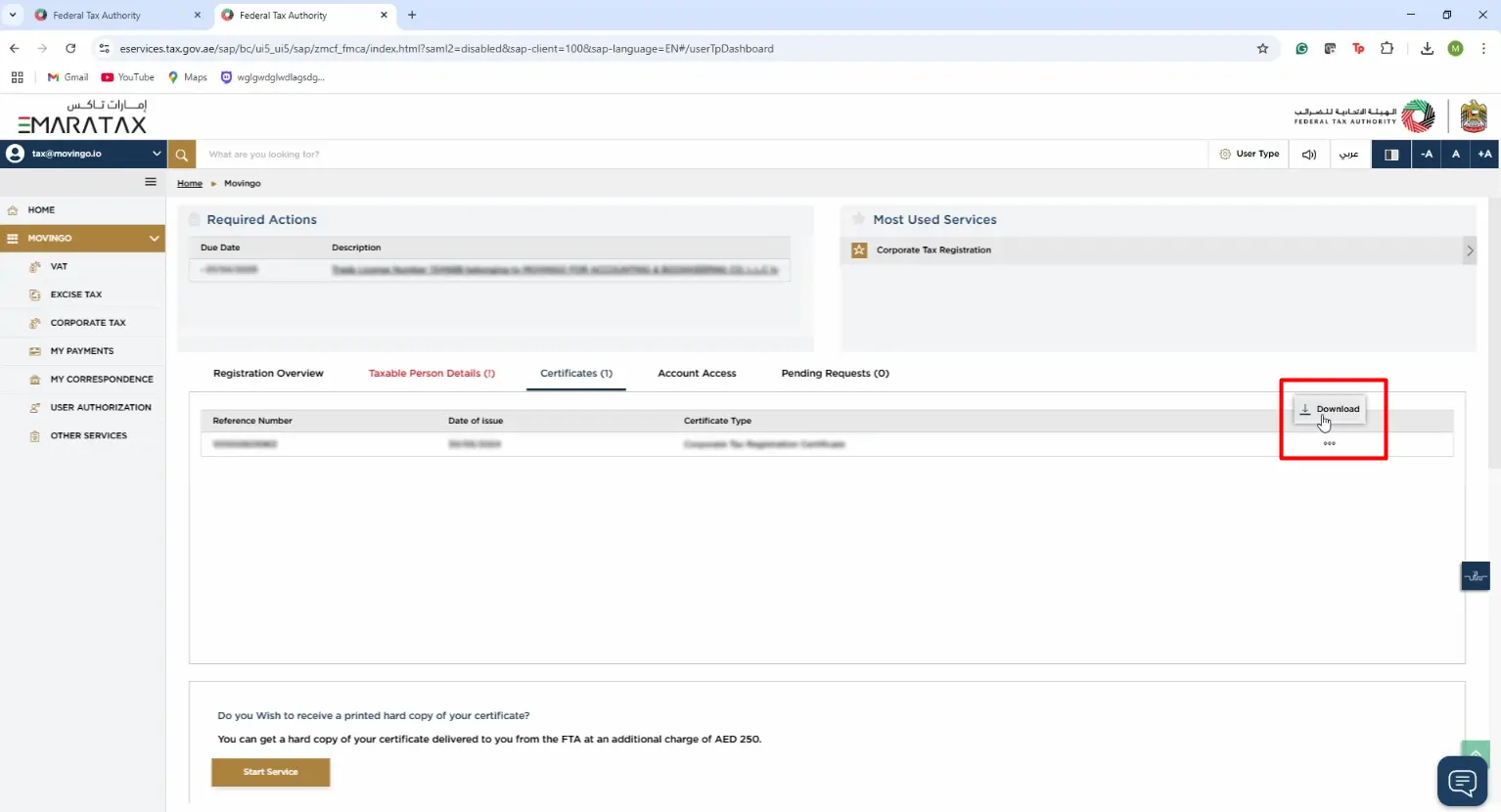
2- Create or Select a Taxable Person Profile
After logging in, select the taxable person profile linked to your account. If no taxable person exists, you must create a new taxable person by entering the required details.
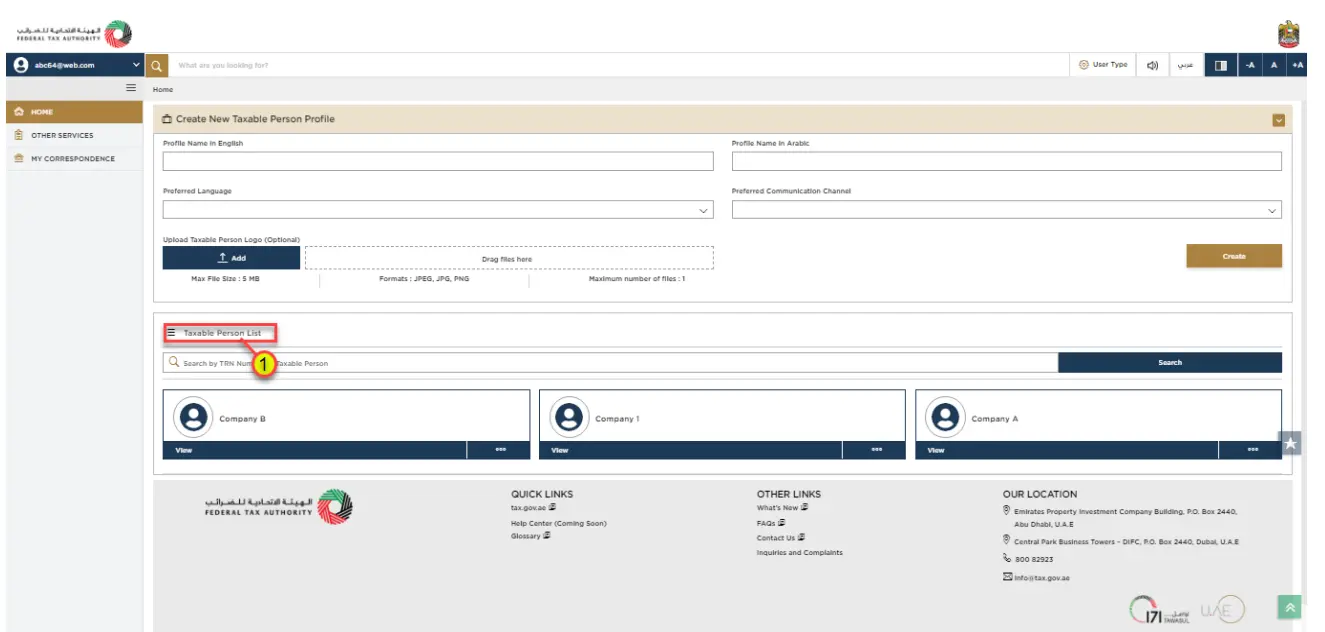
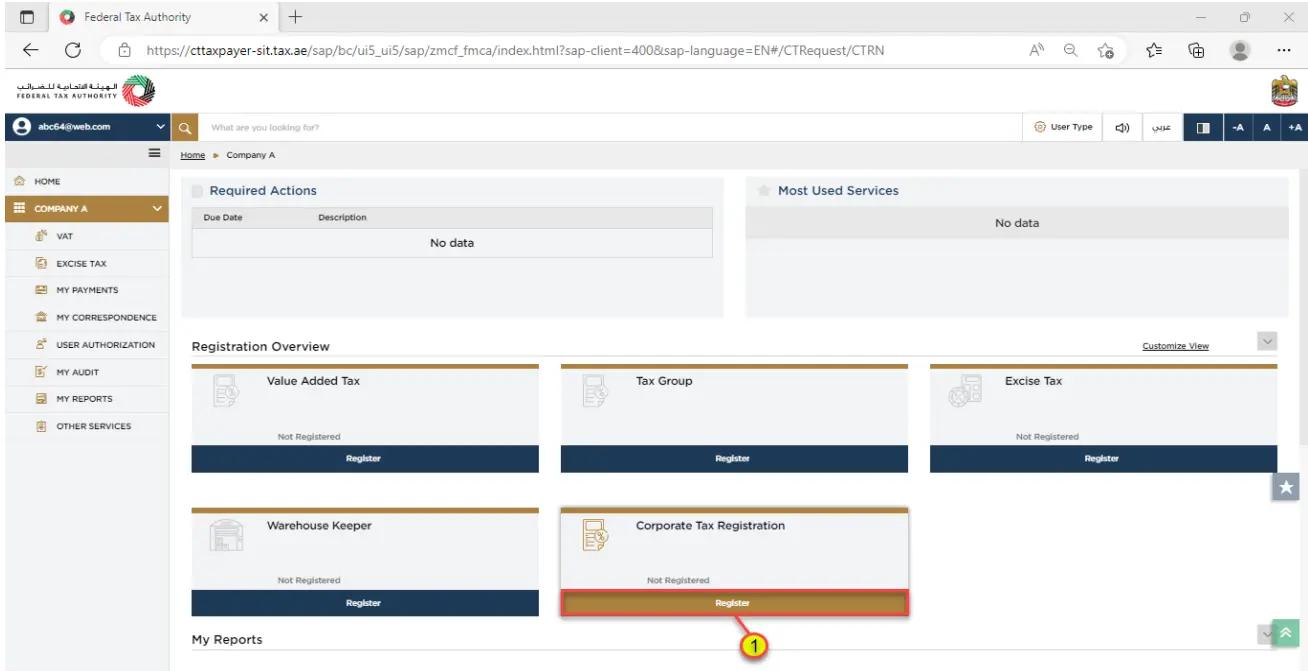
3- Start the Corporate Tax Registration Application
From the Taxable Person dashboard, click “Register” under the Corporate Tax section to begin the application.
4- Review the Guidelines and Instructions
Before proceeding, review the guidelines and instructions provided on the portal and confirm that you understand the Corporate Tax registration requirements.
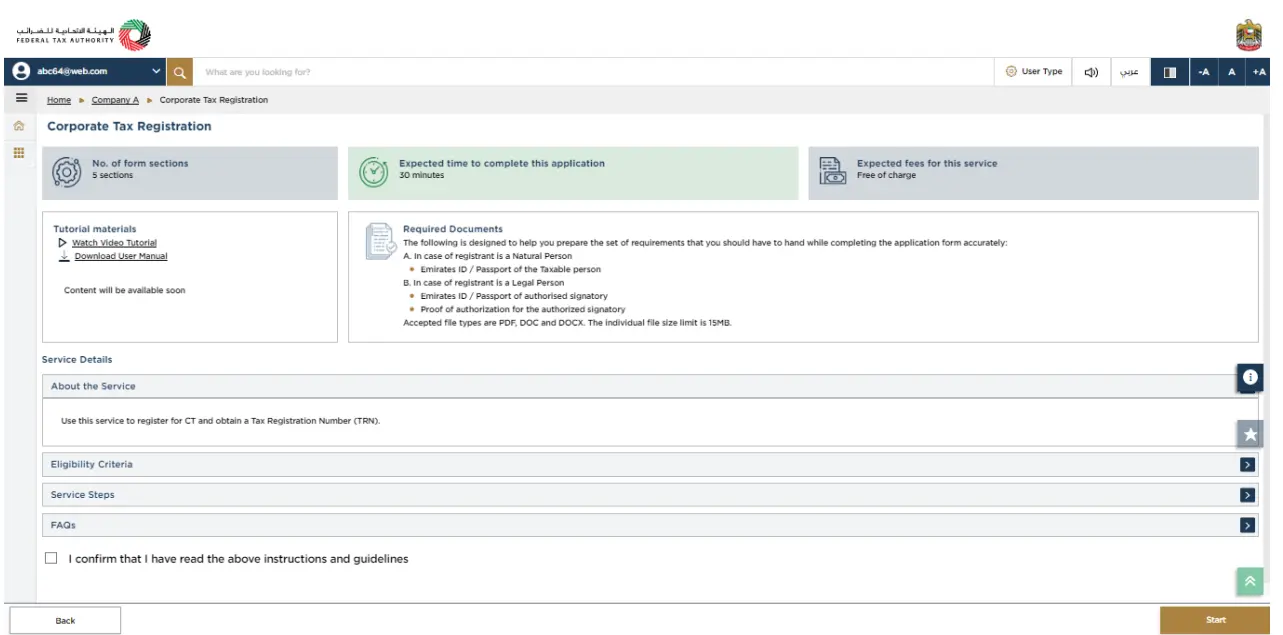
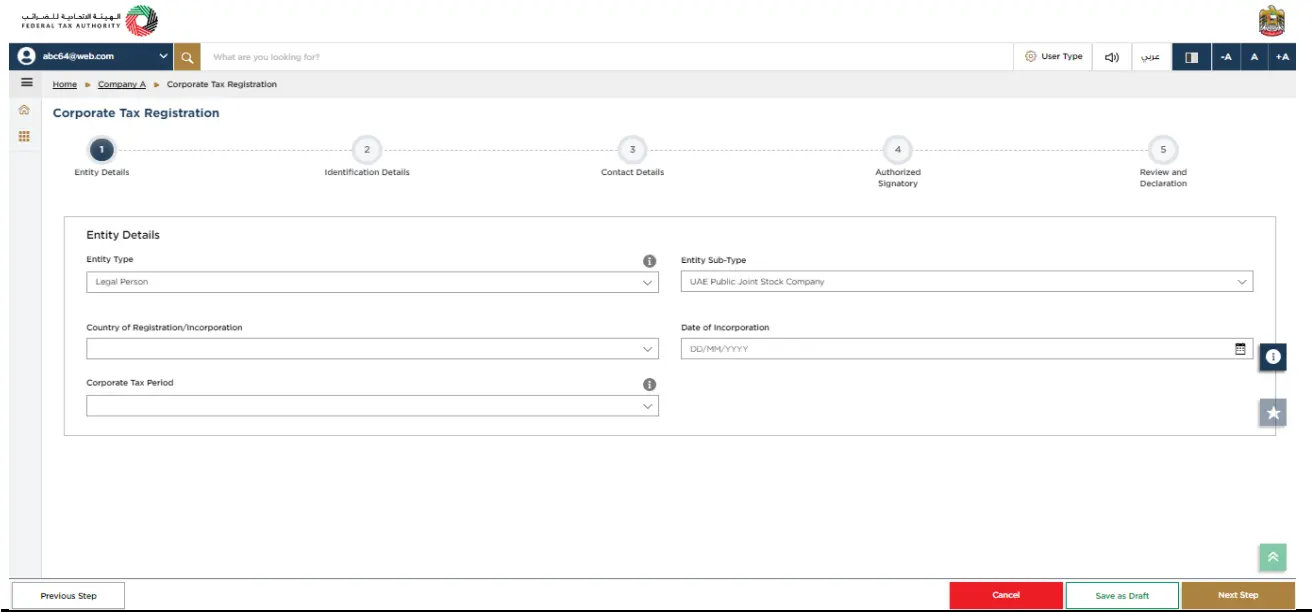
5- Complete the Registration Sections
The application is divided into several sections that must be completed in sequence. These sections include:
- Entity details
- Identification and trade license details
- Business activities
- Owners and branch details
- Contact information
- Authorized signatory details
6- Upload Supporting Documents
Upload the required supporting documents, including trade license details and, where applicable, authorization documents for authorized signatories.
7- Review the Application Carefully
Before submission, the system displays all entered information for review. Businesses should ensure that all details are accurate and match the supporting documents to avoid delays, rejection, or resubmission requests.
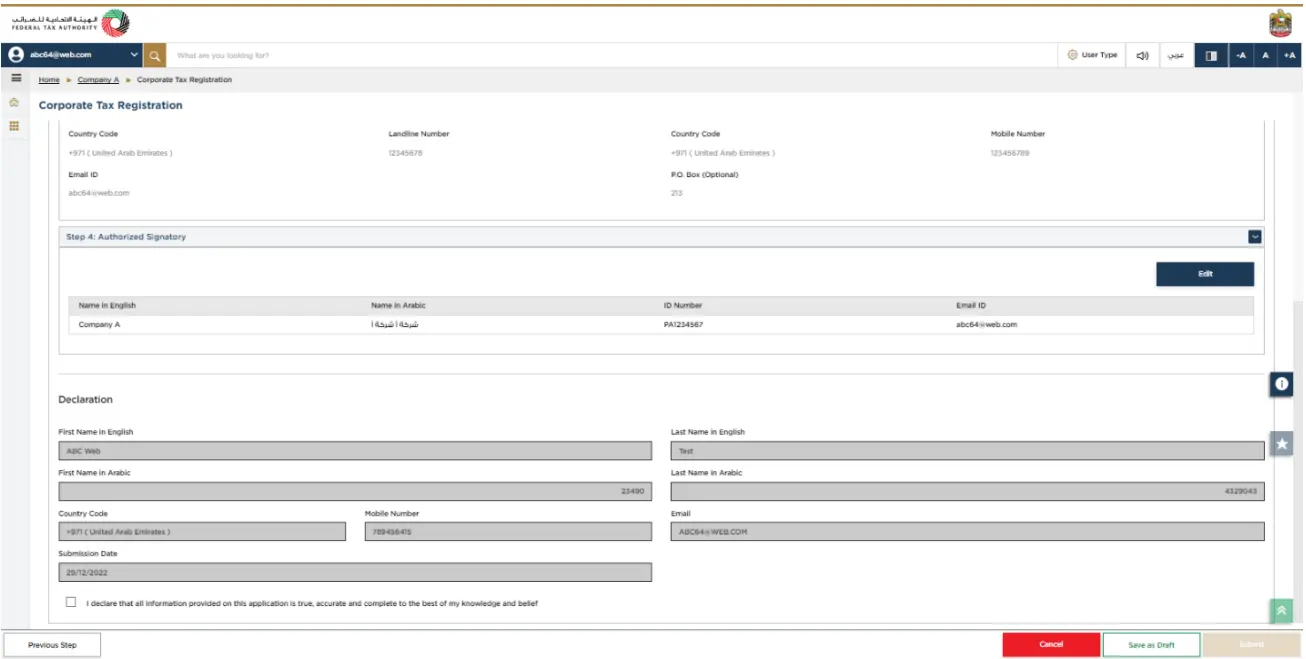
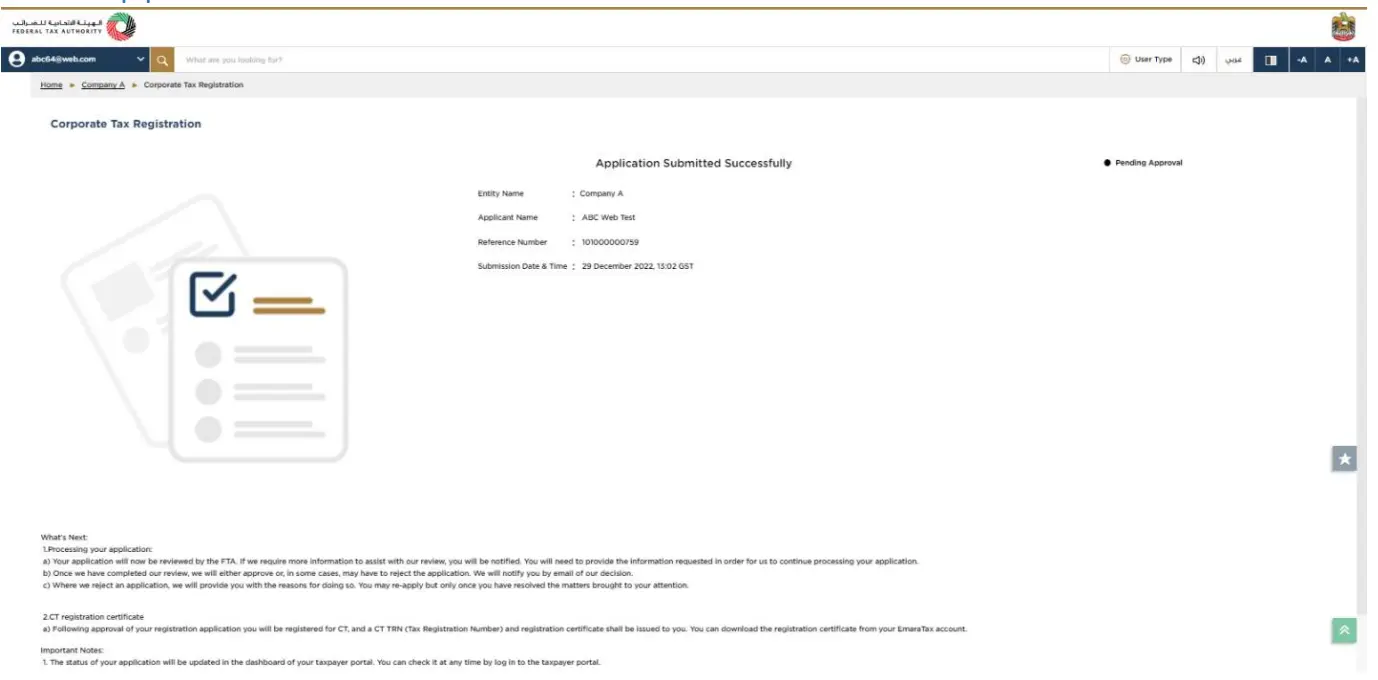
8- Submit the Application
Once the review is complete, confirm the declaration and click “Submit” to send the application to the FTA for review.
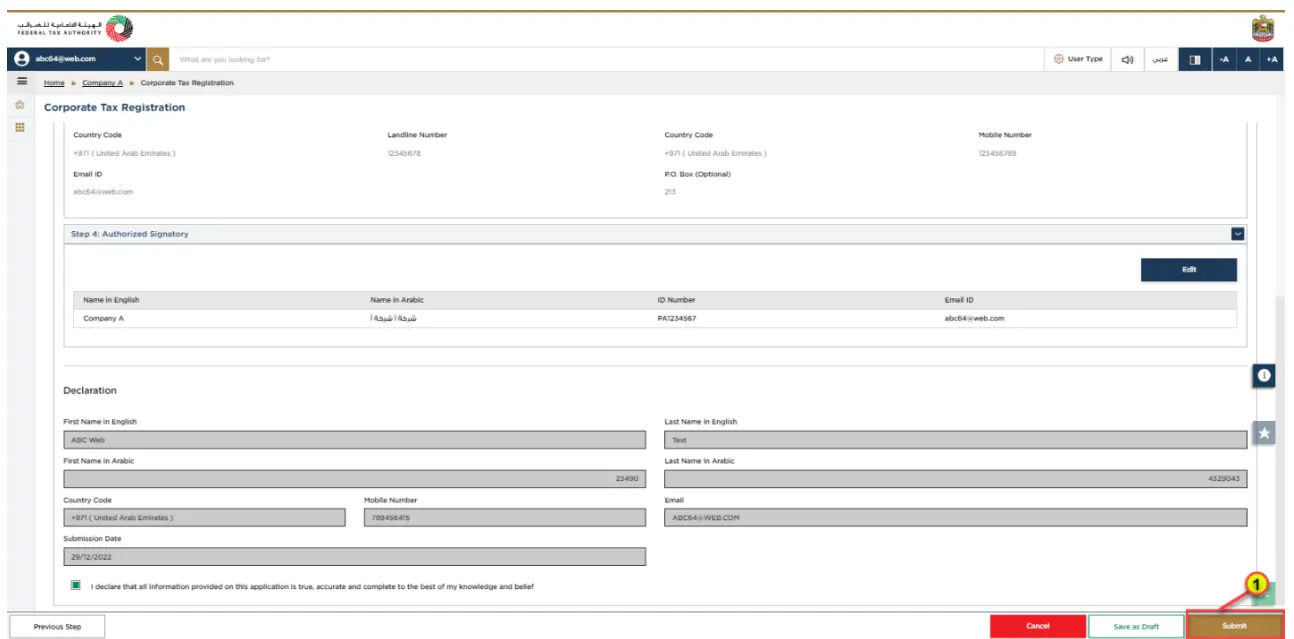
After submission, the system generates a reference number for future communication with the FTA. The application may then be approved, rejected, or returned for additional information, depending on the outcome of the review.
How Does Filing Work if You Are Eligible for Small Business Relief?
Small Business Relief is an annual election available to Resident Persons with Revenue of AED 3 million or less during the relevant and previous Tax Periods.
However, the relief is not available to:
- Members of Multinational Enterprise (MNE) Groups
- Qualifying Free Zone Persons
A Taxable Person electing for Small Business Relief:
- Is treated as having no Taxable Income for the relevant Tax Period
- Does not need to calculate Taxable Income
- Does not pay Corporate Tax for that period
- Completes fewer fields in the Tax Return
What Special Filing Areas Should Businesses Watch Closely?
Businesses should pay close attention to areas that commonly require additional schedules, disclosures, or calculations, including:
- Related Party transactions
- Connected Person payments
- Tax Losses and Loss Transfers
- Foreign Tax Credits
- Interest deduction limitations
- Free Zone income calculations
- Business restructuring reliefs
- Transitional rule adjustments
Qualifying Free Zone Persons should also carefully distinguish between:
- Qualifying Income taxed at 0%
- Non-Qualifying Income taxed at 9%
How Is Corporate Tax Paid After Filing?
After submitting the Corporate Tax Return, the Taxable Person must pay any Corporate Tax due to the FTA within the same 9-month deadline from the end of the Tax Period.
The process operates under a self-assessment system, meaning the taxpayer is responsible for calculating, filing, and paying the correct amount of tax.
Common Mistakes to Avoid When Filing Corporate Tax in the UAE
Common filing mistakes businesses should avoid include:
- Missing the 9-month filing deadline
- Providing incorrect registration details in EmaraTax
- Selecting the wrong accounting basis
- Failing to disclose Related Party transactions
- Omitting required schedules or supporting documents
- Incorrectly applying Small Business Relief or Free Zone benefits
- Failing to upload the required attachments
- Not reviewing pre-populated information before submission
Also, businesses should ensure that all EmaraTax profile information is accurate, as the system uses this information to determine which sections and schedules appear in the Tax Return.
How Daftra Helps Businesses File Corporate Tax More Accurately
Accurate Corporate Tax filing requires more than just submitting tax returns on time. Businesses also need organized financial records, correct tax configurations, accurate calculations, and compliance with the UAE Federal Tax Authority (FTA) requirements.
Daftra accounting software helps businesses manage all these requirements through an integrated accounting and tax management system designed specifically for the UAE market.
With automated tax tools and centralized reporting features, Daftra helps businesses reduce manual errors, improve reporting accuracy, and simplify Corporate Tax compliance processes.
Daftra supports accurate Corporate Tax filing by:
- Automatically configuring UAE tax settings in line with FTA requirements, including VAT, Zero Rated, Exempt, Intra GCC, and Excise taxes.
- Automating Corporate Tax calculations based on UAE tax regulations and applicable tax rates.
- Helping businesses activate and manage Corporate Tax settings from one centralized platform.
- Generating accurate profit and loss reports and tax-ready financial statements.
- Providing detailed VAT and Corporate Tax reports to support tax return preparation.
- Supporting Small Business Relief and Free Zone tax considerations for more accurate reporting.
- Creating bilingual FTA-compliant tax invoices aligned with UAE e-invoicing requirements.
- Generating FTA-ready audit files and tax reports for compliance reviews and inspections.
- Helping businesses maintain organized, audit-ready financial records and documentation.
- Tracking tax liabilities, recoverable VAT, and financial performance in real time.
- Reducing manual data entry and calculation errors by integrating accounting and tax management into one system.
- Simplifying tax return preparation, review, and submission processes for UAE businesses.
By combining accounting, invoicing, reporting, and tax compliance tools in a single platform, Daftra helps businesses improve filing accuracy, stay compliant with UAE tax regulations, and manage Corporate Tax obligations more efficiently.
FAQs About How to File Corporate Tax in UAE
How do I file a corporate tax return in UAE?
Corporate tax returns in the UAE must be filed online through the EmaraTax portal. The process is self-assessment-based, meaning the taxable person is responsible for preparing and submitting accurate information. The return includes sections such as taxpayer information, elections, accounting schedules, tax calculations, and supporting schedules or attachments.
Can I file corporate tax on my own?
Yes, a taxable person can file the corporate tax return themselves through EmaraTax. Alternatively, the return may also be submitted by an authorized Tax Agent or Legal Representative on behalf of the business.
What is the penalty for filing corporate tax return late in UAE?
Late filing of a corporate tax return in the UAE can result in fines ranging from AED 500 to AED 20,000, depending on the nature and duration of the delay. Businesses may also face daily penalties for continued non-compliance and interest charges on overdue tax payments.
Is it mandatory to file corporate tax in the UAE?
Yes. Any taxable person required to comply with UAE Corporate Tax laws must submit a corporate tax return for the relevant tax period unless specifically exempt under the law.
How to file a zero corporate tax return?
A business with no taxable income may still need to submit a corporate tax return through EmaraTax. The taxpayer must complete the relevant sections of the return and declare the applicable income, adjustments, exemptions, or reliefs showing that no corporate tax is payable.
What is the due date for filing corporate tax return in UAE?
A corporate tax return must be filed within 9 months from the end of the relevant tax period. Any corporate tax due must also be paid within the same timeframe.
What happens if I don't lodge my tax return by 31 October?
If you do not lodge your corporate tax return by the required deadline, your business may face late filing penalties, daily fines for continued non-compliance, and interest on unpaid tax amounts. Continued non-compliance may also lead to additional legal and administrative consequences imposed by the UAE Federal Tax Authority (FTA).
How to register for corporate tax in the UAE step by step?
Businesses in the UAE must register for Corporate Tax through the EmaraTax portal and obtain a Tax Registration Number (TRN). The process includes logging into EmaraTax, selecting Corporate Tax registration, entering business and contact details, uploading the required documents, reviewing the information, and submitting the application to the Federal Tax Authority (FTA).
Once approved, the business receives its TRN and can begin managing Corporate Tax filing, payments, and compliance through the platform.
What is a certificate of registration for corporate tax in UAE?
A corporate tax registration certificate is an official confirmation that a business has successfully registered for UAE Corporate Tax with the Federal Tax Authority. Once registered, the business receives a Tax Registration Number (TRN), which identifies it for corporate tax purposes in the UAE.
Conclusion
Corporate Tax filing in the UAE has become an essential part of doing business, requiring companies to maintain accurate records, calculate taxes correctly, and submit returns within the deadlines set by the Federal Tax Authority (FTA).
Whether you are a startup, SME, Free Zone company, or large enterprise, understanding the filing process and preparing the required documents properly can help you avoid penalties, reduce reporting errors, and maintain full compliance with UAE tax regulations.
As the UAE continues to strengthen its tax framework, businesses need reliable systems that simplify compliance and improve reporting accuracy. Using integrated accounting and tax management solutions such as Daftra can help businesses automate tax calculations, generate accurate reports, organize financial records, and streamline Corporate Tax filing processes on a single centralized platform.
By staying organized, following the correct filing procedures, and using the right tools, businesses can manage their Corporate Tax obligations more efficiently while focusing on growth and long-term financial stability.












 Invoicing
 POS
POS Offers
 Installments
 Sales Commission
 KSA E-Invoice Software
 EGY E-Invoice Software
 JO E-Invoice Software
 E-Invoice Software
 Chart of Accounts
 Asset Management
 Cost Centers
 Expenses
 Cheque Cycle
 UAE VAT-Tax
 Product Management
 Purchases
 Purchase Cycle
 Suppliers
 Requisitions
 Stocktaking
 Organizational Structure
 Personnel Management
 Attendance and Leave
 Contracts
 Payroll
 Requests
 Work Orders
 Booking Management
 Rental and Unit Management
 Time Tracking
 Work Flow
 Lease Contracts
 Manufacturing Management
  Client Follow-Up
 Loyalty Points
 Points and Credits
 Memberships
 Insurance Management
 Daftra ERP Full App
 Point of Sales App
 Point of Sales for Desktop – Support Offline Mode
 AI Expenses Scanner App
 Employee Attendance, Sign & ESS App
 E-invoice Reader App
 Inventory Stocktaking App