


Deferred Revenue: Definition, Examples & Journal Entries


Table of contents:
- Key Summary
- What is Deferred Revenue?
- Why Is Deferred Revenue Recorded as a Liability?
- Common Examples of Deferred Revenue
- When Deferred Revenue Becomes Earned Revenue
- How to Record Deferred Revenue
- How IFRS 15 Applies to Deferred Revenue
- How Deferred Revenue Affects Financial Statements
- VAT Treatment of Deferred Revenue in Saudi Arabia
- Deferred Revenue vs. Accrued Revenue
- Deferred Revenue vs. Deferred Expenses
- Deferred Revenue vs. Recognized Revenue
- Why Deferred Revenue Matters to Business Owners
- Common Mistakes in Managing Deferred Revenue
- Best Practices for Managing and Tracking Deferred Revenue
- How Daftra Helps Automate Deferred Revenue Recognition
- FAQs
When a business receives money before providing its services or goods, it cannot immediately record it as revenue. Because the company still has an obligation to deliver the promised goods or services, it initially records the amount received as a liability rather than revenue.
Industries that rely on subscriptions or service-based businesses often receive annual or multi-period payments in advance, making deferred revenue a crucial part of their finances and how they measure business performance. This article covers everything you need to know about deferred revenue, its impact on financial statements, and how it is treated according to VAT in Saudi Arabia.
What is Deferred Revenue?
Deferred revenue, also known as unearned revenue or unearned income, is revenue a company receives before delivering its services or goods to the customer. Because the company has yet to deliver the goods or services, it cannot report them on the current profit and loss statement; it can only record them as a liability, not income, on its balance sheet.
The key idea goes as follows:
Payment is received in advance of the delivery of goods or services.
↪Deferred revenue is initially recorded as a liability, not income.
Example: Insurance companies receive payments in advance to ensure coverage/ protection for future periods.
Why Is Deferred Revenue Recorded as a Liability?
As the company is due to deliver a service for which payment has been received in advance, it remains a liability on the business's balance sheet. After the company provides the goods or services, its liability is reduced, and revenue is recognized as income.
Example:
A company receives 5,000 SAR from a customer for a one-year service contract. The company has already received the payment, but it still owes 12 months of service.
So, after receiving the payment:
- Cash = 5,000 SAR increase
- Deferred Revenue = 5,000 SAR increase
- Recognised Revenue = 0 SAR
Deferred Revenue appears on the company's balance sheet as a liability because the company is still obligated to provide the promised goods or services.
When Deferred Revenue Becomes Earned Revenue
Only after the company delivers the promised goods/services can deferred revenue be recognized as earned revenue. Meaning, as long as the company still has an unsatisfied obligation, it cannot recognize deferred revenue as income.
In simple terms: The money is not earned until the service is provided.
If a company offers a service over a certain period, such as a couple of months or a year, deferred revenue decreases over time while earned revenue increases on the income statement.
Example:
Customer paid 10,000 SAR upfront for a year subscription
Initially
- Deferred Revenue = 10,000 SAR
- Earned Revenue = 0 SAR
After 6 months
- Deferred Revenue = 5,000 SAR
- Earned Revenue = 5,000 SAR
After 12 months
- Deferred Revenue = 0 SAR
- Earned Revenue = 10,000 SAR
As the company fulfills its obligation, the liability (deferred revenue) is recognized as revenue (earned).
How to Record Deferred Revenue
Under accounting principles, cash is recorded when received, but revenue is recognized only when the business earns it by fulfilling its obligation as promised.
The accounting process is made up of two stages:
Record payment when it's received
As the company receives the cash from the customer but has not yet provided the service, the payment is recorded as follows:
- Debit → Cash
- Credit → Deferred Revenue
Example
A SaaS company received 12,000 SAR in advance for a 12-month subscription:
| Account | Debit | Credit |
| Cash | 12,000 SAR | |
| Deferred Revenue | 12,000 SAR |
From this, we conclude that:
- Cash → increased by 12,000 SAR
- Deferred Revenue → increased by 12,000 SAR
- Revenue → 0 SAR
Deferred Revenue appears as a liability on the balance sheet.
↳ Because the company still owes the customer 12 months of services.
Recognize Revenue as it’s earned
As the company gradually or fully fulfills its obligations, it recognizes the appropriate deferred revenue as revenue.
The same SaaS company provides its services for 12,000 SAR distributed evenly over a 12-month period.
12,000 ÷ 12 = 1,000 SAR per month
After the first month
| Account | Debit | Credit |
| Deferred Revenue | 1,000 SAR | |
| Earned Revenue | 1,000 SAR |
In this entry, after the first month, the deferred revenue is decreased by 1,000 SAR, while the earned revenue is increased by 1,000 SAR.
The remaining deferred revenue is:
12,000 SAR - 1,000 SAR = 11,000 SAR
The same concept of the previous entry applies to the rest of the year.
At the end of the year
- Deferred revenue = 0 SAR
- Earned Revenue = 12,000 SAR
The two different entries are necessary as they represent different economic events:
Payment received and services owed
- Debit → Cash
- Credit → Deferred revenue
Obligation satisfied and revenue is earned
- Debit → Deferred revenue
- Credit → Revenue
The different entries prevent revenue from being recognized before it is earned.
Read also: How to Prepare Adjusting Entries
How IFRS 15 Applies to Deferred Revenue
IFRS 15, Revenue from Contracts with Customers, provides the framework for determining when a company should recognize revenue. The core principle of IFRS 15 is that revenue must reflect the transfer of promised goods or services to the customer, measured at the amount of consideration the company expects to receive.
This relates to deferred revenue because when a company receives payment before delivering goods or services, it records the cash as a contract liability.
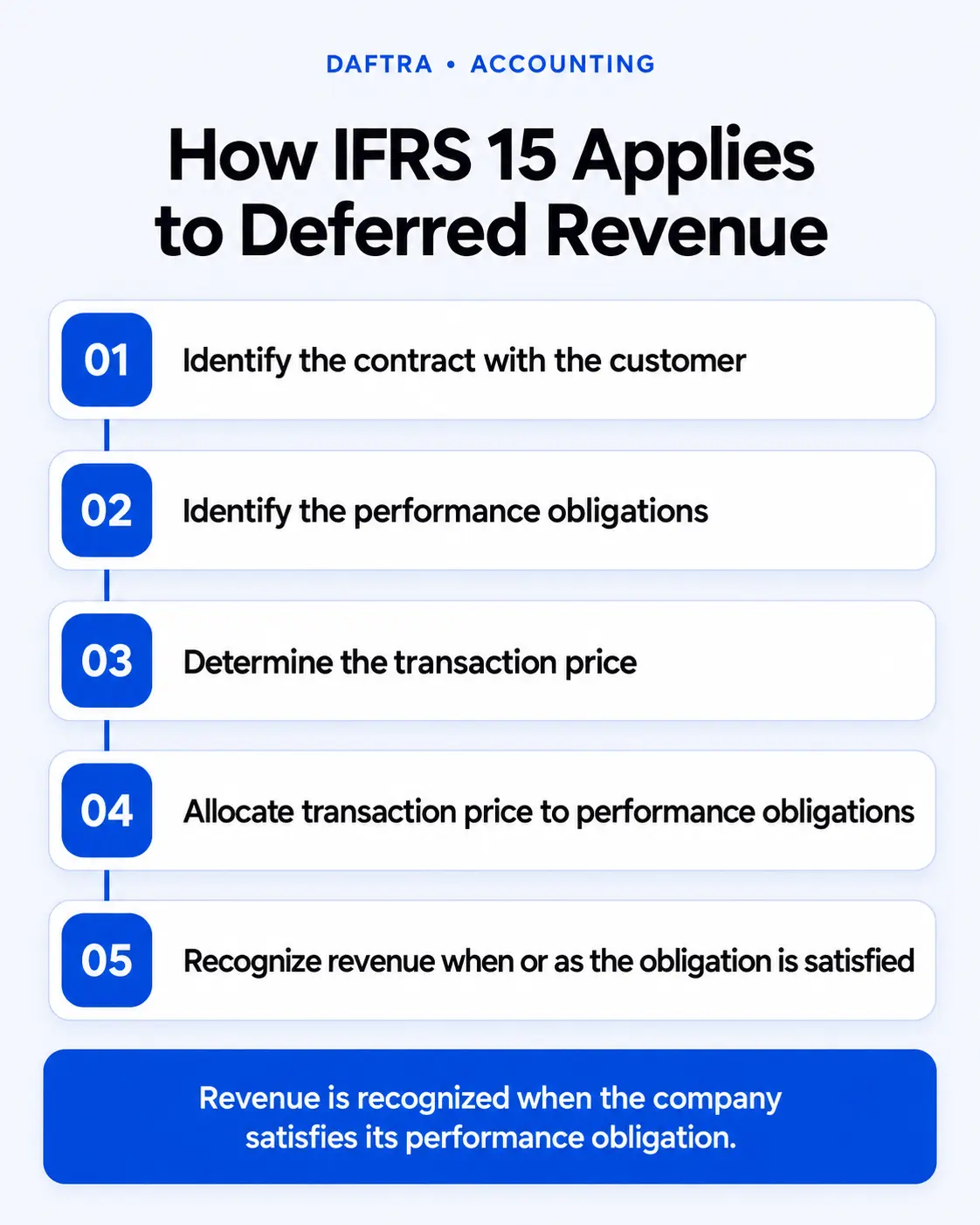
IFRS 15 uses a 5-step model to determine how and when revenue is recognized. Here is the 5-Step IFRS 15 Model:
- Identify the contract with the customer
- Identify the performance obligations
- Determine the transaction price
- Allocate transaction price to performance obligations
- Recognize revenue when or as the obligation is satisfied
This is crucial for deferred revenue as it determines when the liability can be recognized as revenue. According to IFRS 15, revenue is recognized when the company satisfies its performance obligation, either at a point in time or over time.
How Deferred Revenue Affects Financial Statements
Because deferred revenue separates cash collection from revenue recognition, it directly affects the company's financial statements. When a customer pays in advance, the company receives the payment but does not recognize it as revenue until it delivers the promised goods or services. As a result, the balance sheet, income statement, and cash flow statement are affected.
Balance sheet
When the company receives upfront payment, cash increases, but so does deferred revenue ( recorded as a liability).
Example:
The company receives 12,000 SAR in advance for a 12-month subscription.
| Balance sheet | SAR |
| Cash | 12,000 |
| Deferred revenue | 12,000 SAR increase |
| Current liability | - |
After a month of providing said service, the company receives 1,000 SAR, which means the deferred balance becomes:
12,000 - 1,000 = 11,000 SAR
| Balance sheet | SAR (One Month) |
| Cash | 12,000 |
| Deferred revenue | 11,000 |
Income Statement
Deferred revenue is not recognized as income immediately, but as the company provides the service.
Example
If the monthly revenue is 1,000 SAR, then after six months:
| Income Statement | SAR |
| Service revenue | 6,000 |
| Expenses | - |
| Net Income | 6,000 |
Cash flow statement
Revenue increases at the end of the one-year subscription, and deferred revenue decreases.
Example
| Cash flow statement | SAR |
| Cash flow from operating activities | |
| Cash received from customers | 12,000 |
| Net cash from operating activities | 12,000 |
By the end of the year, since the company has already provided the full service, the earned revenue becomes 12,000 SAR, and the deferred revenue becomes 0 SAR.
VAT Treatment of Deferred Revenue in Saudi Arabia
Under Saudi Arabia's VAT law, VAT can be triggered on the earlier of the supply date or the tax invoice issue date, meaning that receiving an advance payment can trigger VAT. Even though the amount is recorded as deferred revenue (a liability), VAT can still be triggered.
Example:
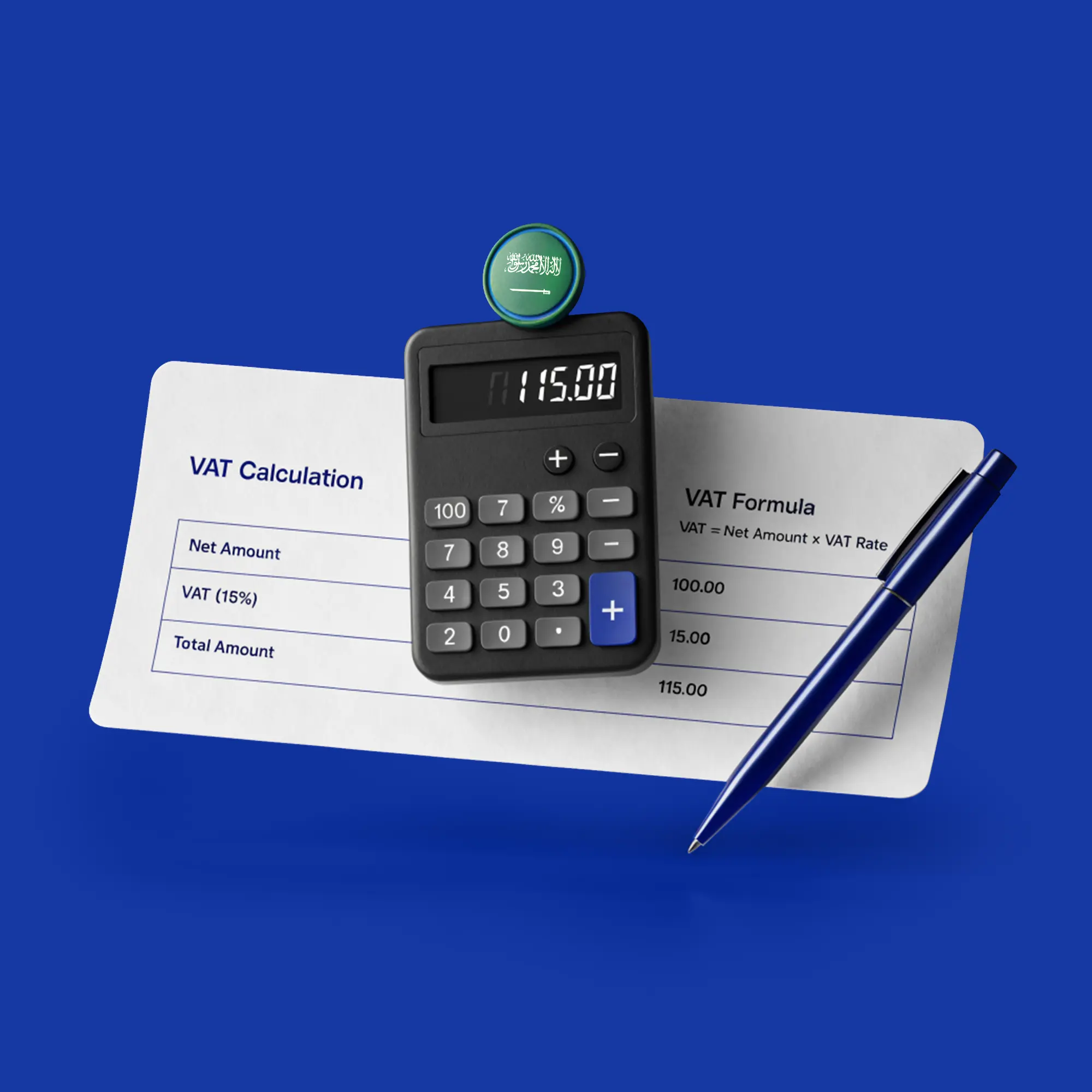
Saudi SaaS company sold a 12-month subscription for 12,000 SAR; VAT is 15%; the customer pays the whole amount in advance.
12,000 x 15% = 1,800 SAR
The total amount collected is 13,800 SAR
Accounting entry:
| Account | Debit (SAR) | Credit (SAR) |
| Cash | 13,800 | |
| Deferred Revenue | 12,000 | |
| Output Vat | 1,800 |
This means:
12,000 SAR is not recognized as immediate revenue ( Deferred revenue)
1,800 SAR is Output VAT collected on behalf of the tax authority
Important: According to ZATCA, advance payments should be properly reflected and subsequently adjusted against the relevant invoices as the supply is invoiced.
Deferred Revenue vs. Accrued Revenue
Although deferred revenue and accrued revenue are similar in terms of revenue recognition, they differ in payment timing: whether the company receives payment before or after earning the revenue.
Deferred revenue
When a customer pays in advance for goods or services that have yet to be delivered, and the company still owes the promised service, the payment is initially recorded as a liability. When the company successfully fulfills its obligation, it gradually recognizes the deferred revenue as earned revenue.
Accrued revenue
When the company has already delivered the goods or services and earned its revenue but has yet to receive payment from the customer, the amount is recorded as an asset, usually as accrued revenue or a receivable, until the customer pays.
Here is a breakdown for each type of revenue:
| Feature | Deferred revenue | Accrued revenue |
| Payment timing | Customer pays before service is delivered | Customer pays after the service is delivered |
| Revenue timing | Revenue is recognized later | Revenue is recognized before payment |
| Balance sheet effect | Liability | Asset |
| Company’s position | Company owes service/ goods to the customer | Customer owes payment to the company |
Quick way to remember the difference:
- Deferred revenue: Cash first, then Revenue later
- Accrued Revenue: Revenue first, then Cash later
For a better understanding of businesses’ Assets, please refer to Current Assets.
Deferred Revenue vs. Deferred Expenses
Deferred revenue and Deferred expenses are both cash recognized in distinct time from the actual transaction, but they differ in their nature.
Deferred revenue
When a business receives payment before delivering the promised goods or services, it records the amount as a liability until it fulfills its obligation.
Deferred expenses
Also known as prepaid expenses, deferred expenses occur when a business pays for a good or service before receiving the related benefit; the payment is recorded as an asset because the company expects to receive a benefit in the future.
Here is a breakdown of the difference between them:
| Feature | Deferred revenue | Deferred expenses |
| Action order | Company receives cash | Company pays cash |
| Recognition timing | Revenue recognized later | Expense recognized later |
| Balance sheet effect | Liability | Asset |
| Company’s Position | Company owes service to customer | Company hasn’t yet consumed the purchased benefit |
| Example | Customer pays 12,000 SAR in advance for SaaS services | Company pays 12,000 SAR for a software license in advance |
| Accounting entry | Decreases as revenue is earned | Decreases as expenses are incurred |
| Income statement impact | Increases revenue over time | Increases expenses over time |
Quick way to remember the difference:
- Deferred revenue: Customer pays first; company delivers later; revenue recognized over time.
- Deferred expenses: Company pays first; company receives benefit later; expense is recognized over time
Deferred Revenue vs. Recognized Revenue
The key difference between deferred revenue and recognized revenue lies in whether the company has fulfilled its obligation. Although both come from customer payments, they are recorded at different stages of the revenue cycle.
Deferred revenue
The company receives money before delivering the service; as it fulfills its obligation, the liability (deferred revenue) decreases and earned revenue increases.
Recognized revenue
Revenue the company earned by delivering the services; once it is recognized, it appears on the income statement and is no longer recorded as a liability.
Here is a breakdown of the difference between them:
| Feature | Deferred revenue | Recognized revenue |
| Meaning | Cash received before the company earns the revenue | Revenue earned when the company provides services |
| Recognition | Not recognized initially | On the income statement |
| Balance sheet | Liability | Increase retained earnings through net income |
| Income statement | Not included as revenue yet | Included in revenue |
| Timing | Before the obligation is satisfied | As the obligation is satisfied |
| Example | Customer pays 12,000 SAR for 12-month SaaS services | 1,000 SAR is recognized each month as the service is provided |
Quick breakdown of how deferred revenue becomes recognized revenue:
Customer pays in advance → Deferred revenue is recorded →Company provides the service → Revenue is recognized → Deferred revenue decreases.
Why Deferred Revenue Matters to Business Owners
Because deferred revenue provides clear insight into cash received, revenue earned, and future obligations, it is a crucial aspect of every business's finances. If a business looked only at cash received, it could seem to have made more profit than it actually did, especially when payments are received in advance.
Here is a breakdown of how deferred revenue is important for business owners:
Evaluates actual business performance
It prevents advance payments from being treated as revenue before the service is delivered. This allows businesses to evaluate revenue based on what they actually earned, not what they collected.
Provides visibility into future revenue
A high deferred revenue balance could indicate customers have already paid and the company is now committed to provide service. This is important insight into future revenue and customer commitments.
Improves financial and profitability analysis
Helps businesses compare revenue and expenses within an accounting period, making key performance measures more meaningful and reducing the risk of overstating performance in periods with large upfront payments.
Supports cash flow decision-making
It clearly differentiates between cash flow and revenue, as a company can have strong cash flow when customers pay upfront but recognize lower revenue. Deferred revenue helps business owners plan spending, hiring, investments, and working capital more efficiently.
Deferred revenue is considered an important metric for evaluating current performance and understanding future revenue commitments.
Common Mistakes in Managing Deferred Revenue
Deferred revenue matters because it affects how well the business understands its financial position; if it is poorly managed, it can lead to revenue overstatement, inaccurate financial statements, and an overall misleading view of the business's performance. Here are some of the common mistakes in managing deferred revenue:
Recognizing the full advance payment as revenue immediately
Recording the full amount as revenue upon receipt is common, since the company has not yet delivered the service.
Example
A SaaS company sells annual subscriptions to several customers for 120,000 SAR in advance. At month-end, an employee recorded the full amount as revenue in the month the money was collected, even though the company is still obligated to provide the service in subsequent months.
The correct entry would be to record the 120,000 SAR as deferred revenue (liability) and recognize it as revenue only as the company provides the service.
Failing to track the revenue recognition schedule
The business may record deferred revenue correctly but fail to recognize it as revenue appropriately as the promised service is done.
Ignoring contract changes or cancellations
If a customer subscription changes, it will affect the amount and timing of revenue recognition.
Failing to reconcile deferred revenue accounts
The business must reconcile deferred revenue with customer contracts, invoices, payment records, and revenue recognition schedules to ensure the balance sheet is accurate.
Ignoring the impact of taxes
Businesses should pay attention to tax obligations and their timing, as they may differ from the timing of revenue recognition under accounting standards.
Best Practices for Managing and Tracking Deferred Revenue
Here is a list of a few of the best practices that elevate deferred revenue management:
Maintain a detailed deferred revenue schedule
Keep a record of all transactions that create deferred revenue, including the customer contract, payment date, service period, amount recognized, and remaining balance.
Automate revenue recognition
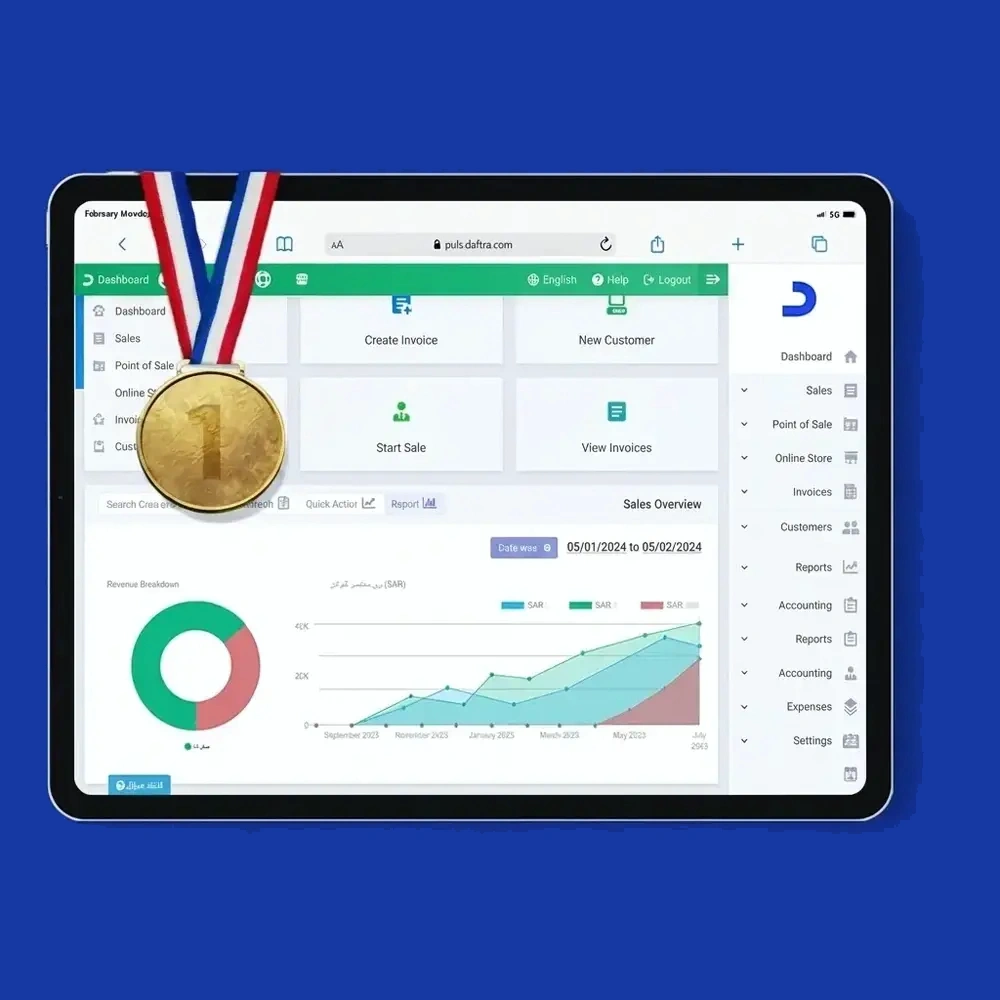
For businesses with a large customer base, manual revenue calculation is error-prone; accounting software (such as Daftra) can automate revenue recognition based on contract terms and update deferred revenue as services are delivered.
Reconcile deferred revenue regularly
Reconcile deferred revenue with contracts, invoices, payment records, and revenue recognition schedules regularly in order to identify discrepancies and improve financial reporting.
Separate current and non-current balances
Some contracts exceed 12 months; classify deferred revenue appropriately between current and non-current liabilities.
Use deferred revenue reports for financial planning
Analyze deferred revenue alongside recognized revenue, bookings, renewals, and customer contracts to estimate future revenue and assess business performance.
By applying these practices, businesses should gain better insight into their finances and elevate their decision-making.
How Daftra Helps Automate Deferred Revenue Recognition
When a business has many annual contracts, subscriptions, or services paid for upfront, deferred revenue can be challenging. As deferred revenue indicates, the entire payment should not be recognized as revenue; instead, the amount should be recognized over the period during which the company provides the service.
From our experience in the Saudi financial market, we witnessed a case of an office space rental company that collected several months' rent upfront from customers but initially recorded the entire amount as revenue. After analyzing the situation, we noticed that revenue spiked unusually in certain months and dropped artificially in the following months. We identified the issue not as collecting payments, but as the timing of revenue recognition. The team started using Daftra, and their team recommended recording upfront payments as deferred revenue and then recognizing them over the months in which customers are owed service.
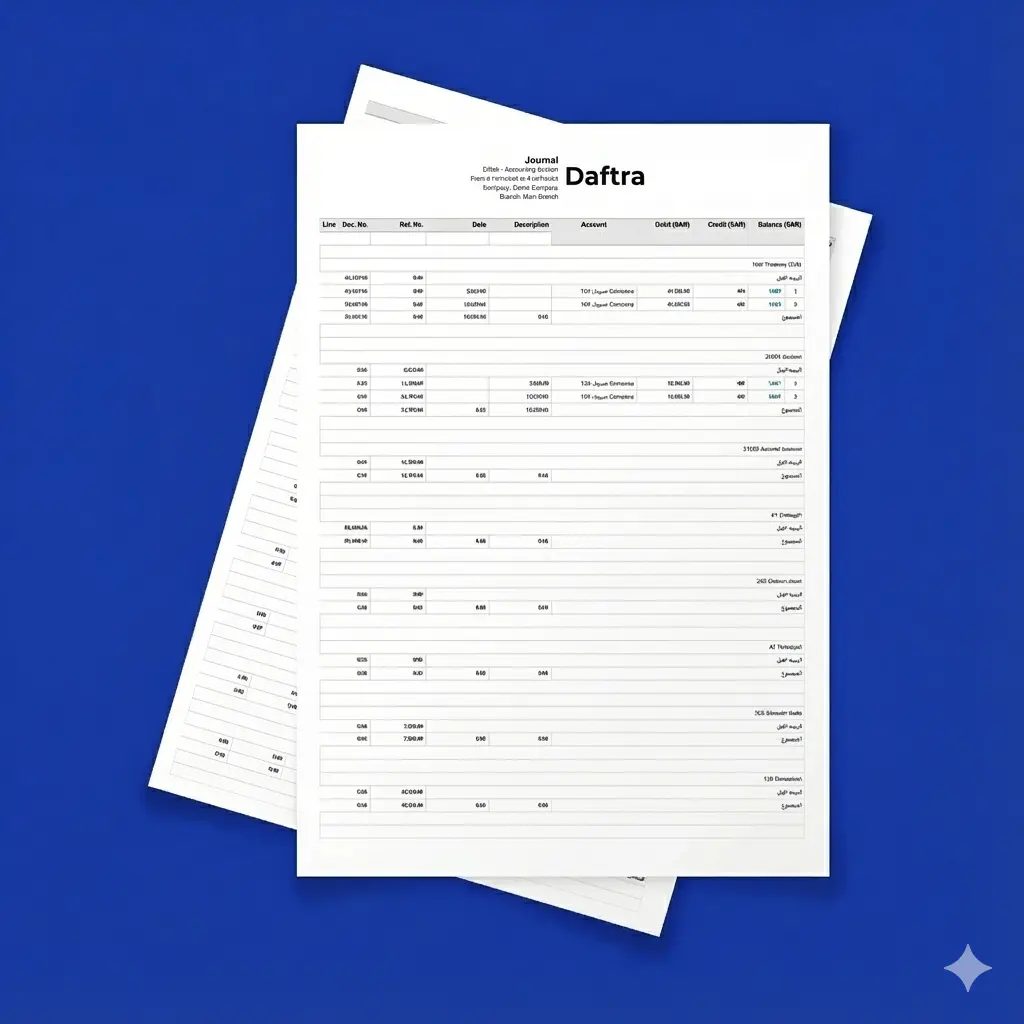
Daftra supports automating deferred revenue tracking and scheduling, which helps:
- Reduce manual accounting work by automating recurring revenue entries.
- Recognize revenue more consistently in periods in which services are provided.
- Maintain a clearer deferred revenue balance as amounts are transferred to earned revenue.
- Improve financial reporting by ensuring revenue is reflected in its appropriate accounting periods.
Thus, Daftra systematizes and streamlines deferred revenue management, especially for businesses that handle recurring contracts or receive significant upfront customer payments.
FAQs
How do I calculate deferred revenue?
You can calculate deferred revenue by taking your beginning balance, adding new cash collected, and subtracting the revenue you earned.
Is deferred revenue considered a current liability?
Yes, deferred revenue is considered a current liability because the company received payment upfront and still owes the customer the promised goods or services.
Is deferred revenue the same as cash?
No, deferred revenue (liability) is different from cash, as it represents the obligation to deliver goods or services to a customer who has already paid in advance, while cash (asset) represents the actual money the company holds in its bank account or in physical form.
Is Deferred Revenue a Credit or Debit?
Deferred revenue is initially recorded as a credit; it is a liability on the balance sheet, as it represents upfront cash collected from customers in exchange for goods or services to be provided.
What is meant by deferred income?
Deferred income is money a business receives in advance for goods or services that are promised to be delivered, also known as deferred revenue or unearned income.










 Invoicing
 POS
POS Offers
 Installments
 Sales Commission
 KSA E-Invoice Software
 EGY E-Invoice Software
 JO E-Invoice Software
 E-Invoice Software
 Chart of Accounts
 Asset Management
 Cost Centers
 Expenses
 Cheque Cycle
 UAE VAT-Tax
 Product Management
 Purchases
 Purchase Cycle
 Suppliers
 Requisitions
 Stocktaking
 Organizational Structure
 Personnel Management
 Attendance and Leave
 Contracts
 Payroll
 Requests
 Work Orders
 Booking Management
 Rental and Unit Management
 Time Tracking
 Work Flow
 Lease Contracts
 Manufacturing Management
  Client Follow-Up
 Loyalty Points
 Points and Credits
 Memberships
 Insurance Management
 Daftra ERP Full App
 Point of Sales App
 Point of Sales for Desktop – Support Offline Mode
 AI Expenses Scanner App
 Employee Attendance, Sign & ESS App
 E-invoice Reader App
 Inventory Stocktaking App