


UAE Standard e-Invoice XML Format Explained for 2026

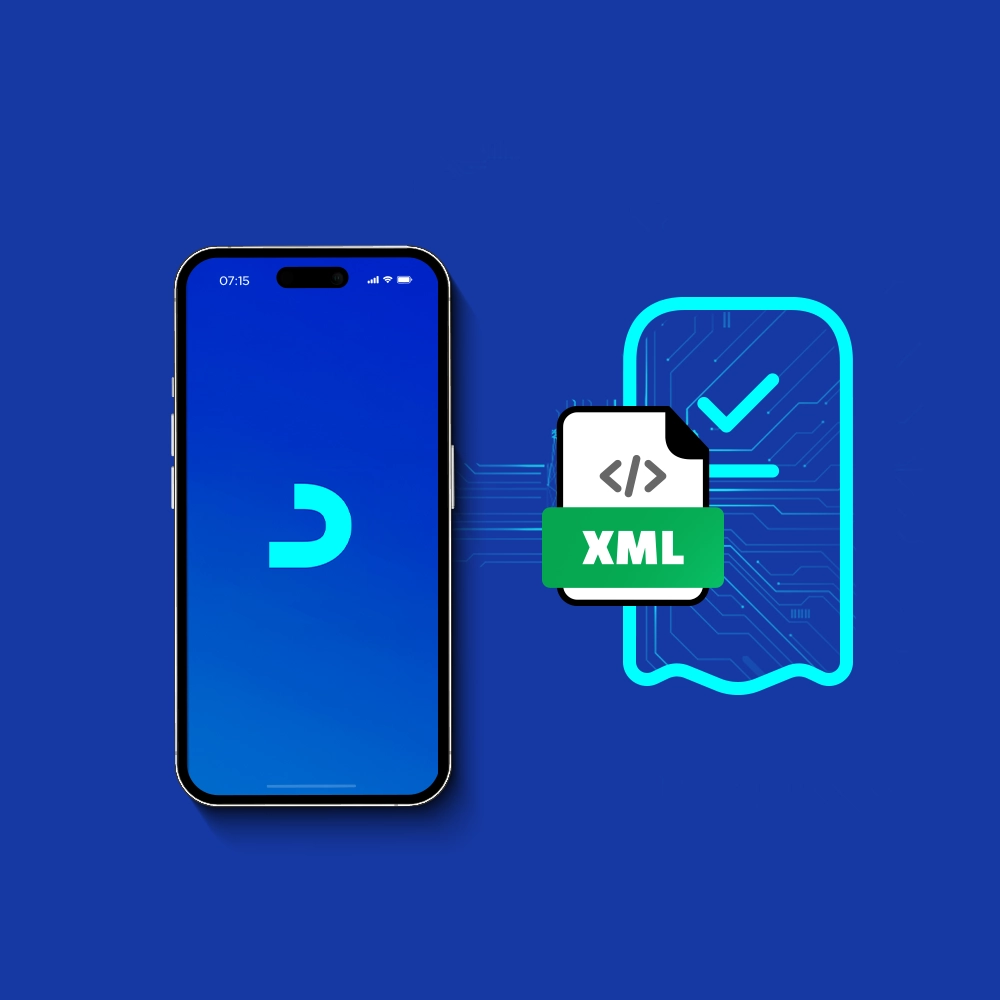
Table of contents:
- Key Summary
- What is the UAE standard e-Invoice XML format?
- Why does UAE e-Invoicing use XML instead of PDF or Excel?
- What is PINT AE in the UAE e-Invoice XML format?
- What does the structure of a UAE e-Invoice XML file include?
- What are the mandatory fields for the UAE e-Invoice XML format?
- How are UAE XML e-Invoices validated and exchanged?
- Common mistakes businesses make with the UAE e-Invoice XML format
- How to prepare your system for UAE e-Invoice XML requirements
- Frequently asked questions about the UAE standard e-Invoice XML format
- Conclusion
The UAE's new e-invoicing system is a breakthrough towards achieving the “We the UAE 2031” vision, as it is a step towards eliminating paper usage. The e-invoice system, starting in 2027, is mandatory for businesses operating in the UAE, regardless of their VAT registration status.
After the UAE released the official guidelines for the e-Invoicing system, considerable confusion arose about which standards are binding, how to apply them, and what the best compliance practices are. The Ministry of Finance in the UAE has made the technical format a top priority for e-invoice issuance, marking a major shift from the traditional invoice format.
The new mandatory format requires issuing, transmitting, and receiving e-invoices in XML, based on the PINT AE Data Dictionary, and does not include a quick response code (QR code). This raises the question: What is the standard e-invoice XML format, and how do I comply with it?
Consider this article your full guide to XML format and best practices for complying with the compulsory e-invoicing technical formats.
What is the UAE standard e-Invoice XML format?
The Ministry of Finance, alongside the Federal Tax authorities, has established the requirements for e-invoicing in the UAE. The new system strictly requires a structured XML format for issuing, transmitting, and receiving the e-invoices between suppliers, buyers, and the Federal Tax Authority (FTA).
XML stands for Extensible Markup Language, a structured way to represent data that machines can read.
The new structure outgrew the old traditional formats, which were PDFs, scanned documents, or Excel documents; now, those are not valid options, and the e-invoice format must be machine-readable. The new required format, XML, allows invoices to be validated, exchanged, and processed automatically, all in accordance with the PINT AE Data Dictionary.
Why does UAE e-Invoicing use XML instead of PDF or Excel?
The e-invoicing system in the UAE is part of the larger “Forward Ecosystem” under the vision “We the UAE 2031”, an initiative to accelerate the electronic transformation and enhance the digital infrastructure of the entire government work model.
This new e-invoicing system is designed to move businesses away from traditional methods such as PDFs, scanned documents, and Excel files toward a structured, machine-readable format: XML in the standardized PINT AE language.
This means that, starting on the mandatory date of January 2027, any invoice that is not in XML format and is based on the Peppol framework will be considered invalid by the Federal Tax authority and subject the issuer to a penalty. Although this seems like a lot at first glance, the whole idea can be simplified in the following way:
- XML = Format (how the invoice is written).
- PINT AE = Rules (what to write in the invoice).
Helpful Template: Tax Invoice Format Template in UAE
What is PINT AE in the UAE e-Invoice XML format?
PINT AE, or Peppol international Invoice, is a standardized e-invoicing format for the UAE, based on the global Peppol network. Peppol’s PINT AE sets out the specific contents that must be included in every e-invoice and how they vary by document type and the specific scenario for which it is issued.
The mandatory XML format is based on the PINT AE Data dictionary, which is required for all businesses operating in the UAE starting in 2027.
PINT AE set the outline of the mandatory fields of the e-invoice, which includes:
- Invoice number
- Invoice data
- Seller TRN
- Buyer details
- VAT breakdown
PINT AE basically controls what fields must exist, how data must look, and how calculations must behave.
What does the structure of a UAE e-Invoice XML file include?
The UAE’s e-invoicing system mandates an XML format under the PINT AE Data Dictionary, which specifies which fields are mandatory, optional, or conditional based on the document type and transaction context.
Here is a breakdown of the main content in the e-invoice:
Invoice header and document identifiers
This section includes:
- Invoice number: a unique identifier for the invoice.
- Invoice date: the date when the invoice was issued.
- Invoice type code: a code specifying the functional type of the invoice.
- Invoice currency code: the currency in which the invoice amounts are given.
Seller and buyer information
This section covers:
- The seller’s company name, identification number, electronic address, electronic identifier, and Tax registration number.
- The buyer’s name, identification number, electronic address, electronic identifier, and Tax registration number.
Line items, VAT breakdown, and totals
This part consists of:
- Line items: quantity, unit price, unit total.
- VAT: total VAT and tax category.
- Totals: Net (before VAT) and gross (after VAT) amount.
Payment, reference, and supporting information
This additional information includes:
- Payment: Bank details and due date.
- Reference: Purchase order reference.
- Supporting information: Delivery notes and comments.
What are the mandatory fields for the UAE e-Invoice XML format?
According to the PINT AE Data dictionary, which defines the XML format, UAE e-invoice fields are categorized as mandatory, conditional, and optional. Here is a breakdown of each category:
Mandatory fields
These fields must be present; without them, the invoice will be invalid.
- Invoice number
- Invoice issue date
- Seller and buyer name
- Tax Registration Number
- Currency
- Line item details
- VAT amount
Conditional fields
These fields are required depending on the transaction.
- Currency exchange rate: when the invoice exchange rate was in a currency other than AED.
- Service accounting code; required for services
- Discount field: when a discount is applied.
- Reverse charge indicator: when VAT is handled under reverse charge rules.
Optional fields
Not required, but can be used to add context to the invoice.
- Purchase order reference
- Delivery notes
- Payment terms
Helpful Template: VAT Return Form 201 Template in UAE
How are UAE XML e-Invoices validated and exchanged?
The e-invoice system operates within a strict framework, prioritizing the standardized XML format based on the PINT AE (PEPPOL international UAE). This is crucial for validating your e-invoice through a machine-readable format. The e-invoice exchange process can be overwhelming. Here is a clear, simple explanation of the whole design:
As a unique move, the UAE has established a no-tolerance policy for any e-invoice format other than XML, which means:
- No PDFs
- No Excel files
- No scanned documents
The invoice must be in XML format, structured by PINT AE, and sent through an accredited service provider (ASP).
Now, how do you do that? Here is how:
- You create the invoice, not manually, through an ERP system or accounting tools. (Daftra supports e-invoice generation, with full compliance with FTA requirements)
- You send the invoice data to ASP, and this is when the system converts it to UAE-compliant XML (PINT AE).
- Once your invoice goes through the ASP, it gets checked for:
- structure efficiency
- mandatory fields completion
- VAT calculation accuracy
- TRN format validation
- Totals consistency
- After validation, the ASP transmits your invoice through the UAE e-invoice system, in alignment with Peppol exchange style.
- By the end of the e-invoice process, the invoice should be shared with the Federal Tax Authority.
Common mistakes businesses make with the UAE e-Invoice XML format
Compliance with the UAE’s rules and regulations should be your number one priority upon adopting the e-invoice system. The Ministry of Finance and the Federal Tax Authority have set penalties for errors and mistakes all along the e-invoice process. It is advisable to learn and understand the full rules and regulations governing the technical and structural format before adopting the e-invoice system.
Here are some common mistakes people usually commit and how to avoid them:
1. Using the wrong format:
The e-invoice regulations strictly validate e-invoices in XML format only; submitting invoices as PDFs or Excel documents will result in rejection.
2. Fail in the fields completion:
The e-invoice fields are divided into mandatory, conditional, and optional fields. Failing to complete the mandatory or conditional fields can invalidate your invoice.
3. Failing short in compliance:
The system is configured with a full list of compliance regulations, not just technical requirements; failing to comply with any mandatory requirement can subject your business to legal fines.
4. Late participation:
The e-invoicing system is set to commence in 2027. It is advised to participate in the voluntary or pilot phase starting July, 2026, to have a trial penalty-free period. Although you will need to issue and exchange invoices electronically if you decide to participate, there is no legal obligation on your part. This period is usually used to get your system ready, train employees on e-invoicing, and raise awareness about the new system in your business.
How to prepare your system for UAE e-Invoice XML requirements
As the mandatory date approaches, every business operating in the UAE should begin preparing to adopt the e-invoice system. It is advisable to start your learning and testing early; by the time your business phase begins, you will be ready to participate and fully comply. Here is what you need to do to prepare your system:
- You should start with your ERP system and ask whether your system has the following information;
- Supplier details (Legal business name, TRN, address)
- Customer details (TRN, structured address)
- Invoice details (Number, date)
- Line items details (description, quantity, price)
- Total details ( Net amount, VAT, gross amount)
- Your accounting software or ERP system would preferably be able to generate invoices in XML format in alignment with UAE regulations.
- The e-invoice system uses a real-time validation model, Peppol-based- PINT AE, which suggests that any mistake in master data quality (supplier and customer) will subject your invoice to rejection.
- As to the importance of ASP in the e-invoice model, you should check if your system supports API integration, sends invoice data in real time, receives validation responses, and supports supplier invoices.
- Plan mapping, testing, and workflow changes, respectively;
- Matching and connecting your data to the UAE format
- Testing with sample e-invoices before the real mandatory date.
- Direct your business team on handling invoices daily.
- You should evaluate whether your current software reliably supports structured invoices or not. This part is crucial; your system should support structured invoices and API, capture all required data, and integrate with ASP.
You can check how to export e-invoices in XML format inside Daftra and follow the steps needed to generate XML files after completing your UAE e-invoicing setup.
Frequently asked questions about the UAE standard e-Invoice XML format
What is the format of e-invoice in UAE?
The UAE set a required XML format for the e-invoices based on the PINT AE standards.
What is the UAE PINT format?
The PINT AE is the standardized and mandatory structural format for the UAE’s e-invoicing system.
Is XML an Excel format?
No, XML is not an Excel format; the key difference is that XML is machine-readable and is used for data exchange and interoperability.
Is an XML file a PDF?
No, XML is not a PDF; the main difference is that XML is machine-readable, whereas PDFs are primarily visual representations of documents.
Who is the ASP for e-invoicing in UAE?
The accredited e-invoicing service providers are private companies approved by the UAE government to connect businesses to the e-invoicing network.
Conclusion
The e-invoicing system in the UAE is designed to maximize efficiency by reducing human intervention, improving VAT compliance, reducing tax fraud, and supporting the UAE’s sustainability objectives. As per the Ministry of Finance's guidelines, all e-invoices from the mandatory date onward must be issued in XML format based on the PINT AE Data Dictionary. Invoices submitted to the FTA as PDFs, scanned documents, or Excel files will not be accepted as valid e-invoices; the format must be machine-readable and structured.
The e-invoicing system requires the XML format, as it depends on ASP to convert your invoice, validate it, and transmit the e-invoice through the e-invoice network. Taking a step back would allow the whole system to appear as a single block, with each part depending on the others.
This is why the new system is configured with full mandatory requirements that are binding for the validation and reporting of e-invoices to the FTA; non-compliance will subject your business to legal action, penalties, and fines.









 Invoicing
 POS
POS Offers
 Installments
 Sales Commission
 KSA E-Invoice Software
 EGY E-Invoice Software
 JO E-Invoice Software
 E-Invoice Software
 Chart of Accounts
 Asset Management
 Cost Centers
 Expenses
 Cheque Cycle
 UAE VAT-Tax
 Product Management
 Purchases
 Purchase Cycle
 Suppliers
 Requisitions
 Stocktaking
 Organizational Structure
 Personnel Management
 Attendance and Leave
 Contracts
 Payroll
 Requests
 Work Orders
 Booking Management
 Rental and Unit Management
 Time Tracking
 Work Flow
 Lease Contracts
 Manufacturing Management
  Client Follow-Up
 Loyalty Points
 Points and Credits
 Memberships
 Insurance Management
 Daftra ERP Full App
 Point of Sales App
 Point of Sales for Desktop – Support Offline Mode
 AI Expenses Scanner App
 Employee Attendance, Sign & ESS App
 E-invoice Reader App
 Inventory Stocktaking App