



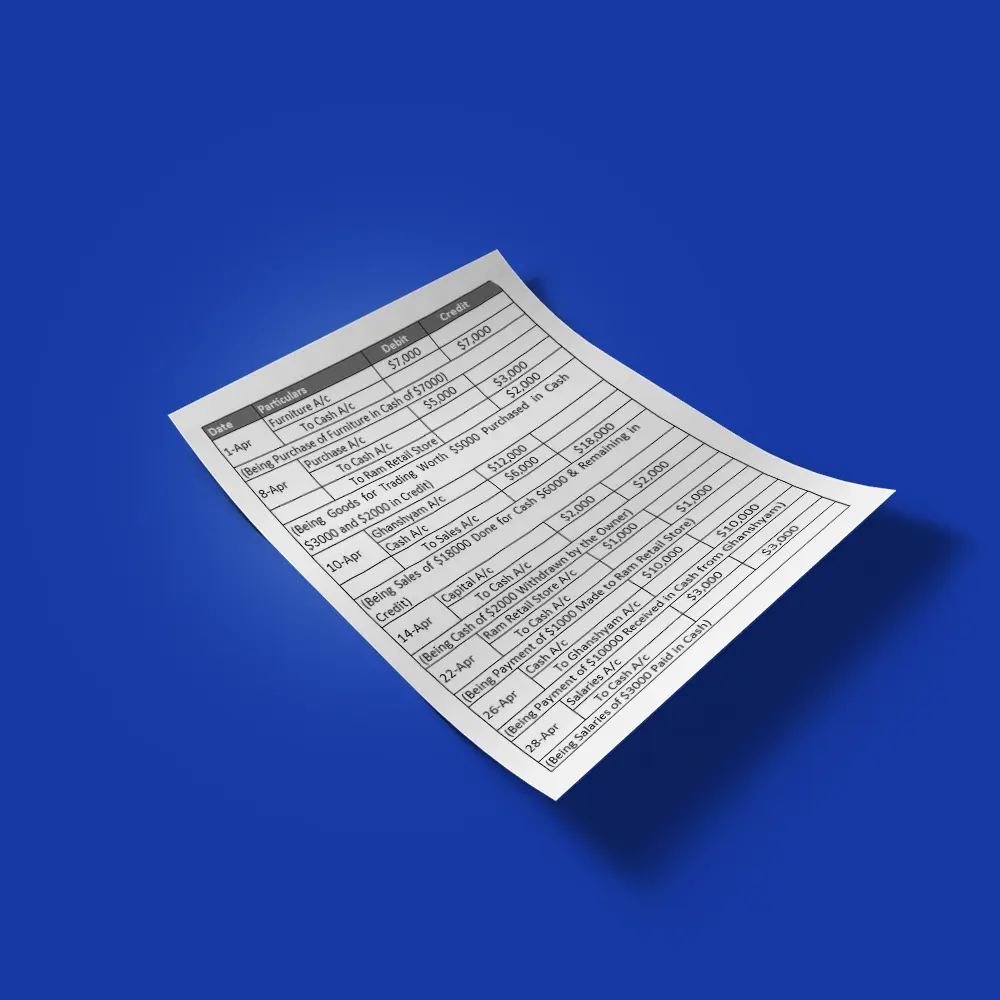
Table of contents:
- What are Accounting Entries?
- Types of Accounting Entries
- The Importance of Accounting Entries in Business Continuity and Performance
- Steps for Recording Accounting Entries
- What Happens After Recording Accounting Entries?
- Objectives of accounting Entries
- How Are Accounting Entries Posted to the General Ledger?
- What Types of Errors Occur in Accounting Entries?
- Most Important Accounting Entries
- Examples and Exercises on Accounting Entries
- How to Learn Accounting Entries?
- How Does Daftra Make Your Accounting Entries Easier?
- Frequently Asked Questions
Companies use accounting as a tool for financial management; without it, no entity can maintain continuity and continue performing its functions, whether for-profit or non-profit. For accounting to be able to perform this role, it relies on several theories and foundations, and takes certain procedures, among the most important of which are “accounting entries.”
In this topic, we will answer several important questions, including: What are accounting entries? What are their types? How do they work? Where do they fit in the accounting cycle? And other questions, so let's go!
What are Accounting Entries?
Accounting entries are the means by which all financial transactions of the project are documented and recorded at the time they occur, with clarification of both parties to the transaction — the creditor and debtor — and the issuing and receiving accounts for this financial transaction. They are considered a tool through which the financial position of the entity can be analyzed and understood, and correct decisions can be made.
These entries are recorded in a set of accounting books, including the correspondence register, inventory and balance sheet book, general accounting, draft book/diary, general ledger, and trial balance book.
It is worth noting that with the technological development that the world is experiencing in all fields of work, many entrepreneurs have turned to adopting electronic accounting systems in managing accounting affairs. Hence, these books have become automated rather than paper-based, and recording accounting entries has become easier and more accurate than before.
Types of Accounting Entries
Accounting entries can be classified into two main categories: simple entries and compound entries, in terms of the number of accounts mentioned on both the debit and credit sides. As for the purpose and nature of the entry, accounting entries can be divided into three main types: accounting entries, adjusting entries, and closing entries, which we will explain in detail below.
1- Simple Entry
The simplest definition of a simple entry is an entry that includes only one account on each side — both debit and credit. An example of a simple entry is: a company paying workers' wages.
| Debit | Credit | Description |
| 12,000 | 12,000 | From A/c (Workers' wages expense) To A/c (Bank) |
2- Compound Entry
A compound entry is the opposite of a simple entry, and it is an entry where one or both sides - debit or credit - include more than one account. It has become customary when writing this type of entry to write "From various accounts" or "To various accounts" before the side that includes more than one account, depending on whether it is a debit or credit account. Examples of compound entries include the following:
When the entry is compound on the credit side:
| Debit | Credit | Description |
| 4,700 | 4,000 700 | From A/c (Assets - Furniture) To various accounts: A/c (Cash) A/c (Bank) |
When the entry is compound on the debit side:
| Debit | Credit | Description |
| 10,000 55,000 | 65,000 | From various accounts: A/c (Bank) A/c (Cash) To A/c (Accounts Receivable/Customer X) |
When the entry is compound on both debit and credit sides:
| Debit | Credit | Description |
| 2,000 1,000 | 750 2,250 | From various accounts: A/c (Internet expense)<br>A/c (Gas expense) To various accounts: A/c (Bank) A/c (Cash) |
After clarifying simple and compound entries, which are the two types of accounting entries in terms of the number of accounts on each side of the entry, we now move to differentiating between types of accounting entries in terms of their nature and purpose. We previously mentioned that they are divided into accounting entries, adjusting entries, and closing entries. Two other types are added to these three main types: opening entries and reversing entries, and we will explain each of them in the following lines.
3- Accounting Entry
The accounting entry is the foundation of accounting theory. It is a tool for documenting every financial transaction that occurs in the entity with the aim of achieving tight financial management and determining the result of activity at the end of each period as profit or loss. In applying the principles of preparing accounting entries, the entry should consist of two sides, one debit and the other credit, and the balance should be equal between the two sides. Examples of accounting entries include:
| Debit | Credit | Description |
| 3,000 | 3,000 | From A/c (Bank) To A/c (Capital) |
Accounting entries are the initial recording procedure for daily transactions in accounting books, and they differ from adjusting entries, closing entries, and other types of entries, each of which has a special character and serves a specific purpose.
4- Adjusting Entry
In some cases, the entity may incur some expenses that belong to the year but have not been paid, and the company may execute some contracts during the financial year but does not receive the full value of these contracts. In such cases, the importance of adjusting entries emerges.
Adjusting entries are those through which situations are corrected that appear to violate certain accounting principles, such as the accrual principle and the matching principle. These adjustments are made to modify account balances so that the activity result and financial position can be accurately reflected for each accounting period.
First: Adjusting Accrued Revenues. These are funds that the company is entitled to during the year in exchange for a service or product it provided, but has not yet received its dues. Examples include:
A company provided environmental consulting to a client worth 35,000 riyals and did not receive its dues until the end of the accounting year. The entry would then be as follows:
| Debit | Credit | Description |
| 35,000 | 35,000 | From A/c (Accrued environmental consulting revenue) To A/c (Consulting revenues) |
Then the entry is posted to the general ledger.
Second: Adjusting Deferred Revenues. Deferred revenue is what is paid to you before providing the service or product in exchange for this revenue, and the revenue has been recorded in the books. In this case, the percentage of revenue that belongs to the current year is determined, and anything beyond that is included as a current liability in the balance sheet. Examples include:
A company renting its administrative headquarters to another company for three years for 300,000 riyals with full advance payment. The entry would then be as follows:
| Debit | Credit | Description |
| 100,000 | 100,000 | From A/c (Deferred rental revenue) To A/c (Rental revenues) |
Then the entry is posted to the general ledger.
Third: Adjusting Accrued Expenses. Accrued expenses can be defined as expenses related to the accounting period that have not yet been recorded in the books or paid. Examples include:
The value of workers' wages in a company is 250,000 riyals, and the wages balance in the trial balance was 210,000 riyals. The entry would then be as follows:
| Debit | Credit | Description |
| 40,000 | 40,000 | From A/c (Wages) To A/c (Accrued wages) |
Then the entry is posted to the general ledger.
Fourth: Adjusting Prepaid Expenses. Prepaid expenses are those paid during the accounting year even though they belong to more than one subsequent year. In this case, only what belongs to the current year is determined, and anything beyond that appears as a current asset on the balance sheet. Examples include:
A company paid a check worth 200,000 riyals for two years' rent. The entry would then be as follows:
| Debit | Credit | Description |
| 100,000 | 100,000 | From A/c (Rental expenses) To A/c (Prepaid rent) |
Then the entry is posted to the general ledger.
5- Closing Entry
At the end of the financial year, the accountant performs one of the most important accounting procedures regarding entries, which is closing all nominal accounts, which are revenue and expense accounts, so that they can prepare the income statement and know the actual result of activity, whether profit or loss.
Read also: What are Closing Entries in Accounting
Accordingly, closing entries are as follows:
First: Closing Expenses Entry Contrary to their debit nature in the accounting entry, expenses are closed as a credit account, and on the other side of the entry is the profit and loss account, as follows:
| Debit | Credit | Description |
| XXX | XXX | From A/c (Profit and Loss) To A/c (Expense) (Closing expense) |
Second: Closing Revenues Entry. As is the case with the expense closing entry, revenues are treated contrary to their credit nature in the accounting entry, so that they are debited in the closing entry, and on the other side is the profit and loss account as well, as follows:
| Debit | Credit | Description |
| XXX | XXX | From A/c (Revenue) To A/c (Profit and Loss) (Closing revenue) |
6- Opening Entry
Also called the establishment entry, this is the entry with which the company begins the financial year, whether it is newly established or transitioning from one financial year to another. Therefore, we have two cases: one is an opening entry for a newly established company, and the other is an opening entry for a company transitioning from a previous financial year to the subsequent financial year.
If the company is newly established and has not previously conducted business, the company will not have any previous data that can be included in the opening entry. In this case, the opening entry is treated as follows:
| Debit | Credit | Description |
| XXX | XXX | From A/c (Assets) To A/c (Capital) |
In the case of an opening entry for a company transitioning from a previous financial year to the subsequent financial year, the accounting treatment for the opening entry involves extracting the balances shown in the balance sheet, which in turn represent the beginning balance of the new period, after taking all accounting steps in closing these accounts.
7- Reversing Entry
A reversing entry is one of the types of entries with a special nature and is only resorted to in special cases, which is when an error occurs in switching between the debit and credit accounts in the accounting entry. To correct this error and settle each account in its correct position in terms of whether it is a debit or credit, the accountant resorts to the reversing entry.
The Importance of Accounting Entries in Business Continuity and Performance
Accounting entries play a clear role in business continuity and efficient performance of functions. The following are the most prominent points that illustrate the importance of accounting entries:
Maintaining Organized Financial Records
Daily accounting entries and other types of entries help arrange and organize operations and activities in financial records, which positively reflects on the smoothness and transparency of other accounting operations, thus reducing potential risks and legal penalties that result from accounting violations such as accounting manipulation, tax evasion, and others. These financial records also help understand the trends of revenues, expenses, assets, and liabilities of the entity.
Monitoring and Tracking Financial Performance
The accurate data provided by accounting entry records of various types helps document financial transactions for different activities precisely, and then use this data to create trial balances and financial statements that, in turn, reflect the actual financial position of the institution. This helps evaluate the entity and its financial performance, facilitates the detection of any accounting errors or illegal manipulations, and all of this contributes to maintaining the entity's reputation and its compliance with laws and accounting principles that form and govern the general accounting structure. All of this ultimately supports the entity's credibility before external customers, investors, creditors, suppliers, and others.
Making Sound Financial Decisions
The comprehensive vision provided by accounting entry data helps administrative bodies concerned with managing financial affairs make strategic decisions related to financial planning, budget preparation and estimated budgets, inventory management and effective resource allocation, expense control, revenue enhancement, tracking key financial performance indicators, identifying strengths and weaknesses and areas for improvement, and other sound decisions that ensure the continuity of the entity's work efficiently and effectively.
Steps for Recording Accounting Entries
Accounting entries achieve one of the most important objectives of accounting, which is documenting financial transactions, because documentation contributes effectively to achieving other objectives of accounting.
Accounting entries consist of two sides: debit and credit, which is called double entry, such as accounting entries for salaries and wages. Each entry represents a financial movement from one account to another account, and the same applies to the general accounting, in which transactions are recorded daily, to be later posted to the general ledger.
The steps for recording accounting entries represent great importance to ensure accuracy and transparency of companies' financial accounts, so it is important to know how to record entries correctly.
Steps for Recording Accounting Entries:
First, Determining the Event, Value, and Concerned Accounts
This involves determining creditor accounts and debtor accounts. For example, "Al-Noor" company sold merchandise (T) and (J) worth 15,000 riyals, so accordingly:
- Event: the sale operation
- Value: 15,000 riyals
- The entry was recorded in two accounts: the sales account and the cash account.
Thus, we have determined the event, value, and accounts concerned with the accounting operation.
Second, Determining Entry Direction
This means determining the effect of the financial operation on the account by an increase or a decrease. For example, Al-Noor company sold merchandise worth 15,000 riyals as mentioned previously. What is the entry direction in this operation?
Answer: Both the sales account and cash account increase if payment is in cash, but in the case of deferred payment, the customer's account is affected (which is an account used to track customers for collecting due amounts).
However, when the "Al-Noor" company decides to purchase supplies worth 15,000 riyals, the goods account increases, and the bank or cash account decreases.
Third, Determining Credit and Debit Accounts
Following the previous example, Al-Noor Company sold for 15,000 riyals, and we determined the types of accounts, which are sales and cash. Since the sold merchandise is a monetary amount due to the company, it is recorded in a credit account, and cash is recorded in a debit account.
In case the company purchases supplies worth 15,000 riyals, we record them in the purchases account and the bank/cash account. The purchases account is the creditor, and the cash account is the debtor.
Therefore, we have implemented the first two steps: determining the affected account and then classifying its type.
Fourth, preparing the Accounting Entry
There must be a balance between the debit and credit accounts. As mentioned previously, Al-Noor Company sold for 15,000 riyals, so when it is recorded in the sales account, it must be equal in the cash account at 15,000 riyals when recorded.
- Debit: 15,000 riyals in cash account
- Credit: 15,000 riyals in sales account
Fifth, Recording the Accounting Entry
The entry date must be written for easy access. Following the previous example, the entry is recorded in Al-Noor Company's general ledger:
Date: February 15, 2024
- Debit: 15,000 riyals in cash account
- Credit: 15,000 riyals in sales account
Sixth, Describing the Entry Recording Process for Easy Understanding
Example:
February 15, 2024
15,000 From A/c Cash
15,000 To A/c Sales
(Sale of merchandise to "Al-Manara" company)
We indicate the debtor with "From" and the creditor with "To" in the entry recording process.
Seventh, Verifying Entry Accuracy Before Confirming Recording
Ensuring entry accuracy in terms of recorded date, creditor and debtor accounts, and the financial value of the entry.
What Happens After Recording Accounting Entries?
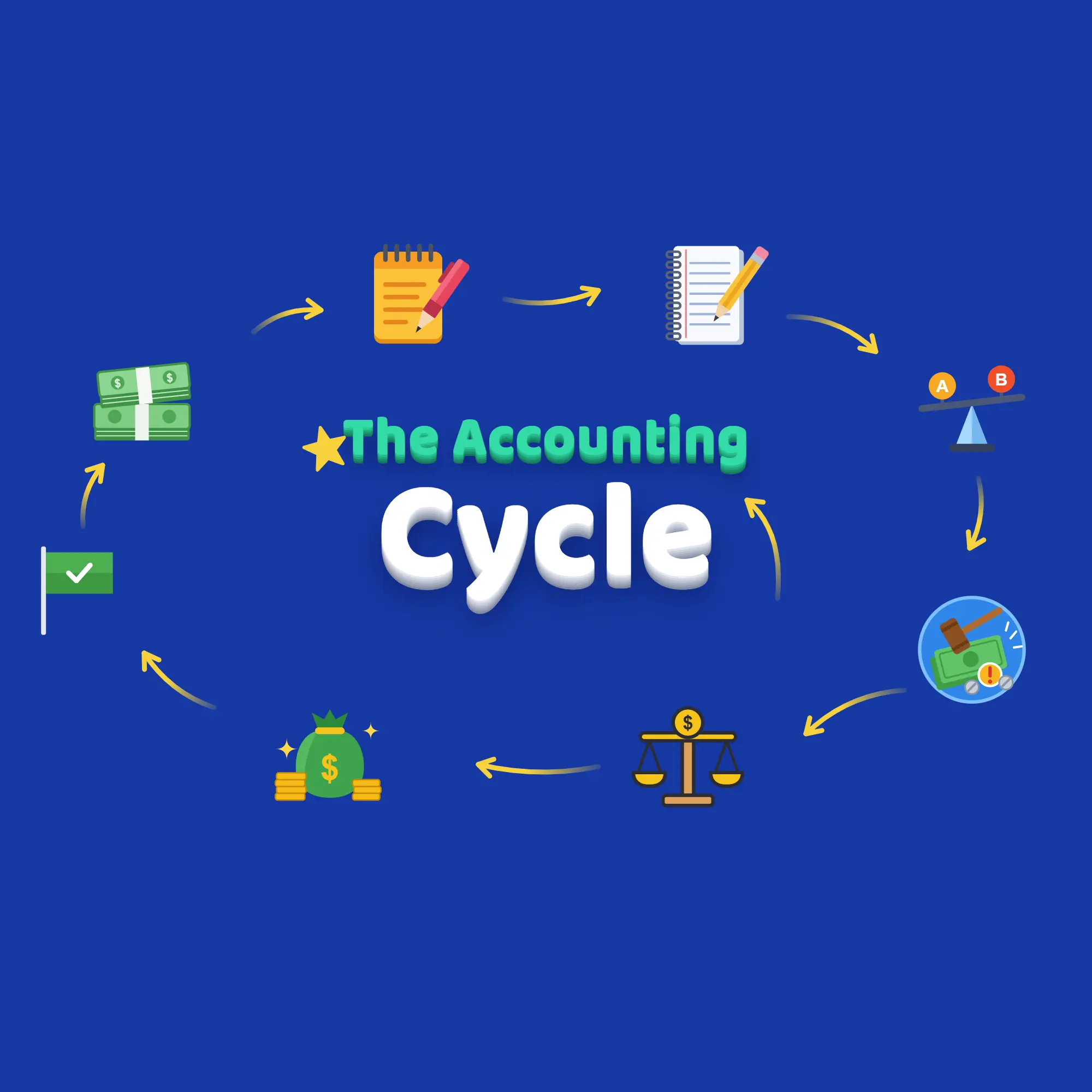
Recording accounting entries is one of the first and most important accounting procedures performed by an accountant. In this procedure, the accounting cycle continues and moves to its subsequent stages to achieve the rest of its objectives, where these transactions are posted after being recorded, their sources are known, and they are established with their accounts in the general ledger.
From the general ledger, which is considered the comprehensive guide for all the company's financial transactions, a trial balance is prepared in preparation for producing the final financial statements. But before that, some adjusting entries are usually made - which we have explained above - in case there are any accrued or deferred transactions.
Then, after that, the final trial balance is prepared, and the last step is performed, which is preparing the financial statements: income statement, balance sheet, cash flow statement, shareholders' equity statement, and comprehensive income statement, to be used in evaluating the company's financial performance and setting a financial plan and clear vision for its future.
It is worth noting that when starting a new accounting cycle, the first thing the accountant does is the opening entry. From here, we realize that the entire accounting system is based on the entry theory.
Objectives of accounting Entries
Understanding the objectives of accounting entries is an integral part of applying accounting principles and practices used to maintain the accuracy and transparency of financial information. The following is a detailed explanation of accounting entry objectives:
Ensuring Accuracy and Credibility of Financial Information
Implementing the principle of financial accountability is one of the main objectives of accounting entries, implementing internal and external audit controls to eliminate unauthorized fraudulent activities, and applying the necessary accounting rules and standards for recording financial transactions.
Achieving Transparency and Financial Disclosure
Accounting entries enhance, through their accurate records, the principle of transparency that requires companies to disclose and report financial information that concerns stakeholders and participating parties.
Compliance with Tax Requirements
Documenting and proving all sales and purchase transactions accurately through accounting entries helps with tax return filing purposes and preparing annual tax reports.
Data Analysis and Financial Report Preparation
Accounting entries help track local accounting standards and record all expenses and revenues according to general accounting standards. This accurate documentation of data in accounting entries helps track assets and accurately assess their value based on their consumption over time. This data also facilitates the book review process and verification of their financial accuracy and freedom from any manipulation or errors, with the aim of preparing comprehensive financial reports that accurately reflect company performance.
How Are Accounting Entries Posted to the General Ledger?
There is a set of steps that must be followed when posting accounting entries to the general ledger:
- Understanding the accounting entry before posting and ensuring the completeness of its items and parties, where it must contain one debit account and another credit account with appropriate amounts.
- Identifying the concerned accounts in each entry that will be posted to the general ledger, such as sales or purchase accounts.
- Posting each part of the entry to the concerned account in the general ledger, where debit accounts are recorded on the left side of the account in the general ledger, while credit accounts are recorded on the right side.
- Recording entry details such as date, description, and amount in the general ledger under the designated account.
- Verifying the balance after posting all entries and ensuring that the total of debit accounts equals the total of credit accounts in the general ledger.
- Recording the difference on the lesser side is what is known as the balancing process. The difference here represents the account balance in the general ledger. If the difference is recorded on the debit side of the account, then the balance is a credit, and the opposite happens if the difference is recorded on the credit side; then the balance becomes a debit.
What Types of Errors Occur in Accounting Entries?
Since accounting entries are among the main pillars upon which the accounting cycle is based, errors in them may affect the entire accounting process. This, in turn, calls for the necessity of caution and care when preparing these entries. Nevertheless, errors occur for several reasons, including oversight or ignorance. Among the most prominent of these errors are the following:
- Error in writing the financial amount, whether on the debit or credit side, which affects the accuracy of the accounting entry, although if the data of other entries is accurate, this error will be easily discovered.
- Overlooking recording a financial transaction from the beginning, since the role of accounting entries is to record every financial transaction, no matter how small or large.
- An error resulting from the accountant's ignorance or lack of experience in correctly determining the debit account and credit account for the financial transaction.
- An error resulting from performing an accounting operation incorrectly, such as addition or subtraction, also leads to the incorrectness of the accounting entry.
- Error in writing the correct account, such as switching debit with credit or vice versa, which leads to recording the transaction in the wrong account.
- Error in repeating the entry, i.e., recording it in the general ledger more than once.
- Errors are corrected through accounting entries, such as reversing entries, not through deletion.
Most Important Accounting Entries
Let us first agree that every accounting entry is important because otherwise there would be no need to record it. However, it is possible to highlight the most common and used accounting entries that have the greatest impact on determining the company's financial position. Among the most prominent of these entries are the following:
- Customer account entries
- Supplier account entries
- Salary and wage account entries
- Inventory account entries
- Capital account entries
- Purchase account entries
In addition to the most important accounting entries falling under these accounts, there are also depreciation account entries, custody account entries, loan account entries, installment account entries, and bank account entries.
Examples and Exercises on Accounting Entries
In the previous lines, we looked together at a set of individual examples of accounting entries while discussing their types. Now, let us review a comprehensive real example that includes several financial transactions so you can learn how to record accounting entries practically.
Comprehensive Practical Example of Daily Accounting Entries: The following operations took place in the Advanced Company, and what is required is to make the necessary entries for these operations:
- Establishing the company by depositing capital worth 5,000,000 riyals in the International Bank on February 1.
- Paying rent for the company's administrative headquarters, worth 20,000 riyals, for February.
- Depositing 50,000 riyals in the office safe from the current account on April 20.
- Purchasing equipment and machinery from the Local Company worth 100,000 riyals, 20,000 riyals paid in cash, 30,000 by check, and the rest on account, on June 1.
- Purchasing office furniture from the Furniture Company worth 70,000 riyals, 25,000 riyals paid by check, and the rest on account, on June 15.
- Paying the electricity bill worth 2,000 riyals in cash on August 1.
Recording the necessary daily accounting entries for these financial operations:
| Entry No. | Debit | Credit | Description |
|---|---|---|---|
| 1 | 5,000,000 | From A/c Bank | |
| 5,000,000 | To A/c Capital | ||
| (Depositing capital in the bank) | |||
| 2 | 20,000 | From A/c Administrative headquarters rent | |
| 20,000 | To A/c Cash box | ||
| (Paying rent in cash) | |||
| 3 | 50,000 | From A/c Cash box | |
| 50,000 | To A/c Bank | ||
| (Withdrawing 50,000 from bank and depositing in cash box) | |||
| 4 | 100,000 | From A/c Equipment and machinery | |
| To various accounts: | |||
| 20,000 | A/c Cash box | ||
| 30,000 | A/c Bank | ||
| 50,000 | A/c Creditors (Local Company) | ||
| (Purchasing equipment and machinery in cash, by check, and on account) | |||
| 5 | 70,000 | From A/c Office furniture | |
| To various accounts: | |||
| 25,000 | A/c Bank | ||
| 45,000 | A/c Creditors (Furniture Company) | ||
| (Purchasing office furniture by cheque and on account) | |||
| 6 | 2,000 | From A/c Electricity expenses | |
| 2,000 | To A/c Cash box | ||
| (Paying electricity bill in cash) | |||
| Total | 5,242,000 | 5,242,000 |
How to Learn Accounting Entries?
Accounting entries can be learned through a set of steps represented in:
- Understanding the basic principles of accounting and the components of accounting entries, such as debit and credit, assets and liabilities, and revenues and expenses.
- Studying accounting rules and understanding the steps of their application according to different accounting cases and transactions.
- Practical training in preparing accounting entries through using real examples and practical exercises on purchase entries, sales, payments, receipts, and others.
- Learning how to use popular accounting software that helps in recording and organizing accounting entries, most notably the Daftra program.
- Subscribing to training courses offered online or by academic institutes specialized in the accounting and financial management fields.
- Continuous learning of accounting rules, as well as becoming familiar with changes and updates occurring in international accounting laws and standards.
- Reading and researching accounting books and available scientific sources that cover accounting topics in detail.
- Joining available field training opportunities in accounting and finance departments in various companies, which support practical and professional experience.
How Does Daftra Make Your Accounting Entries Easier?
The general accounts program in Daftra provides you with comprehensive management of all accounting entries through a set of features and advantages, including manually adding entries where you can make adjustments to financial accounts according to accounting needs by recording entries manually, adding a description for the entry, adding a description for each account within it, and document attachment features. You can also rely on the system to automatically add entries for every financial transaction that takes place on the account and post them to the general ledger.
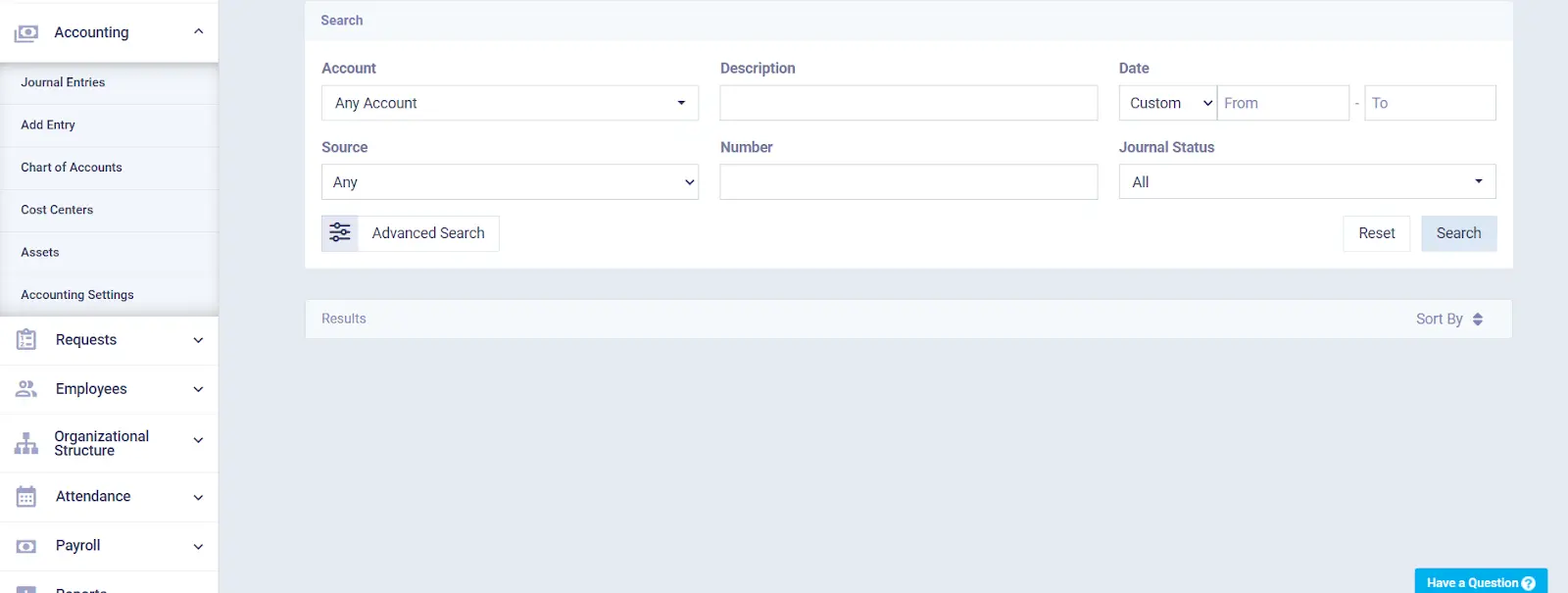
In addition to the features of recording entries automatically and manually, you can view the sources of automatic entries through a link that directs you to the source responsible for creating the entry so that you can easily track operations and review them, while displaying a list of cost centers related to the entry. This is in addition to the feature of customizing the entry template and the ability to modify and design it to suit the company's identity, as well as many customization advantages available through the template designer in the account.
Frequently Asked Questions
Are accounting constraints the same as accounting entries?
Accounting constraints and accounting entries differ in terms of their basic objective, where accounting constraints refer to the principles and foundations on which financial statements are prepared and presented, while the basic purpose of accounting entries is to record financial transactions in account books for financial statements and comply with accounting principles in recording.
What does cost center mean in accounting entries?
A cost center is used in accounting entries to allocate costs and revenues to specific parts separately. The purpose of cost center entries is to distribute general costs and determine the duration of their impact on financial statements and accounting reports, which helps in accurately analyzing the financial performance of different departments and making administrative decisions based on proper analysis of costs and revenues.











 Invoicing
 POS
 Offers
 Installments
 Sales Commission
 KSA E-Invoice Software
 EGY E-Invoice Software
 JO E-Invoice Software
 E-Invoice Software
 Chart of Accounts
 Asset Management
 Cost Centers
 Expenses
 Cheque Cycle
 VAT & Tax Compliance
 Product Management
 Purchases
 Purchase Cycle
 Suppliers
 Requisitions
 Stocktaking
 Organizational Structure
 Personnel Management
 Attendance and Leave
 Contracts
 Payroll
 Requests
 Work Orders
 Booking Management
 Rental and Unit Management
 Time Tracking
 Work Flow
 Lease Contracts
 Manufacturing Management
 Client Follow-Up
 Loyalty Points
 Points and Credits
 Memberships
 Insurance Management
 Daftra ERP Full App
 Point of Sales App
 Point of Sales for Desktop – Support Offline Mode
 AI Expenses Scanner App
 Employee Attendance, Sign & ESS App
 E-invoice Reader App
 Inventory Stocktaking App