




Table of contents:
- Key Summary
- What is the Inventory Documentation Cycle?
- Explanation of the Inventory Documentation Cycle
- Steps for Preparing the Inventory Documentation Cycle
- The Objective of Creating an Inventory Documentation Cycle
- The Importance of the Inventory Documentation Cycle
- Types of Inventory Documentation Cycle
- How Daftra Helps You Prepare the Inventory Documentation Cycle
- Conclusion
- Frequently Asked Questions
Inventory and resource management are essential for the successful operation of any business, regardless of its field of activity. By controlling all inventory-related operations and stages, supply chain management can be handled efficiently, reducing costs and increasing profits. But the most important question here is: what accounting method can be used to organize and manage inventory effectively?
The answer to this question is clear: it lies in the inventory documentation cycle, which cannot be overlooked in managing any commercial activity to achieve a balance among inventory, purchase orders, costs, and sales.
Therefore, in this article, we will explain what the inventory documentation cycle is, its purpose and importance, the steps to prepare it, and its types, and present a model for preparing the inventory documentation cycle.
What is the Inventory Documentation Cycle?
It is a series of sequential processes that include receiving the resources and materials necessary for production and manufacturing, ensuring their quality, properly storing them, controlling inventory levels by tracking and monitoring incoming and outgoing movements, and sorting and updating inventory periodically.
With Daftra software, inventory can be fully managed and monitored at any time, from anywhere.
All of this aims to meet the company’s specified material needs in the required quantities at the right time, to avoid stock shortages or excess inventory that can lead to damage and loss.
Explanation of the Inventory Documentation Cycle
The inventory documentation cycle concerns the flow of products in and out of inventory. Sometimes it is integrated with the purchasing cycle, and at other times it is treated separately. The inventory documentation cycle helps in preparing the basic accounting entries to document expenses and revenues related to products in the warehouse.
In an accounting context, the term “documentation” refers to supporting documents that record every step in the warehouse cycle. It is not limited to issuing a purchase invoice when receiving goods from the supplier and a sales invoice when delivering goods to the customer.
Rather, the concept of the inventory documentation cycle is broader than that, as it includes issuing several documents and records, some of which are intended to define goods in warehouses, while others clarify the results of product inspection, what has been received, and what has been returned to the supplier.
As well as reports showing the results of sorting and stocktaking of inventory and other extensive stages that we will explore in detail in the following lines.
Steps for Preparing the Inventory Documentation Cycle
After issuing a purchase order to the supplier and beginning to receive the products, the inventory documentation cycle begins to determine whether to accept or reject the shipment from the outset.
This cycle and its sequence differ from one activity to another, but there are some basic steps that are followed when preparing the inventory documentation cycle, regardless of the nature of your activity. These steps are as follows:
1- Inspection and Receiving of Goods
This takes place before accepting the shipment, with the aim of excluding damaged items, returning them to the supplier, and proving receipt of the accepted quantity and acknowledging its quality.
2- Item Identification
An item card is created for each product that has been approved for receipt from suppliers and entered into the warehouses, provided that this identification card includes the full details of the product.
3- Addition Voucher for Approved Products
This document confirms the final receipt of products, in which the warehouse manager assumes responsibility for the products from that point forward and releases the supplier from liability for any visible product quality issues discovered during inspection.
4- Return Voucher for Damaged or Rejected Goods to the Supplier
This voucher records and proves the damaged or non-conforming products that will be returned to the supplier.
The warehouse keeper collects all information about the damaged or returned goods, counts, classifies, and records them, and clarifies the reasons for the return in a statement whose original is sent to the finance department and the warehouse management so that approval and authorization to return them to the supplier can be obtained.
The warehouse keeper records data on the card for each item of goods to ensure the balance on each item card matches the actual balance of items present in the warehouse.
5- Goods Return Voucher from Customers
When your customer refuses to receive the goods or discovers defects in the product, you issue a document proving the return of the product to your warehouse. This document is known as an “Incoming Items Return Authorization” and includes all returned items, their descriptions, the customer’s name, the date, and the reasons for the return.
6- Issue Voucher to the Customer
This voucher is issued to the customer for direct sales. If the inventory consists of raw materials that will be re-entered into your manufacturing cycle, your employees issue an issue voucher to the recipient.
7- Transfer Voucher Between Sub-Warehouses
If you own more than one warehouse, you must issue a document when transferring goods from one warehouse to another, even if all warehouses are under your ownership.
8- Warehouse Control Accounts and Stocktaking
These are documents issued periodically for evaluation purposes and to ensure the safety and sufficiency of inventory.
Read also:
What are periodic inventory and perpetual inventory, and the difference between them
What are inventory adjustments in accounting, and what are their objectives
The Objective of Creating an Inventory Documentation Cycle
It tracks a set of interrelated data within their workflow, providing insights that do not appear in journal entries or routine accounting transactions. Therefore, there are many documentation cycles in financial accounting, such as:
- Sales documentation cycle
- Purchasing documentation cycle
- Inventory documentation cycle
The Objectives of Creating an Inventory Documentation Cycle:
- Identifying warehouse departments: Understanding the departments responsible for each step of the inventory cycle, and identifying the steps that involve more than one department, such as purchase returns, where both the purchasing and inventory departments collaborate.
- Control: Enhancing control by having sequential documents for every step of the inventory cycle, which reduces the likelihood of errors and makes it easier to identify responsibility.
- Improving financial performance quality: Assigning each group of documents to a responsible employee enhances control and improves the quality of financial and administrative performance, as tracking document movement between departments keeps management fully aware of operations.
- Providing all information: Providing accurate and clear data about liabilities, purchases, returns to suppliers, sales returns back to inventory, shortages, excess stock, or damaged goods, with all these details presented in comprehensive reports.
- Supporting decision-making: Facilitating decision-making related to inventory management by providing sufficient documentation and evidence for each step of the documentation cycle.
- Defining document ownership: Specifying which departments are responsible for holding original documents and which are allowed to keep copies of inventory-related documents.
The Importance of the Inventory Documentation Cycle
The inventory documentation cycle offers many benefits and has a significant impact, including organizing operations, reducing costs, achieving supply-demand balance, and improving the customer experience. Its importance includes:
1- Organizing various operations: It helps organize purchasing and supply processes and identify production needs and future inventory requirements.
2- Reducing costs: It reduces costs by monitoring inventory levels, managing resources efficiently, minimizing purchasing waste, and improving distribution and sales opportunities, which leads to higher revenue and profits.
3- Improving customer service level: Monitoring inventory helps provide for customer needs quickly, improving their experience and satisfaction, and building a positive company reputation.
4- Balancing supply and demand: It helps maintain the balance between supply and demand levels to avoid shortages or excess inventory.
Types of Inventory Documentation Cycle
The documentation cycle consists of an input stage (purchasing and dealing with suppliers) and an output stage (sales and dealing with customers), resulting in two types:
Inventory Documentation Cycle for Purchases
This is the first stage of the inventory documentation cycle, aimed at documenting all purchasing processes with official documents. These documents may be recurring for routine purchases or issued occasionally for non-routine purchases.
Steps of the Inventory Documentation Cycle for Purchases:
The purchasing documentation cycle goes through several stages, starting from warehouse notification to receiving, inspection, issuing permits, notifying accounting, and returns:
- Warehouse notification: After approving supplier quotations and issuing a purchase order, the warehouse must be notified of the items, quantities, and delivery date to prepare for receiving the goods.
- Receiving by storekeeper: When the goods arrive, the storekeeper receives them and signs for receipt.
- Inspection: The items are sent to the inspection department, and approval is not finalized until quality checks are completed and any defective items are identified and returned.
- Issuing receiving permit: After inspection, an addition (receiving) permit is issued to store the products in their permanent location.
- Notification to the accounting department: Accounting and purchasing departments are notified that goods have been received and added to inventory.
- Return notice: Issued for defective or non-conforming products.
Inventory Documentation Cycle for Sales
In this stage, the company deals directly with the customer when selling products, or items are issued to production for manufacturing.
Steps of the Inventory Documentation Cycle for Sales:
The sales documentation cycle includes several stages, such as issuing release orders and obtaining approvals from sales, warehouse, and production departments:
- Issue (release) permit: An issue permit is created and requires approval.
- Sales department approval: If inventory is issued for direct sales, the sales department must approve.
- Warehouse management approval: If inventory is transferred to another company's warehouse, it is required.
- Production department approval: If raw materials are issued for manufacturing, production management must approve them.
How Daftra Helps You Prepare the Inventory Documentation Cycle
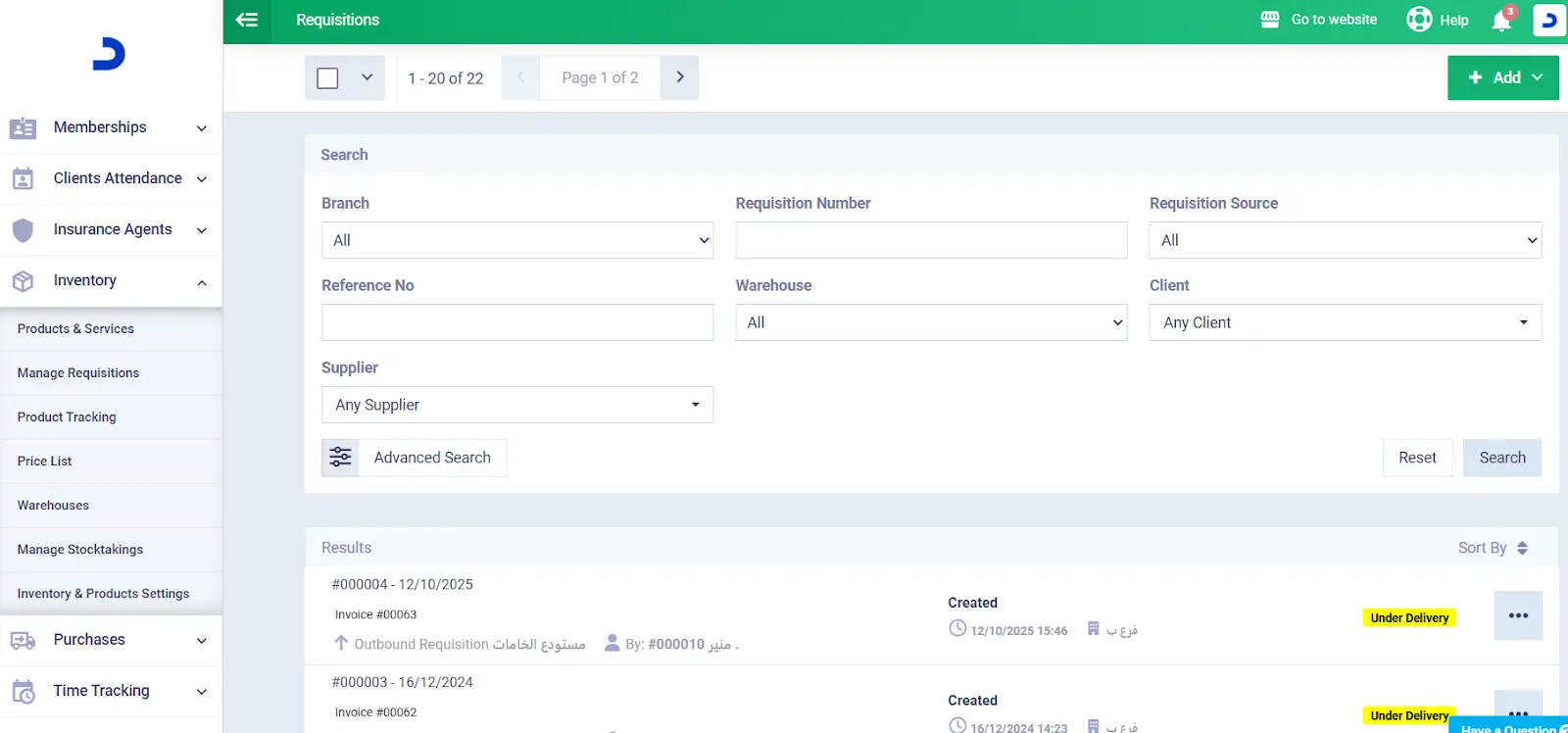
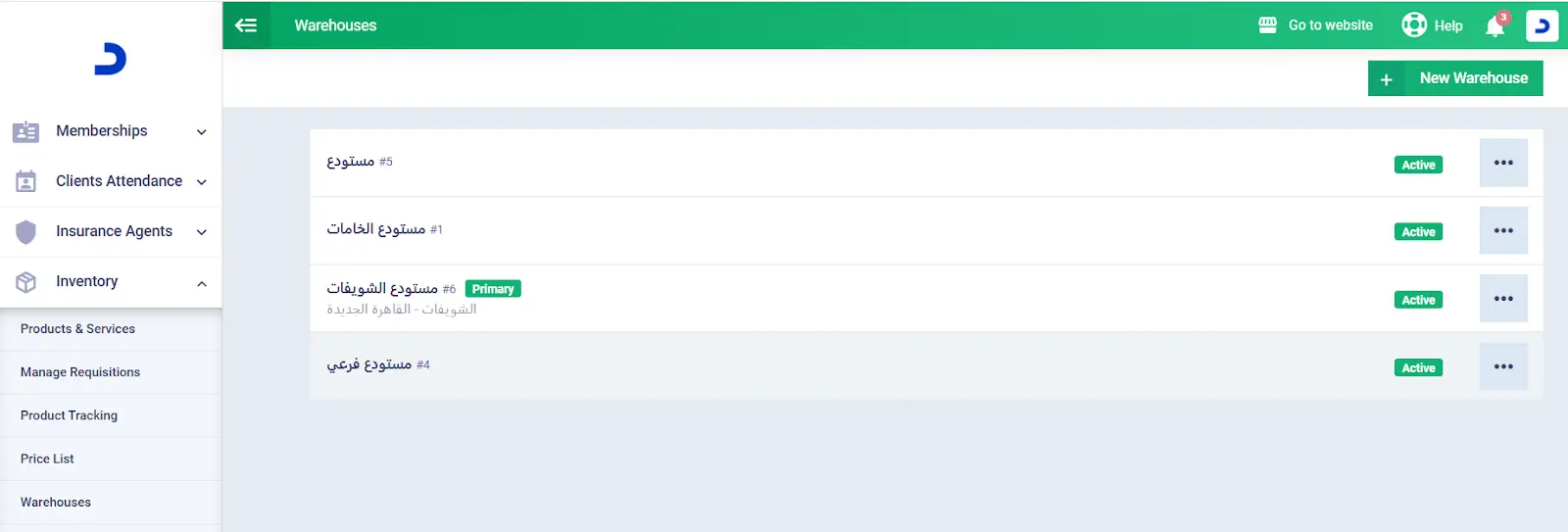
Through the Inventory and Warehouse Management dashboard in the integrated Daftra accounting system, you can use its user-friendly interface to manage all aspects of inventory. This starts with adding products and services in unlimited quantities, with clear details for classification, pricing, and quantities, and allows you to edit information at any time with just a few simple clicks, saving time and effort.
The system also allows you to retrieve products in inventory and view their quantity details and units using fully supported barcode devices. In addition, the system provides automatic messages and notifications when stock levels of any product are about to run out or decrease. It also helps you track inventory movement and consumption using the product or shipment number.
All of this, along with many other features, is provided by the system in an integrated way to help you manage all aspects of the inventory and warehouse documentation cycle in the simplest, most accurate way.
Conclusion
In conclusion, the inventory documentation cycle is not a fixed, mandatory process. Rather, it is a flexible accounting tool that requires continuous evaluation and improvement in line with the nature of work within the organization.
The inventory documentation cycle must also adapt to the evolving patterns of modern technological use, particularly cloud accounting software and Enterprise Resource Planning (ERP) systems, to ensure all steps are carried out properly and to obtain accurate results in the shortest time and at the lowest cost.
Finally, if you want to improve your company’s financial performance and ensure the success of your business, you should pay attention to the inventory documentation cycle as one of the fundamental stages of your organization's accounting system.
Make sure to follow best practices and implement appropriate accounting tools and software to establish your inventory documentation cycle for resources, products, goods, and more, to ensure the success of administrative operations related to supply chains, procurement, storage, and distribution.
This will positively impact the efficiency of other operational and production processes and help achieve your institutional goals and planned profitability.
Frequently Asked Questions
What is a warehouse return authorization document?
A warehouse return authorization document is a document or form that proves the return of a product to the warehouse due to customer rejection, defects, or any other reasons that lead to returning it.
What are the most important documents used in the warehouse department?
- Purchase request document used to specify the required materials with all details.
- The incoming goods register is used to record materials arriving at the warehouse.
- Receiving committee report.
- Rejection document when returning any item that does not meet specifications.
- Warehouse receiving document.
- Issue a document that shows items issued from the warehouse to other departments.
- Material transfer authorization to move goods from one place to another.
- Material exit permit.
- Packing list document showing shipment contents.
- Inventory reports containing all inventory details and contents.
- Supplier notification sent by the supplier.
What are the types of warehouse reports?
Warehouse reports include informational reports that provide detailed product information, management reports that provide analytical data, and time-based reports that help you review your inventory and its status around the clock.
What is the warehouse documentation set?
The documentation set is a group of papers and documents that provide all information and movements within the warehouse and cover all stages it goes through.
What factors should be considered when determining the documentation cycle?
- The level of document complexity (whether simple or complex).
- Types of documents.
- Defining the steps and responsible parties in the documentation cycle.
- Controlling tasks and whether they are automated or manual.
- Providing protection for documents and records.
- Ensuring easy access.
What is the disbursement documentation cycle?
It is a complete cycle of procedures and processes followed by organizations to track financial disbursement operations.
What is the supplier accounts documentation cycle?
It refers to the processes and procedures carried out for purchasing from suppliers.
What is documentary auditing?
Documentary auditing is the review of documents related to the documentation cycle to ensure the accuracy of all data and information they contain.











 Invoicing
 POS
POS Offers
 Installments
 Sales Commission
 KSA E-Invoice Software
 EGY E-Invoice Software
 JO E-Invoice Software
 E-Invoice Software
 Chart of Accounts
 Asset Management
 Cost Centers
 Expenses
 Cheque Cycle
 UAE VAT-Tax
 Product Management
 Purchases
 Purchase Cycle
 Suppliers
 Requisitions
 Stocktaking
 Organizational Structure
 Personnel Management
 Attendance and Leave
 Contracts
 Payroll
 Requests
 Work Orders
 Booking Management
 Rental and Unit Management
 Time Tracking
 Work Flow
 Lease Contracts
 Manufacturing Management
  Client Follow-Up
 Loyalty Points
 Points and Credits
 Memberships
 Insurance Management
 Daftra ERP Full App
 Point of Sales App
 Point of Sales for Desktop – Support Offline Mode
 AI Expenses Scanner App
 Employee Attendance, Sign & ESS App
 E-invoice Reader App
 Inventory Stocktaking App