


Posted on 14 September 2026
Activity-Based Costing Template
- An Activity-Based Costing Template helps determine the optimal selling price of a product or service based on the total production cost in addition to the desired profit margin.
- It is used to support decisions on whether the production of a specific product should be increased or reduced, based on production cost and expected demand.
- It also helps assess the company’s operational efficiency by comparing actual costs with expected costs.


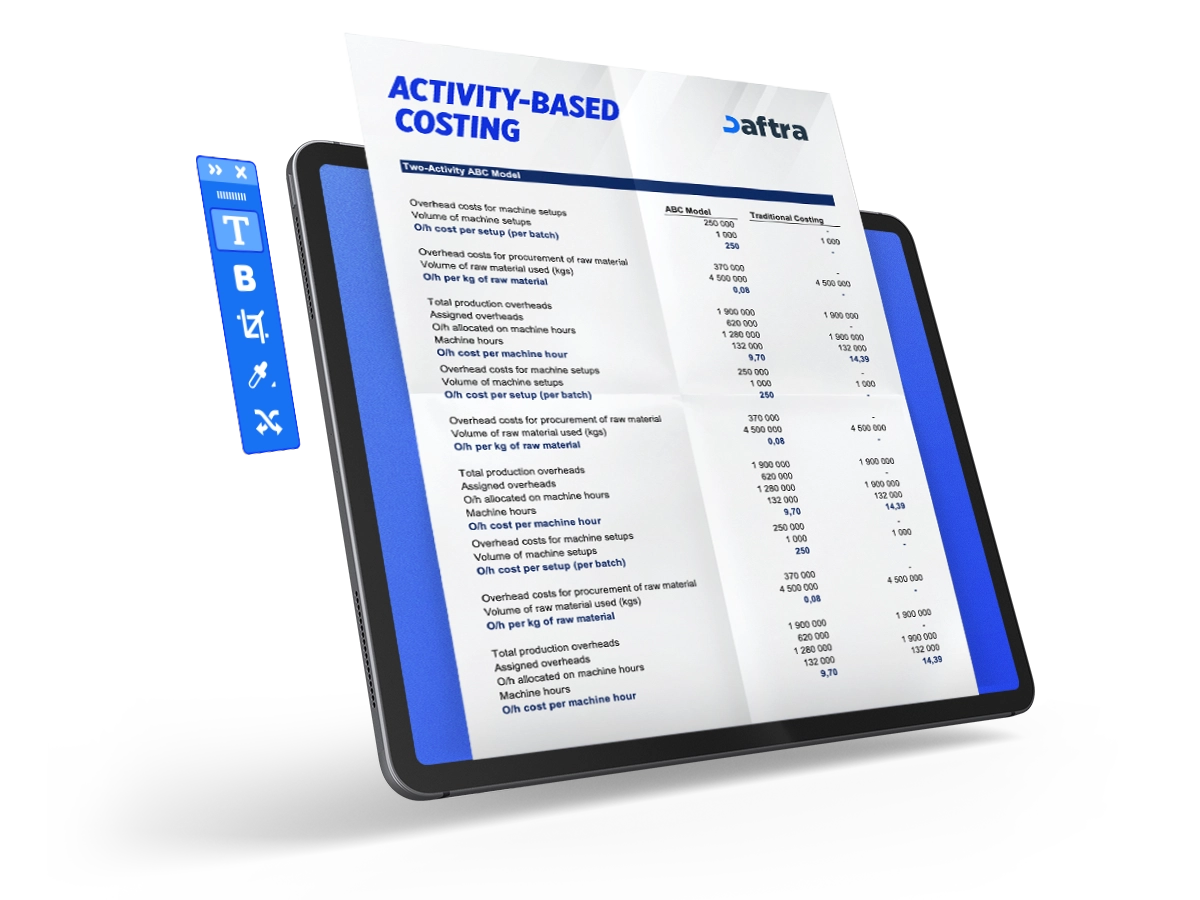
 Keep your costs organized and make better business decisions with Daftra.
What Is an Activity-Based Costing Template?
An Activity-Based Costing Template is an approach used in cost management to calculate the total cost of products or services based on the activities they require. The purpose of this template is to break down the total cost of a product or service into its core components and understand how cost is generated at the activity level.
An Activity-Based Costing Template is useful for improving cost management and supporting informed strategic decisions. It can be used to examine how costs are distributed across different products or services and to identify the activities that contribute significantly to the total cost, which allows for improvements in production processes and more effective cost management.
What Are the Elements of an Activity-Based Costing Template?
An Activity-Based Costing Template includes several essential elements for understanding and analyzing production or service costs based on activities. These elements include the following:
1- Activities
These are the actual activities carried out within the organization to produce products or provide services, such as preparing raw materials, assembly, inspection, and marketing.
2- Cost of Activities
These are the direct and indirect costs associated with each activity. The cost of each activity must be calculated separately, including the cost of raw materials used, labor, and any other expenses related to those activities.
3- Activity Rates
These represent the amount of activity required by different products or services. They are usually determined based on expected quantities or the time required for each activity. They also represent the cost of each activity per unit, such as labor hour or production unit. These rates are calculated by dividing the cost of the activity by the activity volume, such as the number of hours or units produced.
4- Activity Units
Activity units are the units used to measure the quantity of activity. These units may vary depending on the type of activity, such as number of hours, number of production cycles, number of service customers, and so on.
5- Cost Allocation
The cost of each activity is allocated to products or services based on activity rates. This helps determine the cost of each unit of product or service.
How to Use an Activity-Based Costing Template?
Using an Activity-Based Costing Template is useful for improving cost management and making strategic decisions. The main steps for using this template are as follows:
1- Identify the activities
First, identify and classify the core activities required by your operations. These activities should include all steps necessary to produce products or deliver services.
2- Calculate the cost of activities
Determine and evaluate the cost of raw materials, labor, and any other expenses associated with each activity. This information may be based on accounting records and cost reports.
3- Calculate activity rates
Calculate the activity rates for each activity. These rates represent the cost of the activity per specific activity unit, such as labor hour or production unit. This requires dividing the activity cost by the number of its units.
4- Allocate the cost
Allocate the cost of each activity to products or services based on its rates. This allocation may be direct or indirect, as needed. This is the main purpose of an Activity-Based Costing Template.
5- Analyze and make decisions
With the help of this information, you can analyze the total cost of different products or services. You can also identify the activities that contribute significantly to cost and focus on improving them. This helps in making strategic decisions, such as improving production processes, setting product prices, or giving direction for cost savings.
6- Implement improvements
Based on the previous analysis, implement the necessary improvements in your operations to improve efficiency and reduce costs.
7- Follow up and evaluate
Monitor the impact of the improvements on costs and performance. You may need to conduct periodic evaluation of the template and make the necessary adjustments.
Using an Activity-Based Costing Template can help achieve significant improvements in efficiency and cost management by analyzing activity costs accurately and making better strategic decisions.
Why Is an Activity-Based Costing Template Important?
An Activity-Based Costing Template is important for several reasons:
1- Guiding decisions
The template helps analyze cost accurately at the activity level, allowing companies to understand how cost is created and distributed. This can support informed strategic decisions regarding process improvement and cost reduction.
2- Improving efficiency
By analyzing activities and allocating costs, companies can identify the activities that consume the most resources and can be improved effectively to increase efficiency.
3- Determining product costs
An Activity-Based Costing Template can be used to calculate product or service costs more accurately. This helps in setting prices for specific products or services in a way that supports the target profit margin, which in turn can improve the company’s competitiveness.
4- Improving planning and monitoring
This template helps improve financial planning and performance monitoring by providing a better understanding of cost components and their analysis.
5- Guiding pricing strategies
The template provides a better understanding of the cost of producing specific products or delivering specific services. This can help in setting pricing strategies that reflect cost and meet profit objectives.
6- Improving financial reporting
An Activity-Based Costing Template explains how cost is created and distributed in financial accounting reports, which increases transparency and accuracy in reporting.
Overall, an Activity-Based Costing Template contributes to a better understanding of how costs are created and distributed, which helps companies improve cost management and make informed and effective strategic decisions.
Who Benefits from an Activity-Based Costing Template?
An Activity-Based Costing Template is beneficial to several groups of stakeholders within companies and organizations. Some of them include:
- Company management: Company managers and executives benefit from Activity-Based Costing by analyzing activity costs and cost allocation, which helps them make strategic decisions related to improving efficiency and increasing profitability.
- Accountants and finance teams: Accountants and finance professionals can use this template to analyze and explain activity costs and include this information in financial reports.
- Production managers: Production managers can use an Activity-Based Costing Template to improve planning and resource management with greater efficiency. This is reflected in better scheduling and reduced waste.
- Marketing managers: Marketing managers can benefit from this template to understand the cost associated with marketing efforts and estimate the expected costs of advertising campaigns.
- Quality managers: Quality managers can use this template to analyze the cost of activities related to quality control and compliance with standards.
- Supply chain and logistics managers: Supply chain and logistics managers can use an Activity-Based Costing Template to improve supply operations and supply chain management.
- Project managers: Project managers can use this template to understand and estimate the cost associated with project execution and resource planning.
- Investors and shareholders: External investors and shareholders can benefit from the template by understanding how costs are managed within the company and how costs affect financial performance.
In general, anyone working in business management and strategic decision-making can benefit from an Activity-Based Costing Template to understand and analyze the cost of operations and activities and make informed decisions to improve efficiency and increase profitability.








 Invoicing
 POS
POS Offers
 Installments
 Sales Commission
 KSA E-Invoice Software
 EGY E-Invoice Software
 JO E-Invoice Software
 E-Invoice Software
 Chart of Accounts
 Asset Management
 Cost Centers
 Expenses
 Cheque Cycle
 UAE VAT-Tax
 Product Management
 Purchases
 Purchase Cycle
 Suppliers
 Requisitions
 Stocktaking
 Organizational Structure
 Personnel Management
 Attendance and Leave
 Contracts
 Payroll
 Requests
 Work Orders
 Booking Management
 Rental and Unit Management
 Time Tracking
 Work Flow
 Lease Contracts
 Manufacturing Management
  Client Follow-Up
 Loyalty Points
 Points and Credits
 Memberships
 Insurance Management
 Daftra ERP Full App
 Point of Sales App
 Point of Sales for Desktop – Support Offline Mode
 AI Expenses Scanner App
 Employee Attendance, Sign & ESS App
 E-invoice Reader App
 Inventory Stocktaking App