



Table of contents:
When we talk about enhancing profits, we must look at sales methods and techniques, among which personal selling is undoubtedly one of the most important, given its unique approach and distinctive style that humanizes the sales process. So, what is personal selling? What are its characteristics? And how can it be applied in practice?
These questions and more will be answered in the following lines of this article, so keep reading.
What is the definition of Personal Selling?
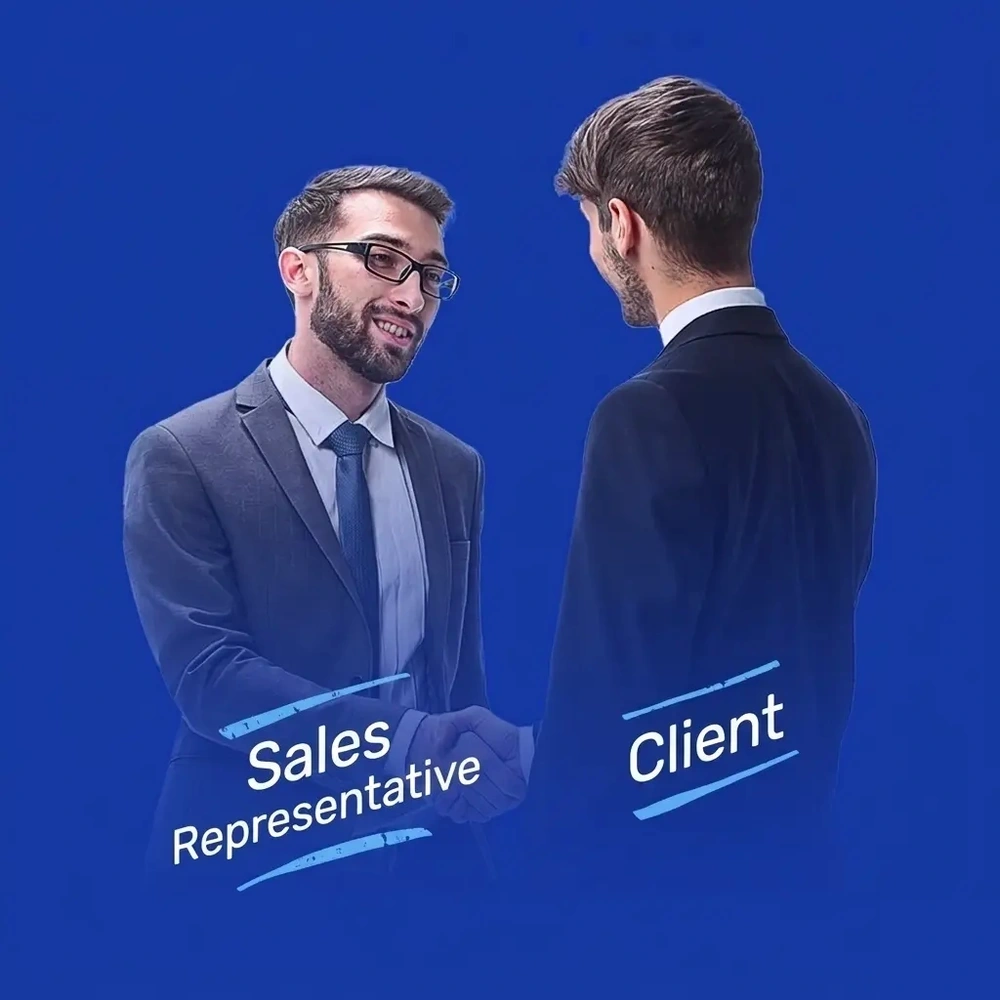
Personal selling refers to a sales method based on personal communication between the salesperson and the customer, face-to-face or through any visual or audio communication channel.
Accordingly, the nature of personal selling is to humanize the sales process, where the salesperson uses their persuasion skills and leverages the customer’s personal entry points to convert them from a potential customer into an actual customer.
Face-to-face selling helps strengthen the customer’s relationship with the product or service, ensuring loyalty and future repeat business.
What are the objectives of personal selling?
The importance of personal selling lies in its main goal: converting potential customers into actual customers and increasing profits. Accordingly, there are several specific objectives of personal selling that ultimately serve this main goal, including the following:
1- Convincing the customer of the product or service
A professional salesperson succeeds in closing this type of sale by fully convincing the customer of the product or service. Their personal selling skills help them in this, and here the difference between a professional and a beginner salesperson becomes clear.
2- Removing any confusion or ambiguity for the customer
One of the salesperson’s goals during the personal selling process is to remove any ambiguity the customer may find in the service or product. Direct communication helps in achieving this.
3- Achieving a profitable deal
Negotiation is the key to reaching a profitable deal. The customer should not feel forced or dissatisfied after completing the purchase, and the company’s interests must also be taken into account.
4- Building a long-term relationship
Ensuring customer loyalty is essential to the customer lifecycle and to the relationship with the brand, as it guarantees future sales.
The customer may also become an advocate for the brand and attract other customers through word-of-mouth.
What are the skills of personal selling?
To excel in completing a face-to-face sale, you should follow certain procedures and possess certain skills, which can be summarized as follows:
- Paying attention to personal appearance.
- Understanding the product well.
- Calmness and emotional stability.
- Managing the conversation.
- Persuasion skills.
- Self-confidence.
In addition to these skills, you should address any customer concerns about the product and highlight the benefits they will gain from it. Also, do not forget to ensure their satisfaction with the service or product after completing the sale, to guarantee their loyalty to the company and encourage repeat business in the future.
What are the characteristics of personal selling?
Personal selling has certain characteristics that define its features and distinguish it from other types of selling. The following are the most important characteristics of consultative selling:
- Personal communication between the customer and the salesperson.
- A high probability of sales success.
- The cost in time and money to complete the sales process.
- Suitable only for professional salespeople.
- The necessity of accurately identifying the target customer.
When closely examining the traits of personal selling, it becomes clear that all of them stem from the first trait: personal communication between the customer and the salesperson, which helps convince the customer and address their concerns and objections.
On the other hand, this leads to increased costs represented in the employee’s salary and time, which in turn requires selecting the best salespeople for this task and carefully identifying the customer who will be contacted personally.
What are the advantages of personal selling?
Personal selling is one of the distinguished types of selling because it is based on personal communication between the customer and the salesperson, and from this core feature stem the advantages of personal selling, which are:
1- Greater opportunity for persuasion
Direct discussion provides a better opportunity to explain the advantages of the product or service, noting that the salesperson’s persuasion skills play a central role in achieving a positive outcome.
2- Building a strong relationship with the customer
A professional salesperson builds a strong relationship with the customer through their communication skills, ensuring satisfaction and brand loyalty. This is supported by the possibility of direct conversation.
3- Responding to doubts and objections
Each customer has a purchasing behavior and nature different from others, and according to this behavior, the salesperson should deal in a way that turns weaknesses into strengths, using the opportunity of personal dialogue conducted with the customer.
4- Providing support in the best possible way
The opportunity for direct dialogue the customer has allows them to request the support they need, and it also helps the salesperson focus on the customer’s questions and provide the necessary support.
Read also: What is direct selling, its types and advantages, and the difference between it and indirect selling
What are the steps of personal selling?
There are 7 basic stages that answer how personal selling is carried out, and each step plays a vital role in the success of the sales process. These steps are:
1- Prospecting (obtaining a list of potential customers)
In this step, a list of potential customers should be compiled to schedule appointments. As previously explained, accuracy in selecting these potential customers is essential to save time and cost.
2- Preapproach (the stage before meeting the customer)
This is the stage before the sales meeting, in which the salesperson prepares by studying the customer’s profile and compiling data to present during the meeting.
3- Approach (meeting the customer)
This stage begins when the salesperson meets the customer, and it is very important because the salesperson must break the ice at the first meeting, identify points of agreement to start the conversation, and create a friendly interaction.
4- Presentation (presenting the product or service)
Here, the salesperson begins to present the product or service's advantages and features, and how it can help solve a problem or improve a situation, to persuade the customer to make a purchase decision.
5- Handling objections
After discussing the product or service, it is very likely that the customer will ask some questions or raise objections. At this stage, the salesperson’s role is to correct these misconceptions or answer any questions the customer may have.
6- Closing
The closing stage is one of the most important stages of personal selling. Why? Because it helps the customer make the purchase decision. Here, the role of the professional salesperson becomes evident, as they can guide the customer to the necessity of buying and their need for it.
7- Follow-up
To ensure professional sales management, it is important to recognize that the personal selling process does not end with the purchase decision. Rather, the salesperson should ensure that the customer does not deal with the brand only once but becomes a regular customer. This is achieved through continuous follow-up of their satisfaction with the service or product they received and providing support when needed.
The Difference Between Personal Selling and Direct Marketing
The main difference between personal selling and direct marketing lies in their focus mechanism. Personal selling focuses on direct customer interaction to complete sales transactions and maintain long-term relationships.
On the other hand, direct marketing focuses on reaching a wide target audience through various channels. In general, the functions of personal selling and the uses of direct marketing complement each other to achieve the highest level of sales and profits.
Now, let us highlight the most prominent differences between personal selling and direct marketing:
| Personal Selling | Direct Marketing |
| An approach based on personalizing and humanizing the sales process | An approach based on targeting customers by the manufacturer or producer without retail intermediaries |
| Its tool is the persuasion skills possessed by the salesperson and their personal experience in completing sales | Its tools are email, promotional brochures, social media platforms, and advertising campaigns |
| Limited reach to a small number of potential customers | Wide reach to a large number of potential customers |
| The sales message is fully customized for the individual customer | The sales message is not fully customized for the individual customer |
| High probability of building a close relationship with the customer | The probability of building a close relationship with the customer exists, but it is not strong |
.webp)
In conclusion, you should know that sales success depends not only on the sales method but also on your ability to manage all company resources properly. Here comes the role of resource planning systems, such as the sales management program from Daftra, which helps you control every detail in your company from anywhere via your computer screen.
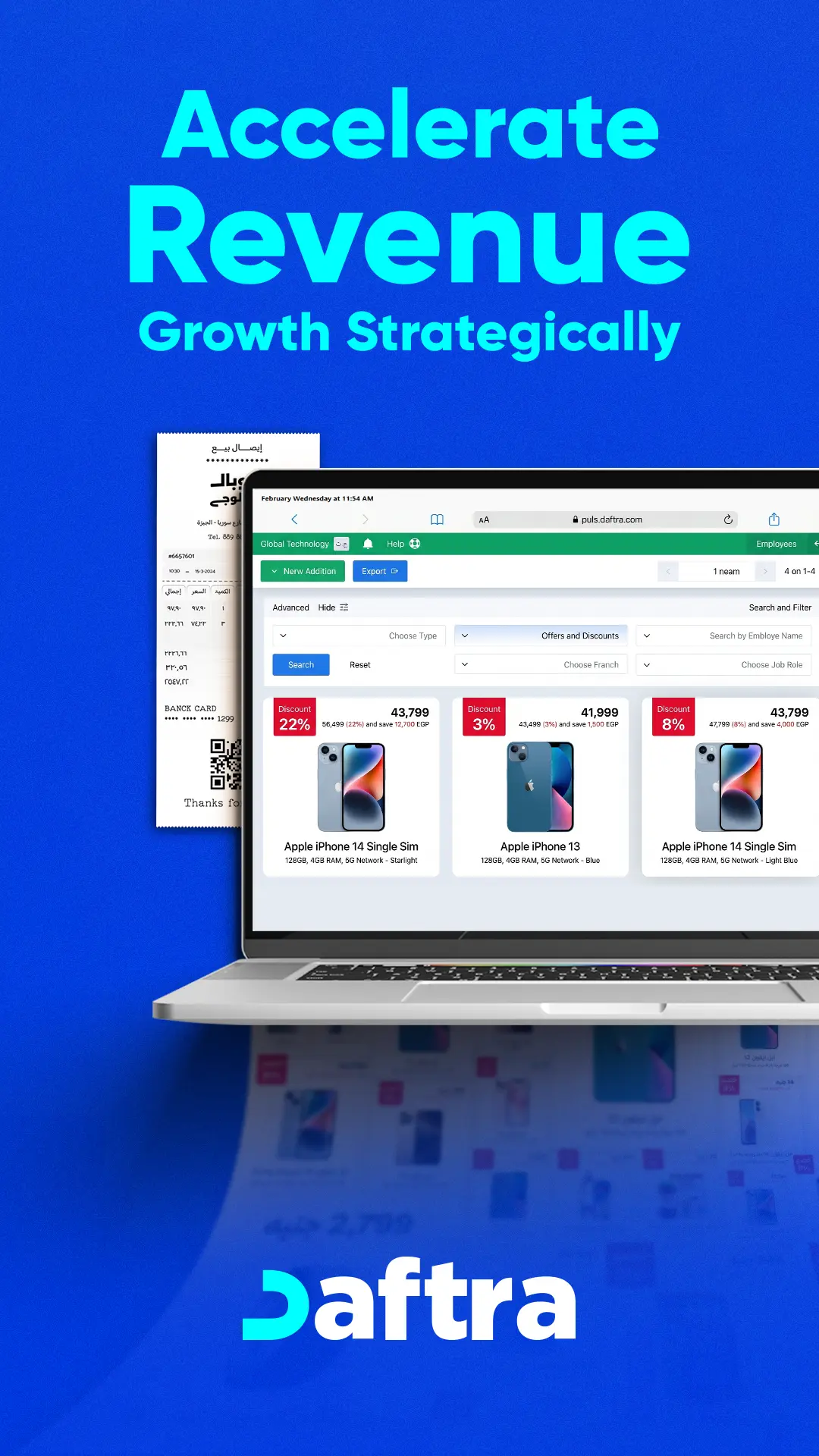
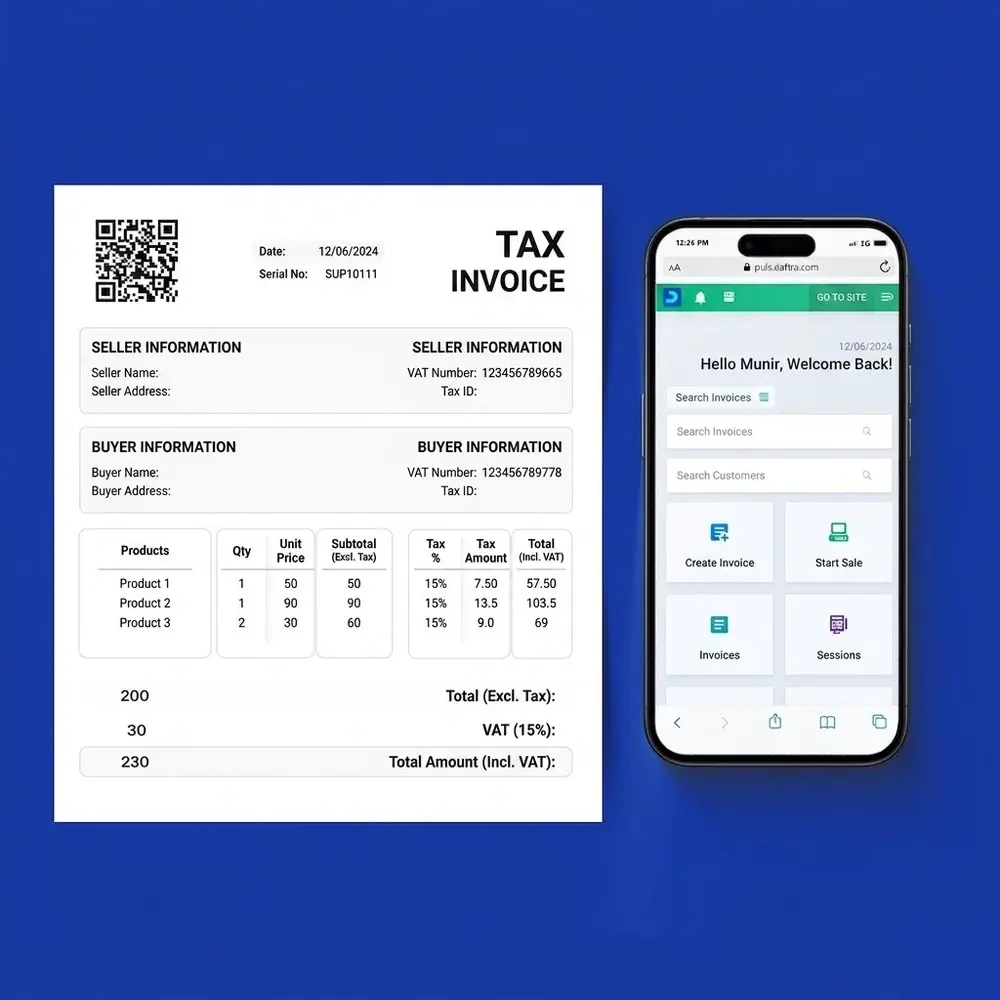
Through the Daftra system, you can manage your sales and monitor results to achieve your targeted profits, organize your customers’ installments, add offers and discounts, and manage your employees, including sales representatives, while linking all of this to general and financial accounts, providing you with a complete experience that ensures your advancement to a higher level in the business world.
Frequently Asked Questions
What are the disadvantages of personal selling?
- High costs are required for training the sales team, their salaries, and travel expenses to reach customers.
- Personal sales representatives face pressure to achieve sales targets.
- Sometimes, personal selling limits the ability to reach many customers at once.
- Face-to-face selling relies on the salesperson’s skills, which may lead to performance variation among sales employees.
- Facing certain challenges in handling customer objections and convincing them to buy.
What are the methods of personal selling?
Personal selling strategies require focusing on building relationships and providing real value to customers. By following personal selling methods, better results can be achieved, and long-term relationships with customers can be built. The most prominent of these methods include:
- Personal visits to potential customers and direct product presentations.
- Preparing customized presentations to explain the product and its benefits.
- Fast and direct telephone communication with customers.
- Personal meetings with customers to discuss their needs and provide solutions that suit them through the products and services offered in personal selling.
- Participation in exhibitions, seminars, and trade events to meet potential customers.
- Providing free trials to customers to build a bridge of trust and credibility with them, and encourage them to buy.
- Customizing special offers and discounts for each individual customer.
What is the difference between advertising and personal selling?
The main difference between advertising and personal selling lies in the method of communication used to present the product or service.
Advertising uses impersonal communication methods, whether visual or audio, through various media channels, and then broadcasts or publishes the desired marketing message.
Personal selling, on the other hand, focuses on personal meetings and observation between the salesperson and the buyer to complete the sale.
Is there a difference between personal selling and personal promotion?
Yes, there is a difference. Personal selling is based on direct interaction between the salesperson and the customer or consumer to complete the sale immediately and as quickly as possible. Personal promotion, however, is a marketing strategy that takes longer than personal selling and aims to increase sales by attracting customer attention, stimulating their interest, and motivating them to purchase.









 Invoicing
 POS
POS Offers
 Installments
 Sales Commission
 KSA E-Invoice Software
 EGY E-Invoice Software
 JO E-Invoice Software
 E-Invoice Software
 Chart of Accounts
 Asset Management
 Cost Centers
 Expenses
 Cheque Cycle
 UAE VAT-Tax
 Product Management
 Purchases
 Purchase Cycle
 Suppliers
 Requisitions
 Stocktaking
 Organizational Structure
 Personnel Management
 Attendance and Leave
 Contracts
 Payroll
 Requests
 Work Orders
 Booking Management
 Rental and Unit Management
 Time Tracking
 Work Flow
 Lease Contracts
 Manufacturing Management
  Client Follow-Up
 Loyalty Points
 Points and Credits
 Memberships
 Insurance Management
 Daftra ERP Full App
 Point of Sales App
 Point of Sales for Desktop – Support Offline Mode
 AI Expenses Scanner App
 Employee Attendance, Sign & ESS App
 E-invoice Reader App
 Inventory Stocktaking App