



Table of contents:
- Key Summary
- Benefits of Using Supermarket Software
- How to Choose Accounting Software for Supermarkets?
- 1- Daftra Software for Supermarket Management
- 2- Dafater Software for Supermarket Management
- 3- Asl Software for Supermarket Management
- 4- Madac Software for Supermarket Management
- 5- SmartERP Software for Supermarket Management
- Questions You Should Ask Yourself Before Choosing a Program for Supermarkets
- Common mistakes to avoid when choosing Supermarket Software
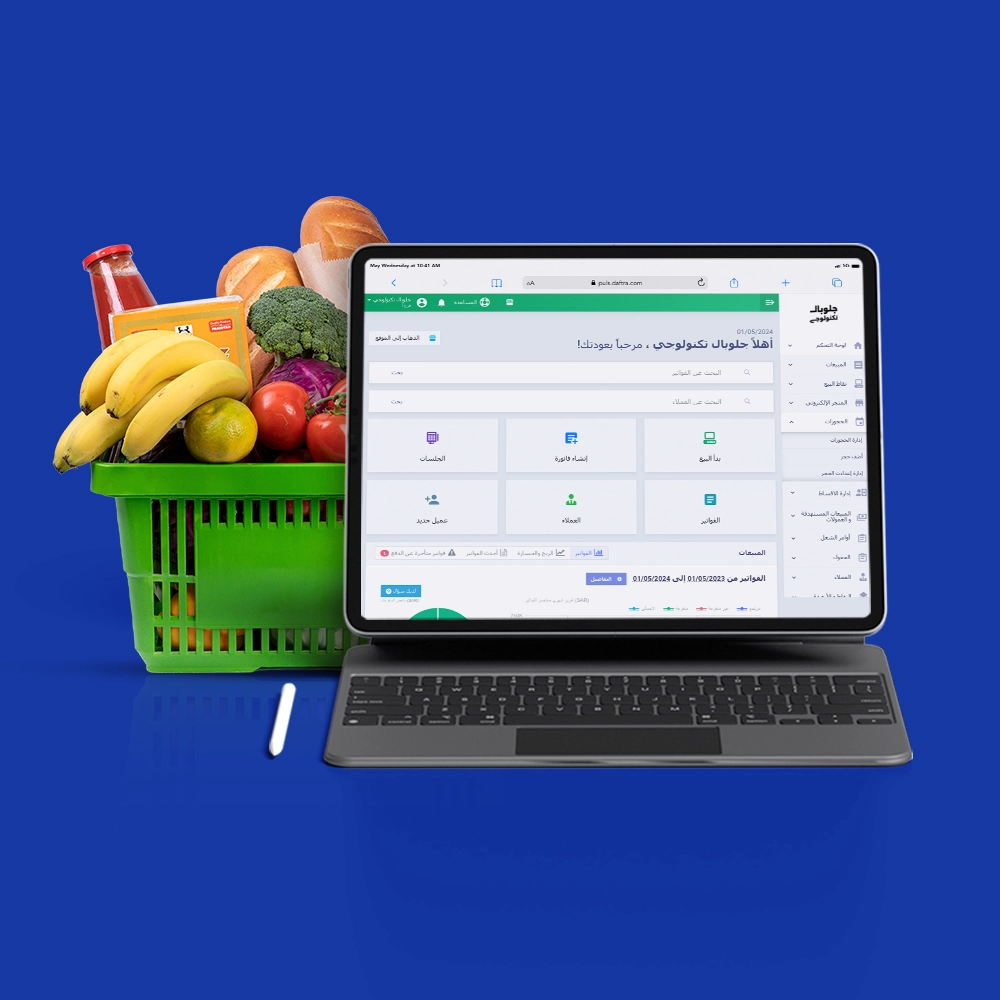
Retail sectors such as supermarkets need accounting solutions that can handle a large number of customers while remaining fast and accurate. Some comparison factors are especially important for the supermarket business, and you should consider them when choosing the right accounting software.
Benefits of Using Supermarket Software
Supermarket software helps retailers manage sales, inventory, payments, customers, and daily operations from a connected system. By automating routine tasks and providing real-time information, it improves efficiency and makes store management easier.
Once, a mid-sized supermarket in Jeddah managed thousands of products but handled sales, inventory, purchasing, and accounting separately. This led to slower checkout, manual data entry, difficulty tracking stock movements, and delays in preparing accurate reports.
By using supermarket software that connects POS, inventory, purchasing, and accounting, the supermarket automatically updated inventory and financial records with every sale.
Barcode scanning and automated calculations made checkout faster and more accurate, while real-time stock data and sales reports helped management make better purchasing decisions. Discounts and loyalty programs improved the customer experience, while automated workflows reduced manual work, and user permissions helped protect business data.
This case study shows several key benefits of using supermarket software:
- Faster and More Accurate Checkout: Barcode scanning, automatic calculations, discounts, and tax handling speed up transactions and reduce billing errors.
- Regulatory Compliance: Supermarket software that supports Saudi regulatory requirements can help businesses comply with e-invoicing and applicable tax regulations, maintain accurate records, and reduce the risk of non-compliance penalties.
- Better Inventory Management: Real-time stock updates, low-stock alerts, and product movement tracking help supermarkets maintain appropriate stock levels and avoid overstocking or stockouts.
- Detailed Sales Reports: Sales and inventory reports show best-selling products, slow-moving items, peak sales periods, and other trends to support better purchasing and promotional decisions.
- Improved Customer Experience: Faster checkout, loyalty programs, discounts, and personalized promotions can make shopping more convenient and encourage repeat purchases.
- Simplified Payments and Accounting: Supermarket software can manage different payment methods and connect sales data with accounting processes, reducing manual data entry and improving financial recordkeeping.
- Higher Staff Productivity: Automating billing, inventory updates, sales tracking, and other repetitive tasks allows employees to spend more time serving customers and managing store operations.
- Better Security and Fewer Errors: User permissions, access controls, and automated calculations help protect business data and reduce mistakes in sales, pricing, and inventory records.
- Easy Integration and Scalability: Many supermarket systems integrate with accounting software, e-commerce platforms, CRM tools, and multiple store locations, making it easier to manage business growth.
How to Choose Accounting Software for Supermarkets?
To choose the most suitable accounting software for your supermarket, you must first identify your needs and prioritize them. Are you more concerned with powerful point-of-sale systems? Or managing simple financial aspects? Or extracting electronic invoices and receipts approved by relevant government authorities, such as the Zakat, Tax, and Customs Authority in Saudi Arabia and the Tax Authority in Egypt?
Then search the market for options and compare them against these needs, excluding features that will not benefit your supermarket business.
Then rank these programs by how well they meet your needs, quality, and price, and try the free trial period for the programs you choose, since practical experience can differ and may reveal features that prompt you to re-filter your priorities.
Read also: Best Accounting Software for Saudi Companies
We present 5 of the best supermarket management software options on the market, with details on how each differs.
- Daftra Software for Supermarket Management
- Dafater
- Asl
- Mudak
- SMART ERP
1- Daftra Software for Supermarket Management
Daftra is a cloud-based ERP that provides specialized retail store management software with online and offline POS systems to enable the use of point-of-sale systems at all times, whether the internet is available or not.
With Daftra, you can manage employee shifts, including cashiers, and control the handover process at the start of each new shift. The system also provides complete management of your accounting and financial needs in a simple way that suits the supermarket.
The following are the most prominent advantages offered by Daftra accounting software for supermarkets:
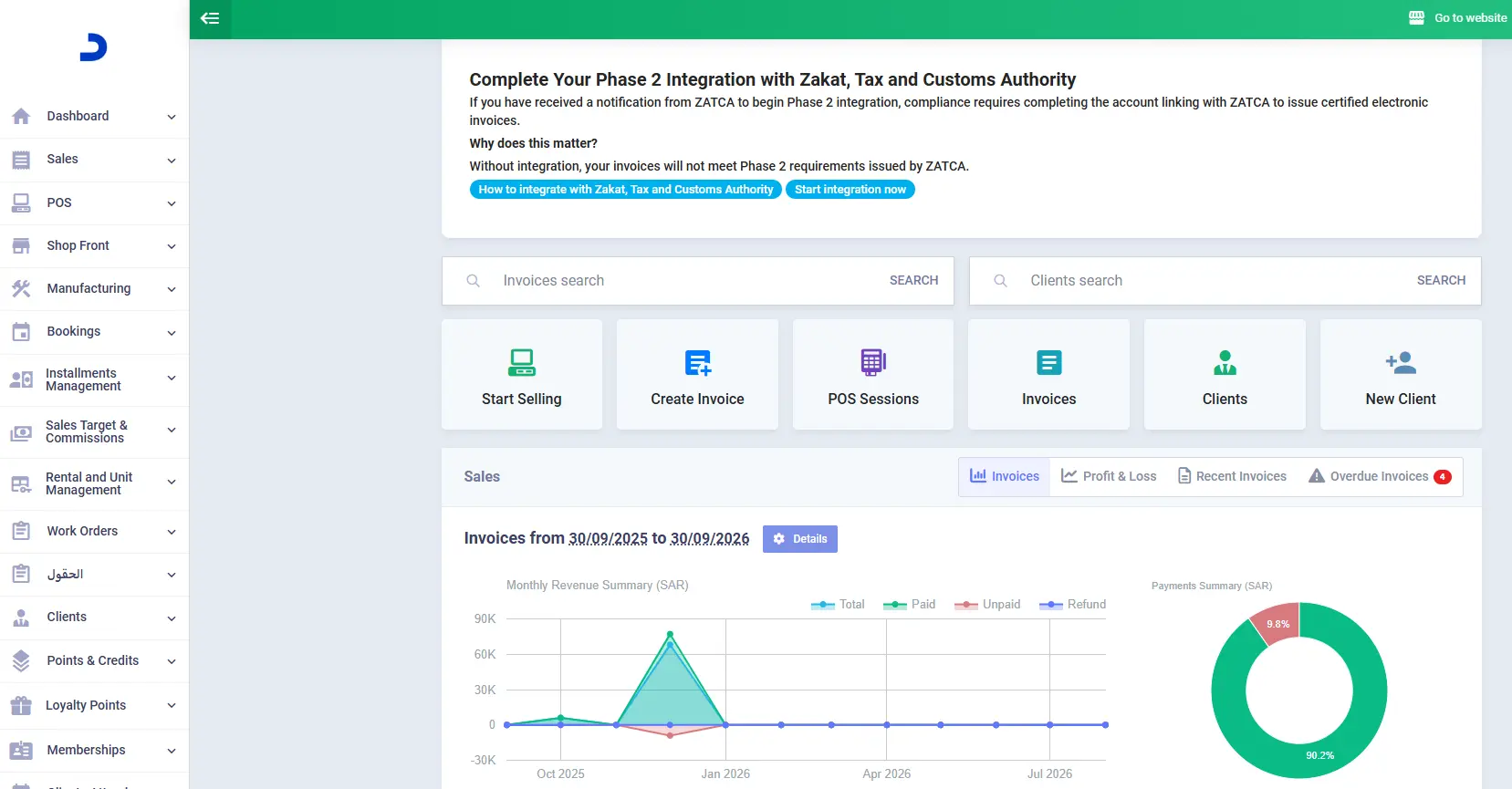
1- Sales Management in Supermarkets
Daftra's accounting system provides an integrated sales software for supermarket management, allowing many tasks to be completed automatically and helping supermarket owners increase sales and profits. Among the prominent smart solutions that Daftra offers to serve supermarkets:
- Issuing sales invoices.
- Providing price quotes to attract more customers, a feature supermarket owners can use for wholesale sales.
- Using Daftra's loyalty points management program to provide discounts to supermarket customers, with the option to link them to different seasonal occasions, which enhances consumer satisfaction and increases supermarket sales.
- Manage and accelerate supermarket sales operations through the point-of-sale program in Daftra's cloud system, which supports multiple measurement units such as barcode devices and others, making it easier to apply discounts to invoices or products.
- Obtaining point-of-sale reports, such as detailed reports on sales and profits by product/category/shift.
- Controlling the target sales percentage for each employee in the supermarket, then automatically calculating employee salaries based on performance and commission rates applied to invoices using the sales commission calculator.
2- Product Inventory Management in Supermarkets
Daftra's inventory and warehouse management software for supermarkets provides many services, such as:
- Monitoring inventory quantities of goods in the supermarket by name, code, barcode, pricing, product classification, and quantity.
- Displaying incoming and outgoing records for products within the supermarket by date, time, and responsible employee.
- The ability to manage all warehouses for multiple supermarket branches in one integrated system, thus obtaining a comprehensive view of product inventory movement according to stored permits, such as disbursement, addition, or transfer.
- Completing supermarket inventory auditing processes automatically with ease and accuracy, and obtaining audit reports to verify shortage and surplus levels in inventory.
3- Purchasing and Supplier Management for Supermarkets from Daftra
Supermarket owners can benefit from the purchasing and supplier software that Daftra provides through the following services:
- Structuring and organizing the purchasing cycle in supermarkets to ensure obtaining the inventory of goods and products at the right time and at the best price and quality.
- Completing all tasks related to incoming purchases for supermarkets, starting from recording purchase orders, requesting price quotes from suppliers, issuing purchase orders, and up to recording purchase invoices and receiving required items.
- Daftra's supplier management program for supermarkets helps track supplier accounts and manage payments due to them.
4- Expense and Cost Management for Supermarkets
Daftra's expense calculation and tracking program covers all accounting tasks and operations for managing supermarket expenses and controlling costs through:
- Recording and classifying expenses, making them easier to track, such as rent expenses, purchasing costs for supermarkets, utility expenses, goods transportation and storage expenses, and others.
- Being able to issue detailed reports to monitor expenses and compare them with revenues.
- Managing recurring supermarket expenses automatically without needing to enter them manually each time, thanks to the smart automation features in Daftra's cloud system.
5- Employee Management in Supermarkets
Daftra is not limited to completing accounting tasks and managing financial operations only, as it is an integrated ERP system for managing all financial and human resources for supermarkets. Daftra's employee management system for supermarkets offers multiple services, such as:
- Recording the attendance and departure of workers in supermarkets.
- Calculating monthly salaries for employees with consideration for deductions, incentives, and commissions.
- Managing employee contracts in supermarkets according to their job roles, training or probation period, contract duration, and salary terms, including entitlements and deductions.
Daftra Pricing
| Package Name | Monthly Price When Paying Annually | Monthly Price When Paying Monthly |
| Basic Package | 95 SAR monthly | 120 SAR monthly |
| Advanced Package | 155 SAR monthly | 220 SAR monthly |
| Comprehensive Package | 225 SAR monthly | 320 SAR monthly |
2- Dafater Software for Supermarket Management
Dafater provides Power, a cloud-based ERP system for managing commercial and retail businesses, including retail stores and chains. The system combines accounting, sales, inventory, purchasing, point-of-sale, and human resources management in one platform. Power also supports multiple branches and warehouses, with automatic synchronization between point-of-sale operations and the accounting system.
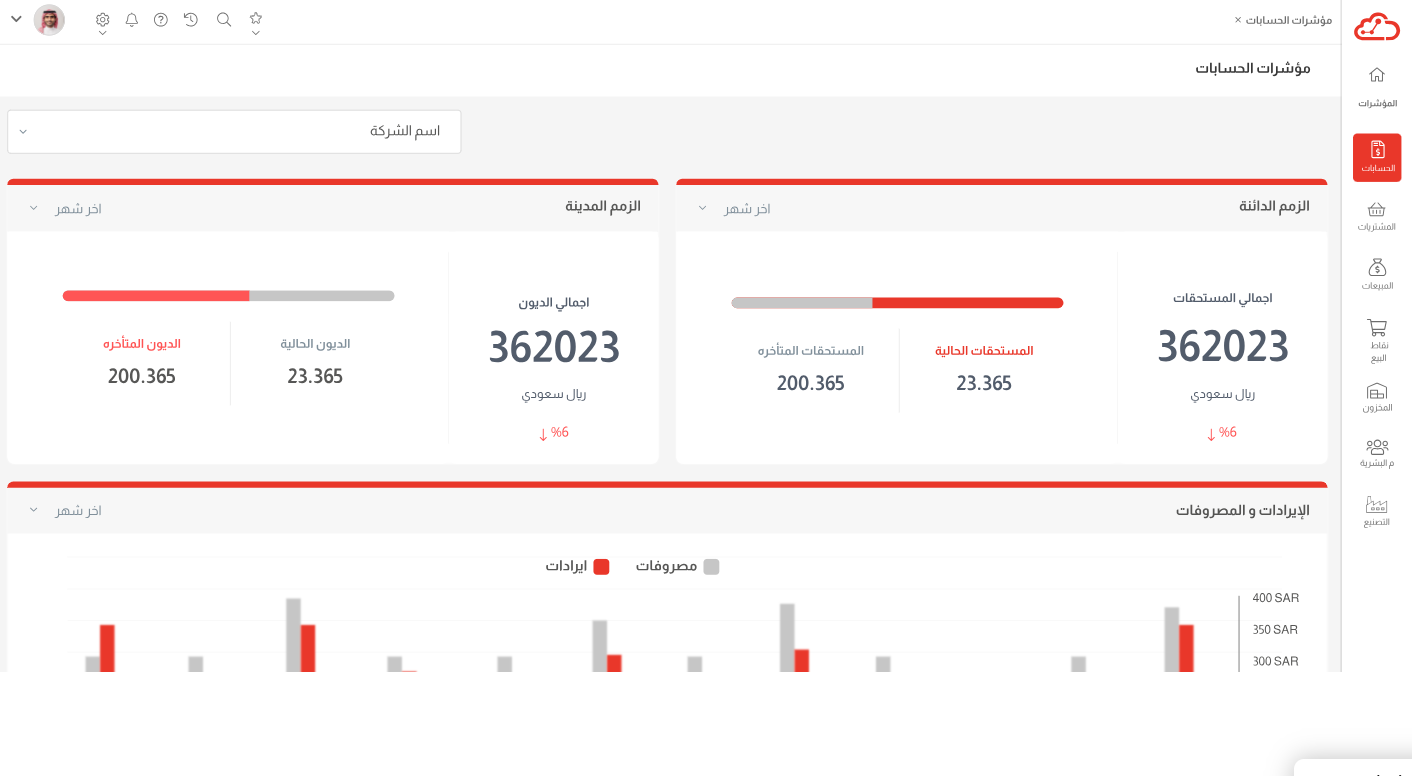
The following are the most prominent advantages offered by Dafater for supermarkets:
1- Sales Management in Supermarkets
Power provides an integrated sales and point-of-sale solution for retail businesses, enabling supermarkets to manage sales across branches and POS terminals while maintaining synchronization with the accounting system. Its main sales management features include:
- Issuing cash and credit sales invoices.
- Managing sales across different branches and point-of-sale terminals at the same time.
- Connecting fixed and mobile point-of-sale devices and managing sales and purchasing operations through one system.
- Working with or without an internet connection, allowing POS operations to continue when internet access is unavailable.
- Automatically synchronizing sales operations and invoices with the accounting system.
- Managing and monitoring all operations performed during employee shifts.
- Temporarily suspending invoices, retrieving previous invoices, and reprinting them when needed.
- Managing promotional offers and loyalty programs to support customer retention and sales activities.
- Generating financial and administrative reports, including reports related to debts, total profit, and sales representative commissions.
2- Product Inventory Management in Supermarkets
Dafater's inventory and warehouse management solution enables supermarkets to monitor product movement across warehouses and branches while maintaining detailed information about stock levels and product characteristics. Key inventory management features include:
- Managing product quantities and movements between different warehouses and storage locations.
- Managing an unlimited number of warehouses.
- Classifying products using serial numbers, images, and detailed product information.
- Monitoring product serial numbers, expiration dates, and batch numbers.
- Tracking incoming and outgoing goods and monitoring inventory movement.
- Performing inventory counts and using inventory adjustment tools to reconcile stock balances.
- Setting minimum stock levels and creating purchase orders to replenish inventory.
- Tracking products using barcodes.
- Managing sales and purchase returns, delivery notes, receiving notes, and transfers between warehouses.
- Generating advanced inventory reports, including stock balances, slow-moving inventory, and inventory levels.
3- Purchasing and Supplier Management for Supermarkets from Dafater
Dafater provides purchasing and supplier management capabilities as part of Power's retail management solution. The system supports the purchasing cycle and helps businesses manage supplier information and purchasing transactions through:
- Managing the complete purchasing and supplier cycle.
- Managing supplier accounts and information.
- Creating purchase orders to support inventory replenishment.
- Recording and classifying purchasing transactions.
- Managing receiving notes and purchase-related inventory movements.
- Managing supplier-related transactions alongside the accounting and inventory modules.
- Supporting purchase and supplier management across retail operations through an integrated system.
4- Expense and Cost Management for Supermarkets
Dafater's Power system includes integrated accounting capabilities that help supermarkets record and classify revenues and expenses and monitor their financial performance. The system provides:
- Recording and classifying business revenues and expenses.
- Managing cash transactions through receipt and payment vouchers.
- Monitoring expenses as part of the supermarket's integrated accounting operations.
- Generating financial and administrative reports covering key business activities.
- Providing financial reports related to debts, total profit, and other business indicators.
- Supporting accounting entries and financial statements within the integrated accounting system.
5- Employee Management in Supermarkets
Dafater's Power is not limited to sales and accounting management. It also includes a human resources system to manage employees and related processes. The HR system covers employee records, attendance, leave, payroll, and other personnel-related operations.
- Maintaining comprehensive employee records, including personal information, certificates, joining date, bank account, and employment history.
- Managing employee attendance and working hours, and linking attendance data to payroll.
- Preparing payroll and managing salary structures, allowances, and deductions.
- Managing employee leave balances, leave types, and leave requests.
- Managing employee expenses and expense claims.
- Managing the recruitment process from opening a position through hiring.
- Calculating end-of-service benefits.
- Managing employee performance evaluations and related records.
- Providing employee self-service features for submitting requests such as leave applications.
- Managing organizational structures, departments, job titles, and employee grades.
Dafater Pricing
| Package Name | Price |
| Eirady | Starting from SAR 1,800/year |
| Power | Starting from SAR 25,000 for the first year |
| FlowHub | Contact Dafater for pricing |
3- Asl Software for Supermarket Management
Asl is a cloud-based ERP system designed for the Saudi market, connecting accounting, sales, inventory, purchasing, point of sale, electronic invoicing, and branch management in one integrated system.
For supermarkets and retail stores, Asl connects POS transactions with inventory, purchasing, accounting, and reports, helping businesses manage their daily operations through interconnected data. The system also supports multiple branches and warehouses and provides electronic invoicing in line with ZATCA requirements.
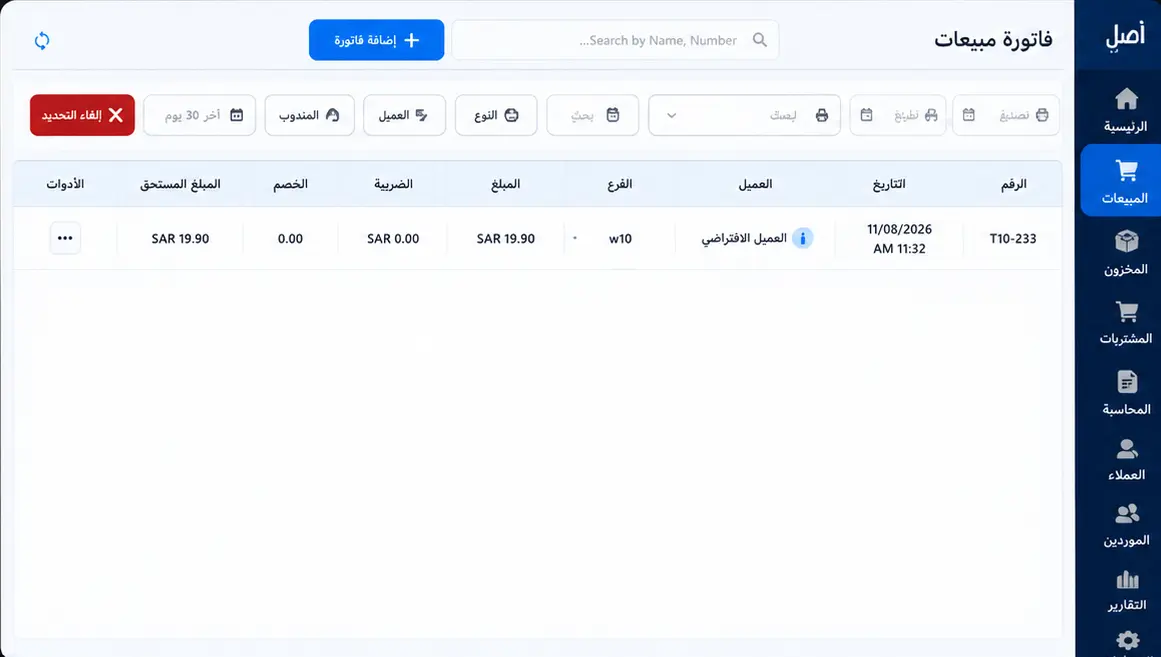
The following are the most prominent advantages offered by Asl accounting software for supermarkets:
1- Sales Management in Supermarkets
Asl provides an integrated sales and point-of-sale solution for supermarkets and retail stores, linking sales transactions to inventory, accounting, and reporting. The system is designed to simplify daily sales operations and provide real-time visibility into sales activities through:
- Issuing sales and electronic invoices directly through the point-of-sale system.
- Supporting barcode and QR code scanning to speed up sales transactions.
- Processing sales returns quickly through the POS system.
- Supporting different POS devices, including cashiers, tablets, and mobile devices.
- Continuing sales operations without an internet connection through offline mode, with automatic synchronization when the connection is restored.
- Managing multiple users with flexible permissions and tracking employee operations and shifts.
- Providing daily, weekly, and monthly sales reports and analyzing sales performance.
- Automatically connecting sales transactions with inventory so stock quantities update based on sales.
- Managing sales across multiple branches and providing separate and combined branch reports.
- Supporting promotional offers and loyalty programs as part of the POS solution.
2- Product Inventory Management in Supermarkets
Asl's inventory and warehouse management system allows supermarkets to track products, quantities, and movements while connecting inventory with purchasing, sales, warehouses, and branches. The system provides several inventory management services, including:
- Tracking product quantities and inventory movements in real time.
- Managing products using barcodes and monitoring their quantities across warehouses and branches.
- Managing multiple warehouses and organizing inventory across different locations.
- Managing inventory transfers between warehouses and branches.
- Conducting inventory counts and making inventory adjustments when needed.
- Providing inventory shortage alerts to help prevent stockouts.
- Connecting purchasing, receiving, sales, and inventory operations within one system.
- Monitoring inventory movement from purchasing and receiving through sales and inventory counting.
- Providing reports on inventory balances, product movement, and inventory performance.
3- Purchasing and Supplier Management for Supermarkets from Asl
Asl connects purchasing operations with suppliers, inventory, and accounting, allowing supermarkets to manage the purchasing cycle and reflect purchasing transactions directly in their inventory and financial records. The system provides:
- Connecting suppliers, purchase invoices, and receiving operations with inventory and accounting.
- Creating and managing purchase orders to support inventory replenishment.
- Recording purchase transactions and linking them to the relevant inventory movements.
- Managing receiving operations and updating inventory based on received goods.
- Connecting purchasing operations with the accounting system to reduce manual data entry.
- Managing purchasing and supplier-related transactions within the integrated ERP system.
4- Expense and Cost Management for Supermarkets
Asl's accounting system enables supermarkets to record and monitor expenses and financial transactions while providing reports that help businesses track their financial performance and control costs. The system provides:
- Recording and monitoring different business expenses and tracking overall spending.
- Classifying expenses and monitoring their impact on the business's net income.
- Providing detailed financial reports, including income statements, financial position reports, and trial balances.
- Monitoring expenses and comparing financial performance through real-time accounting reports.
- Tracking operational costs and reducing waste through better cost monitoring.
- Recording expenses alongside sales, purchases, and other accounting transactions within the same system.
5- Employee Management in Supermarkets
Asl's current Saudi ERP page focuses on accounting, sales, purchasing, inventory, POS, electronic invoicing, and branch management. It does not list a dedicated human resources module among the core ERP modules on this page. The website also advises users to verify the availability of specialized modules, such as human resources, before choosing an ERP system.
Therefore, the available website information does not provide enough detail to confirm supermarket-specific employee management features such as:
- Recording employee attendance and departure.
- Calculating employee salaries, deductions, incentives, and commissions.
- Managing employee contracts and employment terms.
- Managing employee leave and other HR processes.
Asl Pricing
| Package Name | Annual Package Price |
| Invoicing Package | 690 SAR / annually |
| Basic Package | 1,200 SAR / annually |
| Comprehensive Package | 2,000 SAR / annually |
4- Madac Software for Supermarket Management
Madac is a cloud-based accounting software designed to manage business and accounting operations, with solutions covering sales, purchases, inventory, and financial reporting. Madac also provides POS solutions for retail businesses, including supermarkets, along with electronic invoicing and direct integration with payment devices. The system provides access to business data from different locations and supports both cloud-based and desktop solutions.
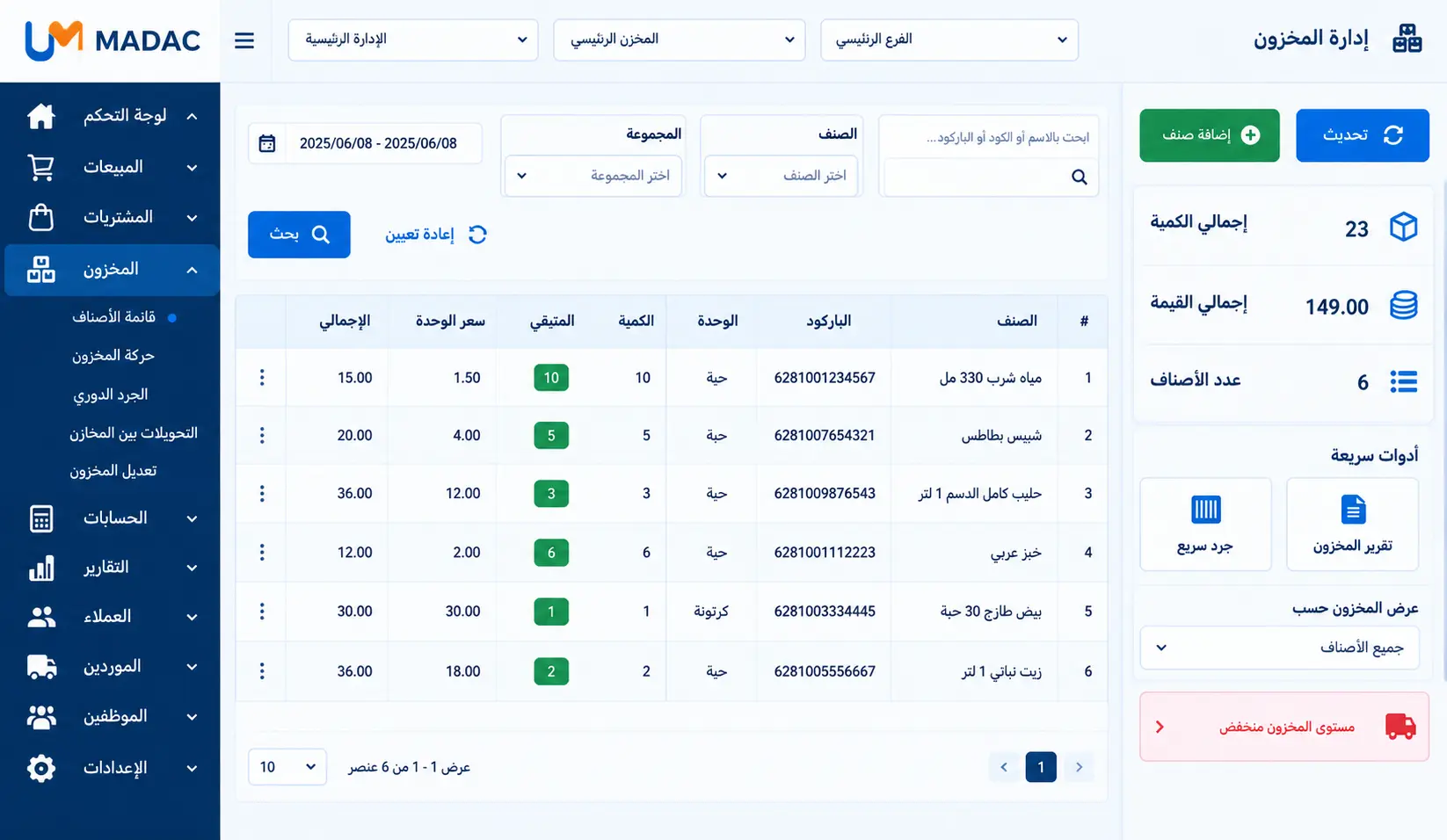
The following are the most prominent advantages offered by Madac accounting software for supermarkets:
1- Sales Management in Supermarkets
Madac's accounting system provides sales management tools that help supermarkets organize their sales operations, issue invoices, manage sales representatives, and monitor sales transactions. Among the prominent solutions that Madac offers to support supermarket sales are:
- Issuing sales invoices and sharing them directly with customers through WhatsApp, email, or other mobile applications.
- Managing sales through Madac's point-of-sale solutions, which are designed to support retail businesses and stores.
- Connecting Madac directly with payment devices to create sales invoices instantly, accept payments through Mada or Visa, and automatically transfer the invoice amount to the payment device.
- Managing and tracking sales representatives by creating a customized route for each representative and linking invoices and collection receipts to the customer's location.
- Restricting invoice issuance to the customer's location helps businesses monitor sales representatives who provide delivery or field sales services.
- Preparing daily reports and monitoring sales operations to provide a clearer view of the supermarket's financial and sales performance.
2- Product Inventory Management in Supermarkets
Madac's ERP system includes inventory management as part of its solutions for managing sales, purchases, and inventory. For supermarkets, the system can help with:
- Managing inventory and monitoring product movement within the business.
- Managing purchased and sold products as part of the integrated sales and inventory cycle.
- Managing warehouses and inventory operations according to the selected Madac package.
- Monitoring inventory quantities and stock movements to support purchasing and sales decisions.
- Generating reports that help businesses monitor inventory and product movements.
3- Purchasing and Supplier Management for Supermarkets from Madac
Supermarket owners can benefit from Madac's purchasing and inventory management solutions to organize purchasing operations and connect them with other financial transactions. The system provides:
- Managing purchasing operations as part of the integrated sales, purchases, and inventory system.
- Recording and managing purchase transactions and purchase invoices.
- Managing supplier-related transactions and linking purchasing operations with inventory and accounting records.
- Monitoring purchased products and their impact on inventory levels.
- Generating reports on purchasing and financial operations to help supermarket owners monitor transactions.
4- Expense and Cost Management for Supermarkets
Madac provides accounting tools for managing the financial side of supermarket operations and preparing reports that help business owners monitor revenues, expenses, and profitability through:
- Recording and managing financial transactions related to business operations.
- Managing revenues, expenses, sales, and purchases through the accounting system.
- Managing accounting records and preparing financial reports to monitor the business's financial position.
- Preparing daily reports to help business owners monitor financial performance and make informed decisions.
- Supporting electronic invoicing as part of the accounting system, with the ability to activate electronic invoices through Madac.
5- Employee Management in Supermarkets
Madac provides tools for managing users and sales representatives, while its website does not present the same detailed employee-management functions as Daftra's dedicated HR solutions. The available features include:
- Adding users to the Madac cloud system according to the selected subscription package.
- Providing around-the-clock technical support to assist users with the system and accounting operations.
- Managing sales representatives by creating customized routes and linking invoices and collection receipts to customer locations.
- Monitoring sales representatives' activities through the sales management features.
- Using Madac's mobile solutions to provide greater flexibility when managing business operations remotely.
Madac Pricing
| Package Name | Monthly Package Price |
| Basic Package | 83 SAR |
| Advanced Package | 150 SAR |
| Premium Package | 240 SAR |
| Business package | Needs Contact |
5- SmartERP Software for Supermarket Management
SMART ERP is a cloud-based accounting and point-of-sale system designed specifically for the retail sector. It combines accounting, POS, inventory, and branch management in one platform, allowing small and medium-sized retail businesses to manage sales, inventory, purchases, expenses, and financial operations from a single system. The system also provides integrated human resources management linked directly to the accounting system.
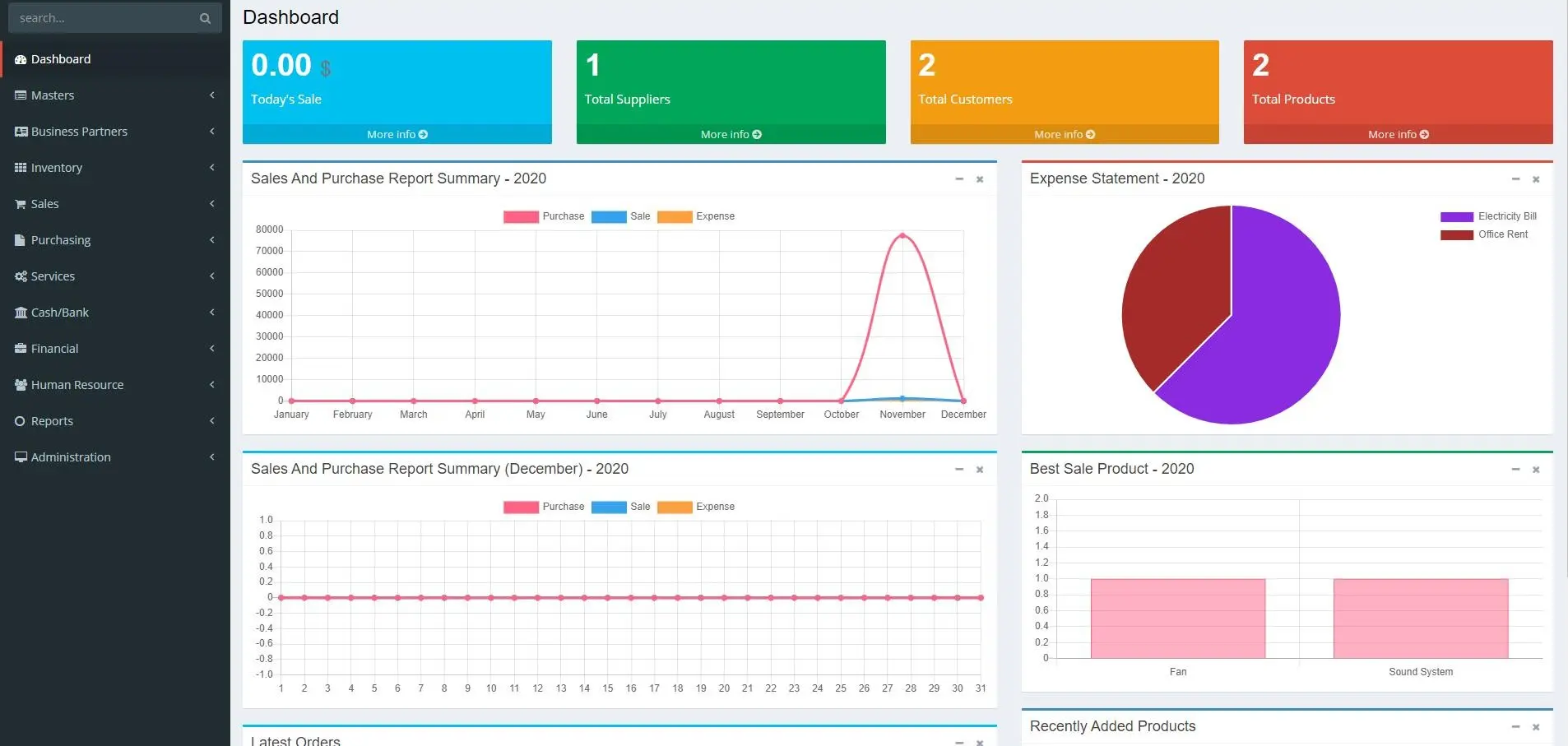
The following are the most prominent advantages offered by SMART ERP for supermarkets:
1- Sales Management in Supermarkets
SMART ERP provides point-of-sale and sales management tools that allow supermarkets to manage sales operations and monitor performance across multiple branches. The system also connects sales transactions directly with inventory and accounting.
- Managing sales transactions through the point-of-sale system and linking sales directly to inventory and accounting.
- Managing sales across multiple supermarket branches through a unified system.
- Monitoring sales performance through detailed sales reports that can be viewed daily or weekly and compared across branches.
- Tracking sales, purchases, inventory levels, and customer balances through the owner application, which provides real-time business reports.
- Managing products and sales-related data through the cloud-based system designed for retail businesses.
2- Product Inventory Management in Supermarkets
SMART ERP provides inventory management tools that help supermarkets monitor product quantities, inventory movements, and stock differences across branches. It also includes a dedicated inventory-counting application that supports inventory counts and stock adjustments.
- Monitoring product quantities and inventory movements across supermarket branches.
- Managing multiple branches and tracking inventory from a unified dashboard.
- Conducting inventory counts through the dedicated inventory-counting application.
- Performing inventory counts at different levels, even without an internet connection.
- Making inventory adjustments directly through the inventory-counting application.
- Generating inventory reports and comparing inventory performance across branches.
3- Purchasing and Supplier Management for Supermarkets from SMART ERP
SMART ERP includes purchasing management and provides supermarkets with tools for monitoring purchases, suppliers, and purchasing-related transactions. The system also connects purchasing information with inventory and accounting operations.
- Managing purchasing operations through the integrated purchasing system.
- Monitoring purchases across different supermarket branches.
- Connecting purchasing transactions with inventory and accounting to maintain updated business records.
- Monitoring supplier balances through the owner application.
- Obtaining purchasing reports that can be reviewed daily or weekly and compared across branches.
4- Expense and Cost Management for Supermarkets
SMART ERP helps supermarket owners monitor revenues, expenses, and costs through its accounting system and financial reports, providing a clearer view of actual profitability and financial performance.
- Recording and monitoring supermarket expenses and costs through the accounting system.
- Tracking revenues, expenses, and costs to determine the actual profit of the business.
- Managing financial operations through an integrated accounting system.
- Generating expense and financial reports on a daily or weekly basis.
- Comparing financial performance between different supermarket branches.
- Creating customized reports through the system's smart reporting feature without requiring programming or technical support.
5- Employee Management in Supermarkets
SMART ERP includes an integrated human resources management system connected directly to the accounting system. It supports employee management and payroll-related financial operations, while its HR application allows managers to monitor employee activities and approve requests remotely.
- Managing employee and human resources operations through a system integrated with accounting.
- Managing employee salaries and the financial transactions associated with them.
- Monitoring employee-related operations through the HR application.
- Reviewing and approving employee leave requests and other HR approvals through the application.
- Managing HR operations across the business while keeping them connected to the accounting system.
SMART ERP Pricing
| Package Name | Annual Package Price |
| First Package | 1,725 SAR |
| Basic Package | 3,450 SAR |
| Advanced Package | 7,475 SAR |
| Complete Package | 11,500 SAR |
Read also: Best Accounting Software in Egypt
Questions You Should Ask Yourself Before Choosing a Program for Supermarkets
Before subscribing to any accounting software for supermarkets, make sure it includes a POS cashier system that works across your branches. You should find answers to some questions, such as:
- Can the system meet your current supermarket needs and support you as your business grows?
- Which programs offer supermarket accounting software at acceptable prices?
- Does the software offer the features and functions you actually need for purchasing, inventory, suppliers, sales, and reporting at an acceptable price?
- What are the experiences of customers from your sector (supermarkets) with this system?
- What are the main disadvantages and limitations of this system? Can you manage them without negatively affecting your business?
- What level of security and data protection does the system provide?
- What kind of implementation, training, and customer support does the vendor provide?
- Is the software compliant with the requirements of ZATCA?
Common mistakes to avoid when choosing Supermarket Software
Choosing supermarket software takes more than comparing prices or picking a system with lots of features. The right solution should match your store’s daily operations, integrate with other systems, and support accurate inventory, sales, and financial management.
Here are some common mistakes to avoid:
Conclusion
Choosing accounting software for a supermarket requires looking beyond basic accounting functions. The system should support the supermarket's daily sales, inventory, purchasing, expense, reporting, and employee-management processes while remaining suitable for its number of products, transactions, and branches.
The comparison of Daftra, Dafater, Asl, Madac, and SMART ERP shows that each system provides a different combination of retail, accounting, inventory, POS, purchasing, and HR capabilities. Therefore, supermarket owners should first define their operational requirements, compare relevant features and total costs, and test the software before making a final decision.
Before subscribing, also verify POS and system integrations, data security, scalability, technical support, training, backups, and compliance with ZATCA requirements.










 Invoicing
 POS
POS Offers
 Installments
 Sales Commission
 KSA E-Invoice Software
 EGY E-Invoice Software
 JO E-Invoice Software
 E-Invoice Software
 Chart of Accounts
 Asset Management
 Cost Centers
 Expenses
 Cheque Cycle
 UAE VAT-Tax
 Product Management
 Purchases
 Purchase Cycle
 Suppliers
 Requisitions
 Stocktaking
 Organizational Structure
 Personnel Management
 Attendance and Leave
 Contracts
 Payroll
 Requests
 Work Orders
 Booking Management
 Rental and Unit Management
 Time Tracking
 Work Flow
 Lease Contracts
 Manufacturing Management
  Client Follow-Up
 Loyalty Points
 Points and Credits
 Memberships
 Insurance Management
 Daftra ERP Full App
 Point of Sales App
 Point of Sales for Desktop – Support Offline Mode
 AI Expenses Scanner App
 Employee Attendance, Sign & ESS App
 E-invoice Reader App
 Inventory Stocktaking App