


Posted on 22 October 2026
Statement of Changes in Equity Template
- The template is used to record changes in equity, such as the acquisition of new assets or the disposal of existing assets.
- It is an essential component of financial reporting, as it provides detailed information about assets, liabilities, and equity.
- It can be used to estimate the current value of owned assets, which may support future asset-management decisions.


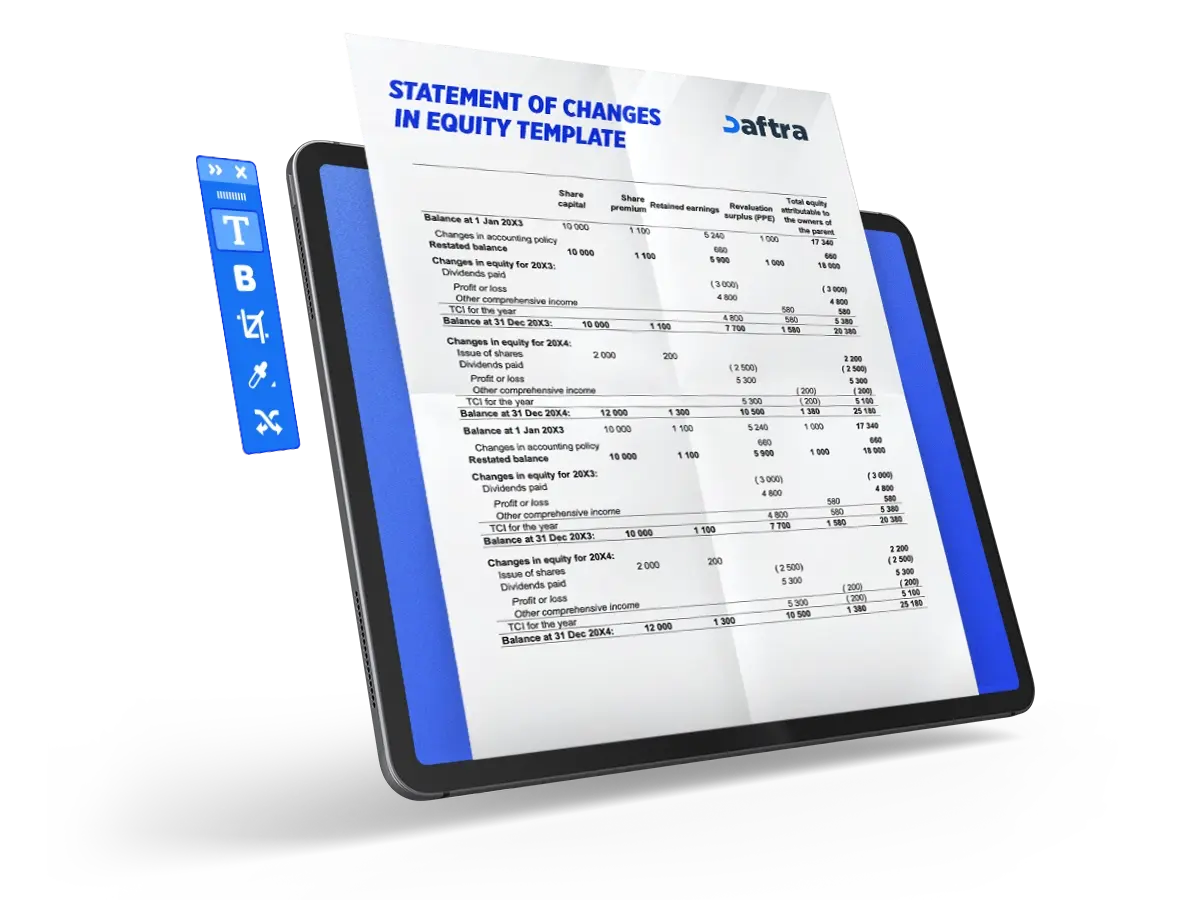
 Track Your Business Equity with Daftra
What Is a Statement of Changes in Equity Template?
A Statement of Changes in Equity template is a document used to record and track details related to the assets, liabilities, and equity of a company or an individual over a specified period. It includes information about property, debts, and net equity. This type of document is used in financial reporting and in the management of assets and liabilities.
The template is an important tool for financial management and strategic decision-making because it enables a company or individual to understand the structure of equity and the relationship between assets and liabilities. It is also used to prepare financial reports and provide accurate information to investors and other external stakeholders.
2. What Are the Elements of a Statement of Changes in Equity Template?
A Statement of Changes in Equity typically includes the following items:
1. Assets
- Cash: Cash amounts available to the entity.
- Investments: Securities and other investments.
- Real estate: Land, buildings, and other real property.
- Equipment and fixed assets: Tangible property and equipment used in operations.
2. Liabilities
- Debt: Borrowed amounts and other financial obligations.
- Accounts payable: Amounts due to suppliers and business partners.
3. Equity
- Shareholders’ or owners’ equity: Ownership interests in the company.
- Retained earnings: Profits that have not yet been distributed.
4. The Basic Equation
- Net equity: The difference between assets and liabilities, generally representing the entity’s equity.
5. Changes in Equity
- Acquisition and disposal of assets: Records any assets acquired or disposed of during the period.
6. Additional Information
- Additional information as required: Other details may be included based on the needs of the company or entity.
Together, these elements enable financial managers and investors to understand the structure of a company’s or individual’s assets, liabilities, and equity. They also provide an essential basis for financial reporting and strategic decision-making.
3. How to Use a Statement of Changes in Equity Template
Using a Statement of Changes in Equity template involves several steps to record and track assets, liabilities, and equity:
1. Update Assets
- Record cash: Enter available cash amounts, including cash on hand and bank account balances.
- Record accounts receivable: Include amounts due from customers.
- Record fixed assets and inventory: Enter the value of fixed assets and inventory.
2. Record Liabilities
- Record debts and loans: Enter amounts owed to financial institutions or other creditors.
- Record accounts payable: Enter amounts due to suppliers or business partners.
3. Update Equity
- Record shareholders’ equity: Enter the ownership interests of shareholders or owners.
- Record retained earnings: Enter profits that have not yet been distributed.
4. Calculate Net Equity
- Calculate net equity: Determine the difference between total assets and total liabilities. This amount represents net equity.
5. Record Changes in Equity
- Record changes: Enter any acquisitions or disposals of assets during the period.
6. Monitor Monthly or Quarterly Changes
- Update periodically: Update the template regularly to track changes in assets, liabilities, and equity over time.
7. Prepare Financial Reports
- Use the data in reports: Use the information recorded in the template to prepare periodic financial reports and explain the entity’s equity position.
8. Make Strategic Decisions
- Analyze the data: Use the recorded data to analyze the capital structure and make strategic decisions for the company or individual.
The exact steps should be adapted to the needs of the company or individual and to the industry in which the template is used. The main objective is to provide an accurate and comprehensive view of equity and the financial position.
You May Also Download
4. Why Is a Statement of Changes in Equity Template Important?
A Statement of Changes in Equity template is an important tool for financial management and strategic planning for both companies and individuals. Its key benefits include:
1. Provides an Overview of the Financial Position
The template provides an immediate overview of the company’s or individual’s financial position, including the value of assets, liabilities, and net equity. This helps assess the entity’s financial strength and its capacity to bear risk and make investments.
2. Supports Capital Structure Analysis
The template helps analyze the capital structure by examining the proportions of debt and equity. This analysis clarifies the balance between different financing sources and the extent of reliance on debt.
3. Tracks Changes Over Time
The template records changes in equity over time, making it possible to monitor the performance of a company or individual and identify long-term trends.
4. Supports Decision-Making
The template can be used as a strategic decision-making tool because it provides accurate financial analysis that helps establish priorities and identify areas requiring improvement.
5. Supports Financial Reporting
The template forms a basis for preparing periodic financial reports, making it easier to prepare financial statements and the reports required by investors and other external stakeholders.
6. Helps Attract Investors and Creditors
Maintaining an accurate template can help attract investors and creditors by giving them a comprehensive view of the financial position and the entity’s ability to manage risk.
7. Supports Compliance with Accounting Standards
The template supports compliance with accounting standards and the provision of accurate information to auditors and regulatory authorities.
Overall, the Statement of Changes in Equity template is an essential tool for understanding the financial position and making sound decisions in business management or personal financial planning.
5. Who Benefits from a Statement of Changes in Equity Template?
A Statement of Changes in Equity template benefits several parties and serves a range of interests. The primary beneficiaries include:
1. Company Management
Company leaders and executives use the template to understand the financial and equity structure, helping them make strategic decisions and plan for the company’s future.
2. Investors
Investors and shareholders use the template to evaluate the strength and soundness of the company’s financial position and to understand how profits are distributed and capital is structured.
3. Financial Managers
Finance managers and accountants use the template to analyze financial data and prepare periodic reports. It also supports compliance with accounting standards.
4. Creditors
Banks and financial institutions use the template to assess the company’s ability to repay debt and understand its debt structure.
5. Suppliers
Suppliers and business partners use the template to evaluate the stability of a customer company and assess its ability to meet financial obligations.
6. Regulatory Authorities
Regulatory bodies and government authorities use the template to verify compliance with financial and accounting laws and regulations.
7. Employees
Employees are indirect beneficiaries because the template reflects the company’s financial stability and its ability to pay salaries and provide benefits.
8. Financial Advisors
Financial advisors and investment professionals rely on the template when providing recommendations and advice to clients and investors.
9. Financial Analysts
Financial analysts review the template to assess the company’s performance and financial outlook.
In general, the Statement of Changes in Equity template gives business stakeholders a clear view of the financial position of a company or individual, supporting informed decisions and the achievement of financial objectives.







 Invoicing
 POS
 Offers
 Installments
 Sales Commission
 KSA E-Invoice Software
 EGY E-Invoice Software
 JO E-Invoice Software
 E-Invoice Software
 Chart of Accounts
 Asset Management
 Cost Centers
 Expenses
 Cheque Cycle
 UAE VAT-Tax
 Product Management
 Purchases
 Purchase Cycle
 Suppliers
 Requisitions
 Stocktaking
 Organizational Structure
 Personnel Management
 Attendance and Leave
 Contracts
 Payroll
 Requests
 Work Orders
 Booking Management
 Rental and Unit Management
 Time Tracking
 Work Flow
 Lease Contracts
 Manufacturing Management
 Client Follow-Up
 Loyalty Points
 Points and Credits
 Memberships
 Insurance Management
 Daftra ERP Full App
 Point of Sales App
 Point of Sales for Desktop – Support Offline Mode
 AI Expenses Scanner App
 Employee Attendance, Sign & ESS App
 E-invoice Reader App
 Inventory Stocktaking App