


Posted on 15 October 2026
Retail Store Account Statement Template
- Records expenses and revenue in detail, helping calculate the store’s net income.
- Provides a clear view of the business’s financial performance, helping owners make better-informed decisions.
- Promotes transparency in the store’s financial affairs, reducing the risk of financial manipulation.


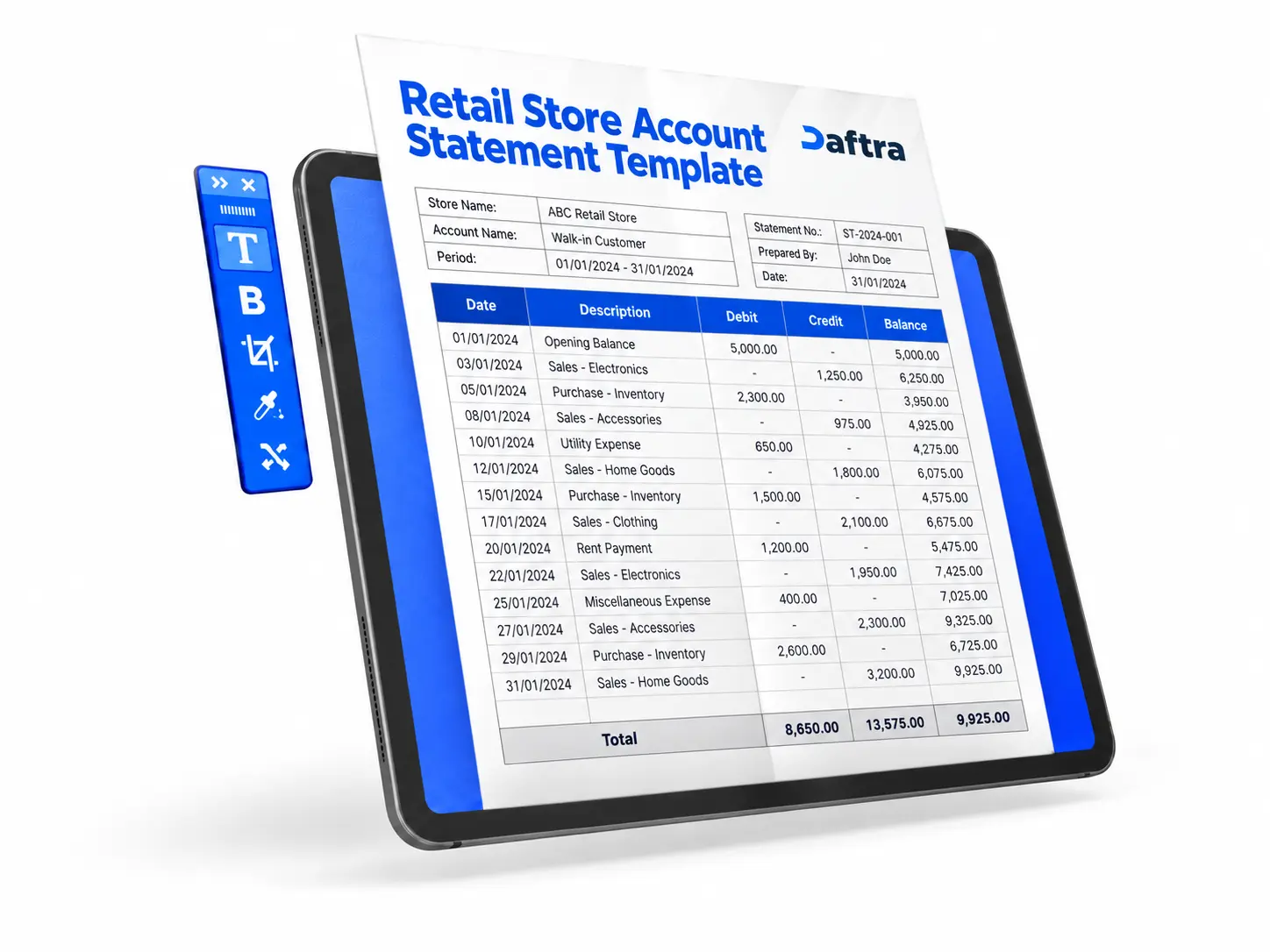
 Manage Retail Store Accounting with Daftra
What Is a Retail Store Account Statement Template?
A retail store Account statement is an essential financial report for any business owner. It records and documents every financial transaction that takes place in the store over a specified period. It includes key details such as sales, purchases, and payments, enabling accurate and organized monitoring of the store’s financial performance.
Use the Compound Return Calculator to calculate compound returns on different transactions and investments automatically and free of charge.
What Are the Elements of a Retail Store Account Statement Template?
The template consists of several essential elements:
Statement Date
Specifies the period covered by the statement, helping track the store’s financial performance across different timeframes.
Expense Table
Includes all expenses incurred by the store owner, from salaries and premises rent to electricity and internet bills, taxes, and interest, providing a comprehensive overview of total expenses.
Revenue Table
Records revenue generated from sales and other income sources, including deductions resulting from returns and discounts, to provide a clear picture of cash inflows.
Cost of Goods Sold Table
Allows the store owner to compare purchase costs with selling prices, helping determine profitability.
Gross Profit
Calculated by subtracting the cost of goods sold from total revenue, helping determine the gross profit generated from sales.
Net Income
Determines the business’s net profit by subtracting total expenses from gross profit.
You May Also Download
Accounting Ledger template for a computer store’s
Why Is a Retail Store Account Statement Template Important?
Evaluating Financial Performance
Helps store owners assess business profitability by comparing revenue with expenses, giving them a comprehensive view of the strengths and weaknesses in their financial performance.
Ensuring Transparency
Financial manipulation is a major concern for business owners. The template supports transparency by documenting the details of all financial transactions, helping reduce the likelihood of financial misconduct.
Assessing Business Viability
By calculating revenue and expenses and determining net income, the business owner can assess the success and sustainability of the store. A negative net income indicates losses and may require corrective action to improve the financial position.
Managing Financial Expenses
Helps store owners manage expenses by monitoring and analyzing costs and evaluating their impact on business performance. This supports efforts to reduce unnecessary expenses and adjust budgets based on expense and tax analysis, contributing to long-term financial sustainability.
How to Use a Retail Store Account Statement Template
The template helps users understand and analyze store performance by documenting different types of revenue and expenses through the following steps:
1. Define the Statement Period
Choose the period the statement will cover, such as one week or one month.
2. Collect the Data
Collect all required financial data, including total revenue, cost of goods sold, expenses, interest, taxes, and other costs. Ensure that all data relates to the period covered by the statement.
3. Enter the Data Details
After gathering the data, enter each item into its designated table.
4. Calculate the Totals
Add the amounts for each transaction category, including revenue, expenses, and cost of goods sold, to calculate the total for each. Then subtract total expenses from total revenue to determine net income.
5. Review the Data
Review the entered data to ensure that all financial transactions have been recorded correctly.
6. Analyze the Results
Analyze the results to understand the store’s performance. Positive net profit indicates that the store is profitable, while a negative result means that the store is operating at a loss.
7. Evaluate Financial Performance
Compare net income with results from previous periods to evaluate financial performance and identify trends or changes in profit and loss. This helps determine the strengths and weaknesses in the store’s financial performance.
Who Can Benefit from a Retail Store Account Statement Template?
The statement provides important benefits to several stakeholders, including:
Store Owner
The template enables the store owner to monitor financial performance continuously and evaluate profits and losses.
Investors
Investors use it to assess the store’s financial performance and measure the return on their investment.
Banks and Financial Institutions
When applying for loans or credit facilities, the statement supports the financing process by helping banks and financial institutions evaluate the store’s financial position.
Business Partners
When considering a business partnership, sharing the statement helps prospective partners understand the store’s financial position and assess its ability to meet future obligations.






 Invoicing
 POS
 Offers
 Installments
 Sales Commission
 KSA E-Invoice Software
 EGY E-Invoice Software
 JO E-Invoice Software
 E-Invoice Software
 Chart of Accounts
 Asset Management
 Cost Centers
 Expenses
 Cheque Cycle
 UAE VAT-Tax
 Product Management
 Purchases
 Purchase Cycle
 Suppliers
 Requisitions
 Stocktaking
 Organizational Structure
 Personnel Management
 Attendance and Leave
 Contracts
 Payroll
 Requests
 Work Orders
 Booking Management
 Rental and Unit Management
 Time Tracking
 Work Flow
 Lease Contracts
 Manufacturing Management
 Client Follow-Up
 Loyalty Points
 Points and Credits
 Memberships
 Insurance Management
 Daftra ERP Full App
 Point of Sales App
 Point of Sales for Desktop – Support Offline Mode
 AI Expenses Scanner App
 Employee Attendance, Sign & ESS App
 E-invoice Reader App
 Inventory Stocktaking App