


Posted on 15 October 2026
Projected Cash Flow Forecast Template
- A Projected Cash Flow Forecast template helps determine how available cash should be allocated over a specific period, enabling the company to avoid liquidity shortages.
- It supports forecasting future financing needs and identifying when the company may need to raise additional funds.
- The forecast can be used to assess how potential growth projects may affect cash flow and the sustainability of operations.


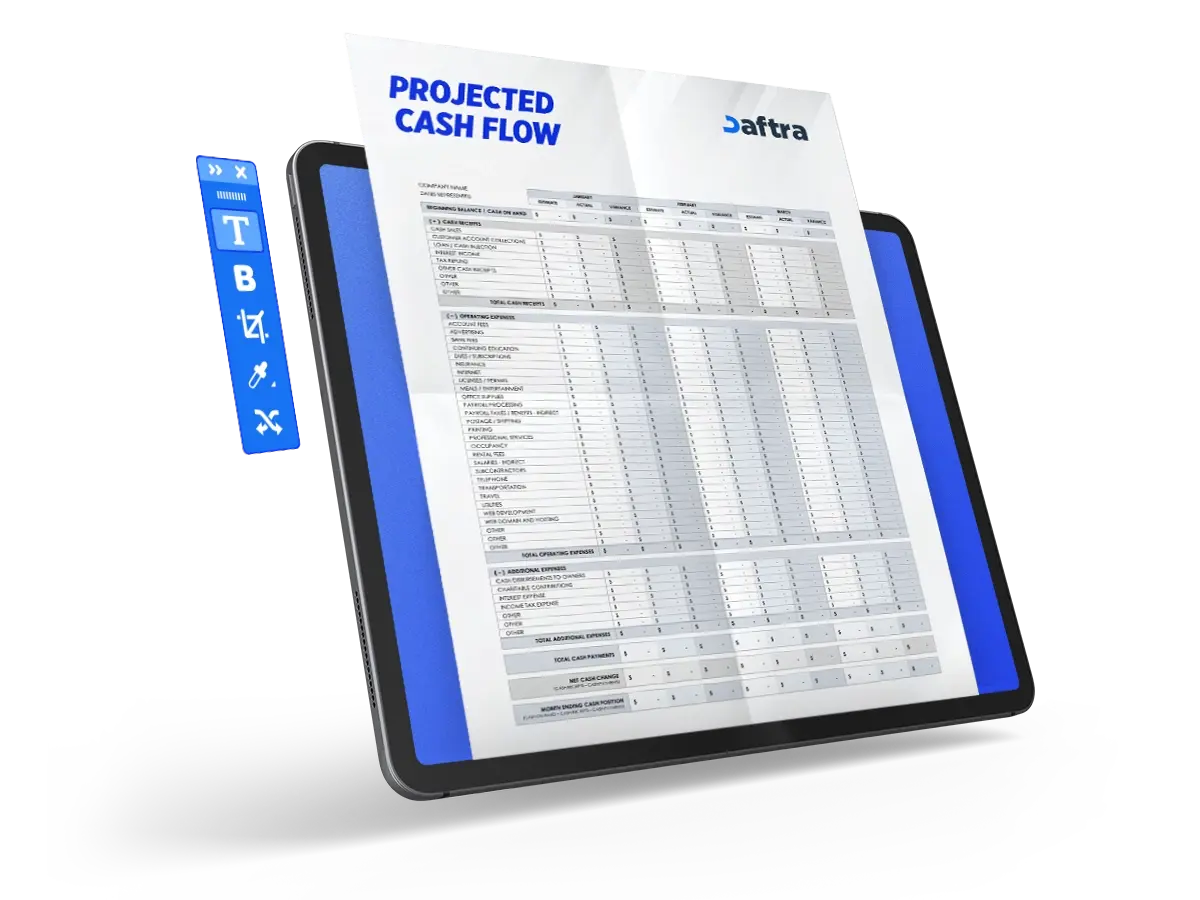
 Track your cash flow and plan your finances easily with Daftra
What Is a Projected Cash Flow Forecast Template?
A Projected Cash Flow Forecast template (Cash Flow Forecast) is a financial tool used to estimate the expected cash inflows and outflows of a company or project over a defined future period, typically by month or quarter. Its purpose is to forecast how the company’s cash balance may change over time and identify periods in which a cash shortage or surplus may occur.
The main sections of a Projected Cash Flow Forecast template include:
1. Revenue
Includes revenue from the sale of goods and services, as well as any other expected income.
2. Expenses
Includes all expected expenses, such as production costs, wages, rent, marketing costs, and other operating expenses.
3. Capital Expenditures
Identifies any significant expected investments in equipment or other assets.
4. Debt and Interest Cash Flows
Includes repayment of outstanding debt and any interest incurred by the company on its borrowings.
5. Tax Cash Flows
Calculates any future tax payments.
6. Changes in Working Capital
Calculates the expected effect of changes in working capital, such as changes in raw material inventory and trade payables.
7. Other Cash Flows
Includes any other cash flows not covered above.
8. Opening and Closing Cash Balances
Identifies the cash balance at the beginning and end of the period.
A Projected Cash Flow Forecast template helps analyze the company’s financial position and estimate its ability to cover costs and meet financial obligations. Using this template supports strategic decision-making, including investment planning, debt management, and identifying periods when additional financing may be required.
What Are the Elements of a Projected Cash Flow Forecast Template?
A Projected Cash Flow Forecast template consists of several elements representing expected cash inflows and outflows over a defined period. The main elements include:
1. Revenue
Includes all expected cash inflows, such as sales of products or services and other income.
2. Expenses
Includes all expected expenses, such as production costs, wages and salaries, rent, and general and administrative expenses.
3. Capital Expenditures
Includes any major investments in fixed assets, such as equipment or property.
4. Debt and Interest Cash Flows
Includes debt repayments and interest payments on loans and advances.
5. Tax Cash Flows
Calculates any future tax payments.
6. Changes in Working Capital
Relates to the effect of expected changes in current assets and liabilities, such as inventory, accounts receivable, and accounts payable.
7. Other Cash Flows
Includes any other cash flows not mentioned above, such as fund transfers or unexpected cash movements.
8. Opening and Closing Cash Balances
Determines the cash balance at the beginning and end of the period, helping to identify the net change in cash.
Together, these elements form a forecast of cash inflows and outflows over a specific period. The template helps analyze the company’s liquidity and supports informed management decisions on how to manage cash flow efficiently.
How to Use a Projected Cash Flow Forecast Template
A Projected Cash Flow Forecast template enables companies and individuals to analyze and plan cash sources and uses over a defined period. It can be used as follows:
1. Analyze the Current Position
Review the current financial position of the company or project, including existing liquidity and financial expectations.
2. Define the Forecast Period
Determine the period for which cash flow will be forecast. This may be weekly, monthly, quarterly, or annually, depending on the purpose of the analysis.
3. Identify Income Sources
List all expected income sources, such as sales, investments, loans, and any other sources.
4. Estimate Costs and Expenses
Identify and estimate all expected costs and expenses, such as production costs, wages, rent, and taxes.
5. Forecast Changes in Working Capital
Estimate expected changes in working capital, including inventory, accounts receivable, and accounts payable.
6. Forecast Capital Expenditures
Identify any significant expected investments in fixed assets and estimate their financial value.
7. Calculate Debt and Interest Cash Flows
Estimate debt repayments due and any interest incurred by the company on loans.
8. Forecast Other Cash Flows
Estimate any other cash flows not listed above, such as fund transfers or unexpected cash movements.
9. Calculate Opening and Closing Cash Balances
Determine the cash balance at the beginning of the period and the closing balance at the end.
10. Evaluate and Analyze the Results
After entering all data, evaluate the results and analyze the forecast. Identify periods in which the company may experience a cash surplus or shortage.
11. Adjust Plans as Needed
Based on the analysis, revise plans and forecasts to align with the company’s objectives and market conditions.
A Projected Cash Flow Forecast template helps guide cash management strategies and supports better investment and financial decisions.
Why Is a Projected Cash Flow Forecast Template Important?
A Projected Cash Flow Forecast template is an important tool for companies and individuals for several reasons:
1. Forecasting Financial Problems
It helps identify potential financial problems that may arise in the future, allowing the company to develop early solutions.
2. Improving Working Capital Management
The forecast can be used to improve working capital management and reduce pressure on liquidity.
3. Making Informed Financial Decisions
It supports informed financial decisions based on accurate forecasts of future cash flows.
4. Planning to Meet Obligations
It allows companies to anticipate periods when significant payments or unexpected costs may arise, enabling them to plan accordingly.
5. Identifying the Need for Additional Financing
It helps determine whether additional financing may be required if the forecast indicates a future liquidity shortfall.
6. Improving Communication with External Stakeholders
It makes cash flow expectations easier for investors and other external stakeholders to understand, strengthening confidence and communication.
7. Analyzing the Financial Impact of Operating Decisions
It provides a framework for evaluating the financial impact of operating decisions and identifying the most suitable scenarios.
8. Planning for Crises
It helps anticipate difficult economic conditions or potential crises, allowing the company to prepare and respond effectively.
In summary, a Projected Cash Flow Forecast template significantly improves cash management and supports financial decisions based on reliable information about future cash flows.
Who Benefits from a Projected Cash Flow Forecast Template?
A Projected Cash Flow Forecast template benefits a wide range of stakeholders, including:
1. Companies and Business Owners
It helps business owners and companies understand and analyze expected cash flows, supporting financial and strategic decisions that promote sustainability and growth.
2. Financial Managers
It enables finance managers to analyze and forecast liquidity, improve capital management, and make informed financial decisions.
3. Investors and Shareholders
It gives investors and shareholders a clear view of how the company manages cash flow, helping them make better investment decisions.
4. Banks and Credit Institutions
It helps assess the company’s ability to repay loans and debts, supporting credit decisions.
5. Consumers
Cash flow can affect the products and services a company provides and may therefore influence the choices and experiences available to consumers.
6. Financial Advisors
The template helps financial advisors provide better advice to clients based on a detailed analysis of their financial position.
7. Government and Tax Authorities
It can be used to understand company cash flows, helping support tax assessments and the development of government financial policies.
8. Suppliers and Business Partners
It enables suppliers and business partners to assess the company’s ability to settle amounts due and meet its obligations, which may affect their commercial relationship.
9. Internal Users and Employees
It helps clarify the company’s financial position and improves employees’ understanding of how their decisions and performance affect liquidity.
Overall, a Projected Cash Flow Forecast template is an important financial management and strategic decision-making tool that serves the interests of the various stakeholders connected to a company or project.








 Invoicing
 POS
 Offers
 Installments
 Sales Commission
 KSA E-Invoice Software
 EGY E-Invoice Software
 JO E-Invoice Software
 E-Invoice Software
 Chart of Accounts
 Asset Management
 Cost Centers
 Expenses
 Cheque Cycle
 UAE VAT-Tax
 Product Management
 Purchases
 Purchase Cycle
 Suppliers
 Requisitions
 Stocktaking
 Organizational Structure
 Personnel Management
 Attendance and Leave
 Contracts
 Payroll
 Requests
 Work Orders
 Booking Management
 Rental and Unit Management
 Time Tracking
 Work Flow
 Lease Contracts
 Manufacturing Management
 Client Follow-Up
 Loyalty Points
 Points and Credits
 Memberships
 Insurance Management
 Daftra ERP Full App
 Point of Sales App
 Point of Sales for Desktop – Support Offline Mode
 AI Expenses Scanner App
 Employee Attendance, Sign & ESS App
 E-invoice Reader App
 Inventory Stocktaking App