


Posted on 14 October 2026
Chart of Accounts Template
- A Chart of Accounts Template is a core element of modern accounting, especially for companies that use double-entry bookkeeping. It is also essential when using single-entry bookkeeping.
- The chart of accounts organizes all company accounts by dividing them into main accounts and subaccounts.
- Each account has its own code, whether it is a main account or a subaccount. A subaccount carries a code that branches from the main account code.


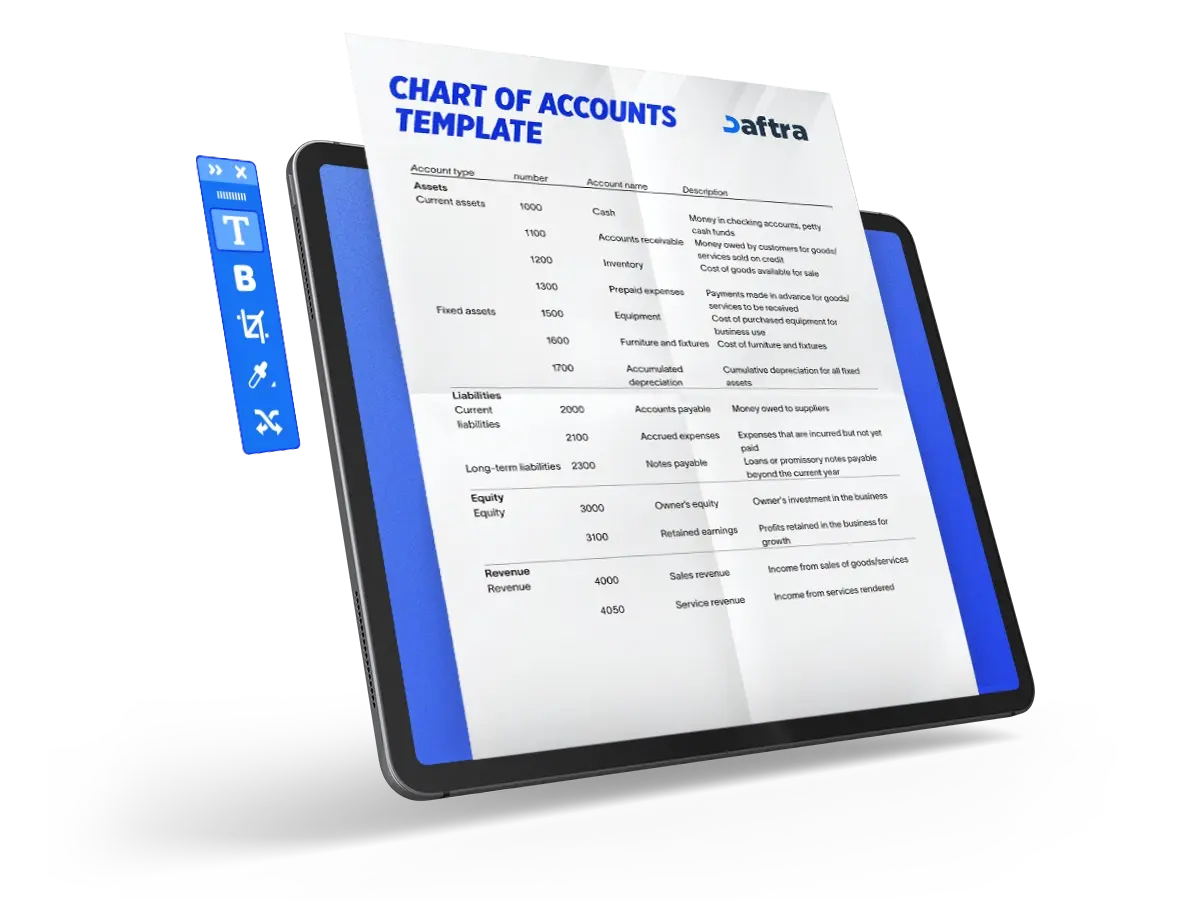
 Register with Daftra and generate chart of accounts automatically
What Is a Chart of Accounts Template?
A Chart of Accounts Template is an index and guide for all main accounts and subaccounts used inside your company. It helps identify chains of related accounts that belong to the same parent account. The chart of accounts covers four main account categories that form the core of the general ledger:
- Assets
- Liabilities and Equity
- Expenses
- Revenue
Why Is a Chart of Accounts Template Important?
A Chart of Accounts Template can be viewed as a foundation for your company's accounting because it provides the following benefits:
1- A Primary Method for Organizing Financial Transactions
By classifying accounts and creating subaccounts and secondary accounts for each main account, your company can determine which account each financial transaction belongs to and identify the accounts with the highest transaction activity.
2- A Flexible List That Adapts to Your Business Field
The structure of the Chart of Accounts Template changes according to the nature of the business. For example, operating expenses may be added or removed depending on the company's needs, including research and development, security, software licenses, and other expense categories.
3- Easier Access to a Clear View of Financial Performance
Your company cannot obtain a clear view of its financial performance without a well-organized and accurate account structure. The Chart of Accounts Template provides that structure.
What Are the Elements of a Chart of Accounts Template?
The template displays the accounts used in your company and organizes them as follows:
1- Classification
The template includes main accounts and subaccounts. Each subaccount belongs to one of the following main accounts:
- Assets
- Liabilities and Equity
- Revenue
- Expenses
Subaccounts may also be divided into multiple levels to provide more accuracy for each type of transaction related to a group, category, or department inside the company.
2- Account Code
The template includes a code for each account, whether it is a main account or a subaccount. A subaccount code is usually derived from the main account code. For example, assets may carry the code 1, current assets 11, cash under current assets 1101, and cash on hand 110101.
3- Description
The template includes the chart of accounts along with a description for each account, so the correct account can be used easily in the appropriate situation.
How to Use a Chart of Accounts Template
You can use the Chart of Accounts Template as follows:
1- Identify Your Company's Main Accounts
Use the four categories mentioned earlier as your main accounts. You can also separate equity from liabilities, making five main accounts instead of four.
2- Review the Codes Assigned to Each Account
To work efficiently with accounts, each account should have a clear code. This makes it easier to reference the account correctly in journal entries.
3- Start Refining the Accounts
You can add new subaccounts or remove some existing accounts based on your company's needs.
Who Benefits from a Chart of Accounts Template?
This template benefits users and employees in both financial and management accounting because organization is essential to many accounting tasks. Financial accountants and management accountants who work directly with company accounts often refer to the chart of accounts to identify the relevant account code, its position in the account structure, and the main account it belongs to.








 Invoicing
 POS
 Offers
 Installments
 Sales Commission
 KSA E-Invoice Software
 EGY E-Invoice Software
 JO E-Invoice Software
 E-Invoice Software
 Chart of Accounts
 Asset Management
 Cost Centers
 Expenses
 Cheque Cycle
 UAE VAT-Tax
 Product Management
 Purchases
 Purchase Cycle
 Suppliers
 Requisitions
 Stocktaking
 Organizational Structure
 Personnel Management
 Attendance and Leave
 Contracts
 Payroll
 Requests
 Work Orders
 Booking Management
 Rental and Unit Management
 Time Tracking
 Work Flow
 Lease Contracts
 Manufacturing Management
 Client Follow-Up
 Loyalty Points
 Points and Credits
 Memberships
 Insurance Management
 Daftra ERP Full App
 Point of Sales App
 Point of Sales for Desktop – Support Offline Mode
 AI Expenses Scanner App
 Employee Attendance, Sign & ESS App
 E-invoice Reader App
 Inventory Stocktaking App