


Posted on 5 October 2026
general journal template
- A General Journal is used to record the transactions completed during the day.
- It helps track progress toward specific goals and document daily transactions related to the company activities that contribute to achieving those goals.
- Business owners and project managers use the journal book to monitor balances and accounts.


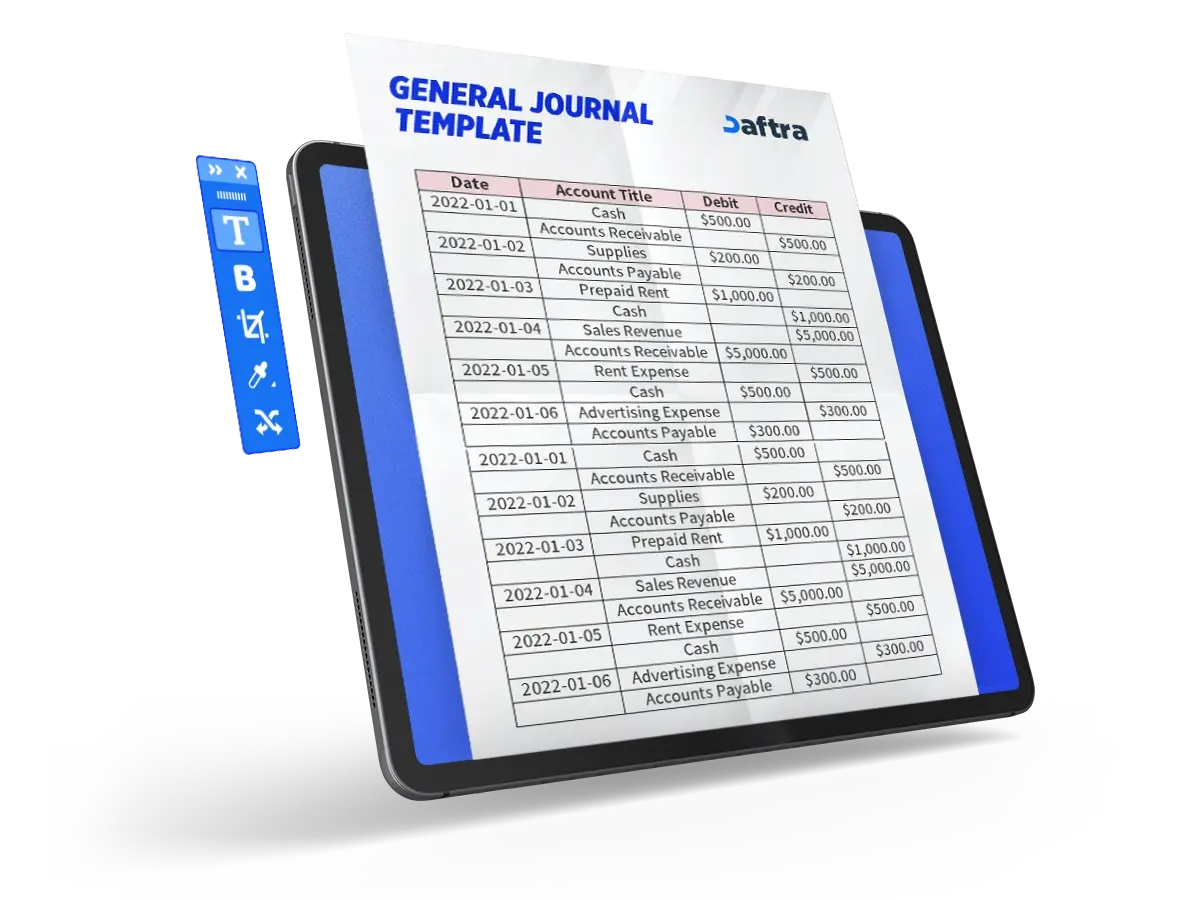
 Automate your journal entries and simplify accounting with Daftra
What Is a General Journal Template?
A general journal template is a model or form used to record the activities and events that take place during the day. In accounting, this book is often maintained annually or for the full accounting period.
The template usually includes dedicated space for recording financial transactions that occur within a specific period of time.
general journal templates vary in design and format depending on the intended needs and uses. The template may be printed for manual use, or it may be available in digital formats that can be used on computers or smartphones.
Companies, individuals, and institutions use general journal templates to organize their finances, record amounts due, track daily activities, and set priorities. They may also be used in areas such as work, education, time management, personal planning, and other contexts to improve productivity and organize day-to-day life.
What Are the Elements of a General Journal Template?
A daily accounts journal template is an accounting tool used to record the daily financial transactions of an organization or company. The elements may vary slightly depending on the company needs and business type, but they usually include the following common components:
Transaction Date
The date of the financial transaction or event.
Transaction Description
A brief description of the completed financial transaction, such as a purchase, sale, cash deposit, cash withdrawal, supplier payment, customer receipt, and similar activities.
Debit and Credit Accounts
The transaction amount is recorded in the debit account and the credit account according to the accounting treatment used for the transaction.
Financial Amount
The value of the financial transaction, whether it is a cash deposit, cash withdrawal, debit amount, or credit amount.
Current Account Balance
The current account balance is recorded after each transaction to update the final balance of the account.
Additional Notes
A space for recording any additional notes related to the financial transaction when needed.
These elements are used to track and accurately record daily financial activities, which supports financial statement preparation and financial performance analysis.
How to Use a General Journal Template?
Using a daily accounts journal template helps record daily financial transactions accurately and in an organized way. The following steps can be used:
Identify the Required Items
Before you start using the daily journal, identify the items you want to record every day, such as cash deposits, cash withdrawals, purchases, sales, and any other financial transactions.
Set the Date and Time
Start by recording the date and time of each financial transaction. This information must be documented correctly.
Record Financial Transactions
Record each financial transaction in detail, including the amount, the related accounts, and an accurate description of the transaction.
Calculate Daily Balances
After each financial transaction, calculate the daily balance for each financial account. Start with the previous balance, then add or subtract the new amounts and calculate the updated balance.
Review and Verify
At the end of each day, review the daily accounts journal to ensure that it is accurate and complete. Make sure all financial transactions have been recorded correctly and that balances are reconciled.
Keep Records
Maintain the daily accounts journal regularly so it can be used later for financial reports and analysis.
By following these steps, you can use the daily accounts journal template effectively to record and track daily financial transactions for your organization or for personal purposes.
Why Is a General Journal Template Important?
A daily accounts journal template is important for several reasons:
Recording Financial Transactions
The journal book allows you to record all financial transactions that occur daily, helping you track cash and cash flows accurately.
Controlling Money
By using a daily accounts journal, you can monitor how money is used and identify daily expenses and revenue clearly.
Providing Transparency and Credibility
The daily accounts journal provides an accurate record of all financial transactions, which enhances transparency and increases the credibility of financial data.
Budget Planning
You can use information from the daily accounts journal to identify available financial resources and plan the company or organization budget effectively.
Financial Analysis
The daily accounts journal is an important tool for financial analysis because it can be used to analyze financial trends and identify strengths and weaknesses in financial performance.
Compliance with Accounting Controls
The daily accounts journal supports compliance with accounting controls and financial regulations by providing accurate documentation of financial transactions.
Overall, the daily accounts journal is an essential tool for managing money and achieving organizational or personal goals effectively.
Who Benefits from a General Journal Template?
A general journal template can be useful for a variety of people and groups, including:
- Professionals and business owners: They can use the journal book to organize their schedules, identify important appointments, and track professional tasks and priorities.
- Administrative employees and government employees: The template can be used to organize daily administrative tasks, schedule meetings and important appointments, and manage time effectively.
- Coaches and personal mentors: They can use the journal book to organize activity schedules and sessions with clients, track their progress, and guide them toward achieving personal and professional goals.
- Individuals seeking better time management and productivity: Anyone who wants to improve time management and personal productivity can use the journal book to organize their daily schedule and achieve goals effectively.
In general, anyone who wants to organize and manage personal or professional time and priorities can benefit from using a general journal template.








 Invoicing
 POS
POS Offers
 Installments
 Sales Commission
 KSA E-Invoice Software
 EGY E-Invoice Software
 JO E-Invoice Software
 E-Invoice Software
 Chart of Accounts
 Asset Management
 Cost Centers
 Expenses
 Cheque Cycle
 UAE VAT-Tax
 Product Management
 Purchases
 Purchase Cycle
 Suppliers
 Requisitions
 Stocktaking
 Organizational Structure
 Personnel Management
 Attendance and Leave
 Contracts
 Payroll
 Requests
 Work Orders
 Booking Management
 Rental and Unit Management
 Time Tracking
 Work Flow
 Lease Contracts
 Manufacturing Management
  Client Follow-Up
 Loyalty Points
 Points and Credits
 Memberships
 Insurance Management
 Daftra ERP Full App
 Point of Sales App
 Point of Sales for Desktop – Support Offline Mode
 AI Expenses Scanner App
 Employee Attendance, Sign & ESS App
 E-invoice Reader App
 Inventory Stocktaking App