



Table of contents:
- Key Summary
- What Is a Virtual Corporate Card?
- How Does a Virtual Corporate Card Work for Business Payments?
- Virtual Corporate Card vs Physical Corporate Card
- Key Benefits of Virtual Corporate Cards for UAE Businesses
- Common Use Cases for Virtual Corporate Cards in the UAE
- Types of Virtual Corporate Cards Businesses May Use
- Disadvantages and Risks of Virtual Corporate Cards
- How to Choose a Virtual Corporate Cards Solution in the UAE
- How Virtual Corporate Cards Support Accounting, VAT Records, and Expense Reconciliation
- Where Daftra Fits After Corporate Card
- FAQs
Virtual corporate cards in the UAE empower businesses to securely manage expenses, control budgets, and streamline VAT compliance. Leading fintech platforms and major banks let you instantly generate single or multi-use virtual cards with customized spending limits, expiry dates, and real-time tracking.
What Is a Virtual Corporate Card?
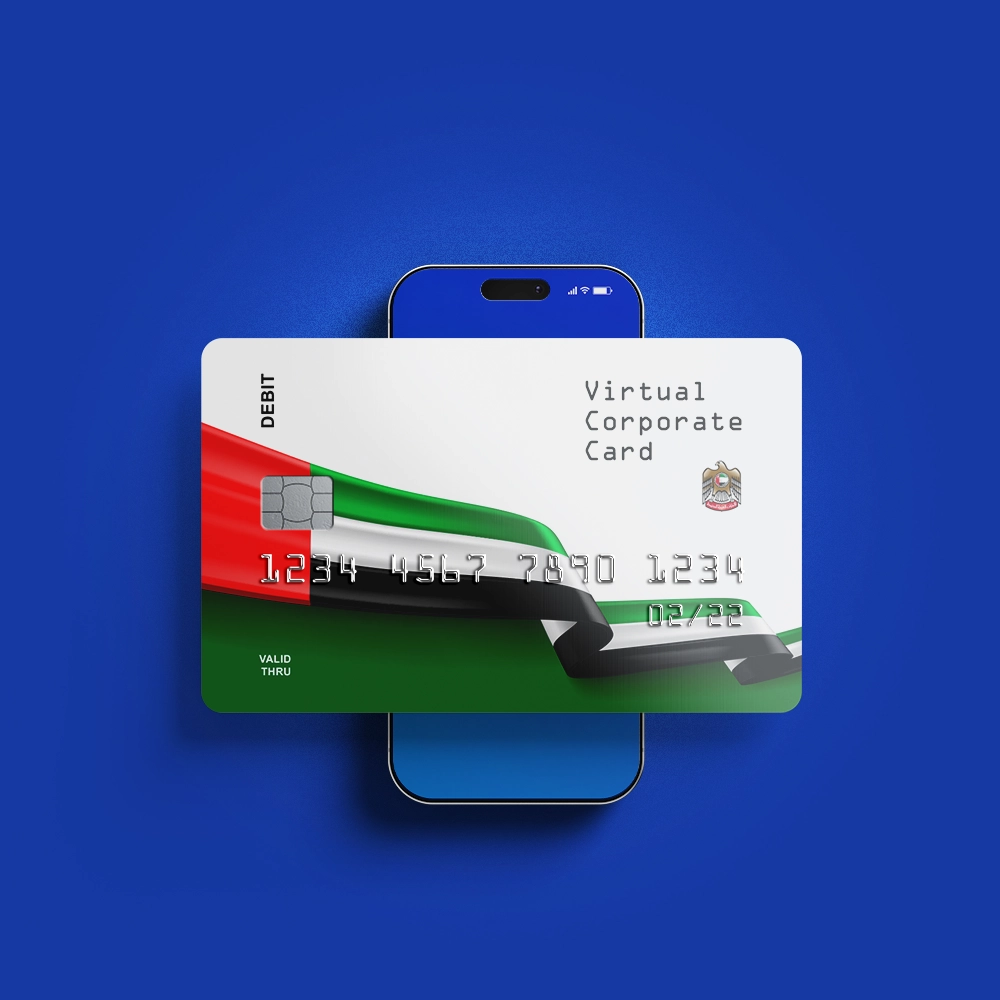
Virtual cards are temporary card numbers randomly generated and linked to a funding account that has an established line of credit. They are often integrated into accounting, enterprise resource planning and expense management systems to streamline back-office processes, including automating reconciliation. Every Virtual card has its own number, expiry date, and CVV, a physical card, but you don’t need to wait for delivery, and you can set its limits, expiration, and usage rules instantly.
They are typically used for a specific transaction or for a specific period of time.
The UAE predicts that 80% of B2B sales interactions between suppliers and buyers will take place through digital channels by 2025. As millennials ascend to key decision-making roles, a seller-free virtual sales experience will become standard.
How Does a Virtual Corporate Card Work for Business Payments?
Each virtual card has its unique card number that links back to your main bank account or funding source. You can create multiple virtual cards and use them to transact in various currencies using funds available in your account. Some providers offer additional features such as the option to set transaction limits and to create disposable cards that automatically expire after the intended payment has been made.
Here is exactly how they work for business payments:
- Users can create a virtual card through their bank or financial provider's website. They will receive their virtual card details including a set of unique card numbers, expiry date, and security code. During this process, they may have the option to set specific spending limits or card expiration dates for added control.
Download: Payment Voucher Template
- When making a purchase, the virtual card details are entered just like those of a traditional card. The transaction is encrypted and processed through secure payment gateways, ensuring the safety of your business' financial information.
- Your bank or financial provider then verifies the transaction, ensuring adequate funds are available and that the transaction parameters fit within any set limits. Approval is signal led back to the merchant without revealing any sensitive account information.
- The purchase amount is deducted from your account, and the vendor receives payment. The transaction appears on your statement, linked to the virtual card number, allowing for easy tracking and management.
You can download: What Is a Payment Voucher.
Virtual Corporate Card vs Physical Corporate Card
A virtual card is similar to a traditional credit or debit card but exists solely in a digital format. It is primarily used for online purchases and subscription services, offering a convenient and secure alternative to physical payment methods.
Both are linked to a bank account and used to make payments. But there are some important differences in how they’re issued, managed, and used in practice.
Key difference between Virtual Corporate Card and Physical Corporate Card
The best choice will depend on how your organisation spends. If the majority of your transactions are made online or your team works remotely, virtual cards are likely your best bet. They’re quick to issue, easy to track, and offer greater security with custom limits and expiry settings.
Key Benefits of Virtual Corporate Cards for UAE Businesses
Virtual Corporate Cards empower UAE businesses to streamline operations by offering instant issuance, precise spending controls, real time visibility, and Solve Cash Flow Issues. They eliminate manual tracking, prevent unwanted subscription renewals, and seamlessly automate expense reconciliation across your entire organization UAE Virtual Corporate Card for Business.
Here is how virtual cards transform business operations:
Easier Tracking of SaaS and Subscriptions
Assign unique, dedicated virtual cards to individual software subscriptions. If a service is no longer needed, simply freeze or delete the specific card to instantly block forgotten, auto-renewing charges.
Faster Purchasing for Approved Needs
Eliminate the wait time associated with physical bank cards. Finance teams can generate and issue virtual cards in seconds, allowing employees to immediately pay for approved business tools, marketing ads, or software to join their works.
Granular Control Over Spending
Prevent overruns by setting strict, customizable spending limits and vendor restrictions per card. You can also issue single-use virtual cards to external agencies or freelancers to keep your main funds secure.
Better Finance-Team Visibility
Track every AED you spent in real-time through a centralized dashboard. Transactions automatically sync with accounting software virtually eliminating the need for manual data entry and end-of-month receipt chasing.
Clear Visibility into Online Expenses
Gain complete oversight of your digital spending footprint. You can categorize and monitor every online purchase and ad campaign in one place, helping your team make data-driven budgeting decisions.
Call the Daftra team and tell them what specific operational challenges or pain points your finance team is currently facing so the Daftra team can recommend the ideal UAE-based virtual card provider for your business?
Common Use Cases for Virtual Corporate Cards in the UAE
Key use cases for businesses in the UAE include:
- Marketing and Advertising Campaigns: Allocate cards with predefined budgets (hard-coded limits) for campaigns such as, Facebook Ads or Google Ads to prevent overspending.
- Subscriptions and Software (SaaS): Track and manage cloud service and software fees monthly for each department.
- Travel and Leisure Management: Book flights, hotels, and manage employee travel needs, with the option to integrate with many platforms for expense tracking.
- Supplier Payments (B2B): Create dedicated virtual cards for specific suppliers or single-use cards to protect data and reduce fraud.
- Petty Cash Alternative: Replace cash payments for field teams with virtual cards linked to digital wallets such as Apple Pay and Google Pay for easy purchases.
- VAT Compliance: Utilize specialized UAE platforms to automatically track invoices and taxes, streamlining accounting and auditing processes.
Types of Virtual Corporate Cards Businesses May Use
Virtual corporate cards offer UAE businesses enhanced security, automated expense tracking, and precise spending limits.
Here is how UAE businesses can leverage these specific virtual card types to optimize budgets:
- Standard Virtual Cards: Function just like general physical corporate cards but are issued instantly for online transactions. Ideal for general employee expenses. They allow managers to set monthly limits and enforce corporate travel policies, completely eliminating the need for physical wallets and manual receipt-keeping. They are ideal for every day, approved employee business expenses.
- One-Time Virtual Cards: Perfect for one-off purchases from new or unknown vendors. It is a temporary, randomly generated digital payment number linked to your actual credit or debit card. They automatically expire or "self-destruct" immediately after a single transaction, making them the ultimate tool for preventing fraud, avoiding recurring subscription traps, and protecting your primary account data.
- Recurring Virtual Cards: Secure, digital card numbers designed specifically for ongoing subscriptions and vendor payments. Unlike single-use, disposable cards, they remain active over multiple billing cycles and can be set to automatically replenish their spending limits on a daily, weekly, or monthly basis. Best for predictable expenses and software subscriptions. You can tie these cards to specific tools (Google Ads or Zoom) and set hard-capped budgets to stop surprise overruns.
- Vendor-Specific Cards: These cards are digital payment cards tied exclusively to one pre-approved merchant or supplier. This secures ongoing B2B payments, making it highly efficient for managing large-value supply chain invoices. They are widely used by businesses to manage software licenses, and control purchasing. It offers several advantages such as enhanced security, strict spend controls, and automated reconciliation.
- Department or Project Cards: Secure, instantly generated digital payment numbers tied to a company's main account. These cards allow businesses to maintain strict control over spending, with limits and parameters customizable to specific departments, projects, or employees. Highly customizable for specific teams (e.g., Marketing and Sales Teams). Finance teams can easily monitor exactly where department budgets are going in real-time.
Disadvantages and Risks of Virtual Corporate Cards
Although virtual credit cards offer several benefits for businesses, they also come with some limitations that you should consider before using them.
Below is one of the key drawbacks of using a virtual credit card for your business:
- Acceptance: While becoming increasingly popular, acceptance of virtual cards is not universal. Businesses that work with a broad range of suppliers may encounter resistance to virtual payment methods. Traditional payment systems, even bank or SWIFT transfers remain the preferred choice for many suppliers, owing to their established reliability and widespread recognition.
To get around this, businesses may need to maintain multiple payment solutions to accommodate varying supplier preferences and address their own payment needs.
- Regulatory and compliance issues: Businesses always adept when it comes to selecting a virtual card provider that complies with regulations. Regulatory standards can vary significantly between different regions and industries, meaning businesses must invest time and resources to ensure their chosen provider is fully compliant. In addition, these regulations are subject to change, necessitating continuous monitoring and updating of policies to maintain compliance.
Employee resistance: Some employees may be accustomed to using their own personal cards or physical corporate cards and are hesitant to adopt virtual cards. A seamless transition to virtual cards necessitates company-wide training to ensure all employees are comfortable with the new system.
Most virtual cards are easy for employees to learn and use. They can simply add the cards to their phone’s Apple Pay or Google Pay to get started. Moreover, virtual cards have the benefit of streamlining the expense tracking and reporting process for employees as an added incentive for them to switch over.
- Fees: Some virtual card providers may impose various fees that add to the overall cost of using these cards. Issuance fees may be charged each time for creating a new virtual card, while transaction fees are incurred each time the card is used for a purchase. Additionally, maintenance fees may be levied on a regular basis simply to keep the card active.
- Reliance on the phone: One of the disadvantages of virtual cards is that they must be stored on mobile wallets or payment apps and accessed through a phone or laptop. However, if your device is out of battery or has a poor connection, you won't be able to use your virtual cards. In such cases, you'll need to use cash or physical cards for payments when smartphone access is unavailable.
How to Choose a Virtual Corporate Cards Solution in the UAE
Before 2026, corporate cards were issued by banks, used for travel and procurement, and manually reconciled weeks later.
When you evaluate corporate cards for SMEs in the UAE, you look past interest rates and card materials entirely. Here's what actually determines whether a card saves your finance team time or creates more work.
Automation that actually reduces work
Does the card support receipt capture via mobile? Can it match receipts to transactions automatically using OCR or AI? Does it reduce manual reconciliation?
Without these, your finance team stays buried in paperwork at month-end. I've seen teams spend 3-4 full days just chasing missing receipts. A good corporate card platform makes that problem disappear.
Employees simply snap a picture of a receipt, and the software automatically extracts the vendor, date, and VAT amount, eliminating manual data entry. Systems capture and organize VAT details in real-time, generating reports that comply with UAE Federal Tax Authority (FTA) standards.
Software and integration depth
Does the card come with a real spend dashboard? Not a basic transaction history, but an actual platform that lets you see spending patterns across departments in real time.
Able to connect with accounting software. Direct sync with transactions flow automatically into the right accounts. If not, your finance team is stuck with manual exports and CSV uploads every month.
And can it categorize expenses on its own? The difference between a card that just records transactions and one that auto-codes them to your chart of accounts is hours of work every month-end.
Real-time controls and limits
Modern finance teams need granular controls. Not just a monthly card limit set by the bank. Can you block certain merchant categories? Can you set daily, weekly, or per-transaction limits? Can you freeze a card instantly from your phone when something looks off?
These aren't luxury features. For a UAE SME managing 10, 20, or 50 employees with cards, the ability to set rules before money is spent is the difference between control and chaos.
To secure a corporate card with real-time controls in the UAE, you should explore modern spend management platforms. These fintechs allow instant issuance of physical and virtual cards, and live budget limits. Traditional banks in the UAE offer digital B2B solutions.
All-in-one platform vs. isolated features
In the UAE, choosing between an all-in-one spend management platforms and traditional isolated bank cards depends on your need for granular control versus raw credit capacity. All-in-one solutions offer automated reconciliation and unlimited virtual cards, whereas traditional banks provide higher credit limits but lack integrated expense software. Many cards offer isolated features. A dashboard here. A receipt scanner there. But the most effective systems combine cards, approvals, invoicing system, and accounting sync in one place.
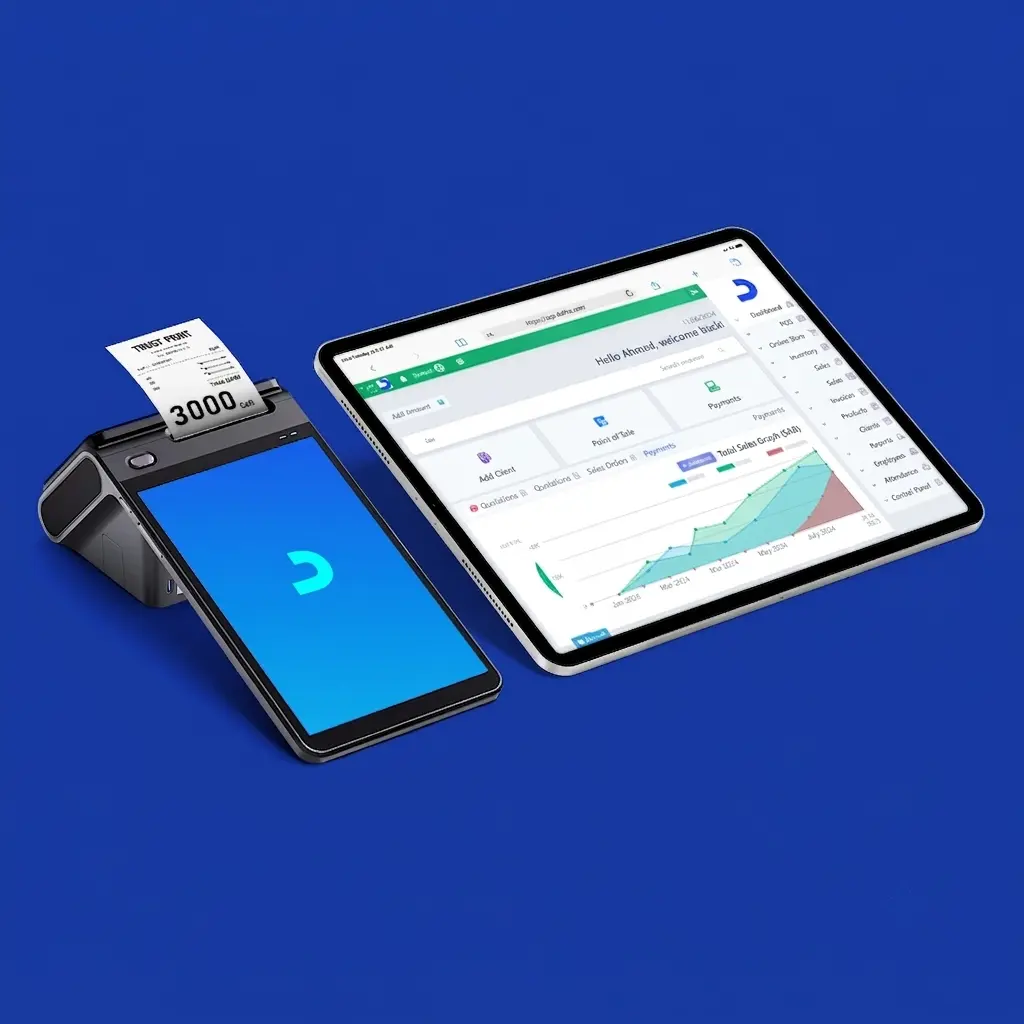
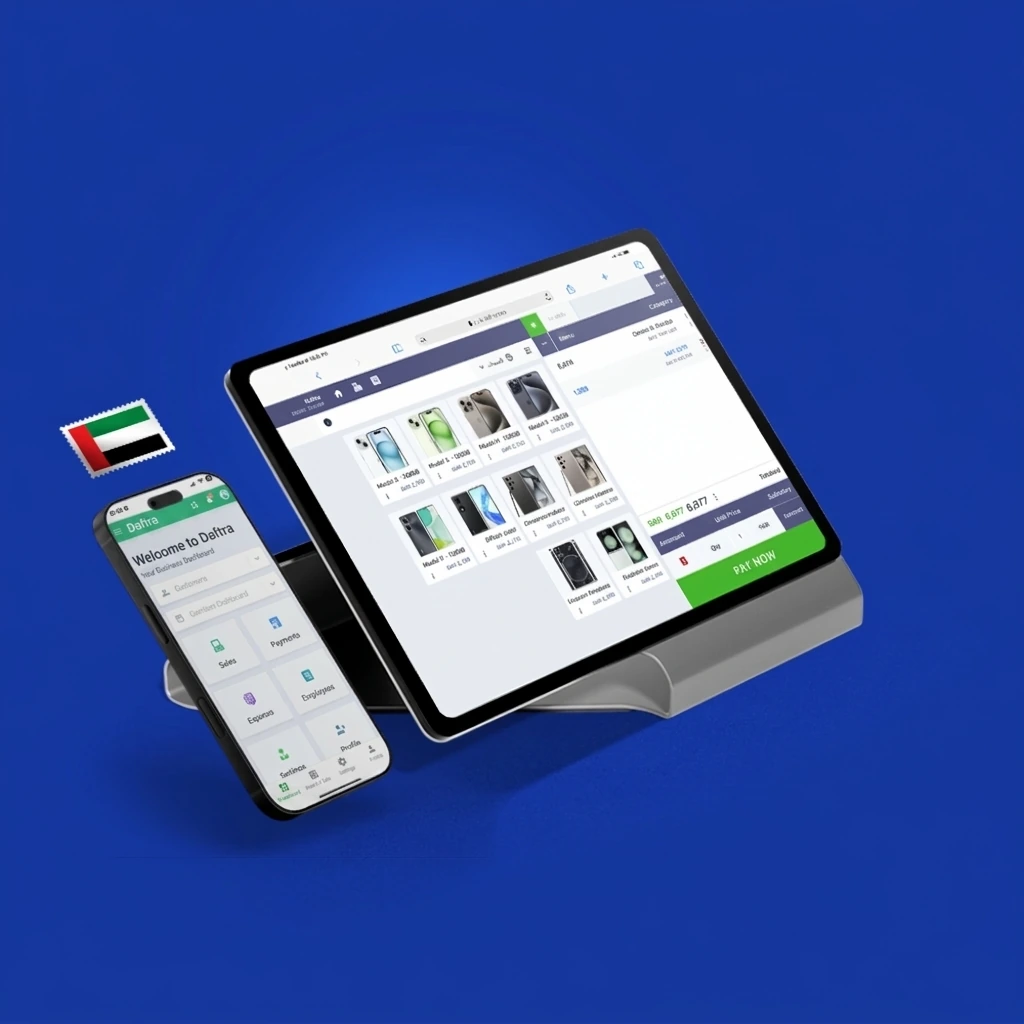
Daftra all-in-one business software platform that helps UAE businesses manage accounting, invoicing, expenses, inventory, sales, CRM, HR, reporting, cash flow, VAT, and corporate tax in one place.
How Virtual Corporate Cards Support Accounting, VAT Records, and Expense Reconciliation
Virtual corporate cards automate financial workflows for UAE businesses by instantly capturing transactions, digitally matching receipts, and logging VAT.
Virtual corporate cards automate financial workflows for UAE businesses by instantly capturing transactions, digitally matching receipts, and logging UAE VAT Input Tax Recovery. This eliminates manual data entry, guarantees accurate accounting ledgers, and ensures Federal Tax Authority (FTA) compliance through seamless API integrations with major accounting tools.
You may want to know more about: Non-Recoverable VAT in UAE: Blocked Expenses and Article 53 Rules
Accounting & Bookkeeping
Virtual card platforms instantly push transaction data into accounting software eliminating manual journal entries. Finance teams can issue unique virtual cards for specific projects, departments, or software subscriptions (e.g., SaaS tools, Google Ads), ensuring costs are immediately allocated to the correct ledger.
VAT Records & Compliance
The systems auto-calculate the standard 5% VAT and prompt employees to upload digital receipts via mobile apps, ensuring every input VAT claim has the required legal backing. Also, Platforms capture supplier Tax Registration Numbers (TRNs) and invoice data at the point of sale, preparing audit-ready records that make direct filing via the EmaraTax Portal straightforward.
Expense Reconciliation
Rather than waiting for monthly bank statements, accounting teams can view live transaction feeds and matching statuses in one centralized dashboard. In addition, AI-driven Optical Character Recognition (OCR) automatically matches uploaded receipts to card transactions, completely removing the need for retroactive expense reports and tedious month-end reconciliation.
Where Daftra Fits After Corporate Card
Daftra plays the core financial engine that bridges the gap between raw spending and finalized bookkeeping. It transforms corporate card transactions into structured, compliant, and actionable accounting data, managing everything from automated reconciliation to deep financial reporting.
Note: Daftra does not issue any types of cards or provide banking services.
After a UAE business starts using virtual corporate cards, it still needs a system to record expenses, organize suppliers, track cash flow, manage invoices, monitor reports, and keep financial workflows organized.
Here is what Daftra do to help businesses control the records and workflows around spending:
Conclusion
UAE Virtual Corporate Cards are essential for modern, digital-first businesses. Companies unlock enhanced security, dynamic spend controls, and automated reconciliation that perfectly align with UAE VAT regulations. They represent a foundational tool for eliminating fraud and administrative inefficiencies.
Virtual Corporate Cards is the best choice for UAE businesses because it is security, flexible in use, control, and has clarity terms.
FAQs:
What can a virtual card be used for?
A virtual card is a digital-only version of a physical debit or credit card that is used primarily for secure online transactions. It features a unique 16-digit card number, expiration date, and CVV, but exists entirely in your banking app or digital wallet.
Can I use my virtual credit card immediately?
Yes, you can use your virtual credit card immediately upon approval and issuance. Many UAE banks and providers offer instant digital cards that can be used for online shopping or added to digital wallets right away American Express UAE Virtual Card.
What are the disadvantages of a virtual card?
The primary drawbacks stem from not being physical. Key limitations include restricted in-store use, incompatibility with recurring bills due to expiration dates, reliance on charged devices, and difficulties securing refunds on expired cards.
Is a virtual card a good idea for business expenses?
Yes, virtual cards are highly effective for business expenses. They offer superior security, strict spending controls, and automated reconciliation, which eliminates manual expense reporting. They are ideal for business travel, recurring subscriptions, and vendor payments.
Can I withdraw money from a virtual credit card?
No, you cannot directly withdraw cash from a virtual credit card at an ATM because it lacks a physical form. However, you can indirectly access the funds by transferring the balance to a linked bank account via digital wallets or directly through your card issuer.
Can I use a corporate card for personal use?
No, you should generally not use a corporate card for personal expenses. Corporate cards are issued strictly for business-related purposes, and using them for personal items violates most company expense policies and can lead to termination.
Who is eligible for a corporate card?
To qualify for a corporate card program, a business must typically be a legally registered entity (such as an LLC or Corporation) with strong creditworthiness and minimum annual revenues (often $4 million+). For employees to receive a card, they must hold a role requiring business expenses and be approved by management.












 Invoicing
 POS
POS Offers
 Installments
 Sales Commission
 KSA E-Invoice Software
 EGY E-Invoice Software
 JO E-Invoice Software
 E-Invoice Software
 Chart of Accounts
 Asset Management
 Cost Centers
 Expenses
 Cheque Cycle
 UAE VAT-Tax
 Product Management
 Purchases
 Purchase Cycle
 Suppliers
 Requisitions
 Stocktaking
 Organizational Structure
 Personnel Management
 Attendance and Leave
 Contracts
 Payroll
 Requests
 Work Orders
 Booking Management
 Rental and Unit Management
 Time Tracking
 Work Flow
 Lease Contracts
 Manufacturing Management
  Client Follow-Up
 Loyalty Points
 Points and Credits
 Memberships
 Insurance Management
 Daftra ERP Full App
 Point of Sales App
 Point of Sales for Desktop – Support Offline Mode
 AI Expenses Scanner App
 Employee Attendance, Sign & ESS App
 E-invoice Reader App
 Inventory Stocktaking App