



Table of contents:
- What Is a Dubai Free Zone Company?
- Types of Business Licenses Available in Dubai Free Zones
- Step-by-Step Process for Free Zone Business Setup in Dubai
- General Cost Structure of Dubai Free Zone Setup
- Timeline for Business Setup in Dubai Free Zone
- After Getting Your Free Zone License – Operational Requirements
- Common Mistakes in Dubai Free Zone Company Formation
- Final Decision Checklist – Is a Dubai Free Zone Right for You?
- FAQs About Business Setup in Dubai Free Zone
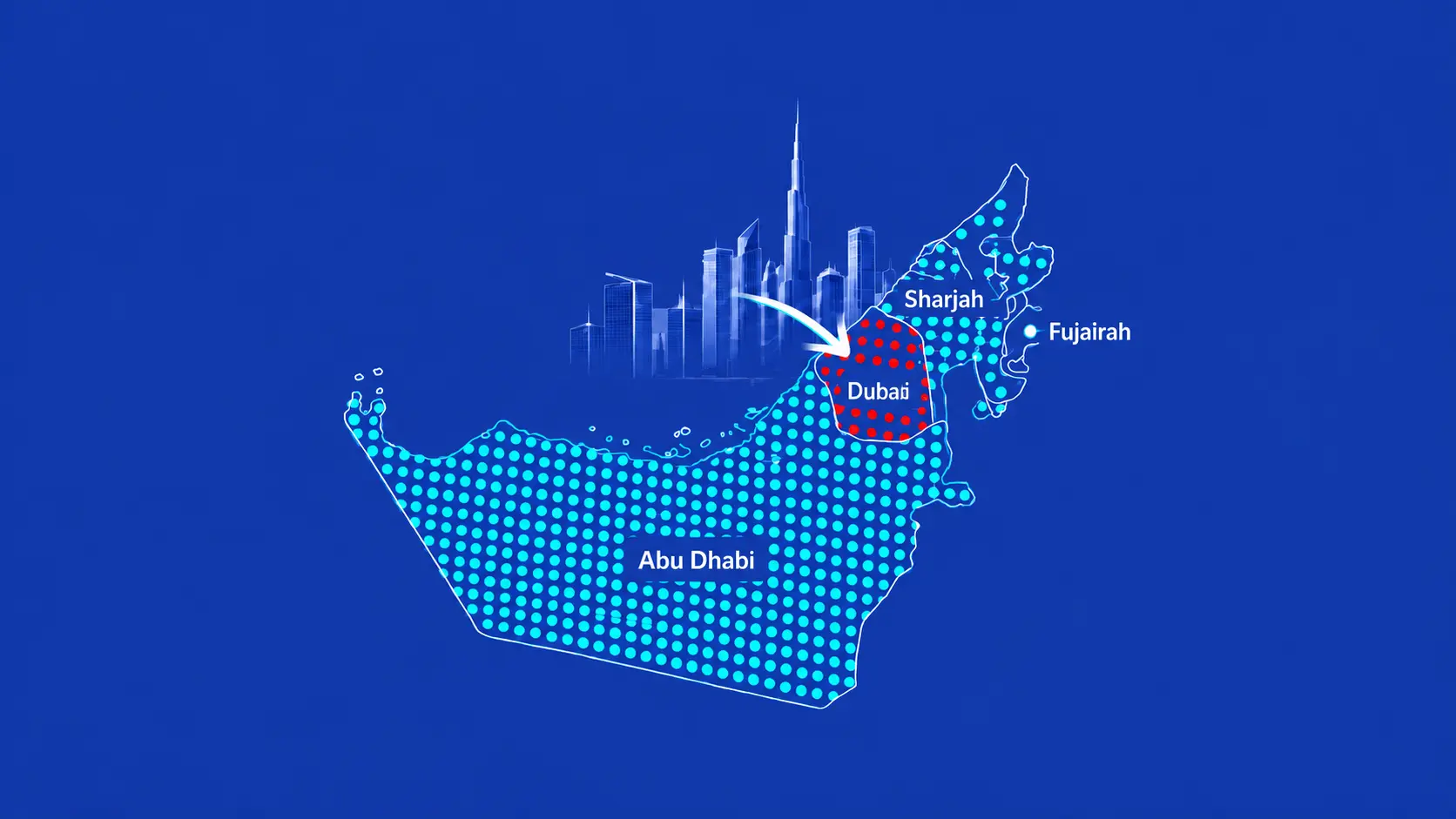
Dubai stands out as a global business hub which groups over 30 specialized zones that offer tailored setups for different sectors.
Anyone eager to understand what Is Free Zone in UAE usually wants to know more about business setup in Dubai free zone specifically.
Because it allows entrepreneurs to set up a company that operates under independent regulatory authorities.
- Dubai operates as a multi-zone business hub, where each free zone focuses on specific industries.
- Dubai free zones offer 100% foreign ownership and simple regulations for international investors.
- Companies benefit from a fast set up process compared to the mainland.
- It provides flexibility in choosing business activities according to each free zone's sector focus.
- Dubai free zone supports a wide range of sectors, such as trade, logistics, technology and media.
What Is a Dubai Free Zone Company?
A Dubai free zone company is a business entity formed in an economic area that operates under its own regulations and authority. They are designed to attract international businesses by offering simple regulations, and it also allows for two or more shareholders in its structure.
Ownership: Business setup in Dubai free zone allows 100% foreign ownership, and it doesn’t require a local sponsor.
Jurisdiction: Companies in Dubai free zones are regulated by the specific free zone authority that issued their license, so they're not managed by the mainland authority.
Independent authorities: Each free zone has an authority that is responsible for the company registration and its license.
Industry focus: Dubai free zones support companies to operate in sector-focused free zones.
Types of Business Licenses Available in Dubai Free Zones
Before setting up a business in a Dubai free zones, it’s important to know which type of licence best fits your business model. There are various sectors which may affect the license options. E.G., free zones such as DMCC and Dubai South provide specific licenses based on their sector focus.
| License type | Business Type | Main activities | Office/ warehouse requirement | Mainland trading |
| Commercial | Trading goods | Buy/sell goods | Office/ warehouse | Via approval or distributor |
| Service | Consultancy/Advisory | Services only | Office/ flexi-desk | Via approval or distributor |
| Industrial | Manufacturing/Production | Make/assemble goods | Factory/warehouse | Via approval or distributor |
| Media | Media/Content Creation | Creative production | Office/flexi-desk | Via approval or distributor |
| Trading | Specialized Trading | Import/export goods | Physical or virtual office | Via approval or distributor |
| E-Commerce Licence | Online business | Selling goods/services online | Physical or virtual office | Via approval or local partner |
| Tourism Licence | Tourism & travel services | Tour operators/ travel companies | Office/ flexi-desk | Via approval or distributor |
| Professional | Specialized Professions | Legal, medical, Consulting | Office/flexi-desk | Via approval or distributor |
| Freelance Licence | Individual professionals | Solo services | virtual or flexi-workspace | Via approval or distributor |
Step-by-Step Process for Free Zone Business Setup in Dubai
Step 1: Select the right free zone
Choosing a free zone that fits your budget and industry is really important. Dubai has over 30 free zones and each one has its own advantages that you can benefit from. Because business setup in Dubai free zone depends on many factors, such as the industry, documentation requirements, office space options, and ease of renewal. Comparing all these factors will help you make the right decision. Here is a quick comparison that can help you in understanding the popular zones in dubai:
| Free zone | Primary industry focus | Key features |
| JAFZA | Logistics & manufacturing | Direct connect with Jebel Ali Port, strong logistics infrastructure |
| IFZA | Services &Consulting | Competitive costs, flexible processes |
| DMCC | Trading & commodities | Large-scale free zone, strong banking relationships and active business community |
| DIFC | Finance & fintech | Independent common law framework and it’s a global financial center |
Step 2: Choose Your Free Zone Company Structure
Deciding which legal structure fits your business defines how your company will operate in the free zone, here is the company structures:
Free zone establishment (FZE): It’s designed for a single shareholder which can be an individual or a corporate entity. It suits entrepreneurs who want to have full ownership of the company.
Free zone company (FZCO): This structure is used when there are two or more shareholders. These shareholders can be individuals or companies. It’s Ideal for collaborations if multiple investors share the ownership.
Public joint stock company (PJSC): A structure that allows company shares to be in the public and traded on a stock exchange. It is usually used for businesses with substantial capital and that has long-term expansion plans.
Private limited liability company (LLC): It’s formed by two to fifty shareholders, but you can’t offer its shares to the public. It can suit companies that want limited liability and clear ownership structure.
Branch of a local or foreign company: It is an extension of an existing company registered inside or outside the UAE. The branch can carry out the same activities as its parent company and remains legally linked to it. Which suits international businesses that want a presence in the UAE.
Step 3: Trade Name Reservation
Your company name is a crucial part in the business setup processes, you must choose a name that follows the rules set by the free zone’s authority. And it has to be an original name and doesn’t contain any words that are against public morals. And if the name follows the rules, the authority will issue a trade name reservation certificate, so you can have the rights to use the company name.
Step 4: Submit the application
Most Dubai free zones have digitized their processes, so you can complete your registration completely online. You need to submit all the documents needed in the specific free zone you chose to avoid the delays. Then, after the application is reviewed you will get the initial approval.
Step 5: Office Space Requirements
Securing a workspace for your company is an important part of business setup in Dubai free zone. You have to start in the office requirement before the license is fully issued. It shows the authorities that your business has a real presence in the UAE. You can choose from different office options, including flexi-desks and offices.
Step 6: Finalize Registration
You’ll sign some official documents such as the Memorandum of Association (MoA), which outlines key details about your business such as the business activities and share capital. After signing all documents and paying fees the free zone authority issues your business licence.
Step 7: License issuance
After all documents are approved, the authority will issue your trade license. And you also receive other documents such as a certificate of incorporation and your company’s (MoA). These documents confirm that your company can operate legally within the selected free zone.
Step 8: Apply UAE Residency Visa
If you want to work in the UAE or hire employees, you have to apply for a visa. Most Dubai free zones offer visa quotas with their license packages, which makes the process easier. Once approved, your visa allows you to stay in the UAE for up to 2 to 3 years, and you can renew it.
Step 9: Open a Corporate Bank Account
This is a critical step for managing your business expenses. You have to prepare all the needed documents because banks in the UAE have strict compliance standards. The earlier you open the business bank account will help you avoid cash flow disruptions.
General Cost Structure of Dubai Free Zone Setup
Understanding the cost structure in business setup in Dubai free zone helps you in planning the budget accurately. While exact fees can vary according to the free zone and business type, most set ups follow the same cost categories.
| Cost component | What it covers |
| Licence Fee | This payment is made for the free zone authority to register the company and issue its initial incorporation documents. The cost depends on the legal structure and the selected free zone. |
| Registration Fee | It’s for issuing and maintaining the business licence based on the approved activity type, such as trading or services, etc. |
| Office Lease | The cost of securing a physical workspace in the free zone, like offices or industrial facilities, depends on the business activity. |
| Visa Quota | Fees related to allocating and processing residency visas for shareholders and employees. |
| Renewal Cost | Annual fees required to renew the business licence, office lease, and registration to keep the company legally active. |
Timeline for Business Setup in Dubai Free Zone
Business setup in Dubai free zone follows a clear sequence that becomes faster if you prepare all requirements properly. Understanding each phase will help you move in the setup much faster.
Name Reservation & Document Preparation (3–5 days)
Define your business activity and reserve your trade name and other documents needed. If all documents are accurate in this phase, it will help you get approvals faster. E.G., JAFZA setups can take 1-2 weeks, but if your business activity isn’t clear, it can extend to 3 weeks or more.
Office Setup & Trade License Issuance (2–7 days)
Once documents are approved, you’ll start by submitting your trade name certificate and (MoA), and also arranging the office setup you’ll have according to your business needs.
Visa procedures (7–14 days)
After obtaining your business licence, you can apply for your UAE residence visa and any employee visas. The timeline in this phase can take longer if there are any missing documents.
Corporate Bank Account Opening (1–3 weeks)
After company formation and licensing, you can open your corporate bank account. This step involves compliance checks so make sure you prepare accurate documents because banks in the UAE have strict standards. E.G., DMCC takes 1 to 3 weeks to complete the bank requirements but it can take longer if compliance isn’t complete.
After Getting Your Free Zone License – Operational Requirements
After your business is legally established, you’ll need to complete some operational steps to start running your business properly. Here is what you need to do after setting up a business setup in Dubai free zone.
Open a Corporate Bank Account: It’s an important step to receive payments and manage expenses, and UAE banks usually set strict standards for opening accounts so you have to ensure that all documents you provide are complete.
VAT Registration: If your business expects its annual taxable turnover to exceed AED 375,000, you must register. And to stay compliant, businesses should also understand how VAT in the UAE works to follow VAT Filing in UAE procedures and to know how to calculate VAT correctly for your businesses.
Set up accounting and bookkeeping: The UAE regulations require companies to maintain accurate financial records, so you have to track revenue and prepare financial statements that support tax compliance.
Implement an Invoicing System: It ensures that all store and track invoices are correct and compliant with VAT for reporting and audit purposes to meet the UAE standards.
Payroll and HR Setup: Registering for WPS and managing salaries to ensure compliance with labour regulations.
Annual License Renewal: Free zone licences must be renewed annually before they expire to not affect the business operations and it includes paying fees and updating company information.
Corporate tax and compliance review: If your businesses earn profits above AED 375,000. So you have to keep track of your taxable income and submit annual returns.
After getting your license, using e-invoicing software like Daftra will ensure that your business runs smoothly without any issues. It could assist you in running all your invoices, tracking of VAT, and payroll systems.
Read also: How to File Corporate Tax in UAE
Common Mistakes in Dubai Free Zone Company Formation
| Mistake | Impact | Prevention |
| Lack of legal compliance or proper documentation | Incomplete documents can cause delays or rejection of applications | Use a detailed checklist for required documents and double-check submissions before filling |
| Choosing the wrong activity code | Selecting an inappropriate business activity or license type can lead to license rejection, operational restrictions, and bank account issues | Carefully assess your business activities before application and align them with the official free zone activities |
| Not checking visa allocation | Underestimating visa quotas tied to office space or license type can restrict hiring or force costly office upgrades later | Plan your staffing needs ahead of time and choose office space that supports the number of visas you require |
| Underestimating renewal responsibilities | Assuming setup costs are one-time leads to surprises when annual licence and visa renewals | Forecast your annual renewal costs and track renewal deadlines and budget allocation. |
| Opening a bank account too late | Delaying bank account opening can prevent your business from receiving payments and conducting financial operations | Start the bank account application early once your licence is issued and prepare all required documents |
| Ignoring accounting and compliance requirements | Neglecting financial record-keeping, VAT filing, and other regulatory compliance can result in higher costs later. | Establish proper accounting software early and understand your VAT and tax obligations to meet reporting requirements. |
read also: How to Set Up a Mainland Company in Dubai
Final Decision Checklist – Is a Dubai Free Zone Right for You?
Choosing the right company structure in Dubai is a strategic decision; it affects where you can sell and how your business can grow. The checklist below will help you evaluate if Dubai free zone setup aligns with your business goals.
Market Focus: Free zones are generally best suited for businesses that focus on international markets. They usually don’t allow direct sales to the mainland without a special permit or using a distributor.
Budget & Cost Structure: Free zone company packages include simplified licence processes and visa quotas in competitive packages which can suit your costs especially for startups.
Growth Plan & Expansion: If you plan to scale internationally or keep operations efficient, free zones such as Abu Dhabi free zone provide fast setup and great economic ecosystems that will help you in business growth plans.
Compliance Readiness: All setups require compliance, including VAT and corporate tax, and you have to ensure that you keep clean records and reports to meet specific Free Zone Authority compliance and the FTA rules.
In order to make your business setup in the Dubai Free Zone successful, you have to rely on reliable accounting and compliance systems early, such as Daftra. It can help you in VAT tracking and financial reporting to ensure you're giving yourself a reliable foundation as you grow.
FAQs About Business Setup in Dubai Free Zone
How much does it cost to start a business in Dubai free zone?
The cost to set up a company in a Dubai free zone depends on setup expenses including licence and registration fees, office space, and visa processing and the overall costs according to the free zone and business activity.
Can a Dubai free zone company trade in mainland UAE?
Dubai free zone companies are allowed to operate on the mainland by obtaining the right permit or by establishing a mainland branch.
How long does it take to set up a free zone company in Dubai?
Usually it can take a few days to a couple of weeks if all documents are provided. This process may take longer if the business needs additional requirements like visa quotas
Do Dubai free zone companies pay VAT?
Yes, VAT can apply to free zone companies depending on where their goods or services are supplied. They must register for VAT if their taxable supplies exceed the AED 375,000.
Is office space required in Dubai free zones?
Most free zones require a form of office space before issuing a licence. There are various options like flexi‑desks, offices or warehouses, depending on your business activity and free zone authority regulations.












 Invoicing
 POS
POS Offers
 Installments
 Sales Commission
 KSA E-Invoice Software
 EGY E-Invoice Software
 JO E-Invoice Software
 E-Invoice Software
 Chart of Accounts
 Asset Management
 Cost Centers
 Expenses
 Cheque Cycle
 UAE VAT-Tax
 Product Management
 Purchases
 Purchase Cycle
 Suppliers
 Requisitions
 Stocktaking
 Organizational Structure
 Personnel Management
 Attendance and Leave
 Contracts
 Payroll
 Requests
 Work Orders
 Booking Management
 Rental and Unit Management
 Time Tracking
 Work Flow
 Lease Contracts
 Manufacturing Management
  Client Follow-Up
 Loyalty Points
 Points and Credits
 Memberships
 Insurance Management
 Daftra ERP Full App
 Point of Sales App
 Point of Sales for Desktop – Support Offline Mode
 AI Expenses Scanner App
 Employee Attendance, Sign & ESS App
 E-invoice Reader App
 Inventory Stocktaking App