





Table of contents:
- Article Summary
- What Is a Tax Return in Egypt?
- Who Is Required to File a Tax Return in Egypt?
- What Are the Most Common Types of Tax Returns in Egypt?
- When Must Tax Returns Be Filed in Egypt?
- How to File a Tax Return Electronically in Egypt
- What Documents and Information Should You Prepare Before Filing a Tax Return?
- What Happens If You Fail to File a Tax Return on Time?
- What Are the Most Common Mistakes When Filing a Tax Return?
- How Can Accounting Software Help You Prepare a Tax Return?
- Conclusion
Amid the digital transformation of Egypt’s tax system, the tax return serves as an official document submitted by individuals and businesses to the Egyptian Tax Authority. Its primary purpose is to accurately disclose income, expenses, and tax liabilities.
The Egyptian tax return is important because it serves as an official record of a taxpayer’s tax position. Filing it on time also helps taxpayers avoid penalties, which can reach millions of Egyptian pounds in certain cases.
This article provides a comprehensive guide to tax returns in Egypt, explaining what they are, which individuals and entities are required to file them, and how to submit them electronically.
What Is a Tax Return in Egypt?
A tax return in Egypt is an official document that individuals and businesses are required to submit to the Egyptian Tax Authority, as applicable. It contains accurate information about income, expenses, profits, and the amount of tax due.
Accurate tax returns start with accurate invoices. With Daftra’s electronic invoicing software for Egypt, you can issue invoices in one click with taxes calculated automatically, apply Egyptian unified standard (GS1) item codes, and add an e-stamp using an authorized electronic signature certificate.
Who Is Required to File a Tax Return in Egypt?
Several individuals and entities are required to file tax returns in Egypt, depending on their activities and applicable tax obligations.
1. Individuals and Self-Employed Professionals
This category includes individuals who earn income from various sources, such as freelance work, rental properties, and investments. It also includes professionals such as doctors, engineers, lawyers, and accountants.
2. Companies
Companies are also required to file tax returns, subject to the applicable tax rules. Filing obligations are not limited to companies of a particular size.
What Are the Most Common Types of Tax Returns in Egypt?
There are several types of tax returns in Egypt. The most common include the following:
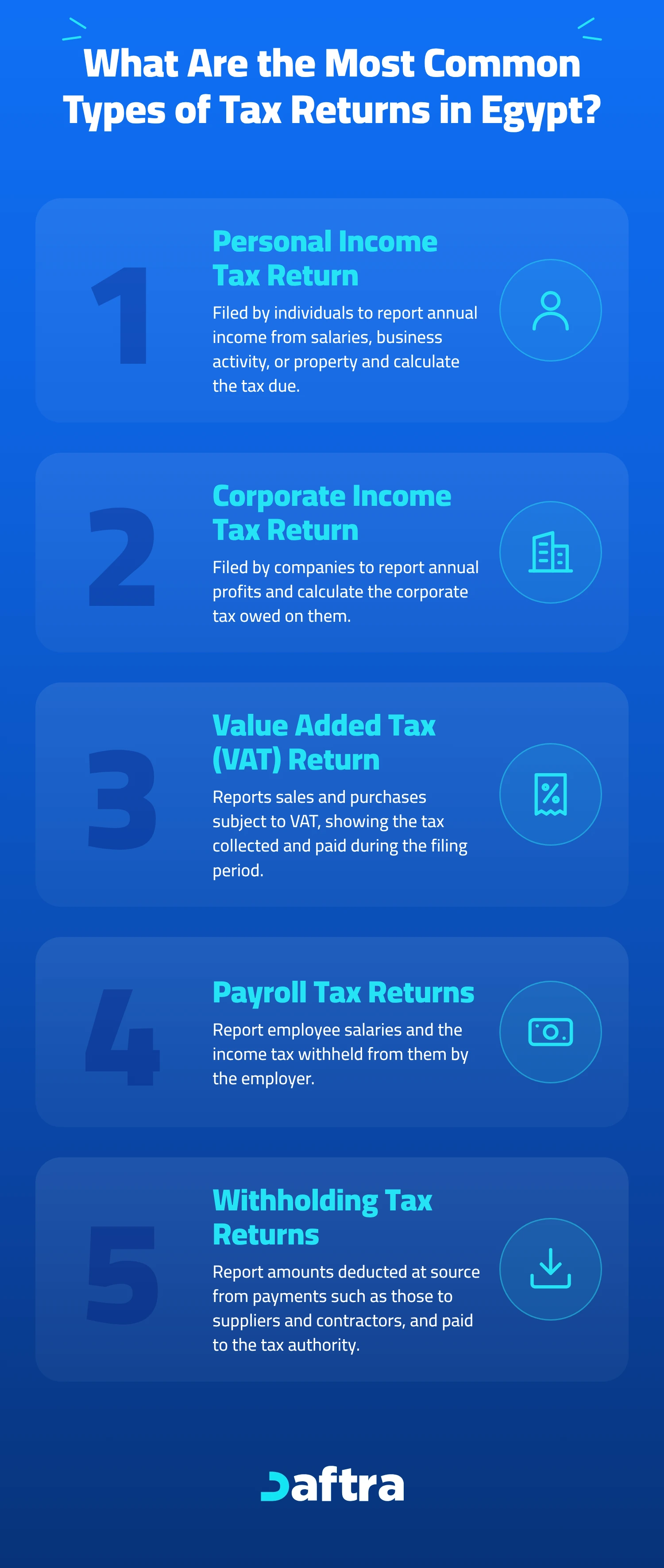
1. Personal Income Tax Return
Individuals and self-employed professionals file personal income tax returns annually. These returns may include income from professional activities and rental properties, subject to applicable deductions and tax rules. Tax is calculated using progressive rates based on taxable income.
2. Corporate Income Tax Return
Companies file corporate income tax returns based on their taxable profits. Depending on the applicable requirements, a final return may be submitted after the accounts have been approved. Filing obligations apply to entities subject to corporate income tax.
3. Value Added Tax (VAT) Return
VAT-registered businesses file VAT returns monthly or at the applicable reporting intervals. The return covers taxable sales and purchases, with Egypt’s standard VAT rate generally set at 14%. Filing may still be required for a reporting period in which no sales were made.
Download: Value Added Tax (VAT) Template
4. Payroll Tax Returns
Employers must comply with the applicable payroll tax reporting and withholding requirements. These filings cover employee remuneration and related information, while the employer withholds and remits payroll taxes in accordance with the applicable deadlines.
5. Withholding Tax Returns
These returns are submitted by entities responsible for withholding or collecting tax from payments made to suppliers, service providers, or other recipients. They report the relevant payments and amounts withheld during the reporting period.
When Must Tax Returns Be Filed in Egypt?
Tax return filing deadlines in Egypt vary depending on the type of return and the taxpayer’s status, whether an individual or a company.
The applicable deadlines are governed by Egyptian tax legislation, including the Unified Tax Procedures Law. Annual income tax returns have different deadlines from periodic VAT and payroll tax filings.
The Egyptian Tax Authority may announce extensions or other filing arrangements in certain circumstances. For example, the deadlines stated for income tax returns relating to the 2024 tax year were March 31, 2026, for individual taxpayers and April 30, 2026, for corporate taxpayers. Taxpayers should verify the applicable deadlines and any subsequent extensions through official Egyptian Tax Authority announcements.
It is important to check the Authority’s official portal regularly, as deadlines and filing arrangements may change.
How to File a Tax Return Electronically in Egypt
Tax returns in Egypt can be submitted electronically through the official tax system by following these general steps.
1. Access the Egyptian Tax Authority Portal
Visit the official tax portal or the relevant electronic tax services platform at eservice.incometax.gov.eg. Log in using your registered account and follow the procedures applicable to your taxpayer profile.
2. Select the Correct Tax Return
Choose the return that matches your taxpayer status and filing purpose. Available forms and services depend on the type of tax and the taxpayer’s registration. Confirm the correct form through the portal before proceeding.
3. Enter the Required Financial Information
Enter the required details accurately, including total revenue, expenses, taxable profit, and tax due, as applicable. Prepare supporting records, such as invoices and accounting documents, in case they are required by the system or requested by the Tax Authority.
4. Review, Approve, and Submit the Return
Review all entered figures and ensure that the required fields have been completed. Correct any errors, approve the return, and submit it electronically. Follow the portal’s instructions to confirm that the submission has been completed successfully.
5. Keep Proof of Submission
Save the submission reference number, electronic receipt, or other confirmation issued by the system. Retaining this evidence helps demonstrate that the return was submitted and can be useful if a dispute arises.
You may also be interested in: Tax Journal Entries: Their Importance and How to Record Them
What Documents and Information Should You Prepare Before Filing a Tax Return?
Preparing financial documents is an essential step before filing a tax return. The following records and information should be organized in advance:
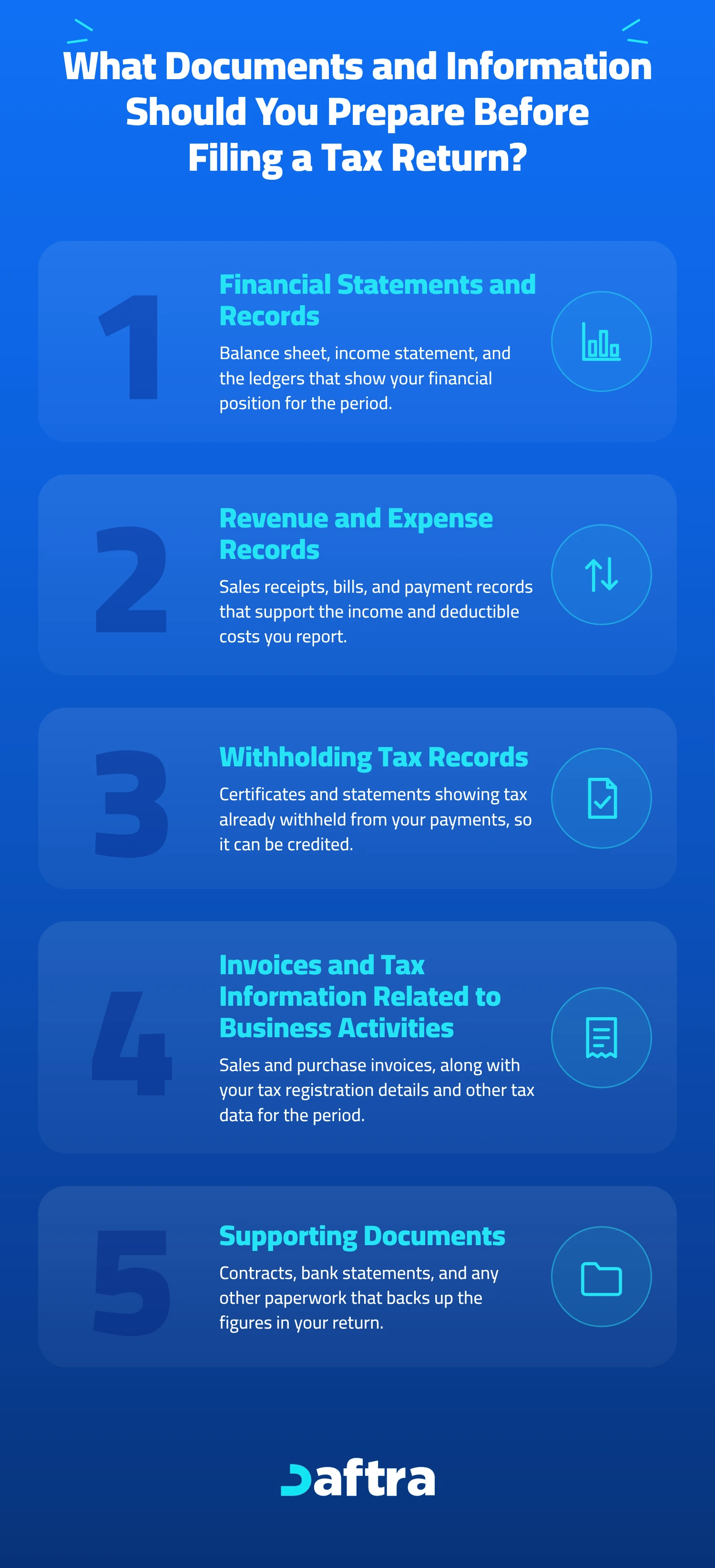
Financial Statements and Records
Gather the relevant financial statements, such as the balance sheet (statement of financial position), income statement, and cash flow statement.
Revenue and Expense Records
Prepare records of total revenue from sales or services, along with eligible deductible expenses, such as salaries, rent, and depreciation, in accordance with applicable tax rules.
Withholding Tax Records
If applicable, prepare records of tax withheld from payments to suppliers, including Form 41, along with supporting evidence of tax deposits and payments.
Invoices and Tax Information Related to Business Activities
Collect sales and purchase invoices subject to value-added tax (VAT), along with records of the VAT collected and other relevant tax information.
Supporting Documents
Gather supporting documentation for the reported figures, such as bank statements, contracts, payment receipts, and inventory records.
What Happens If You Fail to File a Tax Return on Time?
The Egyptian Tax Authority imposes penalties for late filing or failure to submit a tax return by the applicable deadline, under Unified Tax Procedures Law No. 206 of 2020.
Filing Delays of 60 Days or Less
Penalties may range from EGP 3,000 to EGP 50,000 for delays of up to 60 days, depending on the applicable provisions. Additional tax and interest may also apply where relevant.
Filing Delays Exceeding 60 Days
For delays exceeding 60 days, penalties may reach EGP 2 million, depending on the circumstances and applicable legal provisions. Penalties may be increased for repeated violations within three years. Repeated failure to file more than six monthly or annual returns may also result in imprisonment ranging from six months to three years, where the relevant legal conditions are met.
What Are the Most Common Mistakes When Filing a Tax Return?
Several common mistakes can lead to errors in a tax return, requests for clarification, or rejection of the submission. The most common include:
1. Selecting the Wrong Tax Return Form
Some taxpayers may select a form that does not match their taxpayer status or business activity, resulting in an incorrect filing.
2. Waiting Until the Last Minute
Delaying submission until the final days increases the risk of data-entry errors and technical issues that may prevent timely filing.
3. Entering Incomplete Information
Leaving required fields blank or entering incomplete revenue and expense information can result in an inaccurate or invalid submission.
4. Failing to Reconcile the Return With Accounting Records and Supporting Documents
If the figures in the tax return do not match the accounting records or invoices, the Tax Authority may request additional supporting evidence or clarification.
5. Failing to Retain Proof of Submission
Not saving the submission reference number or electronic receipt can create difficulties if proof of filing is needed later.
6. Relying on Unsupported Estimates
Using estimates that are not supported by appropriate documentation may result in deductions being disallowed and the tax payable being adjusted.
How Can Accounting Software Help You Prepare a Tax Return?
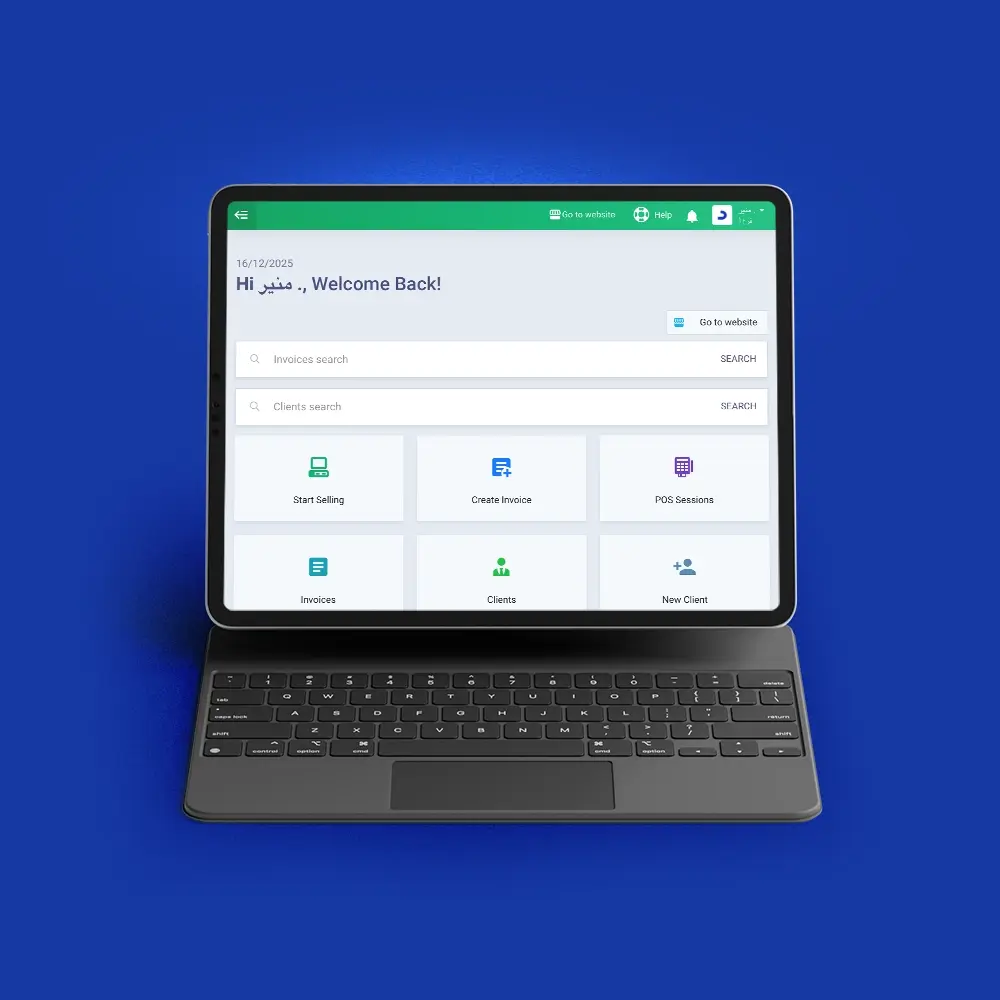
Accounting systems such as Daftra Accounting Software can simplify the preparation of tax returns in Egypt by automating routine tasks and organizing financial information. They can help businesses in several ways:
- Organizing revenue and expenses throughout the year: Generate reports summarizing revenue, expenses, and net profit without having to calculate every figure manually.
- Saving time and effort: Access up-to-date financial reports without having to compile all the information from scratch.
- Generating customized reports: Prepare reports that support the completion of applicable tax return forms, such as Forms 101 and 103, subject to the current requirements and available system functionality.
- Reducing manual errors: Minimize errors associated with manual calculations and data entry by maintaining organized, consistent accounting records.
You may be interested in: Accounting Software: What They Are and Their Functions
Conclusion
In Egypt, a tax return is more than an administrative form; it is a legal obligation that helps taxpayers demonstrate their tax position to the Egyptian Tax Authority and avoid penalties associated with non-compliance.
Choosing the correct tax return type and meeting the applicable filing deadlines are essential. Accounting software such as Daftra can also save time and effort by organizing revenue and expense records, making tax return preparation faster, more accurate, and more efficient.







 Invoicing
 POS
 Offers
 Installments
 Sales Commission
 KSA E-Invoice Software
 EGY E-Invoice Software
 JO E-Invoice Software
 E-Invoice Software
 Chart of Accounts
 Asset Management
 Cost Centers
 Expenses
 Cheque Cycle
 UAE VAT-Tax
 Product Management
 Purchases
 Purchase Cycle
 Suppliers
 Requisitions
 Stocktaking
 Organizational Structure
 Personnel Management
 Attendance and Leave
 Contracts
 Payroll
 Requests
 Work Orders
 Booking Management
 Rental and Unit Management
 Time Tracking
 Work Flow
 Lease Contracts
 Manufacturing Management
 Client Follow-Up
 Loyalty Points
 Points and Credits
 Memberships
 Insurance Management
 Daftra ERP Full App
 Point of Sales App
 Point of Sales for Desktop – Support Offline Mode
 AI Expenses Scanner App
 Employee Attendance, Sign & ESS App
 E-invoice Reader App
 Inventory Stocktaking App