


Posted on 5 October 2026
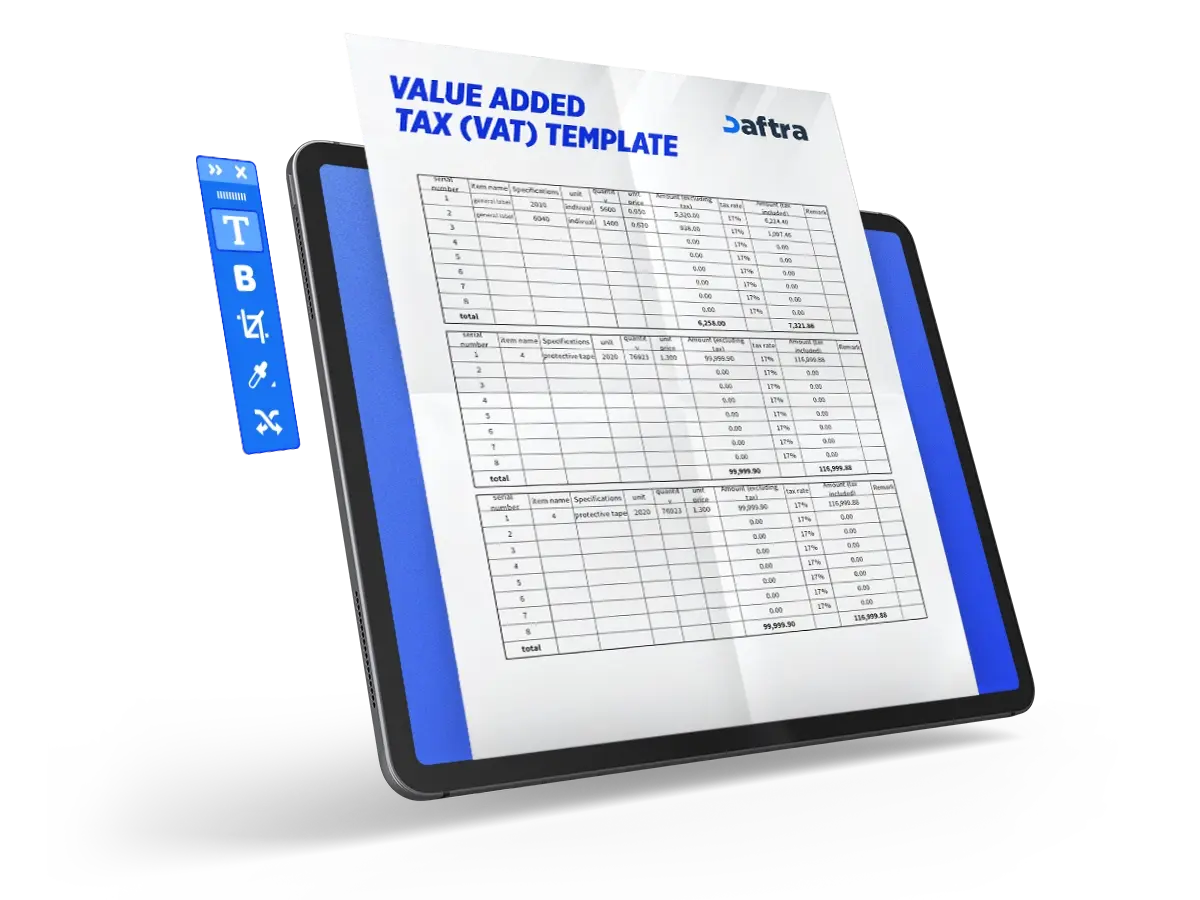
Value Added Tax (VAT) Template
- A Value Added Tax (VAT) Template is one of the most important templates in modern business, especially as many tax systems have replaced sales tax with VAT.
- The VAT Template helps tax authorities collect dues from buyers through businesses that act as tax collectors.
- VAT is applied after any permitted discounts have been calculated.


 Register with Daftra and calculate VAT automatically
What Is a Value Added Tax (VAT) Template?
A Value Added Tax (VAT) Template is an invoice template that accounts for VAT. It is similar to any other invoice that includes the item purchased by the customer, the quantity, unit price, and any discount allowed for the customer.
Use the Saudi VAT calculator to calculate any VAT percentage automatically and for free.
Why Is a Value Added Tax (VAT) Template Important?
The VAT Template is one of the most important templates for businesses and tax authorities. Its importance comes from the following points:
- It helps the tax authority collect the tax due from the customer purchasing the product. In this process, your company acts as an intermediary collector that ultimately remits the tax to the authority.
- Showing the tax amount to the customer helps build a trust-based relationship between the customer and the company. Breaking down the amount paid not only increases credibility, but also clearly shows the monetary value of each item.
- It helps the company comply with local laws and avoid any legal accountability related to VAT, because VAT is properly reflected in its invoices.
What Are the Elements of a Value Added Tax (VAT) Template?
As mentioned above, the VAT Template is an invoice that includes VAT. It includes the following elements:
1- Company Details
The template includes the details of the company selling the product or service, such as the company name, address, phone number, and postal box for official correspondence.
2- Customer Details
The template includes the name of the customer who purchased the product or subscribed to the service, along with details such as the address, the company name (if the customer represents a company), and whether the customer is an individual. It may also include the customer's email address and mailing address for official correspondence. Your company can also assign a specific code to each customer to make it easier to refer back to their transactions and previous purchase history.
3- Invoice Details
Each invoice includes details such as an invoice number or reference code that identifies the customer in whose name the invoice was issued. The invoice issue date and due date should also be specified.
4- Item Details
The template includes details of the item sold, whether it is a service or a product. This includes the quantity sold, unit price, any discount allowed for the customer and related to the product, and the total amount.
5- Value Added Tax
This is the most important element in the template and is applied as the final step after the subtotal and available discounts have been determined. VAT is usually a fixed percentage, such as 15% under the Saudi system or 14% under the Egyptian system, but the percentage varies by country.
How Do You Use a Value Added Tax (VAT) Template?
To get the most value from a VAT Template, you can follow these steps:
1- Create a Fixed Template for Your Company Details
Use the available template and add your company’s basic details so they remain fixed. This way, you only need to add the variable details related to the customer or the product.
2- Enter the Customer Details
You should specify the customer in whose name the template is issued. Add the company-assigned reference code, along with the purchase date and due date.
3- Define the Variable Invoice Items
Whether the variable item is a product or a service, you should specify its name, description, quantity if applicable, and the unit price at which it was sold to the customer.
4- Apply the Unit Price
Calculate the total price of the units sold on the invoice, applying the available discount based on the customer or product.
5- Add the VAT Amount
After calculating the total invoice amount, apply the fixed VAT percentage.
Who Benefits from a Value Added Tax (VAT) Template?
Several parties benefit from the VAT Template, most importantly the finance department, as this template proves the company’s compliance with local laws. It also helps the customer deal with an entity that values transparency and credibility. On the other hand, the country’s tax authority benefits from the template because it identifies the amounts your company expects to remit as value-added tax.







 Invoicing
 POS
POS Offers
 Installments
 Sales Commission
 KSA E-Invoice Software
 EGY E-Invoice Software
 JO E-Invoice Software
 E-Invoice Software
 Chart of Accounts
 Asset Management
 Cost Centers
 Expenses
 Cheque Cycle
 UAE VAT-Tax
 Product Management
 Purchases
 Purchase Cycle
 Suppliers
 Requisitions
 Stocktaking
 Organizational Structure
 Personnel Management
 Attendance and Leave
 Contracts
 Payroll
 Requests
 Work Orders
 Booking Management
 Rental and Unit Management
 Time Tracking
 Work Flow
 Lease Contracts
 Manufacturing Management
  Client Follow-Up
 Loyalty Points
 Points and Credits
 Memberships
 Insurance Management
 Daftra ERP Full App
 Point of Sales App
 Point of Sales for Desktop – Support Offline Mode
 AI Expenses Scanner App
 Employee Attendance, Sign & ESS App
 E-invoice Reader App
 Inventory Stocktaking App