




Table of contents:
- Key Summary
- What is Sustainable Accounting?
- What are the Objectives of Sustainable Accounting?
- What are the Elements of Sustainable Accounting?
- What are the Benefits of Sustainable Accounting?
- What is an ESG Report?
- What are the Challenges Facing Sustainable Accounting? And how to avoid them?
- Sustainability Accounting Standards Board (SASB)
- What are some examples of sustainability practices in accounting?
- Sustainable Accounting in the Saudi Context
- How can Saudi companies implement sustainable accounting?
- How to Measure Sustainability?
- How does the Daftra software help you implement sustainable accounting?
- Frequently Asked Questions
- In conclusion
Profits are not always the primary or final goal of business activities. In this regard, sustainable accounting provides companies with an opportunity to achieve a balance between profitability and maintaining social and environmental responsibility, which is fundamentally considered an integral part of corporate strategy.
Therefore, we present to you in this article a comprehensive guide on sustainable accounting and its objectives, elements, the most prominent challenges facing sustainable accounting, and details related to how to implement sustainable accounting disclosure standards issued by the International Federation of Accountants and International Financial Reporting Standards for preparing financial reports.
What is Sustainable Accounting?
Sustainable accounting is a systematic approach to identifying, measuring, analyzing, and reporting a company’s Environmental, Social, and Governance (ESG) performance and its potential impact on business performance.
It extends beyond traditional financial accounting by considering how business activities affect the environment, employees, communities, and other stakeholders, while also examining sustainability-related risks and opportunities and their potential financial implications.
It provides a structured framework for evaluating ESG factors such as greenhouse gas emissions, energy and water consumption, waste generation, employee health and safety, fair compensation, human rights, board oversight, and internal controls. This information can support financial reporting, cost management, sustainability disclosure, and business decision-making.
What are the Objectives of Sustainable Accounting?
The objectives of sustainable accounting are centered on achieving a balance between environmental, economic, and social dimensions. Below, we answer the question about what sustainable accounting aims to achieve:
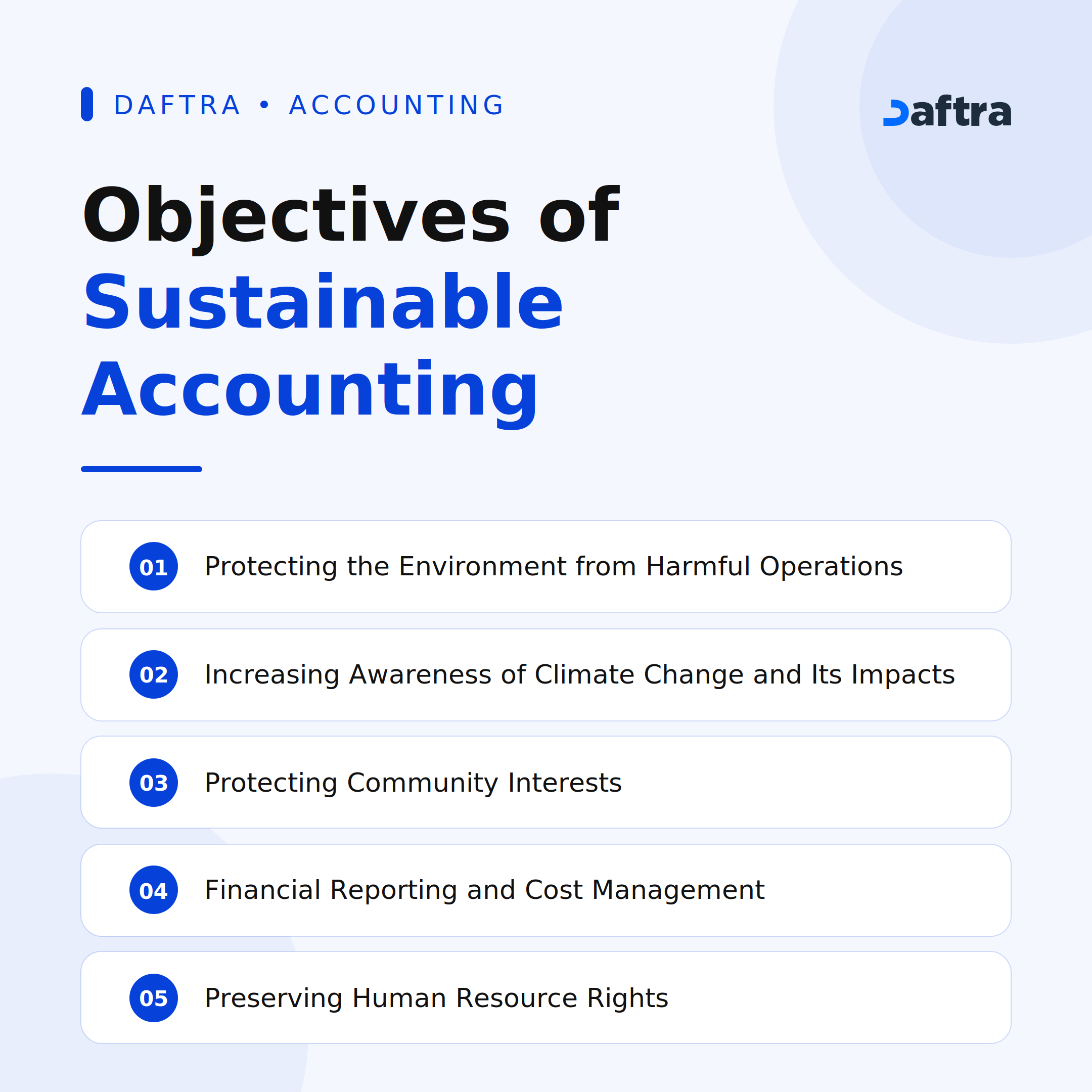
1- Protecting the Environment from Harmful Operational and Production Processes
Reducing the harmful environmental effects of operational and production processes, as well as minimizing emissions from them, such as carbon emissions, is one of the most important objectives of sustainable accounting.
This is achieved by encouraging the effective use of renewable and non-renewable resources and energy sources in a way that does not harm society, either directly or indirectly, and allows for the sustainable use of these resources for long-term use by future generations. It also involves positive waste management using environmentally friendly technologies, such as green technology that helps protect the environment, and re-managing supply chains to achieve environmental sustainability goals.
2- Increasing Awareness of Climate Change and Its Impacts
One objective of sustainable accounting is to increase awareness of climate change and its impact on business, which helps companies mitigate the effects of climate change. This is achieved through tracking and reporting greenhouse gas emissions and taking the necessary actions and measures to prevent climate change risks.
3- Protecting Community Interests
The objectives of sustainable accounting include achieving a balance between the company's need to generate profit and the needs of the surrounding community, through preserving community interests and promoting principles of accountability and transparency in the company's dealings with the public, customers, and other external parties, as well as focusing on participation in social initiatives in cooperation with civil society institutions.
4- Financial Reporting and Cost Management
Sustainable accounting aims to integrate sustainability-related information into financial reporting and cost management. It helps organizations identify how environmental, social, and governance factors may affect financial risks, asset values, future cash flows, provisions, and other financial measures.
It also supports better cost management by evaluating the financial impact of sustainability initiatives, such as investments in energy-efficient solutions, and comparing their current costs with potential long-term savings and benefits.
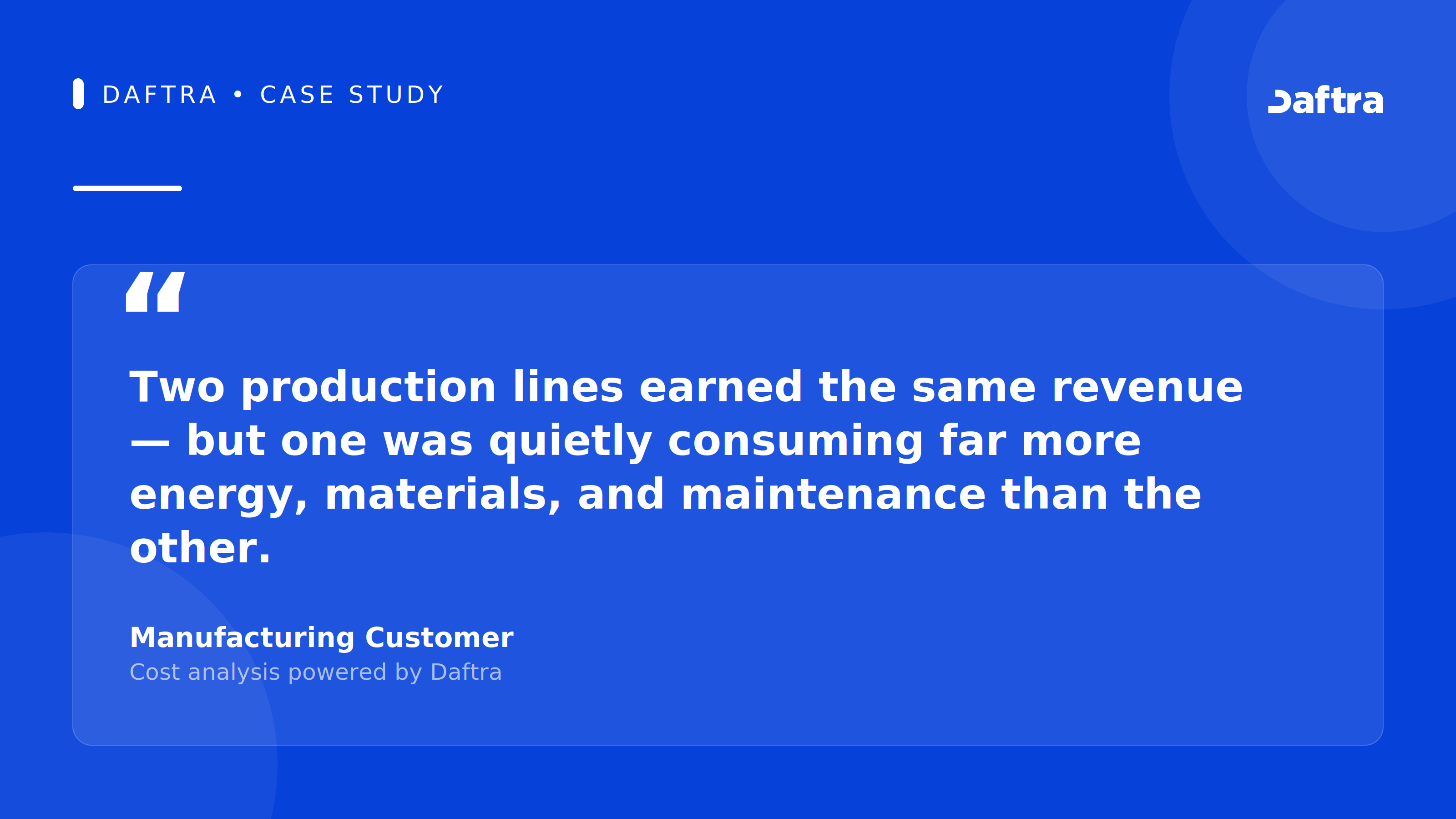
One of Daftra’s customers was a manufacturing company operating two production lines that generated approximately the same revenue. Based on sales figures alone, the performance of the two lines appeared similar.
The company entered data related to energy consumption, waste disposal, maintenance, and material usage into Daftra’s system and incorporated these costs into its performance analysis. This revealed that one production line was consuming significantly more resources and incurring much higher operating costs than the other, despite generating similar revenue.
This analysis helped management evaluate the performance of each production line beyond revenue alone by comparing the returns generated with the costs and resources consumed. As a result, the company could make more informed decisions about production and cost management based on a more comprehensive view of its financial and operational performance.
5- Preserving Human Resource Rights
Providing a healthy, positive, and safe work environment is one of the most important objectives of sustainable accounting. This is achieved through effective human resource planning, respecting employee rights, supporting and developing them, providing opportunities for learning and training, motivating the work team, and fostering a positive institutional culture that values diversity among team members and involves them in important decisions. It also includes distributing wages and salaries among employees fairly and transparently, as well as providing additional benefits such as leave, bonuses, and recreational software for employees.
With Daftra software, you can accurately manage employees, salaries, bonuses, leave, attendance, and other details that support sustainable accounting and protect human resource rights through employee management software.
By understanding these objectives, we learned the role of sustainable accounting in balancing environmental, social, and practical aspects.
What are the Elements of Sustainable Accounting?
Sustainable accounting is based on several elements according to comprehensive ESG sustainability standards. In the following points, we mention what the components of sustainable accounting are:
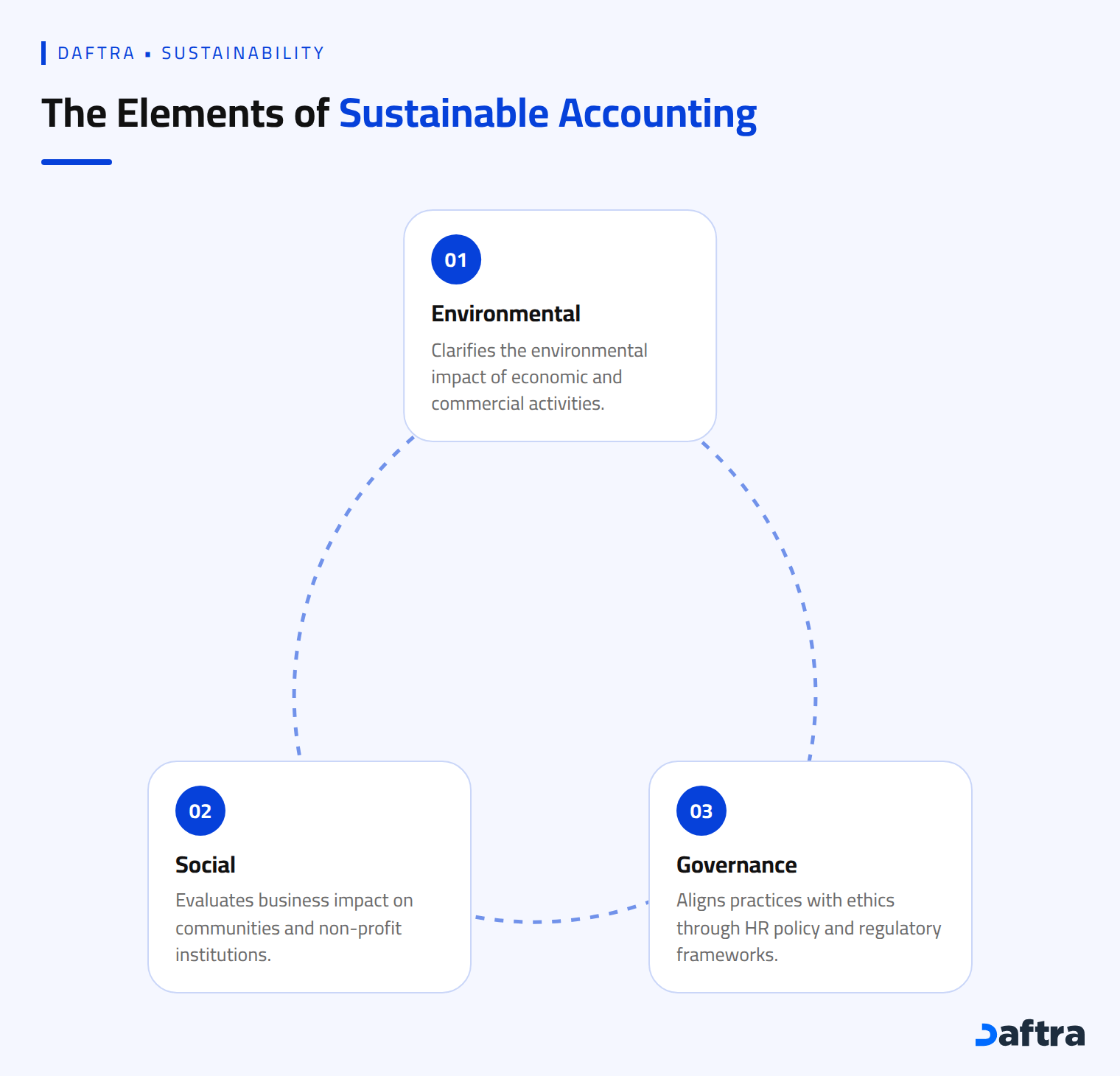
1- Environmental Elements
This aspect focuses on clarifying the environmental impact of practicing economic and commercial activities. This element is used in sustainable accounting to assess the extent of efforts institutions make to avoid operational and production practices that are harmful to the climate and environment, such as reducing carbon emissions, managing energy use and waste volume, and adopting appropriate water policies. It can also involve measuring progress toward net-zero emissions.
2- Social Elements
Evaluating the impact of business practices of entities on the social dimension in terms of helping communities and non-profit institutions. This includes considering how a company treats the people it depends on, including its employees, customers, and the communities it serves, while assessing the strength of its relationships with these groups and their potential impact on the business.
3- Governance
This element refers to how business practices align with ethical obligations and principles through human resource management policy and the regulatory frameworks followed. This can be reflected in practices such as board oversight, internal controls, and clear accountability for business decisions and their outcomes.
What are the Benefits of Sustainable Accounting?
Many people may not know the importance of sustainable accounting and how it affects the work of various companies. Here are the most prominent benefits of sustainable accounting:
1- Risk Management
Sustainable accounting reports provide a clear, comprehensive view of the impacts of business operations. These reports help identify financial risks associated with the negative impacts of business activity on the environment, society, or individuals.
The role of sustainable accounting in risk management involves some steps, which are:
- The impacts include environmental pollution resulting from the discharge of chemicals and industrial waste, unsustainable depletion of natural resources, and effects on community residents' health due to practicing some operational activities that lead to air, water, and soil pollution, poor human resource management, and other harmful impacts.
- Here comes the role of sustainable accounting reports in identifying potential risks and determining weaknesses, and necessary improvement opportunities.
- Making necessary decisions through which the company's plans can be aligned with sustainability goals in supporting community interests and preserving its natural and environmental wealth.
2- Improving Institutional Reputation
The company's implementation of sustainable accounting requirements and its objectives in preserving the environment, society, and protecting human resources help the institution support and enhance its brand, maintain its competitive position and market share, and also help it attract the best talents and competencies from job candidates.
This role contributes to attracting investor interest in financing such integrated companies, and also maintains the consumer base and helps attract new customers.
3- Increasing Efficiency and Effectiveness of Operational and Administrative Processes
Sustainable accounting reports help reconsider unnecessary resources and costs, and identify repetitions and unbalanced operational processes, thus rationalizing resource use and restructuring production processes to achieve their required efficiency and effectiveness.
4- Obtaining Sustainability Certifications
Sustainable accounting reports help in obtaining various sustainability certifications that reflect the company's commitment to certain industrial and production standards, such as the Global Recycling Standard (GRS) certification, FSC certification, GOTS certification for the textile industry, and Certified B Corporation certification.
5- Increasing Transparency
Sustainable accounting works on monitoring and following up on company performance, which enhances transparency and makes companies more self-monitoring. This consequently leads to growth in their performance and makes it more professional.
6- Improving Decision-Making
Sustainable accounting helps provide more accurate information and data, which assists companies in making decisions more easily and correctly.
7- Improving Company Relations
Through sustainable accounting, company information becomes more accurate, which enables them to build better relationships with stakeholders, leading to increased development and growth.
In these simple points, we have clearly summarized the advantages of sustainable accounting in terms of the importance and impact they represent.
What is an ESG Report?
The acronym ESG refers to Environmental, Social, and Governance Standards, a comprehensive sustainability report of environmental, social, and governance information about a company's performance and impact. Investors and financiers use this report to make investment decisions in a particular entity or to compare diverse investment destinations.
They believe that companies that meet ESG standards in terms of environmental and social responsibility are more deserving and prioritized for aligning their investment portfolios with them, compared to other companies that some investors believe are unethical and unworthy of investment trust.
Thus, we have clearly explained what ESG means in a detailed and simple manner at the same time.
What are the Challenges Facing Sustainable Accounting? And how to avoid them?
Sustainable accounting faces a set of challenges that make implementation difficult. Here are the most important of these obstacles:
1- Difficulty in Standardizing ESG Measures
The complexity of ESG data and indicators can make it difficult for companies to accurately measure environmental and social impacts.
Companies can address this challenge by adopting recognized sustainability reporting frameworks, such as the ISSB and ESRS, which provide structured guidelines that improve consistency and comparability in sustainability reporting. Comprehensive data management systems can also help organize complex sustainability information and support more accurate reporting.
2- Cost Challenges in Collecting Reliable Information
Cost challenges are associated with collecting reliable, verified information necessary for sustainability reports, particularly for small and medium-sized enterprises.
Companies can reduce these costs by investing in ERP systems like Daftra, automation tools, and artificial intelligence applications that streamline data collection, analysis, and reporting while reducing manual work.
A small retail company wanted to improve its sustainability reporting by collecting reliable information about its business operations. However, gathering and verifying the required data manually was time-consuming and costly, especially because financial and operational information was recorded across different spreadsheets and systems. The company needed a more organized way to manage its business data without increasing its administrative costs.
By using Daftra, the company could centralize its financial and operational records in one system, reducing repetitive manual data entry and making relevant information easier to access and organize. With automated processes and reporting tools, the accounting team could spend less time manually collecting and preparing data. This helped the company reduce the administrative effort associated with data collection while maintaining more organized and accessible business records.
3- Increasing Regulatory Pressures and Regulatory Changes
Strict and continuously developing regulatory requirements can make it challenging for businesses to adopt sustainable accounting practices.
Companies can better manage these pressures by taking a proactive approach to sustainability reporting, adopting recognized reporting frameworks, and maintaining organized sustainability data that can be updated as regulatory requirements evolve.
4- Difficulty in Balancing Profit and Responsibility
Balancing profit achievement with commitment to social and environmental responsibility is one of the biggest problems facing sustainable accounting.
Setting smart sustainability goals—specific, measurable, achievable, relevant, and time-bound—can help companies set clear sustainability objectives, integrate them with broader business goals, and track progress.
5- Lack of Technologies and Awareness
The lack of appropriate technologies and knowledge about how to use them can hinder the implementation of sustainable accounting.
Companies can address this challenge by investing in advanced data management systems, automation, and artificial intelligence tools, while providing specialized training to help employees use these technologies effectively.
6- Absence of Data in One Place
Sustainability information may be scattered across different software systems, making it difficult to collect, analyze, and report data efficiently.
Companies can overcome this challenge by implementing comprehensive data management systems that organize sustainability information and streamline collection, analysis, and reporting.
7- Data and Information Protection
Managing large amounts of sustainability information creates challenges related to data protection and security.
Companies can address this by using reliable, structured data management systems to organize and control sustainability information, while ensuring data collection and reporting processes are properly managed.
8- Lack of Awareness Among Accountants
A lack of awareness and specialized knowledge among accountants can make sustainable accounting difficult to implement effectively.
Companies can address this challenge by providing specialized training on sustainability reporting standards, data collection, and sustainability accounting practices, enabling accounting teams to contribute more effectively to sustainability reporting.
The challenges of sustainable accounting can be overcome through alternative and innovative solutions by using cloud-based accounting software to automatically collect and analyze data, reviewing and confirming sustainability reports by a neutral third party, and providing those responsible for preparing these reports with the necessary skills to address the challenges they may face during the creation of these reports.
Sustainability Accounting Standards Board (SASB)
The Sustainability Accounting Standards Board (SASB) developed industry-based standards to identify and disclose sustainability-related risks and opportunities that may help investors make decisions. The SASB Standards focus on sustainability issues that could reasonably be expected to affect a company’s cash flows, access to finance, or cost of capital over the short, medium, or long term.
The standards are industry-based, recognizing that sustainability-related risks and opportunities can vary significantly by industry. They cover sustainability-related issues across 77 industries and are designed to help companies provide comparable, decision-useful information while considering reporting costs.
Who is responsible for SASB Standards?
The International Sustainability Standards Board (ISSB), which operates under the IFRS Foundation, is currently responsible for the SASB Standards. The ISSB maintains and enhances these standards and incorporates their industry-based approach into the broader international sustainability reporting framework.
SASB Standards also play an important role in the implementation of the IFRS Sustainability Disclosure Standards, including IFRS S1, which covers general requirements for sustainability-related financial information, and IFRS S2, which addresses climate-related disclosures.
What is Sustainability Accounting Disclosure?
Companies use SASB Standards to identify the sustainability-related information that is most relevant to their industry and investors, measure the applicable indicators, and communicate the results through sustainability-related disclosures. This information is commonly presented as part of sustainability accounting disclosures.
In practice, these disclosures provide investors and other stakeholders with structured information about the sustainability-related risks and opportunities that may affect a company's financial performance and long-term value.
What are some examples of sustainability practices in accounting?
Sustainability practices in accounting can include using digital tools to reduce paper use, managing ESG data efficiently, integrating sustainability metrics with financial information, and improving reporting transparency. These practices are also relevant to companies in the Saudi market, particularly listed companies that increasingly engage in ESG disclosure and sustainability reporting. Some examples include:
Using digital accounting solutions
Moving from paper-based records to digital and cloud-based accounting tools can reduce paper usage, printing costs, and storage needs while making financial information easier to access and share.
Reducing office waste and energy consumption
Accounting practices can support sustainability by reducing unnecessary printing, using both sides of paper, implementing recycling programs, and reducing energy consumption by turning off equipment when it is not in use.
Managing ESG data systematically
Establishing systems to collect, verify, and store ESG information helps improve the accuracy and reliability of data used in sustainability reporting. This is particularly relevant for Saudi listed companies, as Saudi Exchange's ESG Disclosure Guidelines encourage issuers to identify, prioritize, and assess the ESG factors most relevant to their businesses.
Connecting ESG and financial metrics
Companies can integrate sustainability performance with financial outcomes to understand the business impact of sustainability initiatives. For example, tracking how energy-efficient processes can reduce energy costs.
Analyzing sustainability data
Regularly analyzing ESG data can help identify trends and areas for improvement. Companies can also consider independent verification of their findings to enhance transparency and credibility.
Transparent sustainability reporting
Clear, transparent sustainability reports help stakeholders understand a company’s sustainability achievements and provide a clearer view of its environmental, social, and governance performance.
Using technology to improve accounting efficiency
Automation, AI, cloud-based solutions, and data analytics can reduce manual tasks, improve access to information, and support more efficient accounting and sustainability reporting processes.
Sustainable Accounting in the Saudi Context
Sustainable accounting in Saudi Arabia is closely connected to the growing focus on environmental, social, and corporate governance (ESG) practices in the financial market. Saudi Exchange highlights the importance of business practices that go beyond financial returns and contribute to sustainable development. It also encourages companies across different sectors of the Saudi financial market to disclose their ESG practices.
The Role of Sustainability in Saudi Arabia
Sustainability represents an important part of Saudi Vision 2030. The principles guiding the development and implementation of Vision 2030 are closely connected to environmental, social, and corporate governance practices. Saudi Exchange therefore plays a role in encouraging ESG disclosure and supporting the development of an advanced financial market that contributes to the national economy.
ESG Disclosure for Saudi Companies
For companies listed on Saudi Exchange, ESG disclosure can provide investors with a broader view of company performance and management quality. ESG information can help investors understand how companies manage related risks and opportunities and assess factors that may affect their ability to create value.
Saudi Exchange's guidance helps listed companies identify, prioritize, and evaluate the ESG factors most relevant to their businesses and consider available reporting frameworks when preparing disclosures.
Connecting Sustainability With Financial Performance
Integrating sustainability into business strategy and financial performance can help companies identify opportunities for cost savings, revenue growth, and reduced risk. It can also help management and boards identify ESG-related risks and opportunities and align them with company objectives.
How Companies Can Approach Sustainable Accounting
Companies can start by identifying the ESG topics most relevant to their businesses and selecting appropriate performance indicators to measure progress. It is recommended to use widely recognized indicators developed through credible national or international mechanisms. Companies can then choose a suitable reporting approach, such as including material ESG factors in financial reports or preparing separate sustainability reports.
Overall, the Saudi context emphasizes measuring, managing, and transparently disclosing ESG information. For listed companies, this approach can support communication with investors and other stakeholders while helping management understand ESG-related risks and opportunities and their connection to the company's long-term value.
How can Saudi companies implement sustainable accounting?
Saudi companies can implement sustainable accounting by integrating relevant environmental, social, and governance (ESG) factors into their financial and business reporting. The process can be approached through four main stages:
1. Assess and Identify Relevant ESG Factors
- Identify key stakeholders and understand their information needs.
- Conduct a materiality assessment to determine the ESG topics most relevant to the business.
- Select appropriate indicators and metrics to measure performance.
- Establish a baseline against which future progress can be measured.
2. Collect and Manage Sustainability Data
- Establish reliable systems and processes for collecting ESG-related data.
- Train relevant teams on the selected measurement methods and reporting requirements.
- Create procedures for reviewing and verifying collected information.
- Maintain data quality, consistency, and accuracy.
3. Report and Disclose ESG Information
- Select a reporting framework that suits the company's activities and reporting needs.
- Integrate material ESG information into financial or annual reports where appropriate, or prepare a separate sustainability report.
- Communicate relevant sustainability information clearly with investors and other stakeholders.
- Ensure that disclosed information is transparent, consistent, and supported by reliable data.
4. Monitor Performance and Improve Continuously
- Review ESG performance regularly and compare results against established baselines and goals.
- Update objectives and performance indicators as business priorities evolve.
- Improve internal processes for measuring and managing sustainability-related factors.
- Monitor recognized practices and reporting approaches to identify opportunities for improvement.
How to Measure Sustainability?
Measuring sustainability involves identifying the environmental, social, and economic factors most relevant to a company, selecting appropriate key performance indicators (KPIs), and regularly monitoring results. The right metrics depend on the company’s industry, business model, operations, and material sustainability topics.
1. Identify Relevant Sustainability Metrics
Companies do not need to measure every available sustainability indicator. Instead, they can identify the topics that are most relevant to their activities and stakeholders and select KPIs that help them understand their impacts, risks, and opportunities.
Common sustainability metrics include:
- Environmental: greenhouse gas emissions, energy consumption, water use, waste generation, material use, land use, and biodiversity-related impacts.
- Social: workplace health and safety, employee training and development, diversity and inclusion, fair compensation, and human rights within the supply chain.
- Economic: employment creation, labor compensation, tax contributions, gross value added, and local economic development.
2. Measure Environmental Impact
Environmental performance can be measured through several indicators:
- Carbon footprint: Measures the total greenhouse gas emissions generated directly or indirectly by a company. Emissions fall into Scope 1, Scope 2, and Scope 3.
- Energy consumption: Measures the amount and source of energy used, as well as energy saved through improvements.
- Water use: Measures water consumption, water footprint, and the percentage of water reused or recycled.
- Waste generation: Measures the amount of waste produced, its type and disposal method, and the waste production rate.
- Materials: Tracks raw material usage, the percentage of non-renewable and recycled materials used, and product recycling rates.
- Supply chain: Measures factors such as supply chain miles and the percentage of suppliers that comply with the company's sustainability strategy.
Companies can use these indicators to identify areas where operational changes may reduce environmental impact and, in some cases, operating costs.
3. Measure Social and Governance Performance
Sustainability measurement also considers how business activities affect employees, workers in the value chain, communities, customers, and other stakeholders. These social factors are closely connected to Corporate Social Responsibility (CSR), which focuses on a company’s responsibilities toward society and its stakeholders.
Social indicators can include workplace health and safety incidents, employee sick days, workforce diversity and inclusion, training and development, fair compensation, and human rights risks within the supply chain. They can also measure CSR-related activities, such as community investment, employee volunteering, charitable contributions, social impact initiatives, and the company’s engagement with local communities.
Governance indicators can include board structure, including board independence and diversity, as well as anti-corruption policies and training related to anti-bribery and corruption compliance.
4. Use Sustainability Assessment Methods
KPIs provide information about individual aspects of sustainability, but companies may need additional methods to understand broader environmental, social, and economic impacts.
- Life Cycle Assessment (LCA): evaluates the environmental impacts of a product or service throughout its lifecycle, from raw material extraction and production to use and end-of-life treatment. It can help identify environmental hotspots and support product design, supply chain management, and environmental reporting.
- Cost-Benefit Analysis (CBA): compares a project's expected benefits and costs. It can support investment decisions, although broader environmental and social impacts may be difficult to express in financial terms.
- Impact Measurement & Valuation (IMV): provides a way to consider environmental, social, and economic impacts using a common unit of measurement, typically monetary values. This can help organizations identify hotspots, evaluate trade-offs, prioritize initiatives, allocate resources, and incorporate sustainability considerations into business decisions.
5. Establish a Baseline and Monitor Progress
Once companies select relevant indicators, they can establish a baseline and track changes over time. This may include monitoring energy consumption, emissions, water use, waste generation, workplace safety, and other selected KPIs.
Regular monitoring allows companies to assess progress against their objectives, identify areas for improvement, and understand how sustainability-related performance can also affect business performance and contribute to increasing profit. For example, reducing energy consumption can lower both environmental impact and energy costs, while reducing supply chain distances can potentially reduce both emissions and transportation costs.
Ultimately, measuring sustainability requires companies to focus on the indicators most relevant to their activities and use reliable measurements to understand their environmental, social, and economic impacts. The results can then support sustainability management, reporting, and business decision-making.
How does the Daftra software help you implement sustainable accounting?
Daftra accounting software provides many features and tools that help you manage your accounts easily and automatically, in addition to accurate analytics and reports.
The Daftra software helps in:
- Recording entries and invoices automatically on a daily basis.
- Complete management of assets and various accounts, which provides accuracy and significantly reduces errors.
- Providing complete security for information and data, and maintaining complete confidentiality of all details related to operations.
- Comprehensive human resources management, which supports complete governance, represents a strong part in sustainable accounting and its implementation.
- Providing reports continuously with all information and variables that occur in business activity.
All these services work together to achieve sustainable accounting more easily and quickly, without requiring much effort.
Frequently Asked Questions
What is the role of accountants in sustainability?
Accountants do many things to implement sustainable accounting, such as:
- Continuously measuring performance.
- Preparing reports and ensuring their accuracy.
- Monitoring changes.
- Continuously reviewing to avoid any problems or errors.
- Working to achieve the goal of sustainable accounting.
- Using professional software and technologies such as Daftra software to achieve sustainability easily and automatically.
The difference between sustainable accounting and green accounting
Sustainable accounting is a broader concept than green accounting as it includes environmental, social, and governance aspects, while green accounting focuses only on the environmental aspect.
What is the concept of sustainability?
The concept of sustainability is preserving resources of all types socially and environmentally without affecting future generations, and sustainability helps maintain balance between the different needs of individuals and society.
In conclusion
it can be said that sustainable accounting is a mirror that reflects the hidden story of the relationship between accounting figures, financial data, and profitability on one hand, and the protection of the environment, society, and human resources on the other.
Care must be taken to achieve the goals of sustainable accounting and apply the standards associated with it within the financial framework to achieve the required balance between economic and investment success, while maintaining social care and environmental protection at the same time.











 Invoicing
 POS
POS Offers
 Installments
 Sales Commission
 KSA E-Invoice Software
 EGY E-Invoice Software
 JO E-Invoice Software
 E-Invoice Software
 Chart of Accounts
 Asset Management
 Cost Centers
 Expenses
 Cheque Cycle
 UAE VAT-Tax
 Product Management
 Purchases
 Purchase Cycle
 Suppliers
 Requisitions
 Stocktaking
 Organizational Structure
 Personnel Management
 Attendance and Leave
 Contracts
 Payroll
 Requests
 Work Orders
 Booking Management
 Rental and Unit Management
 Time Tracking
 Work Flow
 Lease Contracts
 Manufacturing Management
  Client Follow-Up
 Loyalty Points
 Points and Credits
 Memberships
 Insurance Management
 Daftra ERP Full App
 Point of Sales App
 Point of Sales for Desktop – Support Offline Mode
 AI Expenses Scanner App
 Employee Attendance, Sign & ESS App
 E-invoice Reader App
 Inventory Stocktaking App