



Table of contents:
- Key Summary
- What are the main free zones in Sharjah?
- Which Sharjah free zone is right for your business?
- What legal structures can you register in a Sharjah free zone?
- What license types are available in Sharjah free zones?
- What documents do you need to set up a company in a Sharjah free zone?
- Step-by-step how to set up a company in Sharjah Free Zone
- What office, warehouse, or facility options can you choose?
- How much does it cost to set up a company in the Sharjah free zone?
- How long does Sharjah free zone company formation usually take?
- What happens after you get the license?
- Common mistakes people make when setting up a company in the Sharjah free zone
- How Can Daftra Help You in Your Sharjah Business?
- FAQs about setting up a company in Sharjah free zones
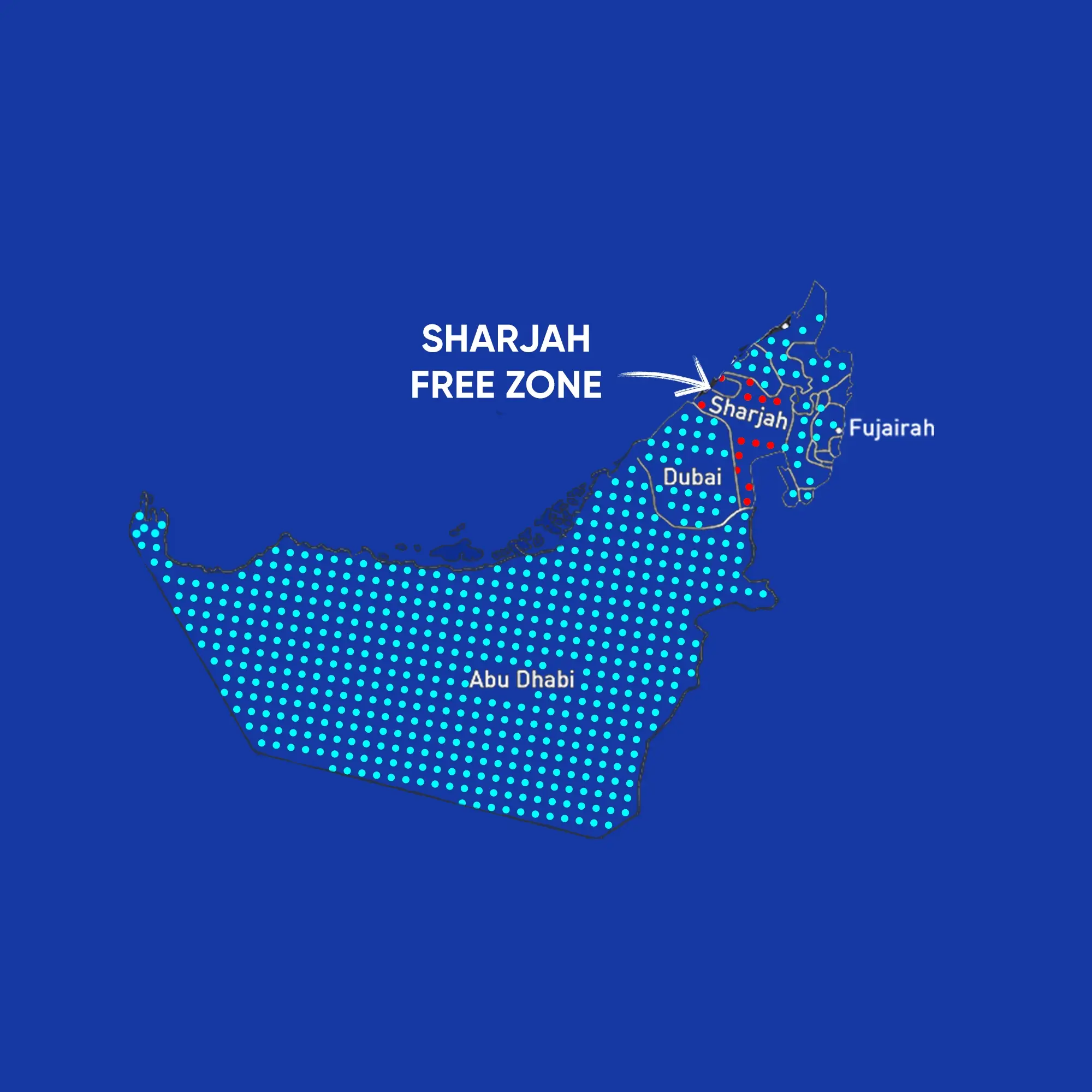
Over 60,000 companies have chosen Sharjah Free Zones as a cost-effective way to establish a presence in the UAE.
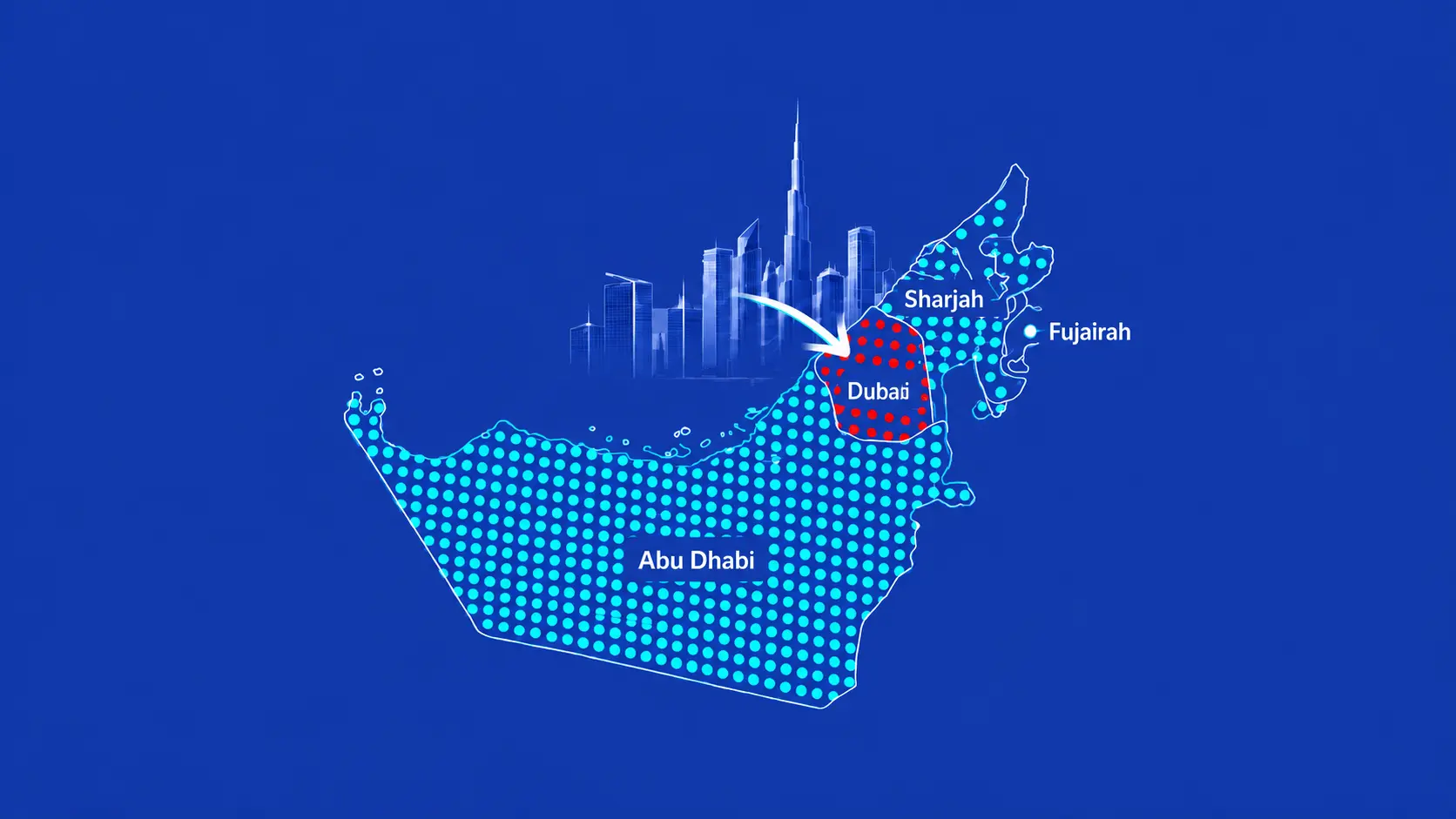
Although Sharjah Emirate has around 7 Free Zones to suit different business needs, they share the same core advantages that attract investors.
Sharjah Free Zones offer lower operational costs, which can be 25-50% less than other Free Zones, such as Dubai and Abu Dhabi. It’s also the only emirate with access to seaports on both the Arabian Gulf and the Gulf of Oman.
Now that you understand what UAE free zones are, it’s time to consider a Sharjah Free Zone option for your company setup.
In this guide, we’ll walk through the differences between each Sharjah Free Zone, the main license types, and the formation process stages to help you choose the right Free Zone for a smooth setup.
What are the main free zones in Sharjah?
When you decide to set up your business in Sharjah, you’ll come across different Free Zone options that serve various business needs. Your role is to choose the option that best suits your business model to continue the formation process.
Which Sharjah free zone is right for your business?
As you have noticed, each Free Zone in Sharjah serves a specific business model by providing the infrastructure that supports its activities. Choosing the right Free Zone is important, as it determines the activities you’re allowed to do.
To help you decide which Free Zone option suits your needs, review the guide below.
- Choose Hamriyah Free Zone if you have an industrial or manufacturing business, as it provides the suitable infrastructure you’ll need.
- Select the SAIF Zone if you’re involved in international trading or logistics, because the airport will help ensure smooth shipping.
- Choose Shams Free Zone if your business offers media and creative services to other businesses, either globally or within the Free Zone.
- Choose SRTIP Free Zone if your company mainly focuses on research and development or advanced technologies.
- Select SPC Free Zone if your business is engaged in publishing and printing activities, which could trade locally or internationally.
- Choose Sharjah Healthcare City if you have a hospital or clinic, as the Free Zone provides land plots for your operations.
- Choose Sharjah Communication Technologies Free Zone if your business involves advanced technologies and AI services.
If you don’t find a Free Zone that matches your business needs, you can explore alternatives, such as setting up a business in a Dubai Free Zone.
What legal structures can you register in a Sharjah free zone?
When setting up your company in Sharjah, you’ll be asked to choose a legal structure. This determines the ownership structure and shareholders’ liability. Below are the common structures across Sharjah Free Zones.
- Free Zone establishment: Suits businesses with a single shareholder and is treated as a separate legal entity with its own financial liability.
- Free Zone company: Designed for businesses with two or more shareholders, with liability limited to the capital they invested in the company.
- Subsidiary: For existing parent companies that want to create a new legal entity in a Sharjah free zone, which will be owned by the parent company.
- Branch office: It’s a structure used by local or foreign companies that want to enter one of Sharjah’s Free Zones, allowing them to extend their presence under the parent company’s name.
If you’re unsure whether to choose a subsidiary or a branch office structure, this guide on setting up a branch office in Dubai can help you understand the difference.
What license types are available in Sharjah free zones?
Your license serves as the primary proof of your right to operate in the Sharjah Free Zones, and it also determines the business activities you’re allowed to do. So, choose your license type wisely; below are the main license types available in Sharjah Free Zones.
- Service license: for businesses offering professional services, such as consulting or other service-based activities.
- Commercial license: suits companies that import, export, and distribute goods, such as e-commerce or logistics companies.
- General trading license: designed for businesses that deal with several categories, allowing them to trade various goods at the same time.
- Industrial license: suits manufacturing businesses that assemble and produce different types of goods.
- Healthcare license: designed for businesses engaged in medical services, such as hospitals and clinics.
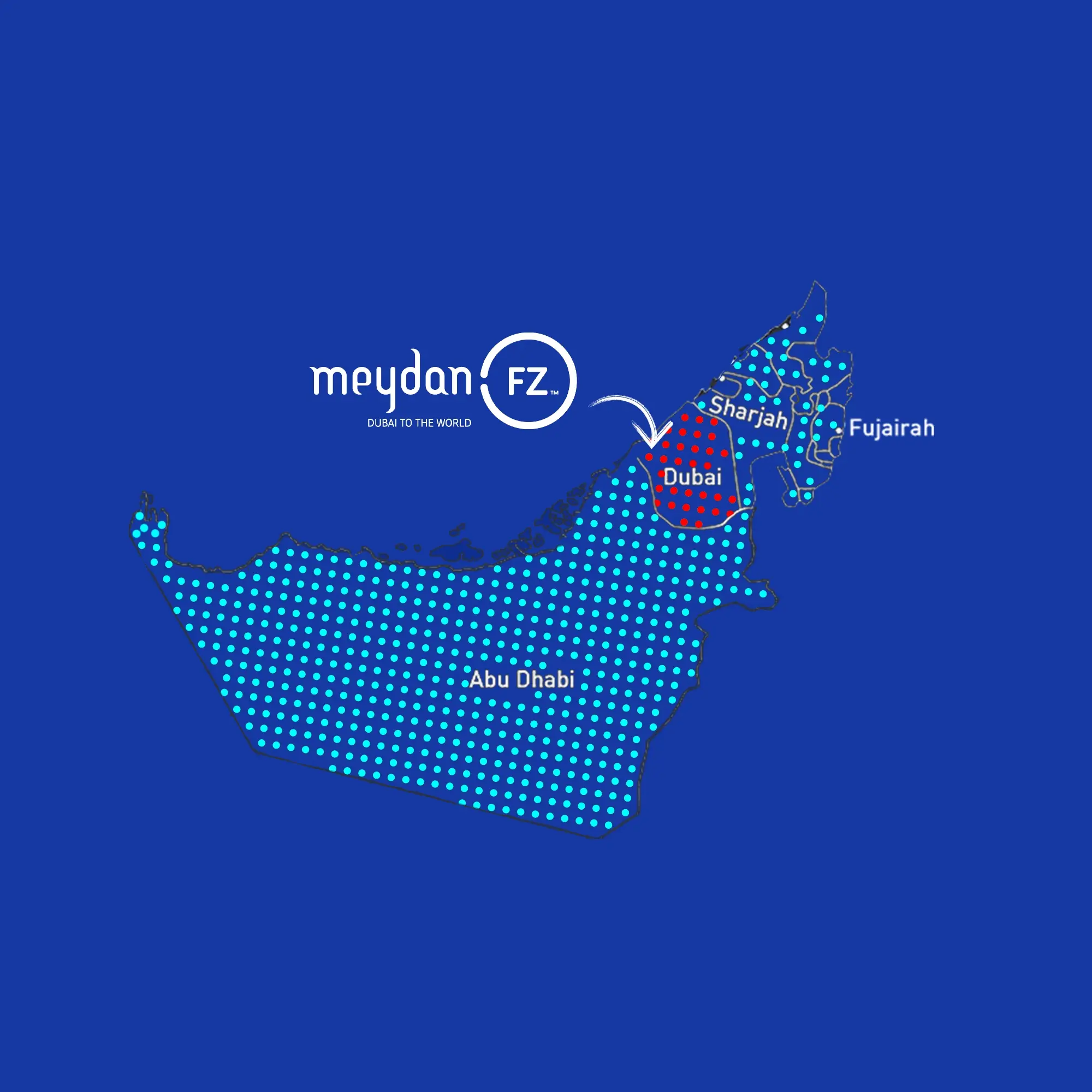
You can consider the Meydan Free Zone company setup, especially if you need more flexibility in the business operations, because it allows you to select up to 3 activities under one license.
What documents do you need to set up a company in a Sharjah free zone?
To ensure a smooth setup process, make sure your company documents are complete to avoid delays later. Below are the common documents required by Sharjah Free Zones’ authorities:
- Completed application.
- Passport copies of shareholders.
- Passport-size photos of shareholders
- Visa copy, if applicable.
- Proof of address for shareholders.
- Memorandum and articles of association.
- UBO declaration.
- A Business plan.
- No Objection certificate from current sponsor.
In case of establishing a branch office, you’ll need to provide these additional documents:
- Specimen signature of the manager.
- Certificate of incorporation for the parent company.
- Certificate of good standing.
- Board resolution.
- Power of attorney.
Step-by-step: how to set up a company in Sharjah Free Zone
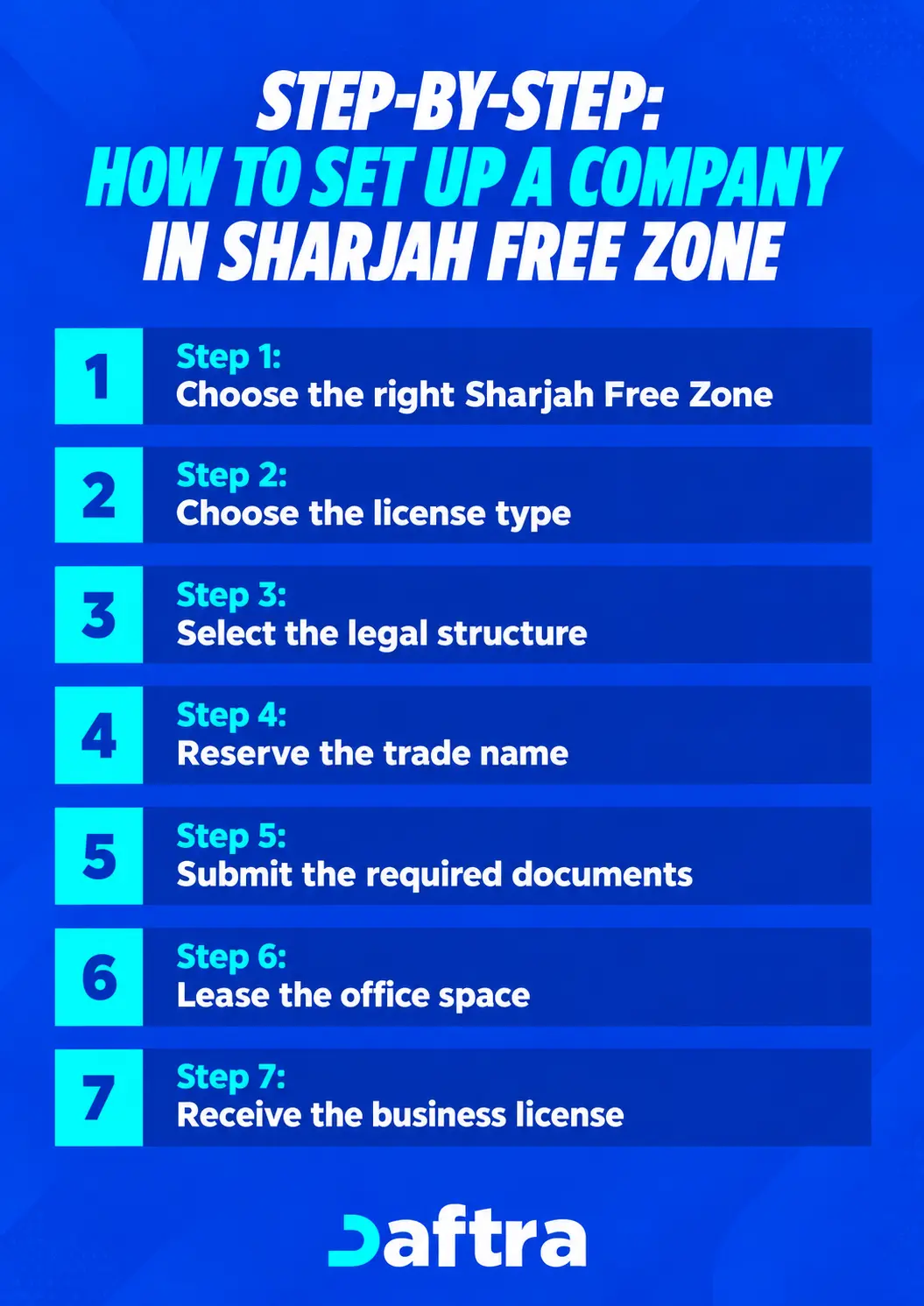
Step 1: Choose the right Sharjah Free Zone
As we’ve mentioned earlier, Sharjah has different Free Zones that serve different business models. At this stage, compare each Free Zone based on its specifications and how it fits your business needs.
Step 2: Choose the license type
First, clearly select the business activities you’ll conduct within the Free Zone to choose the appropriate license type.
For example, if you’re offering professional services, choose a service license, as it matches your business operations within the Free Zone.
So, you must recheck the license types we’ve listed in this guide so you can choose what actually matches your business operations.
Step 3: Select the legal structure
The legal structure depends on the company’s ownership structure and determines shareholders’ liabilities.
For example, choosing the FZCO structure affects the company's decision-making and the shareholders’ liabilities. For this reason, you need to clearly state your ownership requirements to choose the appropriate legal structure.
Step 4: Reserve the trade name
It’s your unique name that will be incorporated in the business license, so you need to choose a name that complies with the UAE naming regulations, which include the following rules:
- The name must not be similar to other business names.
- It should match your selected business activities.
- It must not contain any offensive or restricted words.
- Include the legal structure suffix within the trade name, such as FZE or FZCO.
Step 5: Submit the required documents
At this stage, you’ll need to submit all the documents we listed earlier, making sure you don't miss any to avoid delays.
Then, the Free Zone authority will review your documents and issue initial approval, which lets you continue the formation process.
Step 6: Lease the office space
To continue company formation in Sharjah, you need to lease a registered office space. Sharjah Free Zone offers different office options that you can choose from, but the most important thing is to state the number of visas required, as the visa quota is linked to the office type you select.
Step 7: Receive the business license
Finally, the Free Zone authority will send you the required fees to issue your license. After you obtain the license, you can start operating within Sharjah Free Zones.
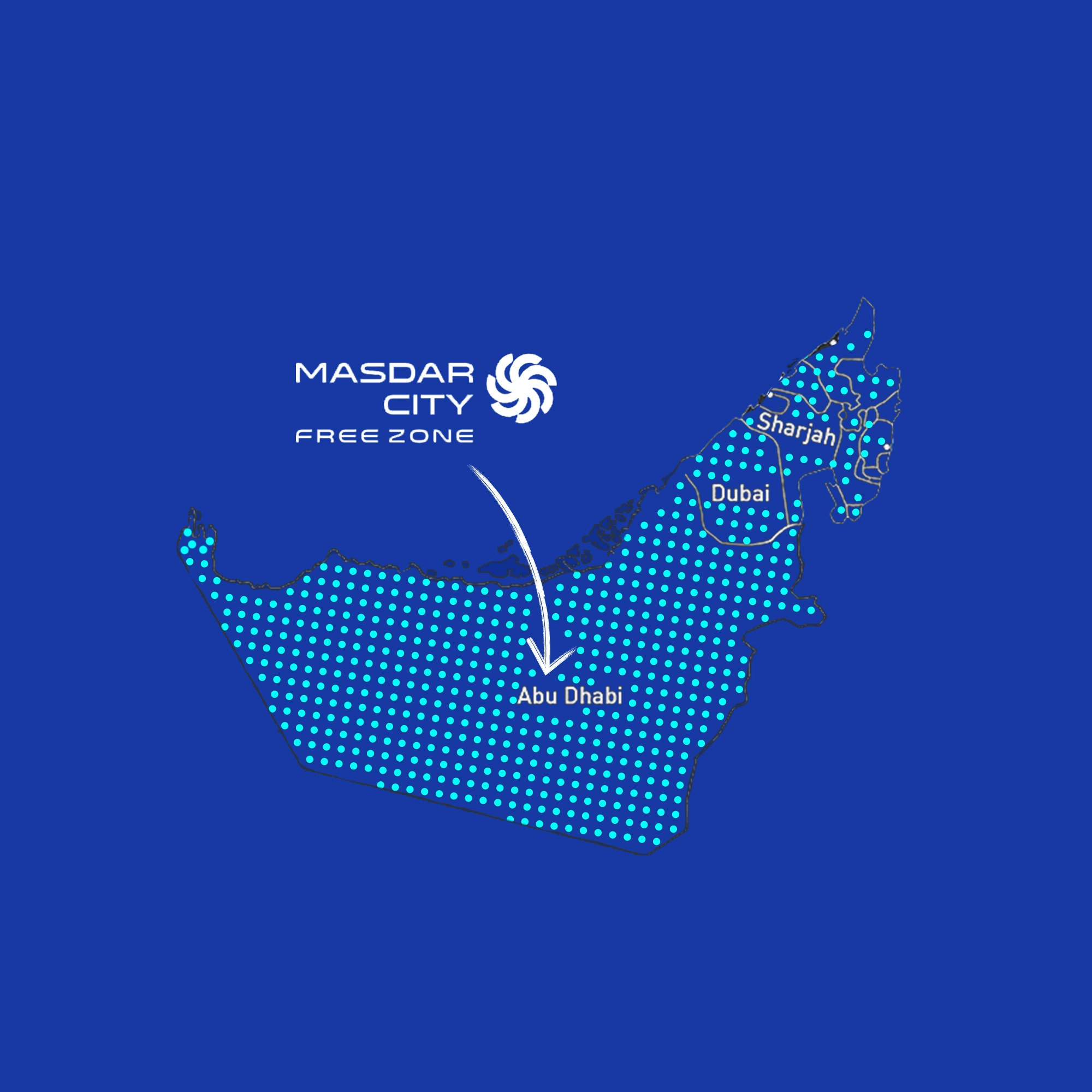
If you want a strategic location that reaches both international and regional markets, explore Abu Dhabi company formation.
What office, warehouse, or facility options can you choose?
Your facility choice depends on two key factors: operational needs and visa quota. Each Free Zone offers specific facilities for certain business models, and the facility type affects your visa eligibility.
- Flexi-desk: A shared office space provided by the Free Zone, an affordable option for startups and freelancers, as it provides a registered office to meet Free Zone requirements without renting a full office.
- Private office: A full workspace registered to one company, offering more privacy for daily operations and private meetings. It’s also a preferred type for businesses that need higher visa eligibility.
- Warehouse: An operational space that suits businesses involved in manufacturing and trading activities, as it provides space for inventory and operational equipment.
- Land plot: It’s a large space where businesses can build their own facilities. For example, they can build their own warehouses and factories within the space. It suits businesses with specific operational requirements and long-term business plans.
- R&D lab: It’s a specialized facility designed in specific Free Zones to meet businesses’ operational requirements, such as STRIP. It’s considered a suitable choice for businesses involved in research and product development.
- Clinical space: It’s designed for healthcare and medical facilities operating in the SHCC Free Zone, with infrastructure suitable for delivering medical services.
To reduce setup costs, explore offshore company formation in the UAE, which lets you establish your company without leasing office space.
How much does it cost to set up a company in the Sharjah free zone?
Setup costs vary depending on several factors across all Sharjah Free Zones, including your license type and operational requirements. So, review the cost factors below to plan your budget.
For a broader overview of setup prices in other UAE free zones, explore this guide on how much it costs to set up a company in Dubai.
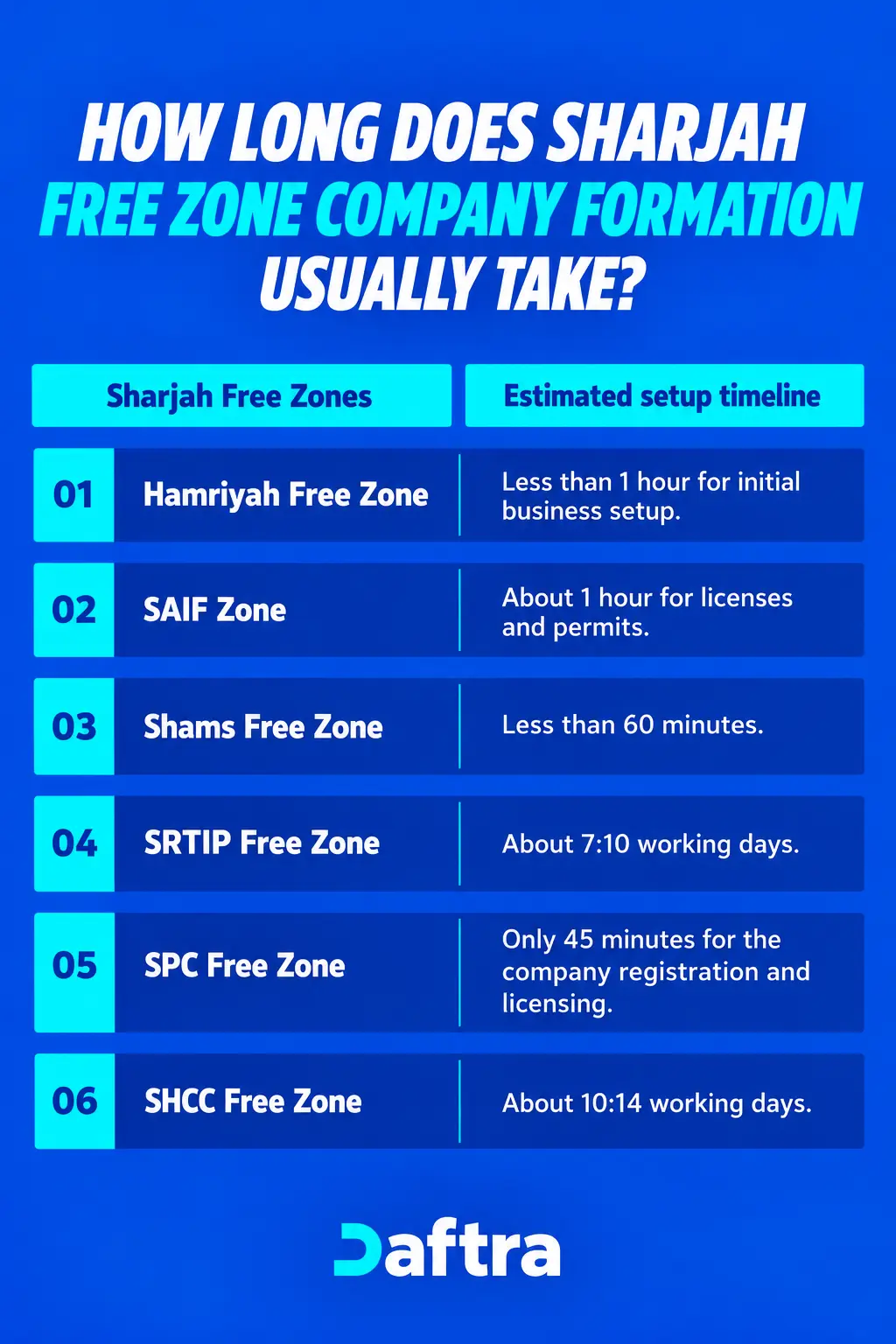
How long does Sharjah free zone company formation usually take?
The main factor affecting the setup timeline is the Free Zone you choose, along with other factors such as your business activity and whether you need approvals from other authorities. Below is the estimated timeline for each Sharjah Free Zone.
What happens after you get the license?
After establishing your business in Sharjah Free Zones, it’s important to consider these post-license steps to help your company stay compliant.
- Open a corporate bank account to receive company payments and government charges; it also helps you manage company transactions and pay employee salaries.
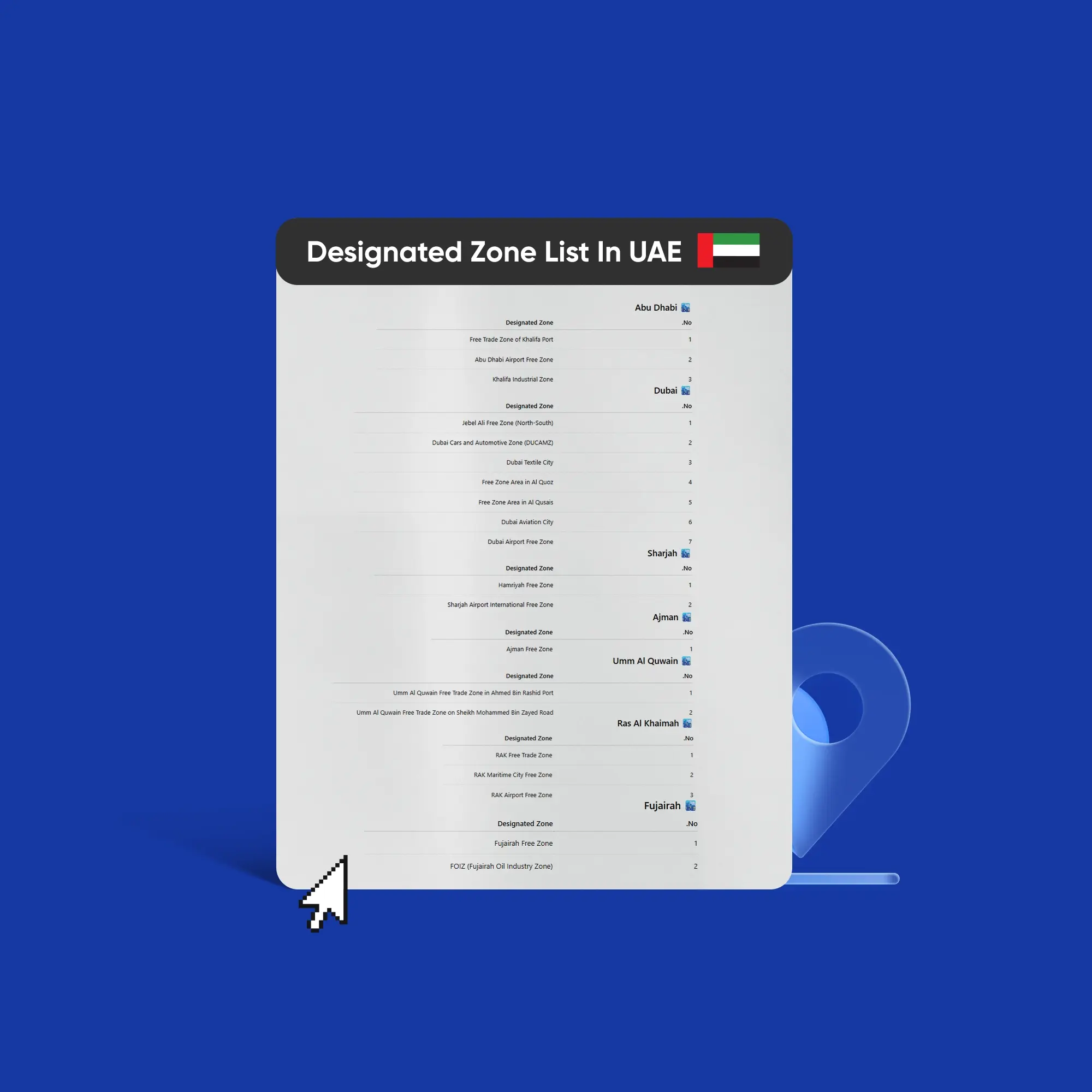
- Register for VAT in the UAE once your taxable turnover exceeds 375,000, because you’ll be charged 5% VAT. But if you’ve registered your company in HFZA and SAIF, you will not charge VAT only on goods, as they are classified as designated zones in the UAE.
- Register for corporate tax to meet the FTA’s requirements, while businesses with taxable income above 375,000 will be charged 9% CT. However, you can benefit from 0% corporate tax if you qualify as a QFZP in the UAE.
- Set up an accounting system to manage your company’s expenses and taxes, which will help you handle VAT and corporate tax filings.
- Use an operating system to run daily operations smoothly and manage business tasks to increase productivity within the company.
Common mistakes people make when setting up a company in the Sharjah free zone
Setting up a company in a Sharjah free zone involves several stages, so understanding common mistakes can help you complete the setup smoothly.
- Choosing the wrong Free Zone: Each Free Zone is designed for specific business needs, so if you don’t choose one based on proper research into its allowed activities, you may face setup delays.
- Selecting the wrong business activity: Clearly identifying your business activities affects the entire setup process, as it determines the license type you’ll receive to operate within the Free Zone.
- Delaying tax registrations: If businesses in Sharjah Free Zones don’t register for VAT in the UAE and corporate tax once they exceed the UAE’s threshold, they could face financial penalties from the FTA.
- Ignoring visa requirements: Your visa eligibility depends on the facility type you choose, so check your visa and operational requirements from the start.
- Ignoring operational systems: Some businesses focus only on finishing the setup process, without paying attention to the tools that help them grow their business. As a result, the company is unprepared to operate efficiently.
- Budget preparation: Many investors think they will only pay the core setup costs. But in reality, they will need to budget for the office, visa, and renewal fees to avoid any financial surprises.
How Can Daftra Help You in Your Sharjah Business?
Instead of setting up separate systems for each department, you can use the Daftra ERP system. Daftra offers customized tools for your business model, which help you track progress across different departments within the company, such as:
- Handles VAT and corporate tax filings to stay compliant.
- Generates clear financial reports for regulatory checks.
- Tracks inventory and stock levels in different facilities.
- Organizes projects for all departments using one tool.
- Track employees' time and work progress.
FAQs about setting up a company in Sharjah free zones
What are the benefits of forming a company in a Sharjah free zone?
Sharjah Free Zones offer an affordable setup process and low operating costs compared to other UAE free zones, along with other advantages such as 100% foreign ownership and the ability to pay 0% corporate tax if you qualify as a QFZP.
What is a Sharjah free zone visa?
It's the residence visa that registered companies in Sharjah Free Zones apply for, allowing investors and employees to live and work in Sharjah. Visas also give them access to other services in the UAE, such as financial services and applying for an Emirates ID.
How long is a Sharjah free zone visa valid?
The visa is valid for 2 to 3 years, depending on the selected Free Zone and visa type. Then, you can apply for a visa renewal with your Free Zone authority.
Is there a minimum capital requirement for a Sharjah free zone company?
Yes, it shows the company's financial ability to operate within the Free Zone. Generally, the required share capital ranges from AED 100,000 to AED 150,000.
How much does Sharjah free zone company formation cost?
Actual setup costs vary mainly by the Sharjah Free Zone you choose. Other factors can also affect setup costs, such as the license type and operational requirements. In most cases, setup costs range from AED 14,000 to 60,000+.






 Invoicing
 POS
 Offers
 Installments
 Sales Commission
 KSA E-Invoice Software
 EGY E-Invoice Software
 JO E-Invoice Software
 E-Invoice Software
 Chart of Accounts
 Asset Management
 Cost Centers
 Expenses
 Cheque Cycle
 UAE VAT-Tax
 Product Management
 Purchases
 Purchase Cycle
 Suppliers
 Requisitions
 Stocktaking
 Organizational Structure
 Personnel Management
 Attendance and Leave
 Contracts
 Payroll
 Requests
 Work Orders
 Booking Management
 Rental and Unit Management
 Time Tracking
 Work Flow
 Lease Contracts
 Manufacturing Management
 Client Follow-Up
 Loyalty Points
 Points and Credits
 Memberships
 Insurance Management
 Daftra ERP Full App
 Point of Sales App
 Point of Sales for Desktop – Support Offline Mode
 AI Expenses Scanner App
 Employee Attendance, Sign & ESS App
 E-invoice Reader App
 Inventory Stocktaking App