



Table of contents:
- Key Summary
- What is the Hamriyah Free Zone and where is it located?
- Who is Hamriyah Free Zone best for?
- What legal structures can you register in Hamriyah Free Zone?
- What license types are available in Hamriyah Free Zone?
- What facilities and infrastructure does Hamriyah Free Zone offer?
- What documents are usually required to set up a company in Hamriyah Free Zone?
- Step-By-Step How To Set Up a Company in Hamriyah Free Zone
- How much does it cost to set up in Hamriyah Free Zone?
- How long does Hamriyah Free Zone company formation usually take?
- What visa and post-incorporation support does Hamriyah Free Zone offer?
- Common mistakes businesses make when choosing the Hamriyah Free Zone
- FAQs about Hamriyah Free Zone
Businesses that mainly operate in industrial and logistics activities need specific advantages from the Free Zone they choose.
These can include a strategic location near air and sea gateways, strong industrial infrastructure, and special VAT exemptions on goods transactions.
These are the advantages Hamriyah Free Zone offers businesses operating within it. So, if you’ve already read about setting up a company in Sharjah Free Zone and have decided to set up your company in Hamriyah Free Zone.
This guide will help you choose the appropriate license type for your company. Then, we'll walk through the main setup stages and the post-license requirements to help you stay compliant.
What is the Hamriyah Free Zone and where is it located?
Hamriyah Free Zone mainly serves industrial and logistics businesses. It does this by offering strong industrial infrastructure and VAT exemptions on certain goods transactions, as it’s a designated zone in the UAE. This has helped Hamriyah Free Zone rank as the UAE's second-largest industrial free zone.
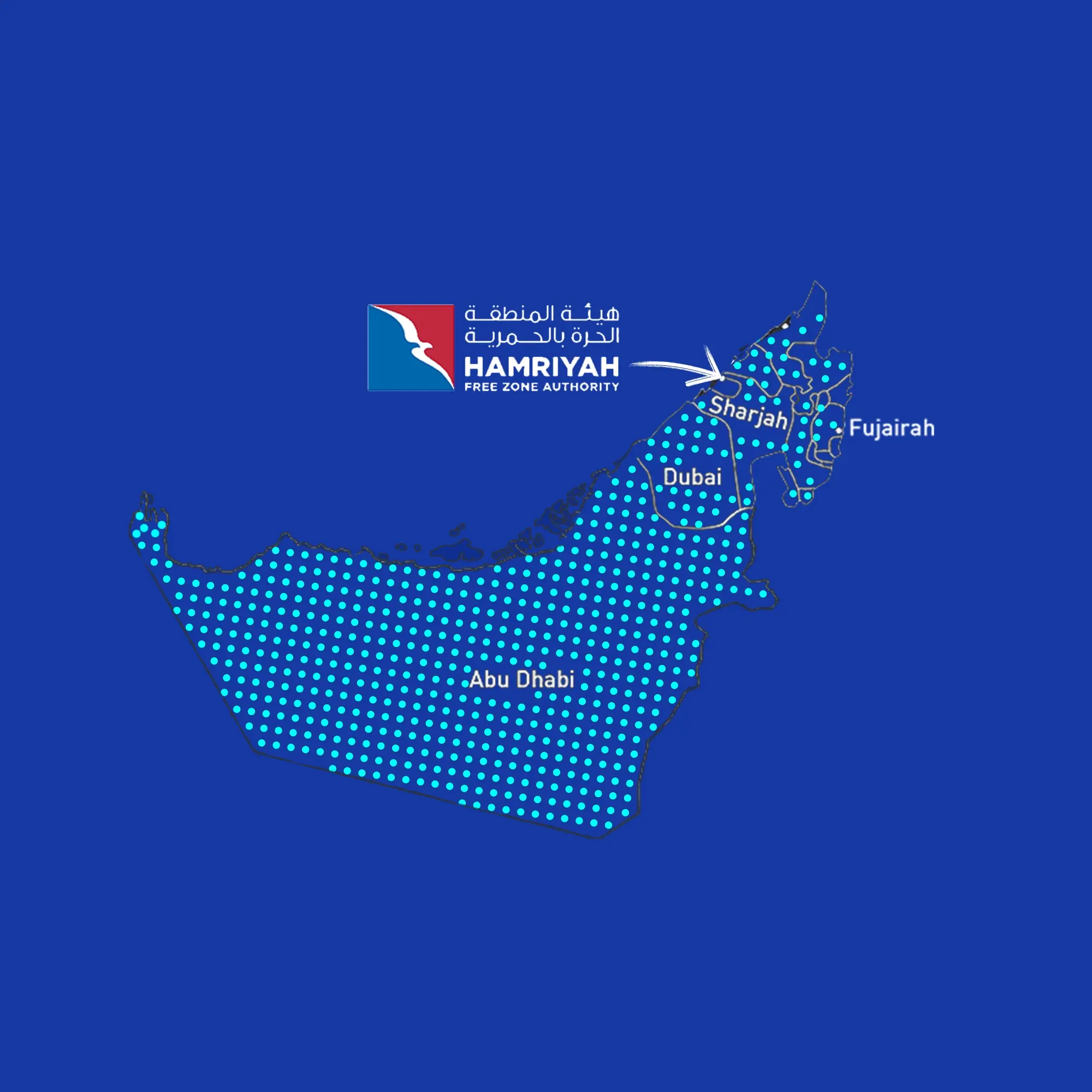
Some investors can be confused about its exact location, as it’s near Ajman Free Zone. In reality, it’s in Sharjah, near Hamriyah Port and Sharjah International Airport, which serve as its main gateways to international markets.
Who is Hamriyah Free Zone best for?
Hamriyah Free Zone suits specific types of businesses with specialized activities, so make sure your business model matches one of the options below.
- Industrial businesses that need specific infrastructure for manufacturing facilities to conduct their operations.
- Trading and logistics companies involved in international trading and distribution by using the Hamriyah Free Zone’s trading gateways.
- Maritime businesses that are engaged in specialized activities, such as shipbuilding and marine equipment trading.
- Food processing companies that need specific operational facilities for production and packaging.
- Oil & gas businesses involved in oil refining and petrochemical processing.
- Businesses seeking 100% foreign ownership and special tax advantages that can boost profits.
If you didn’t find what matches your business model, you can check this guide: What are free zones in the UAE? It helps you explore all free zone options in the UAE so you can choose the right one.
What legal structures can you register in Hamriyah Free Zone?
The legal structure defines your company's structure and how it will operate, including ownership and how important business decisions will be made. Choose the legal structure that matches your business needs.
- Free Zone establishment structure: A limited liability company owned by a single person; it separates the company’s finances from the owner.
- Free Zone company: A limited liability company owned by one or more shareholders, meaning shareholders' liability is limited to their investment in the company.
- Subsidiary structure: It’s designed for foreign or local companies that want to create a new legal entity in Hamriyah Free Zone while keeping ownership with the parent company.
- Branch office: It’s for parent companies that are expanding their presence in Hamriyah Free Zone while using the parent company’s name and identity.
To understand the main difference between a subsidiary and a branch office, review this guide on setting up a branch office in Dubai before you decide.
What license types are available in Hamriyah Free Zone?
Identify the business activities you plan to conduct, as this determines the type of business license you’ll choose. Below are the main license types you’ll find while setting up your company in Hamriyah Free Zone.
- Commercial license: The main license category that allows businesses to trade and distribute products. It includes 3 other license types, which are the following:
- Trading license: suits businesses involved in import and export activities.
- General trading license: allows businesses to trade an unlimited number of products.
- E-commerce license: which is designed for businesses that trade goods and services online.
- Service license: It covers businesses engaged in service-based activities, such as consulting.
- Industrial license: Designed for businesses involved in manufacturing and assembling products.
You can also explore other Free Zones that offer many license options, such as DAFZA and Meydan Free Zone.
What facilities and infrastructure does Hamriyah Free Zone offer?
To continue the company formation process, you’ll need to lease a registered office in Hamriyah Free Zone, which shows you have a real presence in the Free Zone. Check the available facility types in Hamriyah Free Zone to choose what suits your operational needs.
- E-office: A virtual office businesses use for its affordability, allowing them to operate without renting a full office space.
- Executive office: It’s a private space designed for businesses to conduct daily operations and schedule meetings. It also allows them to get a higher visa quota if they have many employees.
- Warehouse: It offers suitable pre-built offices and storage spaces for trading businesses, supporting smooth trading operations.
- Industrial land: It provides customizable plots of land for businesses, including space for factories and storage facilities, depending on operational needs.
Although Hamriyah Free Zone offers affordable office options, you can further reduce operational costs by starting offshore company formation in the UAE.
What documents are usually required to set up a company in Hamriyah Free Zone?
Businesses often face application rejections if some company documents are incomplete. They can avoid this problem by ensuring they've prepared all required documents. Check the documents to make sure you haven't missed any.
- Passport copies of all shareholders and managers.
- Visa copies of shareholders and managers.
- No objection letter from your current sponsor.
- UBO declaration.
You’ll need to upload these additional documents for a branch or subsidiary company:
- License copy of the parent company.
- Certificate of incorporation of the parent company.
- Memorandum and articles of association of the parent company.
- Board resolution mentioning the appointed manager.
Step-By-Step: How To Set Up a Company in Hamriyah Free Zone
During the Hamriyah company formation process, you’ll go through 4 stages to receive your trade license. Keep in mind the considerations we explained earlier to ensure a smooth setup process.
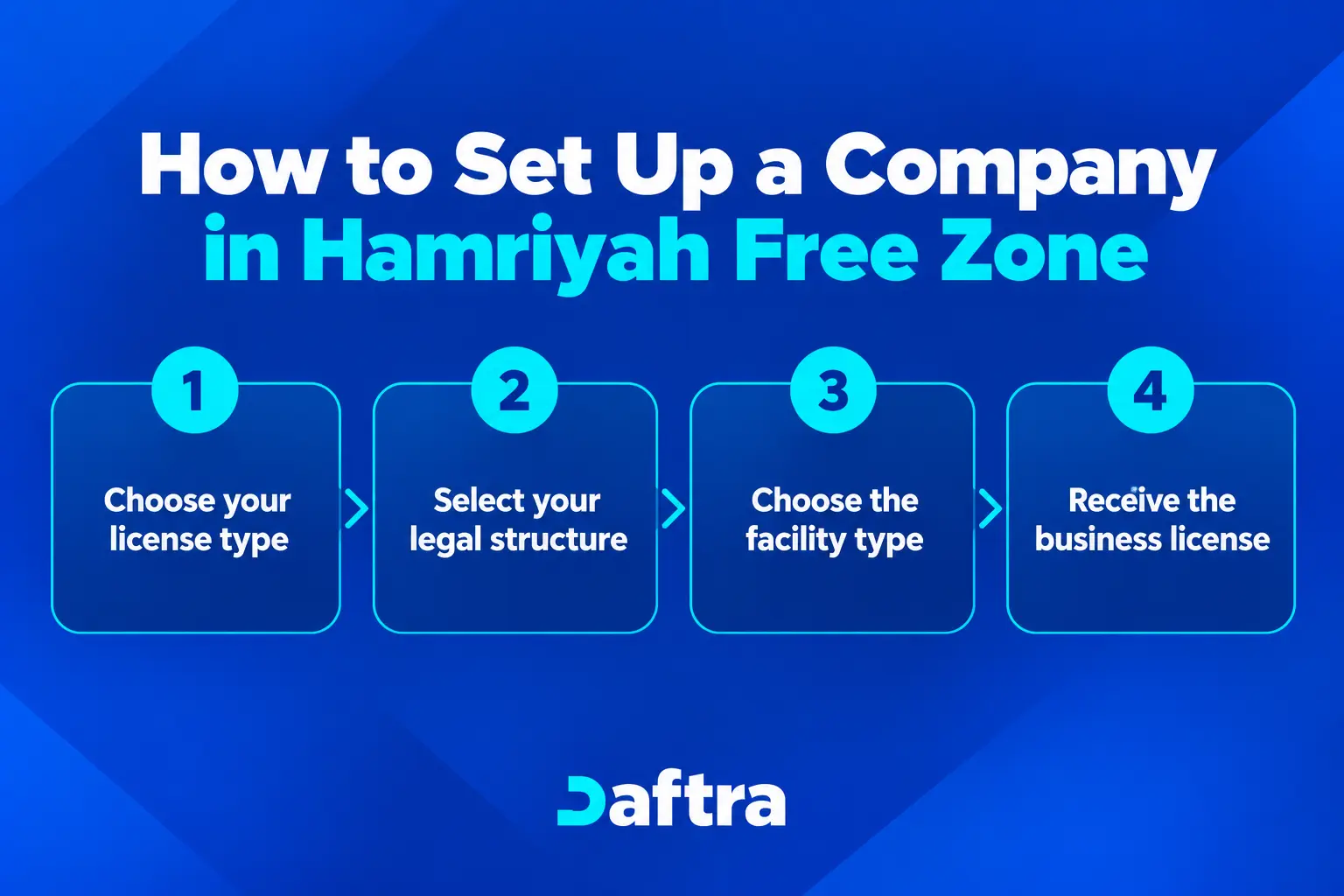
Step 1: Choose your license type
As mentioned, the trade license determines the business activities you can conduct within the Free Zone. So, it’s important to clearly identify which of the 3 licenses available is the best fit for your business needs.
Step 2: Select your legal structure
Properly structuring your company is a key step in shaping internal procedures, such as ownership and management. For example, if you’re establishing a company with multiple shareholders, the FZCO structure clearly identifies who’s responsible for decision-making, helping senior management make better decisions.
Step 3: Choose the facility type
Your facility type determines how many visas you are eligible for, so choose it wisely by evaluating your operational needs. You’ll also find that Hamriyah Free Zone offers different packages that contain a certain number of visas; this is worth considering as it offers an affordable package option for your business needs.
Step 4: Receive the business license
First, upload all the required documents we listed earlier, ensuring they are complete. Finally, the Free Zone authority will review the documents and issue the license. This will serve as your legal permission to conduct business operations within the Hamriyah Free Zone.
How much does it cost to set up in Hamriyah Free Zone?
Before starting the formation process, plan for each cost factor you may face to avoid financial surprises later. Below are the main setup cost factors you need to consider.
You can also check the packages that HFZA offers, as it could be an affordable option instead of paying for each option alone.
How long does Hamriyah Free Zone company formation usually take?
HFZA offers a smooth setup process, which takes less than 60 minutes to complete the initial setup. This usually includes the business license and facility lease, and you can apply for the visa later.
As we mentioned before, the setup process can take longer if your documents are incomplete. So, to get a fast setup process, you must prepare all the required documents we’ve listed.
You can also explore Abu Dhabi Free Zones, which offer a fast setup process and a strategic location in the UAE.
What visa and post-incorporation support does Hamriyah Free Zone offer?
In practice, the setup process doesn’t end with getting your business license. This is only the first step into real operations, so you must follow the requirements below to stay compliant in HFZA.
- Open a corporate bank account to handle the company’s daily payments and maintain clear financial records.
- Applying for visas gives shareholders and employees the legal right to live and work in HFZA, supporting smooth business operations.
- Register for VAT in the UAE once you reach the UAE’s threshold. Although HFZA is a designated zone, VAT exemptions apply only to goods, not services.
- Register for corporate tax, and you’ll only be charged if your income exceeds AED 375,000. You can still have 0% corporate tax; this happens if you qualify as a QFZP by meeting the FTA’s rules.
- Set up an operational system to better organize your company’s internal structure, including defining workflows and assigning them to employees.
Common mistakes businesses make when choosing the Hamriyah Free Zone
In practice, businesses often face challenges when they begin operations that aren't obvious during the setup process. To help you avoid them, we’ll list the most common mistakes businesses make.
FAQs about Hamriyah Free Zone
Is Hamriyah Free Zone in Sharjah or Ajman?
In fact, HFZA is located in the Emirate of Sharjah, not Ajman. But many investors confuse its actual location because it’s near the Ajman border.
What are the benefits of forming a company in Hamriyah Free Zone?
It offers a strategic location near Hamriyah Port and Sharjah International Airport, plus VAT exemptions on goods transactions. It also provides pre-built warehouses and industrial land, making it easy for businesses to operate.
Is Hamriyah Free Zone a Designated Zone?
Yes, HFZA is considered a designated zone for VAT purposes, meaning VAT exemptions apply to certain goods transactions, but not services.
How much does it cost to set up a company in Hamriyah Free Zone?
Hamriyah Free Zone offers various setup packages for different business structures, including all operational requirements such as the license, office, and visas. Setup packages typically range from AED 11,000 for basic packages to AED 150,000 for industrial businesses.








 Invoicing
 POS
 Offers
 Installments
 Sales Commission
 KSA E-Invoice Software
 EGY E-Invoice Software
 JO E-Invoice Software
 E-Invoice Software
 Chart of Accounts
 Asset Management
 Cost Centers
 Expenses
 Cheque Cycle
 UAE VAT-Tax
 Product Management
 Purchases
 Purchase Cycle
 Suppliers
 Requisitions
 Stocktaking
 Organizational Structure
 Personnel Management
 Attendance and Leave
 Contracts
 Payroll
 Requests
 Work Orders
 Booking Management
 Rental and Unit Management
 Time Tracking
 Work Flow
 Lease Contracts
 Manufacturing Management
 Client Follow-Up
 Loyalty Points
 Points and Credits
 Memberships
 Insurance Management
 Daftra ERP Full App
 Point of Sales App
 Point of Sales for Desktop – Support Offline Mode
 AI Expenses Scanner App
 Employee Attendance, Sign & ESS App
 E-invoice Reader App
 Inventory Stocktaking App