



Table of contents:
- Key Summary
- What is KEZAD and where is it located?
- Who is KEZAD best for?
- Should you choose KEZAD Free Zone or KEZAD domestic/mainland setup?
- What licence types are available in KEZAD?
- What legal structures can you register in KEZAD?
- What facilities and infrastructure does KEZAD offer?
- What documents are usually required for KEZAD setup?
- Step-by-step how to set up a company in KEZAD
- How much does it cost to set up in KEZAD?
- Can KEZAD companies operate outside the free zone?
- How do visas and post-licence requirements work in KEZAD?
- Common mistakes businesses make when choosing KEZAD
- FAQs about setting up a company in KEZAD
KEZAD is a strategic location that creates a very mature business ecosystem for various business types, and it also offers both Free Zones and mainland economic zone setup paths to meet different business needs.
Whether you have an industrial, logistics, or trading business, there is a high chance that you’ll find an impressive number that reflects KEZAD's success, and it will encourage you to start KEZAD company formation immediately.
This guide will cut a big part out of your search, as we’ll cover the differences between the Free Zone and the domestic mainland, the setup requirements, and the post-licence requirements to obtain special tax treatment in KEZAD.
What is KEZAD and where is it located?
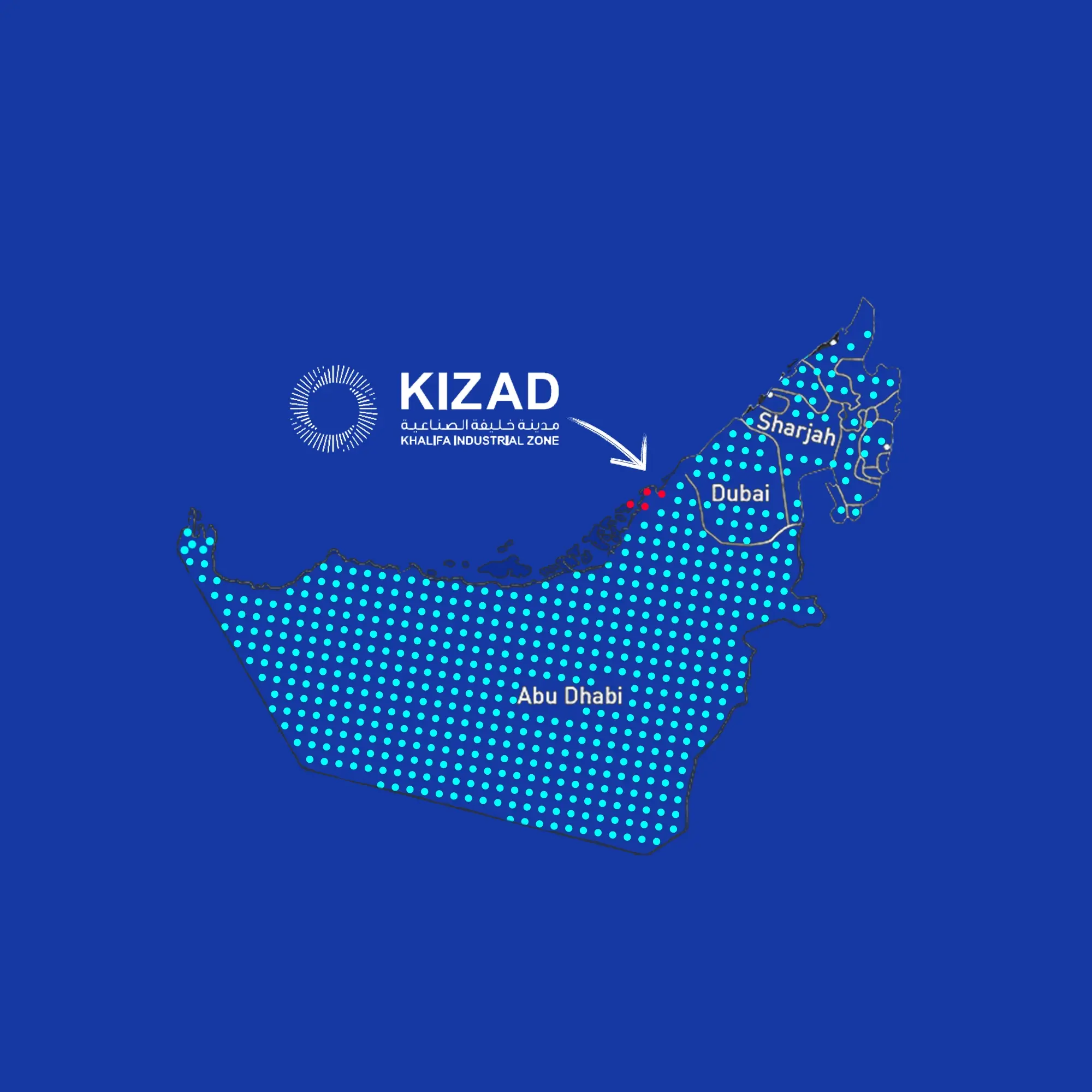
KEZAD is a business hub created by AD Ports to serve as a fully integrated trade and logistics operator. In September 2022, AD Ports Group combined KIZAD and ZonesCorp’s specialised economic zones to create a business ecosystem that combines 12 economic zones for both Free Zone and mainland businesses to provide a strong infrastructure that meets various operational needs.
KEZAD is located in Abu Dhabi, and it benefits from multimodal connectivity to key trading gateways, including air, sea, and road. Regarding the airports, it’s connected to five international airports, including Zayed and Al Maktoum Airports. It also has access to seaports, such as Khalifa Port and Zayed Port.
Who is KEZAD best for?
Even though KEZAD suits many business models because of the integrated ecosystem it offers, it’s still important to ensure that KEZAD benefits actually align with business needs before you start the setup process. So, we’ve gathered the types of businesses that KEZAD is the best option for to see whether it matches your needs.

Should you choose KEZAD Free Zone or KEZAD domestic/mainland setup?
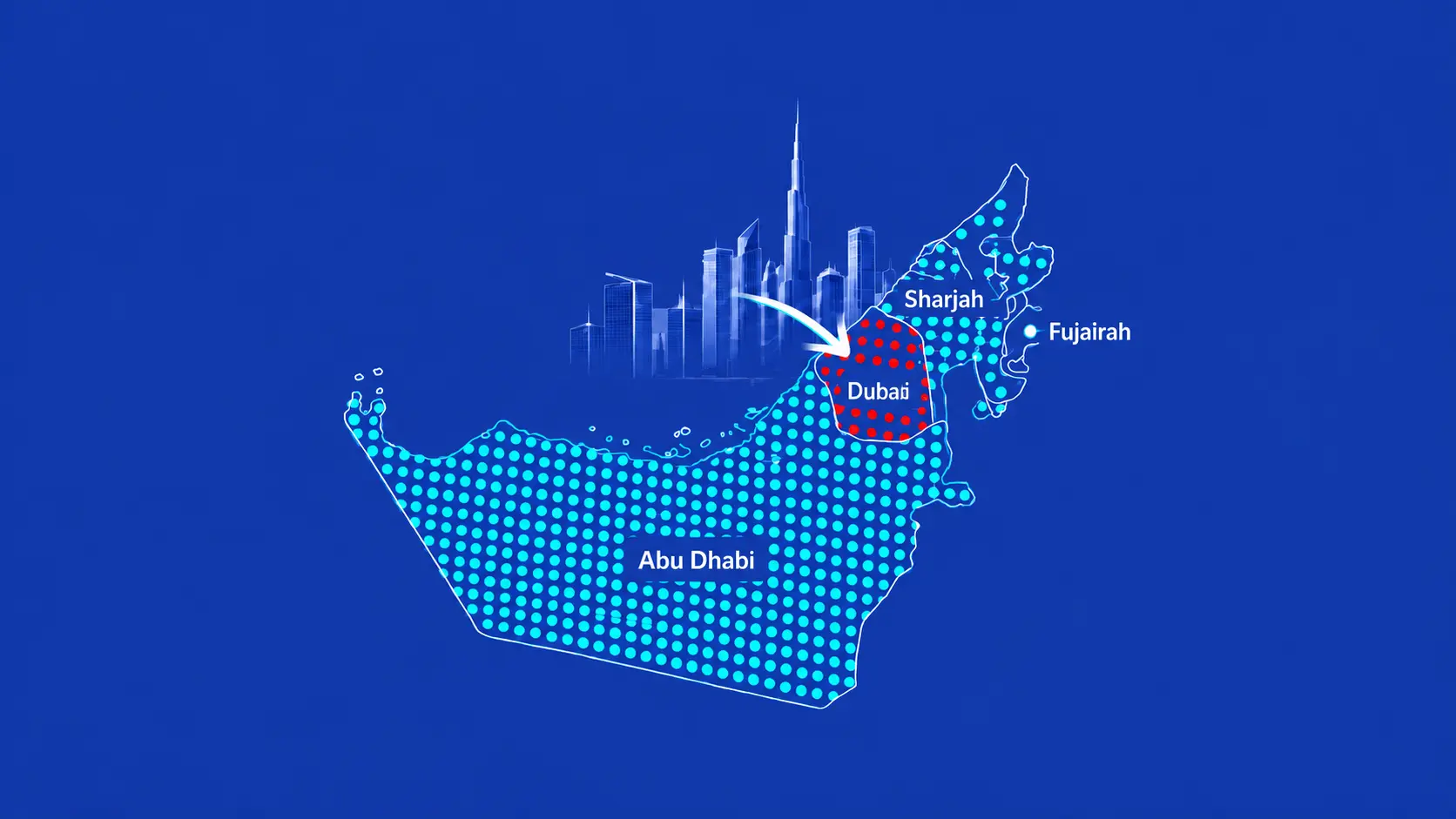
After checking whether KEZAD suits your business model, you may be confused about which setup route to choose: the Free Zone or domestic economic zone (mainland) path. Because each one offers specific advantages, this comparison will help you make your choice depending on your operating needs.
| Feature | KEZAD Free Zone | KEZAD domestic economic zone |
| Ownership | 100% foreign ownership | They can have up to 100% foreign ownership, which can be used in over 1,100 business activities |
| VAT | No VAT in specific locations | Standard VAT rate applies (usually 5% VAT) |
| Sales in local market | They can trade through distributors or local agents. They can also use the dual licence option. | Direct trade access |
| Custom duty |
|
|
| Capital and profit repatriation | 100% allowed | It can be done with a contract between partners |
| Labour law | Free Zone rules and labour law apply | UAE labour law applies |
For a wider overview of how the Free Zone and mainland routes work in Abu Dhabi, you can explore these guides to understand requirements: Business setup in Abu Dhabi mainland
What licence types are available in KEZAD?
You need to identify which type of licence suits the business activities you’re willing to conduct within KEZAD, as it determines the limited categories you’re allowed to conduct. Below are the main licence types in KEZAD that you can select.
- An industrial licence is designed for businesses working in manufacturing and assembly, such as businesses converting raw materials into finished products and exporting them to other markets.
- A trading Licence that allows businesses to import, export, and distribute specific goods items, such as e-commerce businesses. KEZAD also issues a general trading licence if the total number of products exceeds 17, or the number of groups exceeds 3.
- A service licence for companies that offer professional services for other clients in KEZAD, including consulting and retail services.
What legal structures can you register in KEZAD?
The legal structure selection determines each shareholder's liability and the company’s management structure, which affects how decisions are made when you start real operations in KEZAD. Below are the types of legal structures available at KEZAD.
LTD for an individual shareholder: It’s a company owned by one individual who is responsible for all business decisions, and this structure separates the shareholder’s and the company’s liability to avoid potential risks.
LTD for a corporate shareholder: It’s designed for business entities that will establish their company in KEZAD while having partial or full shares within this company, and each shareholder's liability is generally limited to their investments in the company.
Branch of a foreign or UAE company: It suits parent companies that are willing to expand their presence in KEZAD for their long-term growth plans while benefiting from its strategic location in the UAE.
What facilities and infrastructure does KEZAD offer?
As KEZAD has many business types across the Free Zone and domestic economic zone, it offers several office solutions that are generally well connected to trading routes in KEZAD to meet all needs, from startups to large corporations.
Startup solutions: It offers 2 solutions for startups and SMEs, which are the workspaces that are considered an affordable option but it has limited visa eligibility, and the dedicated office option that offers more privacy and higher visa eligibility.
Pre-built warehouses: KEZAD Logistics Park is developing various phases and locations continuously to offer more suitable operational facilities for businesses. It offers various warehousing solutions that suit a wide range of activities, including light industrial and flex units, allowing different business types to benefit from the facilities and its strategic location.
Serviced land plot: It offers land plots for industrial and commercial businesses for long-term lease. They are built with modern infrastructure connected to trading gateways, such as Khalifa Port, to increase operational efficiency.
Build-to-suit solution: KEZAD allows you to customize your facility depending on your budget and operational needs, with support from its specialized team to ensure it supports your operational efficiency.
What documents are usually required for KEZAD setup?
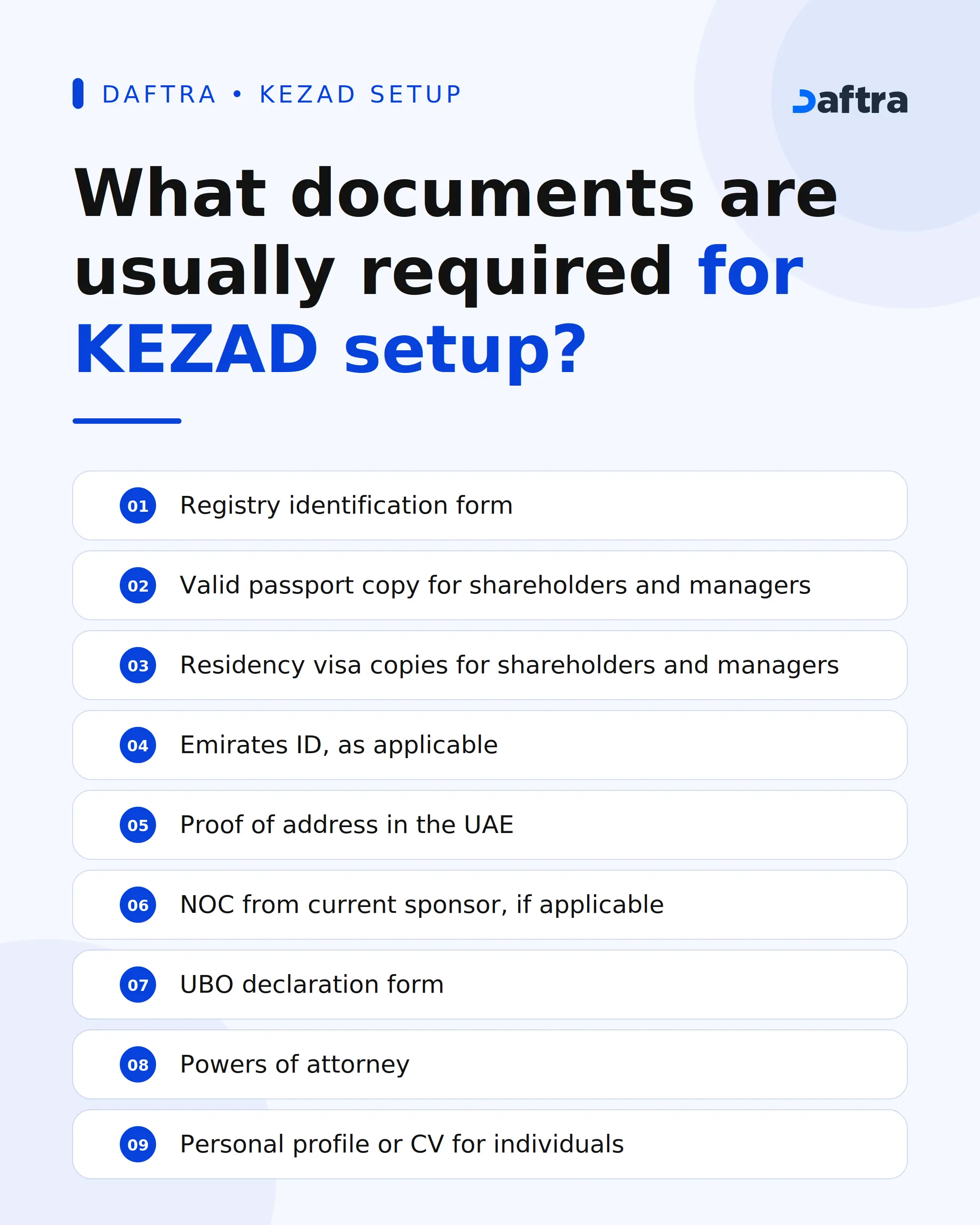
As KEZAD has several business types and legal structures, the documents may vary from one to another, but the common factor is that the document preparation process can affect the setup timeline. Below are the common required documents for each business type in KEZAD.
- Registry identification form
- Valid passport copy for shareholders and managers.
- Copies of residency visas for shareholders and managers.
- Emirates ID (as applicable).
- Copy of address proof in the UAE.
- NOC from current sponsor (if applicable).
- UBO declaration form.
- Powers of Attorney.
- Personal profile (CV) for individuals.
If you’re registering for an LTD corporate or a branch, you’ll need to add the following documents:
Foreign companies:
- Certificate of registration of the corporate person.
- Certificate of good standing
- Memorandum & articles of association and a list of the current directors.
For UAE companies:
- Copy of a valid trade license issued by the DED.
- Commercial registration issued by the DED.
- Memorandum & articles of association and a list of the current Directors (if applicable).
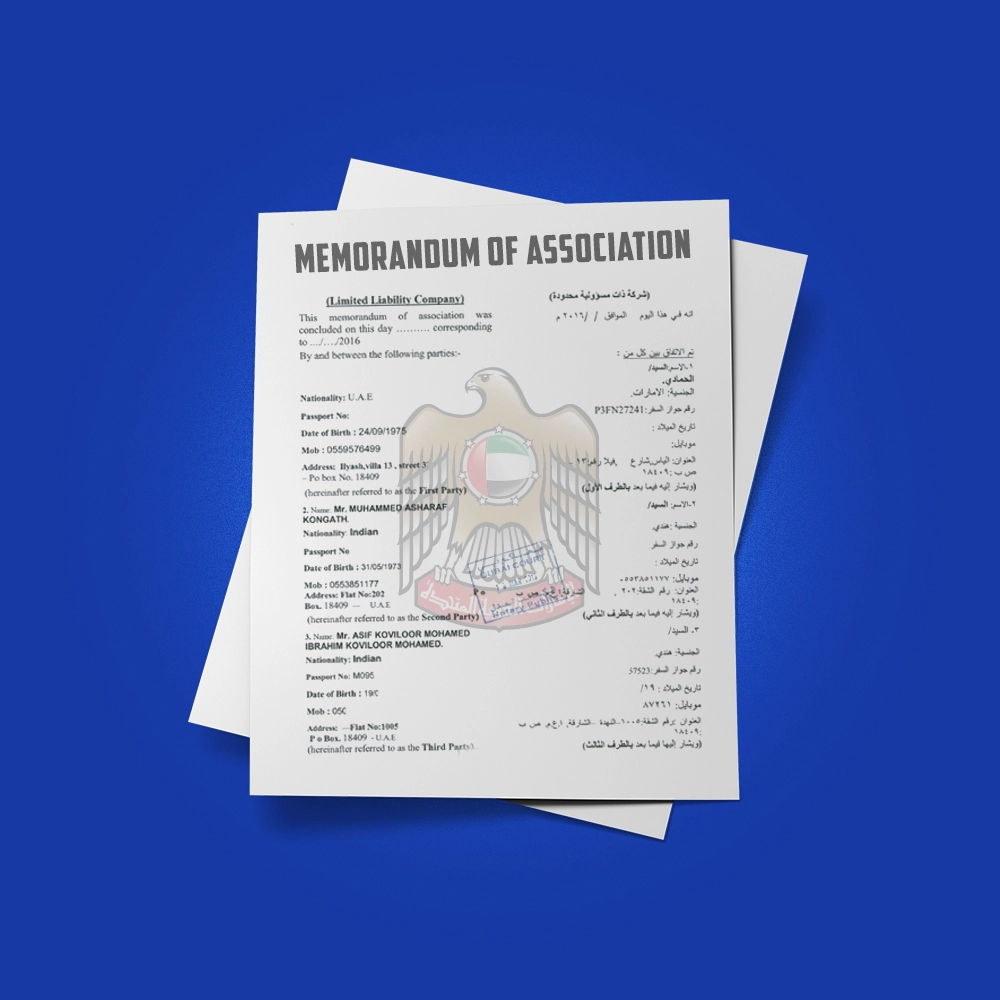
Preparing your company documents? Get our Memorandum of Association Template.
Step-by-step: how to set up a company in KEZAD
Although the setup process may seem a little complicated due to the number of business and legal types within KEZAD, the setup process is much simpler if you clearly understand all the sections we’ve outlined.
Step 1: Express your registration interest
KEZAD offers 2 different setup paths to choose from depending on your business model, which are the Free Zone and the Domestic Economic Zone. You’ll need to express your interest in establishing your company in KEZAD by submitting information about your company in the enquiry section, and the specialized team will contact you and guide you through the formation process.
Step 2: Fill out the application form
First of all, you have to select one of the legal types that we’ve outlined, as it will determine the management structure and the setup documents. Generally, they offer 3 main types: the LTD for individuals or corporates, and the branch structure for parent companies.
Then, you'll need to choose the license type that allows you to conduct specific business activities within KEZAD. When deciding the license type, identify all activities you’ll need and whether you need to add additional activities under your trade license.
After that, you should start exploring the facility options because you must have a real presence in KEZAD to continue the registration, and keep in mind that the facility choice will determine your visa eligibility.
Finally, submit the application form along with the required documents we’ve listed, and make sure that you’re not missing any of them to avoid delays.
Step 3: Receive the trade license
KEZAD responsible authority will send you the quotation that includes all setup components you’ve chosen. After you pay the required fees, they will issue your trade license to start actual operations in KEZAD.
Generally, trading and industrial businesses operate in a fast-paced environment with much pressure to handle multiple tasks at once.
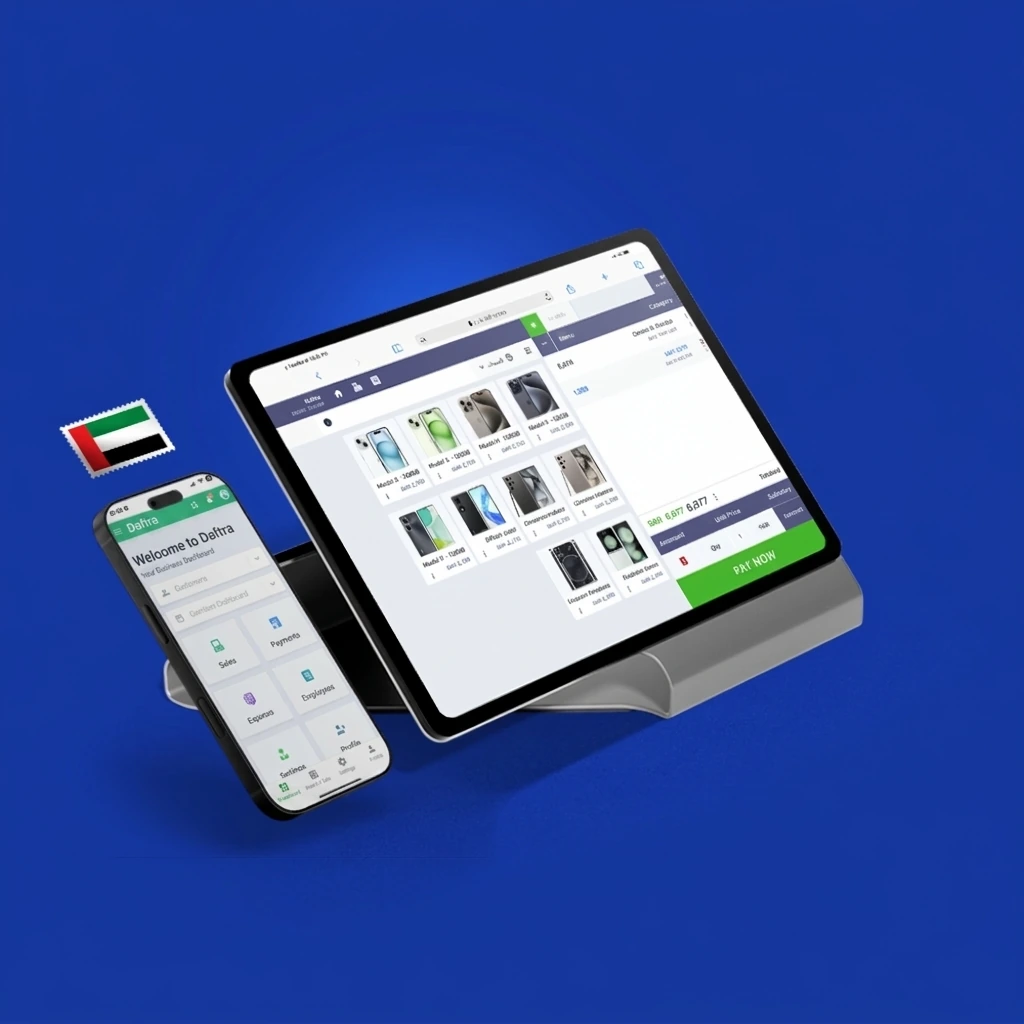
Although they may be doing their best to meet customer expectations and pay a lot of money to handle spontaneous disruptions, mistakes still happen and cost them money and effort. For this reason, using Daftra is now more important than ever. Here is why:
- Centralize workflows by bringing all business data that contribute to the company’s growth in one place.
- It gives you a clearer picture of the company’s internal processes to make fast decisions and manage disruptions.
- Improves coordination between planning departments and execution departments within the company.
- Tracks stock levels across various inventories to maintain accurate stock levels
- Handles the CT and VAT filings using the same system to maintain compliance.
How much does it cost to set up in KEZAD?
Can KEZAD companies operate outside the free zone?
Yes, generally they can operate outside the KEZAD Free Zone if they have applied for the dual license option from KEZAD’s authority, allowing them to conduct activities within the domestic economic zone (mainland) without paying additional fees to lease facilities for operations.
This can be a useful option for businesses that need to expand their brand presence and deal with local customers, without involving a Mainland company setup in Abu Dhabi.
Not only does KEZAD allow Free Zone companies to obtain a dual license to operate in the mainland, but there are also other free zones you can explore that offer the same advantage, such as ADGM and RAKEZ.
How do visas and post-licence requirements work in KEZAD?
After forming your company, you may be misled by misconceptions about post-licensing requirements, since some investors think they’re unimportant or have a vague perspective of them; meanwhile, they’re non-negotiable if you actually want to have smooth operations and remain compliant.
Visa processing: Some investors may think they can obtain any number of visas whenever they need them, but in reality this doesn’t happen. The company’s visa eligibility depends on the package and facilities you choose, so you need to keep that in mind from the start.
Opening a bank account: If you want to be credible with professional clients and businesses your company deals with, you must separate your personal and business finances, as it allows complete transactions through a dedicated account.
VAT registration: Even if you established a company in a designated zone in KEZAD, this doesn’t automatically mean you won’t register for VAT. Because VAT registration is mandatory for any Free Zone business in the UAE, especially since VAT exemptions apply only to certain goods, not services.
Corporate tax requirements: Establishing your company within the KEZAD Free Zones doesn’t guarantee a 0% CT without hard work to prove that you deserve it. If you want to have 0% CT, you need to meet the FTA’s rules and maintain clean financial records.
Operational system: If you assume it’s not that important, you may face problems that can cost you a lot of effort to fix, as it’s now essential to centralize your workflows in one place to support faster, more reliable decision-making.
There is no doubt that you’ve established your KEZAD company with big dreams of scaling, and the key to scaling any business is to reach operational excellence.
This doesn’t mean that you need to make significant changes in your business. It actually means that you need to consider the right operational layers that support business growth. Fortunately, Daftra can do all the hard work for you. Here is what Daftra will do to help you scale your business.
- Set a clear workflow for various business aspects that contribute to achieving your goals.
- Track employees’ work progress across different departments to ensure they’re working on the same goals.
- Know the gaps that need to be fixed based on clear data for upcoming workflows
- Automate all tasks in your business to ensure you have a repeatable system built on what actually works for your business model.
- Generate a wide range of detailed reports for all business aspects, including financial and operational.
Common mistakes businesses make when choosing KEZAD
Before starting the formation process, it’s better to check these common mistakes that businesses make when choosing KEZAD as their business destination in the UAE; this can help you prevent them before they happen.
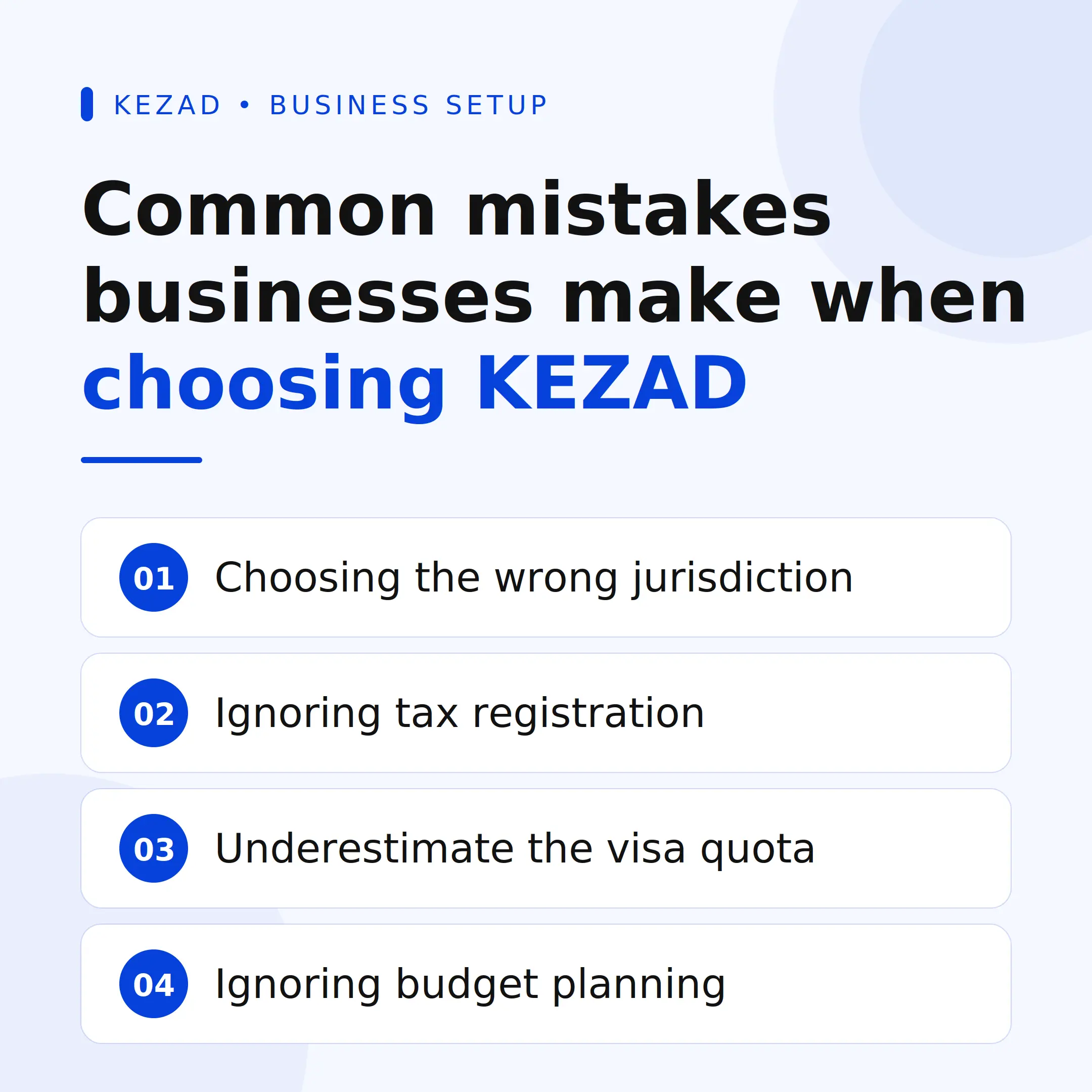
Choosing the wrong jurisdiction: You’ll need to decide whether to setup on the domestic economic zone or a free zone, and it’s important to evaluate each jurisdiction's advantages based on your business model, not the number of benefits they offer.
Ignoring tax registration: It can cost you a lot in late charges, and this doesn’t help you stay compliant with the KEZAD authority, which will decrease your chances of enjoying special tax exemptions.
Underestimate the visa quota: If you didn’t set a clear growth plan for your workforce and operational requirements, you’ll usually choose the wrong setup package that doesn’t meet your business needs.
Ignoring budget planning: It’s important to allocate a proper budget that covers your renewal fees, including the license, facility, and visa, to avoid any operational disruptions because of late renewals.
FAQs about setting up a company in KEZAD
Which is the biggest industrial area in the UAE?
KEZAD is considered the largest industrial area, as it represents 55% of the UAE’s industrial area, with a total area of 550 km². This supported KEZAD’s growth plans and enabled it to develop other facilities for operations in both domestic economic zones and the Free Zone.
What is the difference between KIZAD and KEZAD?
Generally, KIZAD is now part of a larger group, which is KEZAD Group, so they are in the same location now. Formerly, KIZAD was an industrial zone in Abu Dhabi, but the responsible operator, AD Port Group, decided to combine the KIZAD Free Zone and ZonesCorp’s specialised economic zones to create a fully integrated business ecosystem.
Is KEZAD a designated zone?
Not all locations in KEZAD are designated for VAT, as there are only 100 square kilometres designated as Free Zones according to KEZAD Group. This allows companies in Free Zones to have VAT exemptions on specific goods transactions.
Does KIZAD require a physical facility to register?
Yes, all businesses must lease a dedicated office or workspace to continue the registration. The facility requirements vary depending on the jurisdiction you choose, whether it’s a Free Zone or a domestic economic zone.
How long does KEZAD company setup take?
Generally, the KEZAD company setup can be completed in 24 hours for a Free Zone company. However, this process may take longer if there are missing documents or additional approvals from authorities.








 Invoicing
 POS
POS Offers
 Installments
 Sales Commission
 KSA E-Invoice Software
 EGY E-Invoice Software
 JO E-Invoice Software
 E-Invoice Software
 Chart of Accounts
 Asset Management
 Cost Centers
 Expenses
 Cheque Cycle
 UAE VAT-Tax
 Product Management
 Purchases
 Purchase Cycle
 Suppliers
 Requisitions
 Stocktaking
 Organizational Structure
 Personnel Management
 Attendance and Leave
 Contracts
 Payroll
 Requests
 Work Orders
 Booking Management
 Rental and Unit Management
 Time Tracking
 Work Flow
 Lease Contracts
 Manufacturing Management
  Client Follow-Up
 Loyalty Points
 Points and Credits
 Memberships
 Insurance Management
 Daftra ERP Full App
 Point of Sales App
 Point of Sales for Desktop – Support Offline Mode
 AI Expenses Scanner App
 Employee Attendance, Sign & ESS App
 E-invoice Reader App
 Inventory Stocktaking App