



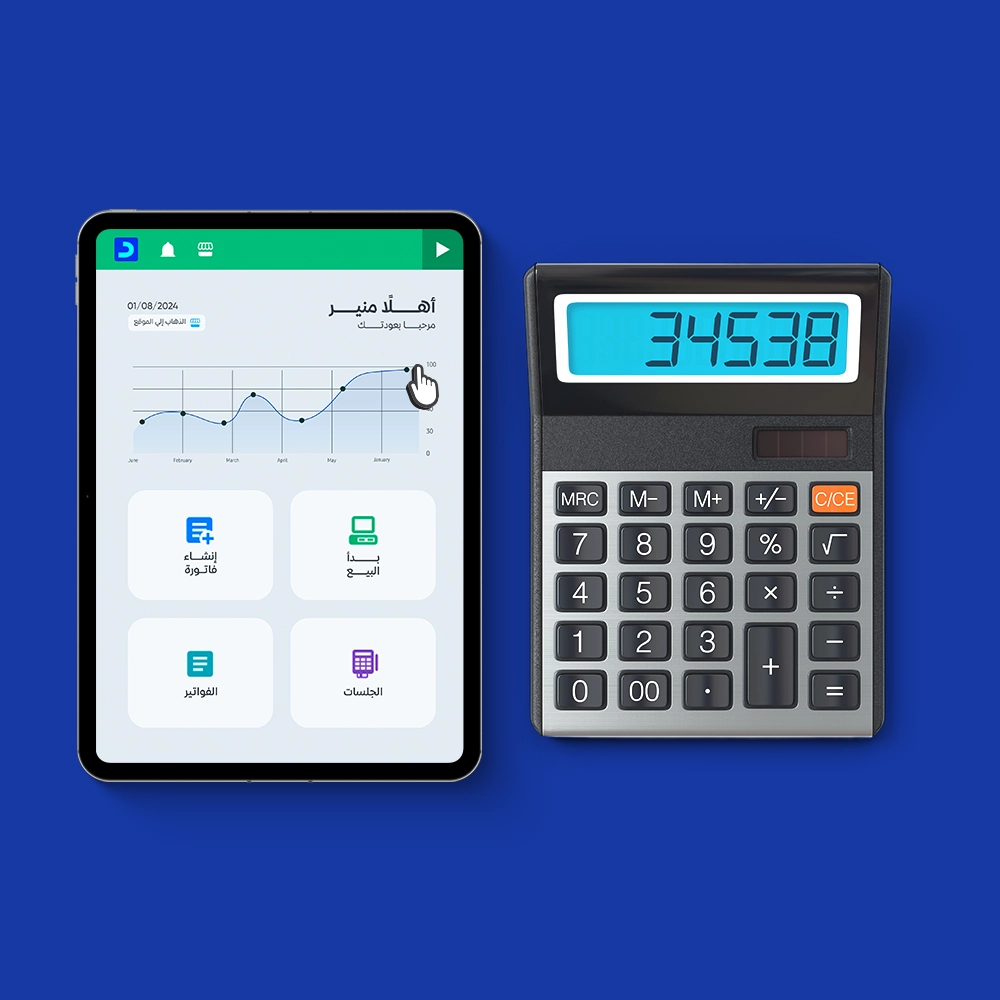
In the era of the information revolution and digital transformation, and the evolution of the "Internet," it has become necessary for companies to keep pace with this tremendous development by relying on accounting software, whose mission is no longer limited to traditional accounting tasks alone, but has become to accurately perform most of the accountant's tasks.
Many criteria and factors guide the process of choosing the best accounting software for companies. If you want to achieve your company's goals by using integrated accounting software to manage and settle all your work, the following lines provide a comprehensive guide to choosing the best accounting software for your company.
Choosing accounting software is one of the most important decisions and challenges facing institutions and companies, especially startups and medium-sized companies that want to move from traditional accounting software to advanced digital solutions.
The following are the most prominent reasons that drive companies to choose accounting software to manage and operate their business:
Why You Might Need Accounting Software in Your Company
Choosing accounting software is one of the most important decisions and challenges facing businesses, especially startups and medium-sized companies looking to move from traditional accounting software to advanced digital solutions.
The following are the most prominent reasons that drive companies to choose accounting software to manage and operate their business:
1- Accurate financial data
Manual accounting leads to wrong calculations and duplicated records. Those errors make reports unreliable and weaken confidence in the numbers.
With accounting software, calculations are automated, data stays more consistent, and the chance of error decreases. It also improves the ease and speed of preparing reports and financial statements.
2- Real-time visibility
Without accounting software, it can be difficult to know how much cash your business has.
Accounting software brings this information together in one place, with updated reports and dashboards that help you keep track of your finances.
- Know how much cash you have available.
- Track outstanding invoices and upcoming payments.
- Make decisions based on current financial data, not outdated reports.
3- Better cash flow management
Managing cash flow is essential for keeping a business running smoothly. Even a profitable company can face financial difficulties if customer payments are delayed or upcoming expenses are not properly planned.
Accounting software helps businesses keep track of cash coming in and going out, follow up on unpaid invoices, and prepare for upcoming payments to reduce the risk of cash shortages.
- Track incoming and outgoing cash.
- Identify overdue invoices and follow up on outstanding payments.
- Plan ahead for upcoming expenses and avoid unexpected cash shortages.
4- Faster and smarter decision-making
Reliable financial information makes it easier to make the right decisions at the right time. When reports are clear and up to date, business owners can see how the company is performing, notice changes in sales or expenses, and deal with issues before they grow.
This makes it easier to plan ahead instead of simply reacting to problems as they come up.
- Get a clearer view of profits and losses.
- Notice important changes in the business earlier.
- Make decisions based on actual financial information rather than assumptions.
5- Compliance with electronic invoicing requirements
Accounting software that includes a solution compliant with electronic invoicing helps issue and store invoices electronically according to the requirements set by the Zakat, Tax, and Customs Authority.
6-Preparation for the second phase of electronic invoicing
ZATCA e-invoicing phase 2 requires linking the establishment's electronic invoicing system with the Fatoora platform, issuing invoices in the required format, and adding the fields specified by the authority. Therefore, choosing an accounting system that supports integration and electronic connectivity has become more important for companies subject to phase 2.
A small trading company in Saudi Arabia was handling its sales and expenses manually in Excel. As the number of orders increased, keeping sales, inventory, payments, and financial reports in sync became more difficult.
The company then started using accounting software to connect these processes in one system. For example, when a sales invoice is recorded, the transaction automatically updates the related revenue, customer balance, tax, inventory, and cost of goods sold based on the system’s settings.
The same data can then flow into the relevant accounting entries and financial reports, without having to enter the transaction separately in each place. This gives the company a clearer view of sales, stock levels, customer balances, and its financial position as transactions occur.
Read Also: Best Accounting Software in Egypt 2026 - Comparison + User Reviews
How to Choose the Best Accounting Software for Your Company?
Choosing the best and most suitable accounting software is the first step to success in simplifying and managing business, as accounting software varies in prices, quality, and the number of tasks it can perform.
This decision matters for several reasons, including the need for software that meets the company's current needs and future expectations by providing and analyzing financial and accounting information and reports, as this data will form the basis for decisions.
Therefore, the correctness of this decision depends on the accounting software's efficiency and accuracy and the quality of the data it produces. There are many criteria and things that must be considered before purchasing accounting software for your company.
The following are the most important of these criteria:
1- Nature of the Company or Institution
The nature of the institution's activity influences your choice of software, as accounting transactions for commercial or industrial institutions may differ from those of service companies.
Similarly, the size of this activity and its growth may also affect the choice of accounting software. The following shows each type and the requirements:
2- Program Version Type
Another factor to consider is whether the accounting software is free. While free accounting software may be suitable for basic accounting needs, it may not always provide all the features a growing business requires.
For example, a company may choose a free accounting system because it covers all basic tasks such as recording income and expenses. As the business grows, the company may find that it needs important features such as bank reconciliation, integrations with other business tools, advanced reporting, or customer support.
3- Determining Work Requirements
You must define your business goals and activities, and the benefit you want to achieve through using accounting software.
You must also identify the elements and accounts that the accounting software is expected to handle, such as payroll, inventory management, cost accounting, and others.
You should also consider the company's future and growth when choosing accounting software to support future expansion.
4- Education Level
You must choose accounting software based on employees' education level. If you choose advanced software, you must consider the training you need to provide to keep up with modern technologies.
Employees must be able to understand the software's functions and features to achieve the desired results.
5- After-Sales Services
Here, you must determine whether the software design company provides after-sales support and services or not. You must also know the company's responsiveness to all customer inquiries and problems.
You must also ensure the support team has sufficient experience and knowledge to help with technical problems, and that the software design company provides regular software updates.
6- Reputation of the Software Design or Providing Company
Here, you must research the software provider, such as how many years the company has worked in the accounting software field.
Therefore, you must ensure the company is flexible enough to handle unexpected situations. The more flexible and stable the company is, the more trustworthy it becomes.
7- External Transaction Support
If you have deals and activities abroad or with parties outside the country, you must ensure your accounting software supports external transactions and accounts.
You must also ensure it handles foreign currency exchange rates and external transfers.
8- Legal Compliance Support
The accounting software must ensure financial records comply with legislative laws in the country. Therefore, companies must adopt accounting software that can simplify and implement compliance processes by automating the creation of electronic road invoices, electronic invoices, and attention to other compliance requirements as well.
9- Ease of Use
It is essential to choose accounting software that is easy to use and not complicated. Therefore, the software must provide a simple user interface that is more suitable for daily operations by focusing only on priorities.
The software must also contain separate menus, such as customer list, inventory list, and invoice list, to facilitate and simplify work.
10- Price
The software price must be appropriate for the tasks it performs, and also appropriate for the quality of services it provides.
You must also ensure whether the software provider imposes any additional costs or any monthly or annual fees.
Read Also: Guide to Prices of Arabic and International Accounting Software
11- Program Performance in Tasks
You must ensure the program's success in performing the required tasks. This can be verified by requesting a trial version of the program for a month, for example, to evaluate the efficiency of the program's performance. The following are the most prominent of these tasks:
- Securing data and preparing invoices.
- Expense tracking.
- Inventory management.
- Bank reconciliations.
- Tracking purchase orders and recording inventory purchases.
- Tax file management.
- Daily journal entry recording.
- Displaying creditor and debtor accounts.
- Preparing reports including balance sheet, profit and loss statement, and trial balance.
- Review and audit.
The program should also provide some additional features and characteristics, according to the type and size of company operations.
12- Data Security
The feature of maintaining data security and confidentiality is one of the most important criteria for choosing the appropriate accounting software, as the company must ensure the confidentiality and accuracy of all accounts and financial and commercial transactions.
Therefore, you must ensure the program's ability to save information and data securely and confidentially through private servers, create backup copies, and implement all safety and security rules.
13- Automatic Integration
Accounting software is one of the technical tools that help in performing tasks and operations. Therefore, it must work with many other tools and technologies to ensure result accuracy. So the program must provide automatic integration features with the most prominent applications in use.
14- Flexibility
Your accounting software must be characterized by flexibility, meaning it keeps pace with all developments and changes that occur in the company's business and activities.
The program must also be supported by the internet, so that all employees can access the database and software, and manage financial operations at any time.
Read Also: Best accounting software in Saudi Arabia
Questions You Should Ask Yourself Before Choosing Accounting Software
If you are about to start your company and want to choose accounting software to manage all financial operations, ask yourself a few questions to help with the selection process.
The following are the most prominent of these questions:
Is there a difference between cloud accounting software and accounting software that is installed on the desktop?
Some traditional accounting software must be installed on a computer or laptop, and users store and access all information and data through those devices. Cloud accounting software does not need to be installed on any device, as it performs all functions via the internet, and information and data are stored in additional backup copies in the cloud.
Will this software meet work requirements in the long term when business and activities grow and expand?
You should also think about the company's future and business growth when choosing accounting software. This software should accommodate future expansions, as future expansion is the goal of all companies. It is not logical to purchase new software with every new expansion of company activities, so you should choose software that is compatible with the company's expected expansions for at least 5 years.
Do you need to train employees to work on this software?
The software may include many modern technologies to accomplish some complex accounting tasks, so the accounting team must be trained to understand and keep up with these technologies to achieve the required results.
Is customer support free or for a fee?
Some companies provide support and maintenance services for free for a year or more, and then the services are for modest fees.
Does the software work on all operating systems, such as Windows, Mac, or Linux?
Traditional accounting software installed on the desktop should work with all operating systems.
Does the software provide the feature of sharing information with those who need it?
Some people sometimes find it difficult to share information and data, so it is transferred manually, but there are some accounting software programs that allow data and information exchange between employees and also allow multiple users, but with conditions and levels of confidentiality for each user.
What is the maximum amount that can be spent to purchase accounting software? Is the software price appropriate for the features and services it provides?
Initially, a special budget is set for purchasing accounting software, according to work requirements and functions required from this software, but the software price should be compatible with the quality and efficiency of tasks and functions performed by the software.
Are there any complaints about the software's security and safety procedures and rules?
Accounting information and data may be exposed to any dangers, such as theft or damage due to natural accidents, so the software design company must provide rules and mechanisms for data safety and security. Therefore, it is necessary to provide storage spaces subject to monitoring with the latest technologies, where they are able to detect hacking attempts. You must ensure the company's ability and reputation to achieve this by searching for previous customers' comments about their experiences with the software.
Final Checklist
Conclusion
It is now impossible for companies and institutions to remain in the financial market, regardless of business size, without digitizing their operations and transactions.
Given that the accounting department is one of the most demanding departments, consuming time, effort, and money, the emergence and development of accounting software has benefited the accounting and auditing sectors. However, the diversity and variety of these programs on the market have made it difficult for companies and institutions to choose the best accounting software for them.
Therefore, a useful guide is needed to help accountants understand what accounting software is and why it matters, along with the key criteria and factors that support the right decision. We recommend, at the end of the article, choosing the accounting software from Daftra, as it provides many features and services.








 Invoicing
 POS
POS Offers
 Installments
 Sales Commission
 KSA E-Invoice Software
 EGY E-Invoice Software
 JO E-Invoice Software
 E-Invoice Software
 Chart of Accounts
 Asset Management
 Cost Centers
 Expenses
 Cheque Cycle
 UAE VAT-Tax
 Product Management
 Purchases
 Purchase Cycle
 Suppliers
 Requisitions
 Stocktaking
 Organizational Structure
 Personnel Management
 Attendance and Leave
 Contracts
 Payroll
 Requests
 Work Orders
 Booking Management
 Rental and Unit Management
 Time Tracking
 Work Flow
 Lease Contracts
 Manufacturing Management
  Client Follow-Up
 Loyalty Points
 Points and Credits
 Memberships
 Insurance Management
 Daftra ERP Full App
 Point of Sales App
 Point of Sales for Desktop – Support Offline Mode
 AI Expenses Scanner App
 Employee Attendance, Sign & ESS App
 E-invoice Reader App
 Inventory Stocktaking App