


Posted on 20 September 2026
Final Accounts Template
- Final accounts are used at the end of an accounting period to prepare for the start of a new accounting period.
- The Final Accounts Template aims to identify the value of your company's profit or loss during the accounting period.
- The template handles three types of final accounts: the Profit and Loss Account, the Operating Account, and the Trading Account.


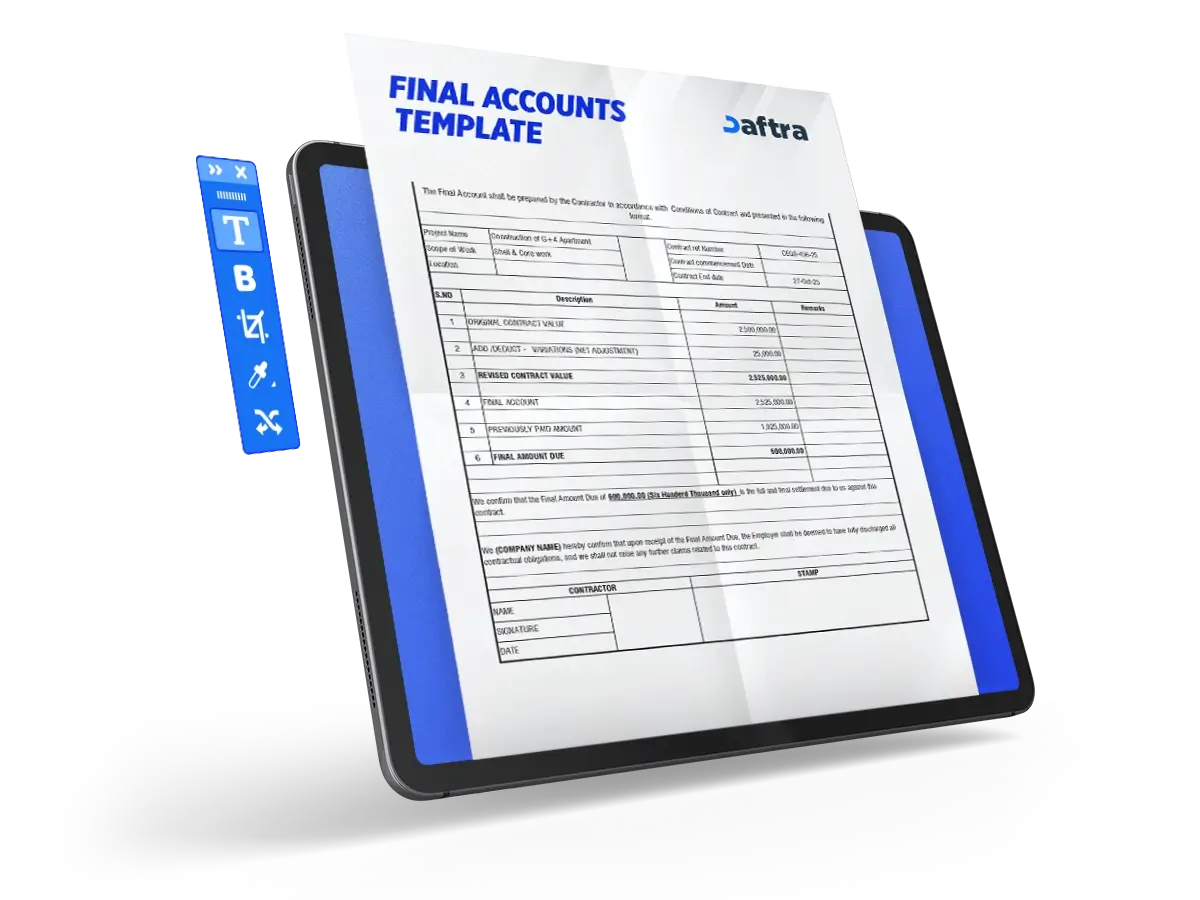
 Register with Daftra accounting software and generate final accounts automatically
What Is a Final Accounts Template?
A Final Accounts Template is an integrated template that handles three types of accounts: the Profit and Loss Account, the Trading Account, and the Operating Account. Each account has its own purpose in supporting account-closing processes and the preparation of financial statements. These accounts represent the main components of the income statement.
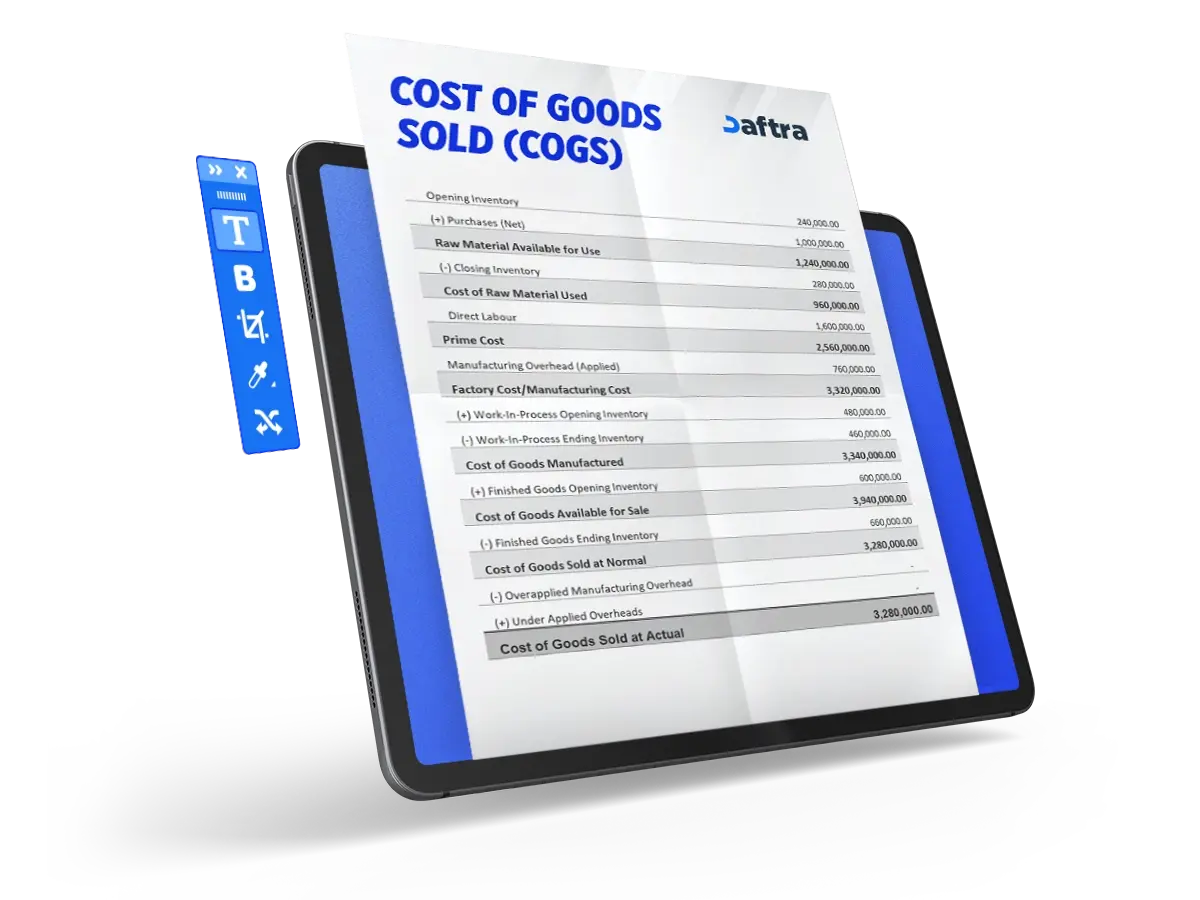
The Operating Account deals with the total cost of goods manufactured when purchased raw materials are subject to any form of processing, operation, or manufacturing inside a factory. If your company does not own a factory and its business model is limited to buying and selling, you do not need to use the Operating Account and can move directly to the Trading Account. The Trading Account deals with gross profit or loss, while the Profit and Loss Account deals with net profit or loss.
What Are the Elements of a Final Accounts Template?
A Final Accounts Template consists of three different accounts:
1- Operating Account Template
The Operating Account Template tracks the expenses and products resulting from manufacturing, operating, and processing activities inside your company's factories. Opening raw materials are recorded on the debit side, while closing raw materials are recorded on the credit side. If the company does not run any operating or manufacturing activities, there is no need to use the Operating Account Template.
The template includes accounts such as fuel, raw material transportation expenses, utilities expenses, and other factory-related expenses on the debit side. The credit side includes closing raw materials, closing work in progress, returns, and other related items.
2- Trading Account Template
This final account interacts with the total cost of goods manufactured, opening inventory, and sales returns, which are recorded on the debit side. The credit side includes sales, closing finished goods, and purchase returns. The result is the gross profit or gross loss.
3- Profit and Loss Account Template
The Profit and Loss Account closes the gross profit or gross loss account based on the results processed in the Trading Account. This template provides a broader view of the business and includes the general expense and revenue items of the business, leading to the final net profit or net loss.
You May Also Download
How Do You Use a Final Accounts Template?
To use the template efficiently, follow these steps:
1- Identify Your Company's Business Model
Determine whether your business model includes importing, then manufacturing or operating, followed by selling and distribution, or whether it only depends on buying and selling products. If the first scenario applies, you can use the Operating Account. In the second case, start directly with the Trading Account.
2- Fill in the Financial Data for Each Account
Review the journal entries related to the accounts included in each final account, then start entering the balances and amounts.
3- Calculate the Total Cost of Goods Manufactured, Where Applicable
To determine gross profit or loss for a company that operates a factory, you need to calculate the total cost of goods manufactured. This includes the total cost of raw materials used and the cost of products manufactured during the period.
4- Calculate Gross Profit or Loss
To determine whether the business is making a profit or incurring a loss, buying and selling activities must be assessed, as they are among the core operations that shape the business outcome. Use the Trading Account to identify all expenses related to buying and selling, determine the purchases that support the sales process, and account for returns. Ultimately, you can determine whether the gross result is profit or loss.
5- Calculate Net Profit or Loss
This is the main purpose of the Final Accounts Template and is reached at the end of the model. Using the Profit and Loss Account, you can place gross profit on the debit side or gross loss on the credit side, depending on the result of the previous step. Then, identify the business's general expenses that were not included in the previous worksheet, as well as revenues generated from other activities unrelated to buying and selling your main products, such as renting out equipment or property, selling waste, or recycling it.
Why Is a Final Accounts Template Important?
The importance of a Final Accounts Template lies in guiding different businesses to understand the efficiency of their financial performance and whether they are making a profit or incurring a loss from their operations. Preparing a Final Accounts Template helps with the following:
1- Preparing Accurate Financial Statements
Recording the Final Accounts Template at the end of the accounting period ensures the preparation of complete and effective financial statements. The template guides the company's board of directors toward financial decisions based on clear data.
2- Protecting the Business from Fraud and Embezzlement Attempts
The Final Accounts Template helps detect errors, embezzlement attempts, or internal theft that may otherwise go unnoticed. As a result, the template protects the company's reputation and market image and safeguards it from major financial losses.
3- Providing Effective Budgets and Accurate Forecasts
The template supports the preparation of budgets that align with business needs based on purchases, sales, and expenses related to both processes. It also provides a complete view of the company's financial position.
Who Benefits from a Final Accounts Template?
Many parties benefit from this template, starting with the board of directors, who need to know whether the business is profitable or losing money at different stages. The template also benefits investors who want to understand the company and evaluate the efficiency of its financial performance.







 Invoicing
 POS
POS Offers
 Installments
 Sales Commission
 KSA E-Invoice Software
 EGY E-Invoice Software
 JO E-Invoice Software
 E-Invoice Software
 Chart of Accounts
 Asset Management
 Cost Centers
 Expenses
 Cheque Cycle
 UAE VAT-Tax
 Product Management
 Purchases
 Purchase Cycle
 Suppliers
 Requisitions
 Stocktaking
 Organizational Structure
 Personnel Management
 Attendance and Leave
 Contracts
 Payroll
 Requests
 Work Orders
 Booking Management
 Rental and Unit Management
 Time Tracking
 Work Flow
 Lease Contracts
 Manufacturing Management
  Client Follow-Up
 Loyalty Points
 Points and Credits
 Memberships
 Insurance Management
 Daftra ERP Full App
 Point of Sales App
 Point of Sales for Desktop – Support Offline Mode
 AI Expenses Scanner App
 Employee Attendance, Sign & ESS App
 E-invoice Reader App
 Inventory Stocktaking App