


Posted on 6 October 2026
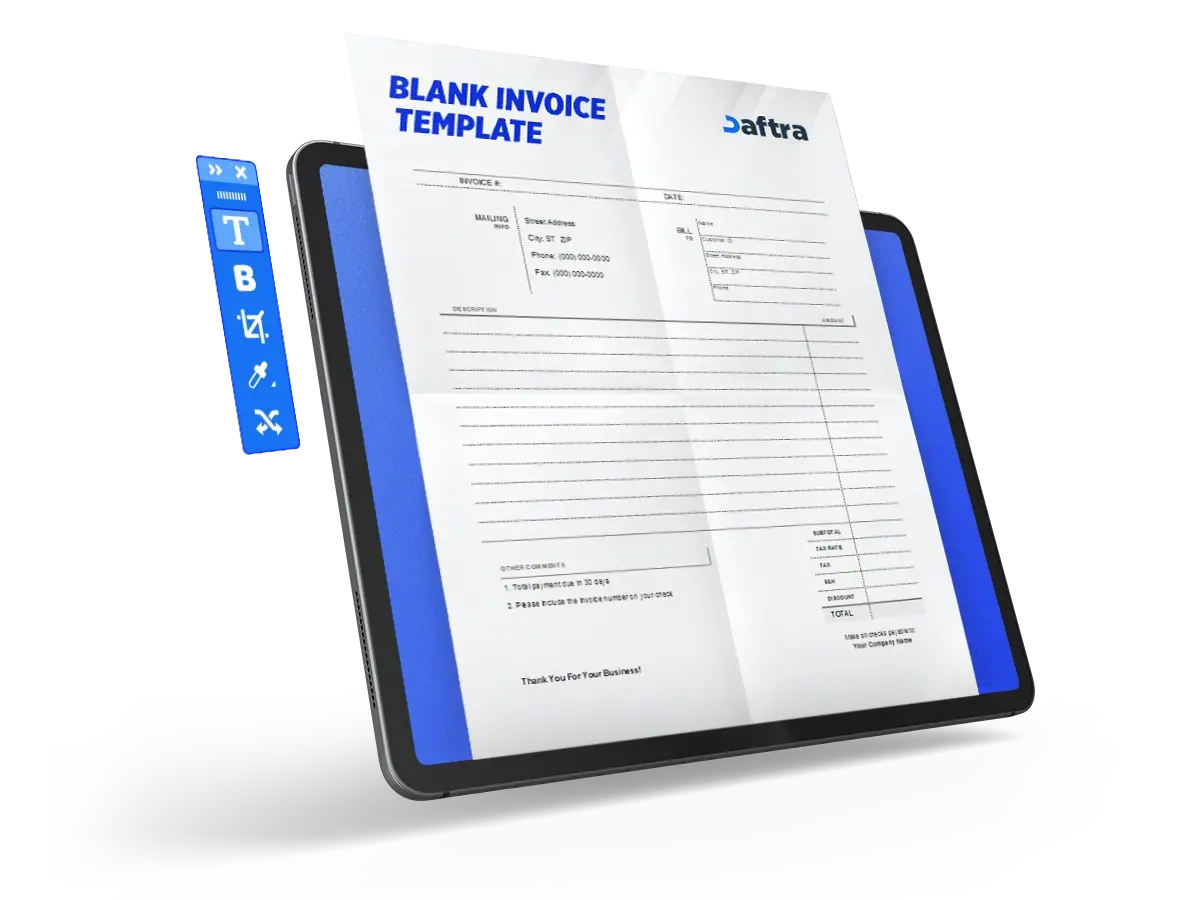
Blank Invoice Template
- A blank invoice template helps document financial transactions and business deals, protecting the financial rights of all parties involved.
- It speeds up invoice issuance by eliminating the time required to create each invoice from scratch.
- It supports a professional brand identity by enabling the company to use a consistent invoice format.


 Create and manage professional e-invoices easily with Daftra
What Is a Blank Invoice Template?
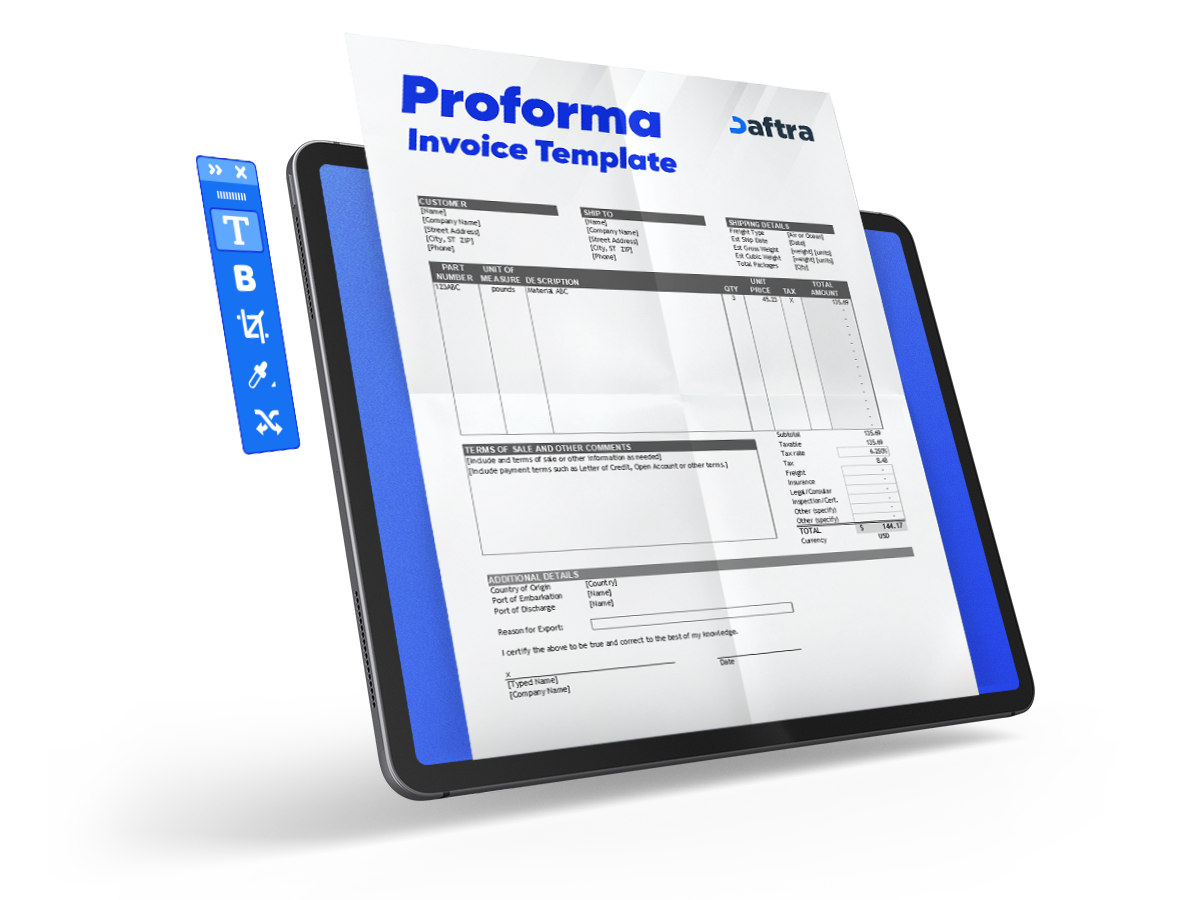
A blank invoice template is a ready-to-use commercial document containing the key fields and details that companies and businesses may need to document financial transactions. These include the company name, invoice details, product descriptions, shipping information, and all other essential invoice elements.
Use the Saudi VAT Calculator to calculate any tax rate automatically and free of charge.
What Are the Components of a Blank Invoice Template?
The template consists of several essential components that are required in any financial transaction:
1. Invoice Details
The template provides all essential invoice information, such as the invoice number, issue date, due date, quotation or estimate number, company name, company address, and customer number.
2. Customer Information Table
This table records customer information through two important sections. The first is the “Bill To” section, which contains the details of the party responsible for receiving the invoice, such as the entity name, address, contact information, and payment terms, if applicable.
The second is the “Ship To” section, which includes the details of the party receiving the products, such as the recipient’s name, shipping address, and telephone number. In some cases, the party receiving the products is the same party responsible for receiving the invoice.
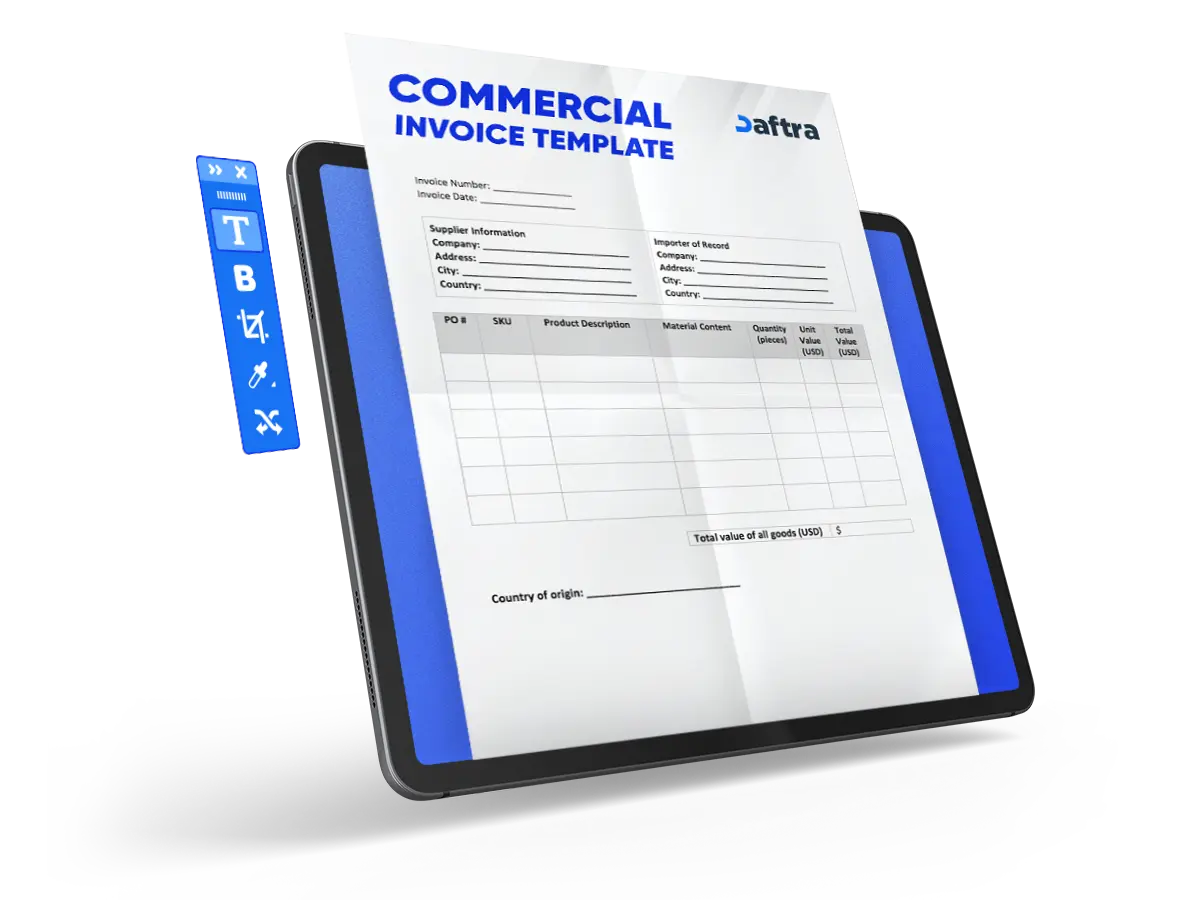
3. Shipping Details
The template includes accurate and important shipping information, such as the purchase order number and date, shipping method, number of packages, and all other essential details related to the shipment.
4. Product Details
This table records all product-related information, including descriptions, quantities, shipping charges, discounts, and taxes, making it easier to calculate the final amount due.
5. Notes
This section is used to record any additional information or important remarks that are not included in the other sections.
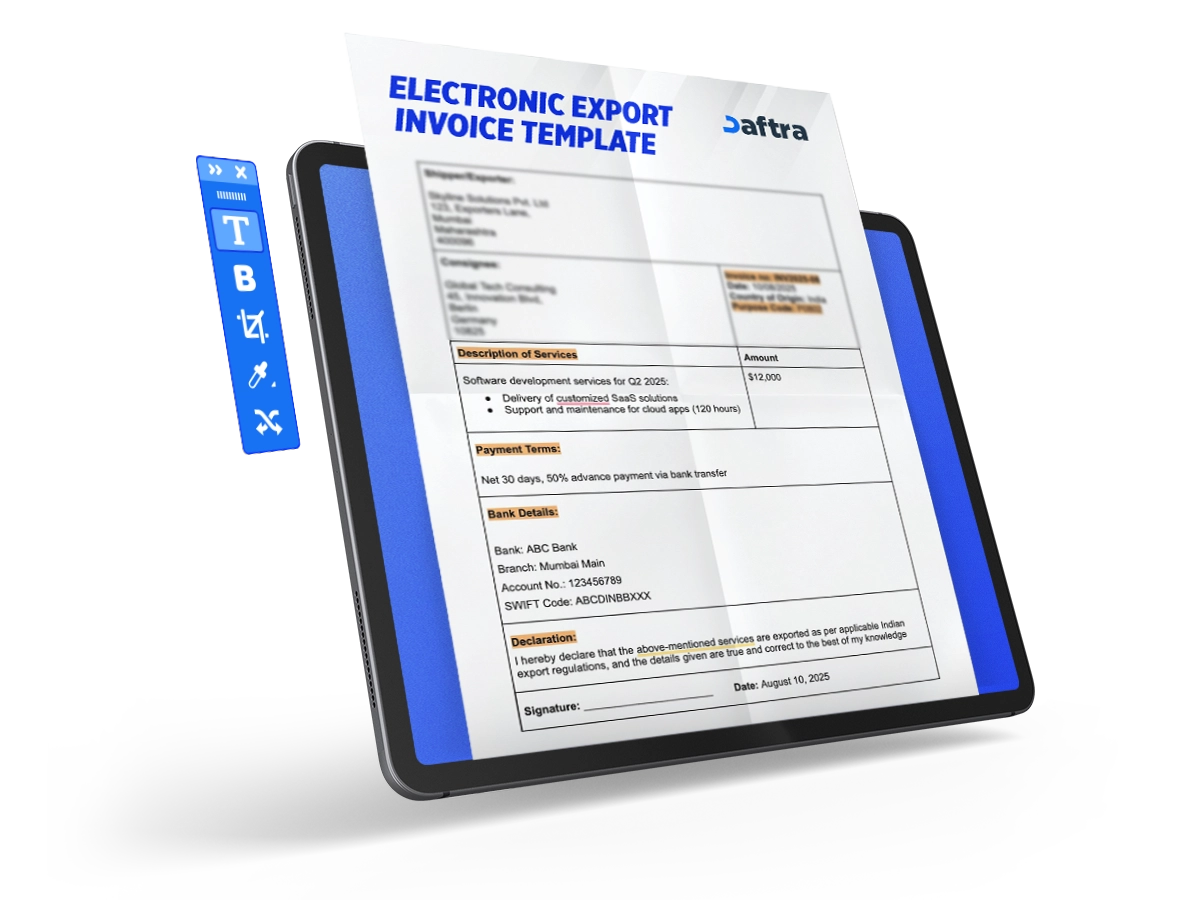
6. Declaration
The template concludes with a declaration in which the signatory confirms that all information stated in the template is accurate. By signing it, the signatory assumes legal and ethical responsibility for the accuracy of the information provided.
Why Is a Blank Invoice Template Important?
A blank invoice template is an essential tool for companies seeking to manage invoicing efficiently and strengthen customer relationships. Its key benefits include:
1. Building a Professional Brand Identity
The template enables the use of a consistent invoice format and allows companies to customize invoices to meet their specific requirements, such as adding the company logo. This helps establish a professional brand identity.
2. Increasing Productivity
Time savings are one of the template’s main benefits. It eliminates the time required to design and prepare invoices from scratch, allowing the company to process more invoices in less time.
3. Preventing Financial Disputes
The template records all information related to financial transactions and identifies the parties responsible for payment and shipping. It also documents the terms agreed upon by both parties, clearly defining the financial obligations of the seller and buyer and helping prevent misunderstandings or disagreements that could lead to disputes.
4. Promoting Transparency
The template promotes transparency between the buyer and seller, as well as between company management and employees, by documenting all detailed information related to financial transactions. The signatory also confirms that the information provided is accurate, helping protect everyone’s rights and making the records easy to review whenever needed.
How to Use a Blank Invoice Template
You can use the template by following these steps:
1. Gather the Required Information
Collect all information needed for the invoice, including customer details, shipping and invoice information, and the details of the products ordered.
2. Enter the Information
Enter the collected information in the designated fields.
3. Record the Shipping Details
Accurately record all shipping details, including the order number, shipping method, date, weight, shipping and payment terms, if applicable, and any other important information.
4. Calculate the Invoice Total
Calculate the total product prices and subtract any applicable discounts. Then add taxes and shipping charges to the discounted product total to determine the final invoice amount.
5. Review the Information
Review all information carefully to ensure its accuracy before sending the invoice.
6. Sign the Declaration
Sign the declaration confirming your legal and ethical responsibility for the accuracy and validity of the information included in the template. It is therefore essential to review all information carefully before signing and sending the invoice.
Who Can Benefit from a Blank Invoice Template?
The template provides valuable functionality for several parties, including:
Business Owners
It helps business owners document sales and analyze revenue, supporting better business management and more informed strategic decisions. It also strengthens the company’s image by standardizing and organizing all invoices, which contributes to a professional brand identity.
Accountants
The template provides accountants with detailed information for every financial transaction, making it easier to enter data and calculate expenses and taxes accurately.
Company Managers
Managers use the template to track financial transactions, monitor financial performance, and make better decisions. It also increases productivity and saves time by providing a ready-made, standardized format for all invoices.
Shipping Team
The template provides the shipping team with all necessary information and helps them track shipment details accurately, reducing the risk of problems and operational disruptions.
Tax Authorities and Auditors
The template helps tax authorities and auditors verify the company’s compliance with applicable tax laws and regulations by presenting accurate, comprehensive, and well-organized details for each financial transaction, making the records easier to review.







 Invoicing
 POS
POS Offers
 Installments
 Sales Commission
 KSA E-Invoice Software
 EGY E-Invoice Software
 JO E-Invoice Software
 E-Invoice Software
 Chart of Accounts
 Asset Management
 Cost Centers
 Expenses
 Cheque Cycle
 UAE VAT-Tax
 Product Management
 Purchases
 Purchase Cycle
 Suppliers
 Requisitions
 Stocktaking
 Organizational Structure
 Personnel Management
 Attendance and Leave
 Contracts
 Payroll
 Requests
 Work Orders
 Booking Management
 Rental and Unit Management
 Time Tracking
 Work Flow
 Lease Contracts
 Manufacturing Management
  Client Follow-Up
 Loyalty Points
 Points and Credits
 Memberships
 Insurance Management
 Daftra ERP Full App
 Point of Sales App
 Point of Sales for Desktop – Support Offline Mode
 AI Expenses Scanner App
 Employee Attendance, Sign & ESS App
 E-invoice Reader App
 Inventory Stocktaking App