


Posted on 16 September 2026
Electronic Export Invoice Template
- An Electronic Export Invoice Template is a legal document used to record export transactions. It includes the seller’s and buyer’s details, a description of the goods, their value, and the terms of sale.
- An electronic invoice is an essential tool for ensuring legal compliance, supporting customs clearance, and accelerating international payments.
- Exporters benefit from the electronic invoice by organizing their commercial operations and ensuring compliance with legal and financial requirements.


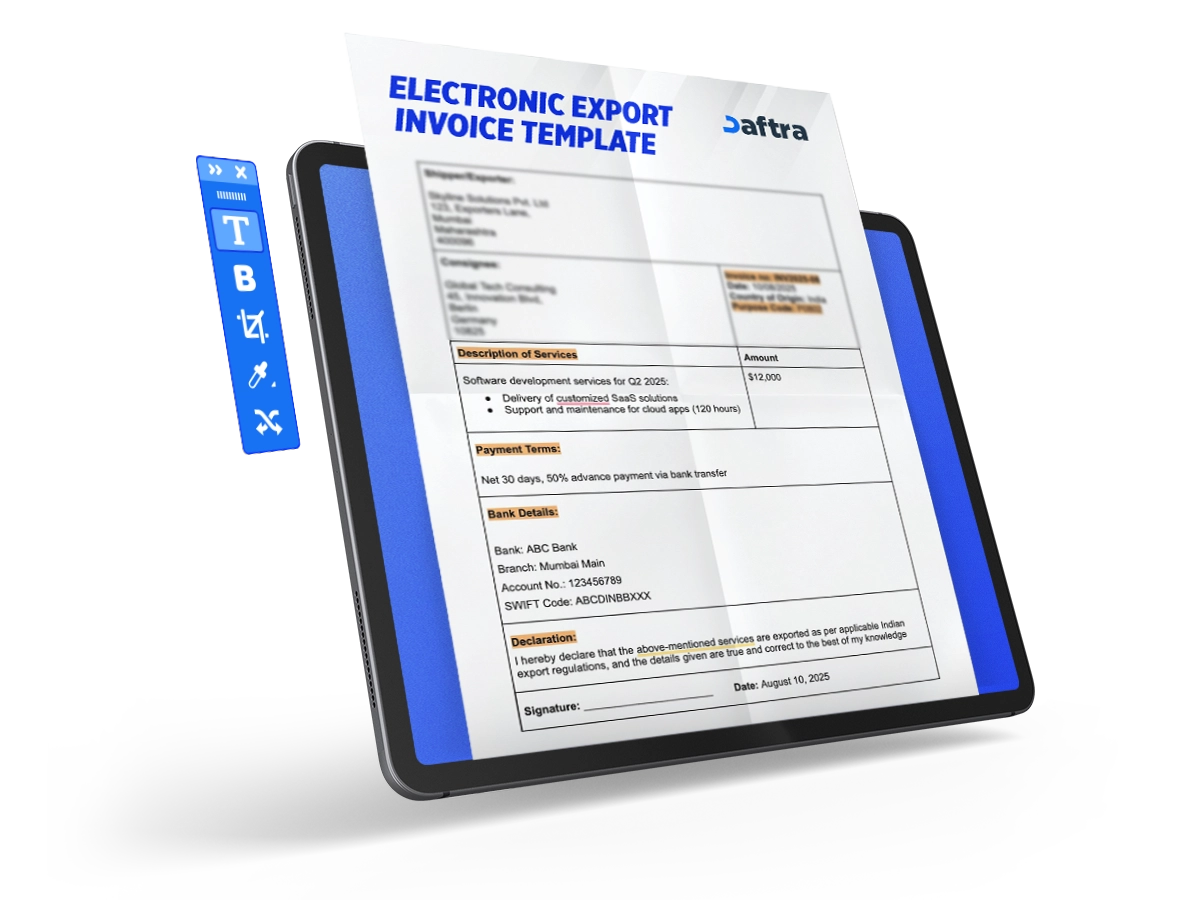
 Create invoices easily with Daftra today.
What Is an Electronic Export Invoice Template?
An Electronic Export Invoice Template is a digital document used to record export transactions. It contains the seller’s and buyer’s details, a description of the goods, their value, and the relevant terms of sale or proposals. This template is considered an essential tool for governments to estimate customs duties and taxes. The format of the invoice, its content, the number of copies, and the language used are usually determined according to the applicable regulations governing imports.
Why Is an Electronic Export Invoice Template Important?
An Electronic Export Invoice is one of the key documents in international trade, as it forms the basis for customs, financial, and legal procedures. Its importance is reflected in the following:
- Legal compliance: The electronic invoice is considered official evidence of the validity of the commercial transaction. It is required in most countries when exporting goods above certain value thresholds, allowing customs authorities to assess duties and taxes accurately.
- Customs clearance: Customs authorities rely on the invoice to classify goods, verify the accuracy of the data, and determine the applicable charges. For that reason, including all information accurately is essential to avoid delays or shipment rejection.
- Facilitating international payments: The electronic invoice is used in banking procedures and letters of credit (LC), where its data must match the other shipping documents in order to ensure faster release of funds.
- Insurance claims: It serves as an essential reference for insurance companies when processing damage or loss claims, as it is used to estimate compensation value.
- Tax compliance: The electronic invoice helps companies comply with tax requirements such as GST and obtain tax credits in a legal and organized manner.
- Recordkeeping and audit: The invoice is an official document required for accounting purposes, financial reporting, and tax audit processes, and it should be retained in accordance with local and international regulations.
In short, an Electronic Export Invoice helps ensure legal and financial transparency and supports the smooth progress of export operations, from payment through customs clearance, making it an essential element in the success of any international export transaction.
You can also download:
What Are the Elements of an Electronic Export Invoice Template?
- Seller details: These include all key business details of the seller, such as the company name, address, contact information, GST number, Import Export Code (IEC), and any other relevant registration numbers.
- Buyer details: These include the customer’s full information, including the official company name, address, the person responsible for receipt, and any tax or registration numbers required in the importer’s country.
- Invoice details: These include a unique invoice number, the issue date, and a reference to the buyer’s purchase order (PO) number to make tracking and review easier.
- Product description: This section provides an accurate and clear description of the goods, including quantities, units of measure, unit prices, and total values, using standardized and unambiguous terminology.
- Shipping details: These include delivery terms, port of loading and destination, shipping date, and any special packing or handling instructions.
- Financial information: This section states the total value of the goods, any applicable taxes or charges, shipping costs, and the final amount due with clarity and accuracy.
Regulatory information: These include compliance details such as HS codes, country of origin, and any certificates or permits required to complete the export process.
How to Prepare an Electronic Export Invoice Template?
To create an Electronic Export Invoice correctly, a set of essential steps should be followed to ensure that the data is complete and accurate, which helps facilitate customs clearance and ensures compliance with legal and financial requirements in export transactions. These steps include:
- Enter the seller’s and buyer’s details: Start by adding the full seller and buyer details, including company name, address, contact details, GST number, IEC, and any other relevant registration numbers, along with the buyer’s official company name, address, contact information, and any tax numbers required in the importer’s country.
- Enter the invoice details: Include a unique and sequential invoice number and the issue date, with reference to the buyer’s purchase order (PO) number to make tracking and review easier.
- Describe the products: Add an accurate description of the goods, including quantities, units of measure, unit prices, and total value, using clear commercial terminology to avoid confusion during customs clearance.
- Add shipping and delivery details: Specify the delivery terms such as FOB or CIF, the port of loading and destination, the shipping date, and any special packing or handling instructions.
- Enter the financial information: Include the total value of the goods, any applicable taxes or charges, shipping costs, and the final amount due.
- Add regulatory and compliance information: Include HS codes, country of origin, and any necessary certificates or permits, then review the invoice before exporting it electronically through an approved system in PDF or XML format and sharing it with the relevant parties.
These steps help ensure that the Electronic Export Invoice is complete and properly prepared, which contributes to faster customs clearance and stronger legal and financial compliance in export transactions.
How Is an Electronic Export Invoice Template Used?
An Electronic Export Invoice is used to document all sea and air shipments when exporting products internationally, as it forms an essential part of the customs clearance documentation. This invoice helps the importer arrange clearance procedures and the delivery of goods. It is also submitted to banks when a letter of credit is used to initiate the release of funds.
Customs authorities rely on the information it contains, such as the description and value of the goods, to determine the duties and taxes payable. For that reason, it must include all the required data to avoid problems or delays during clearance.
Who Benefits from an Electronic Export Invoice Template?
- Exporters: They benefit from better organization of their operations, stronger compliance with legal and tax requirements, and easier customs clearance and international payment procedures.
- Importers: The electronic invoice helps them verify shipment details, match orders, and facilitate receipt of goods without delay at customs.
- Customs authorities: They rely on the invoice to classify goods and determine duties and taxes accurately, which contributes to faster and more efficient customs clearance.
- Banks and financial institutions: They use the invoice to process international payments and letters of credit, ensuring that documents match and that funds are released more quickly.
- Insurance companies: They rely on the invoice data to estimate the value of goods and facilitate insurance claims in the event of damage or loss.









 Invoicing
 POS
POS Offers
 Installments
 Sales Commission
 KSA E-Invoice Software
 EGY E-Invoice Software
 JO E-Invoice Software
 E-Invoice Software
 Chart of Accounts
 Asset Management
 Cost Centers
 Expenses
 Cheque Cycle
 UAE VAT-Tax
 Product Management
 Purchases
 Purchase Cycle
 Suppliers
 Requisitions
 Stocktaking
 Organizational Structure
 Personnel Management
 Attendance and Leave
 Contracts
 Payroll
 Requests
 Work Orders
 Booking Management
 Rental and Unit Management
 Time Tracking
 Work Flow
 Lease Contracts
 Manufacturing Management
  Client Follow-Up
 Loyalty Points
 Points and Credits
 Memberships
 Insurance Management
 Daftra ERP Full App
 Point of Sales App
 Point of Sales for Desktop – Support Offline Mode
 AI Expenses Scanner App
 Employee Attendance, Sign & ESS App
 E-invoice Reader App
 Inventory Stocktaking App