


Posted on 18 November 2026
Accounts Receivable Ledger Template
- An Accounts Receivable Ledger Template can be used to track outstanding receivables and financial obligations due to the company. This helps you understand future inflows and ensure outstanding amounts are monitored properly.
- It helps track customer balances and verify that all collections are made on time and in the correct amounts.
- The template also helps analyze the overall financial performance of the company or individual and supports assessing the strength of outstanding financial obligations.
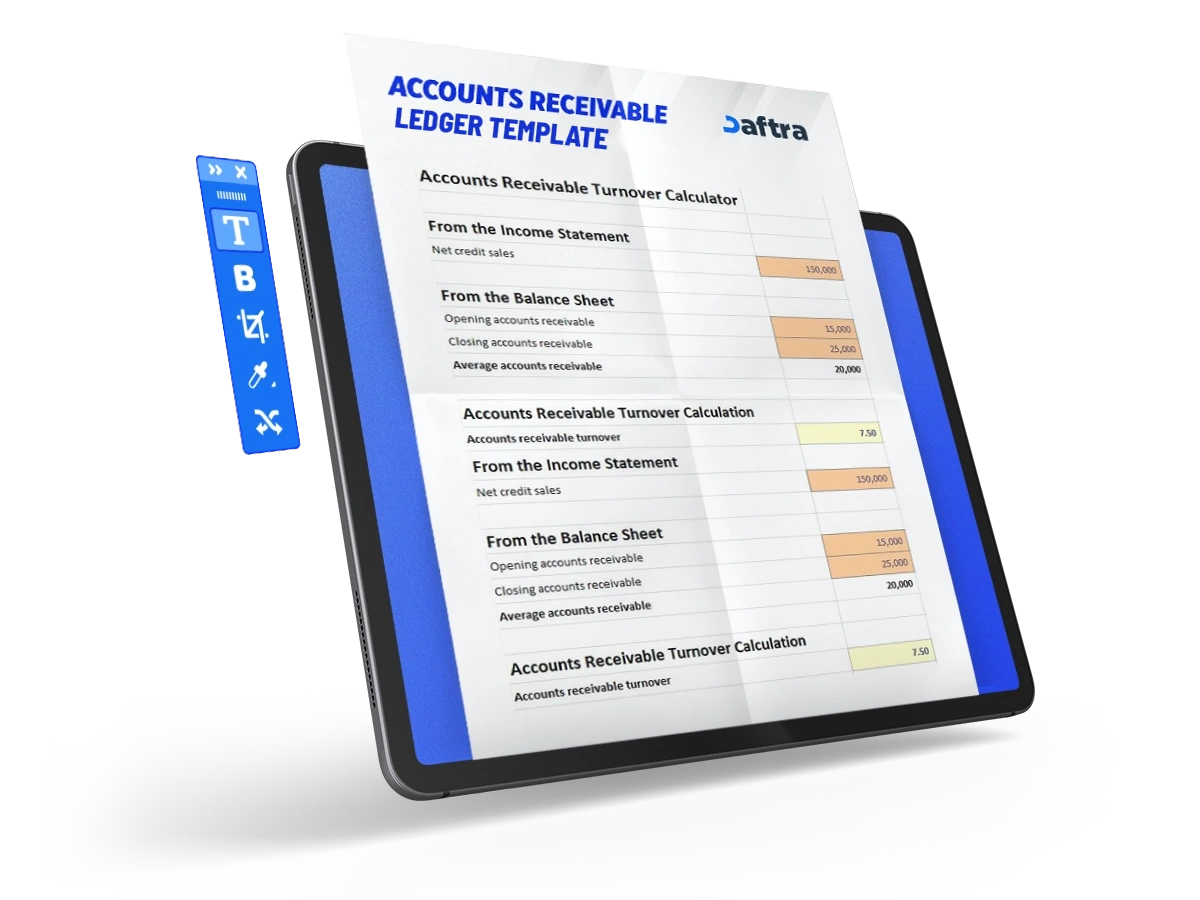
 Track Overdue Payments with Daftra
What Is an Accounts Receivable Ledger Template?
An Accounts Receivable Ledger Template, also known as an accounts receivable book or debt ledger, is a document used to record and track amounts due to a company or an individual. This template records collections due from customers or other parties, making it easier to monitor and manage outstanding debts. The ledger usually includes several columns and details that allow the company to update debt status and record payments received.
An Accounts Receivable Ledger helps organize invoicing activities and track debt status, which is essential for maintaining effective control over receivables and improving the cash flow statement.
What Are the Elements of an Accounts Receivable Ledger Template?
An Accounts Receivable Ledger Template includes several essential elements that help track and record information related to outstanding debts. Some of the main elements that may form part of this template are as follows:
1- Invoice or transaction date
This is used to specify the date on which the invoice was issued or the date of the transaction that created the debt.
2- Invoice or transaction number
A unique number is assigned to each transaction or invoice to make verification and tracking easier.
3- Customer or debtor name
This records the name of the person or company that owes the debt.
4- Amount due
This identifies the total amount that must be paid.
5- Remaining balance
This is used to calculate and record the remaining amount still to be paid.
6- Debt status
This shows whether the debt has been paid in full, partially paid, or is subject to any special payment arrangements.
7- Payment date
This is used to record the actual payment date if part or all of the amount has been paid.
These are some of the main elements that may appear in an Accounts Receivable Ledger Template, and they may be adjusted according to the needs of the company or individual using the template.
You may be interested in:
How to Use an Accounts Receivable Ledger Template?
Using an Accounts Receivable Ledger Template requires an organized process to record and follow up on information accurately. Below are general steps for using an Accounts Receivable Ledger:
1- Prepare the template
Download the Accounts Receivable Ledger Template, which may be paper-based or electronic, using software such as Excel or Google Sheets.
2- Define the key information
Determine the main details that need to be recorded, such as invoice date, invoice number, customer name, amount due, amount paid, and remaining balance.
3- Update the ledger regularly
Update the ledger regularly whenever new transactions occur. Maintain periodic updates so that it reflects the current status of debts.
4- Record information accurately
Make sure all information is recorded accurately, ensure that all customer payments are entered correctly, and update figures on a regular basis.
5- Follow up on outstanding balances
Monitor remaining balances and track payments received. Use color coding or symbols to make it easier to identify the current status of each debt.
6- Update debt status
Use a field to specify whether debts are fully paid, partially paid, or still unpaid. You may also include a status such as “Under Review” for debts that require additional attention.
7- Facilitate communication
Include customer contact details, such as address and phone number, to make communication easier whenever updates or notices are required.
8- Prepare periodic reports
Prepare regular reports reflecting the status of debts and payments. These reports can help in making management decisions and identifying areas of concern.
9- Track overdue debts
Monitor overdue debts and apply the agreed policies to address them, while considering additional measures if necessary.
10- Evaluate performance
Assess the effectiveness of the template periodically and use it as a tool to improve debt management and achieve better financial performance.
Why Is an Accounts Receivable Ledger Template Important?
An Accounts Receivable Ledger Template is an important tool for managing debts and tracking amounts due to a company or an individual. Some of the reasons that make this ledger important include:
1- Monitoring cash flow
The template helps monitor outstanding debts and received payments, which supports effective cash flow forecasting and management.
2- Improving financial planning
It provides a tool for improving financial resource planning and adjusting financial policies to achieve financial stability.
3- Facilitating collection activities
The template makes collection activities more effective, as the company can identify due balances and take the necessary action to collect them.
4- Strengthening customer relationships
It helps improve customer relationships by providing a transparent method for settling debts and clarifying financial balances.
5- Tracking business performance
It provides measurable data about business performance and allows analysis of collection efficiency and identification of areas that may require improvement.
6- Identifying trends and patterns
The template can help the company identify trends and patterns in customer payment behavior, which is useful for identifying customers who may need additional attention.
7- Supporting strategic decisions
The template helps support strategic decisions based on the status of debts, such as improving credit policies or identifying areas that may require debt reduction.
8- Compliance with financial controls
It contributes to compliance with internal and external financial controls by helping provide accurate reports on debt status.
9- Guiding action plans
The template serves as a guide for action plans and the improvements needed in debt-related processes.
10- Improving internal and external confidence
The template strengthens confidence in financial management by providing accurate and transparent information to the internal team and external stakeholders.
In general, an Accounts Receivable Ledger Template is an essential tool for companies and individuals to improve debt management and ensure better financial stability.
Who Benefits from an Accounts Receivable Ledger Template?
Many parties benefit from an Accounts Receivable Ledger Template, including different companies and individuals. Some of the main beneficiaries are:
- Small and medium-sized companies and businesses: It helps them improve debt management and track amounts due, which leads to better cash flow and financial stability.
- The financial services sector: Financial service providers, such as banks and financial institutions, may benefit from using an Accounts Receivable Ledger to provide financing services more effectively and understand customer financial behavior.
- Accountants and finance teams: The template provides accurate data that helps accountants and finance professionals prepare financial reports and track debt status.
- Customers and potential customers: It makes it easier for customers to understand their account status and outstanding amounts, enhancing transparency and building trust.
- Executives and administrative leadership: It enables executives to make strategic decisions based on accurate data about debts and cash flow.
- Marketing and sales teams: Marketing and sales teams can use receivables information to improve their strategies and identify customers who may need additional attention.
- Consumers: It helps individuals track personal debts and improve their financial management.
- Financial analysts and investors: They can use receivables information to assess a company’s financial health and forecast its future performance.
- Governments and regulatory bodies: Governments and regulatory authorities can use debt-account information to monitor financial compliance and ensure adherence to financial laws and regulations.
- Suppliers: Suppliers can use debt information to assess credit control and improve their relationships with customers.
Overall, an Accounts Receivable Ledger Template is a valuable tool that serves a wide range of needs for multiple parties, contributing to stronger financial management and greater transparency in financial relationships.








 Invoicing
 POS
 Offers
 Installments
 Sales Commission
 KSA E-Invoice Software
 EGY E-Invoice Software
 JO E-Invoice Software
 E-Invoice Software
 Chart of Accounts
 Asset Management
 Cost Centers
 Expenses
 Cheque Cycle
 VAT & Tax Compliance
 Product Management
 Purchases
 Purchase Cycle
 Suppliers
 Requisitions
 Stocktaking
 Organizational Structure
 Personnel Management
 Attendance and Leave
 Contracts
 Payroll
 Requests
 Work Orders
 Booking Management
 Rental and Unit Management
 Time Tracking
 Work Flow
 Lease Contracts
 Manufacturing Management
 Client Follow-Up
 Loyalty Points
 Points and Credits
 Memberships
 Insurance Management
 Daftra ERP Full App
 Point of Sales App
 Point of Sales for Desktop – Support Offline Mode
 AI Expenses Scanner App
 Employee Attendance, Sign & ESS App
 E-invoice Reader App
 Inventory Stocktaking App