


Posted on 17 November 2026
Restaurant Feasibility Study Template
- A Restaurant Feasibility Study Template is a tool used to assess the viability of a restaurant project by analyzing costs, revenue, the market, and expected risks.
- It helps identify the risks that may affect the restaurant, enabling restaurant owners to develop plans to address and avoid them.
- It also supports local market analysis and helps understand competition and available opportunities to attract customers and increase revenue.


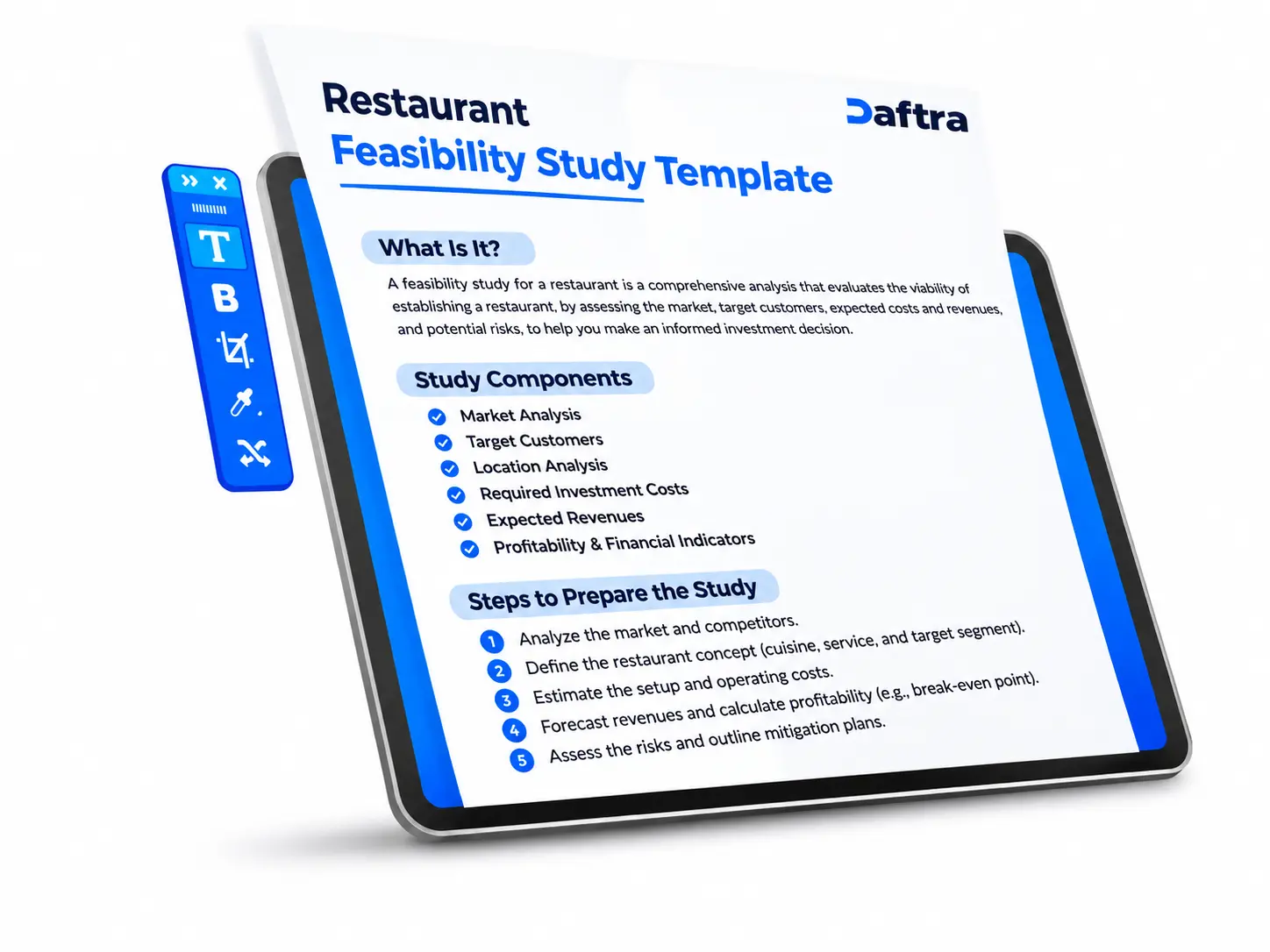
 Track Restaurant Profits with Daftra
What Is a Restaurant Feasibility Study Template?
A Restaurant Feasibility Study Template is an analytical tool business owners use to determine whether a restaurant project is financially, operationally, and technically viable, and to identify the challenges it may face. It includes a set of essential elements that must be studied and analyzed when considering the launch of a restaurant, such as financial, marketing, operational, and human resources data, among others.
What Are the Elements of a Restaurant Feasibility Study Template?
The template includes a number of important elements:
1- Executive Summary
- Restaurant Name: The proposed name of the restaurant.
- Restaurant Type: The category of the restaurant, such as fast food, fine dining, seafood, and others.
- Proposed Location: The geographic location of the restaurant, which affects customer attraction. The location’s advantages, disadvantages, and suitability for the project are stated here.
- Vision and Objectives: An overview of what the restaurant aims to achieve in the long term, such as providing high-quality food, delivering an outstanding customer experience, and similar goals.
- Target Audience: The customer groups targeted by age range or social segment.
2- Market Analysis
- Market Size: An estimate of the target market size for the restaurant in order to understand available growth opportunities.
- Target Audience: The target groups are segmented by age, preferences, or social level in order to define the ideal customer.
- Competition: An analysis of the direct competitors in the area.
- Competitors’ Strengths: The areas in which competitors perform well and which should be considered in order to compete effectively.
- Competitors’ Weaknesses: The aspects that can be leveraged to differentiate the restaurant from competitors.
- Opportunities: Opportunities available in the market, such as rising demand for a particular type of food.
- Challenges: Potential obstacles, such as intense competition, price fluctuations, and other issues.
3- Operating Plan
- Main Menu Items: The dishes that will be offered by the restaurant and that define the menu.
- Working Hours: The restaurant’s operating hours.
- Capacity: The number of tables and seats the restaurant can accommodate.
- Service Style: The service model used by the restaurant, such as table service, takeaway, or delivery.
4- Marketing Plan
- Restaurant Name / Brand: The restaurant’s business identity.
- Logo: The logo that reflects the restaurant’s identity.
- Marketing Channels: The channels that will be used for marketing, such as traditional advertising, social media, or other methods.
- Social Media Platforms: The platforms dedicated to the restaurant through which promotion will be carried out, such as Facebook, Instagram, and others.
- Offers and Discounts: Promotions the restaurant will offer to attract customers.
- Pricing Strategy: How meal and beverage prices will be set in line with the target market.
5- Human Resources
- Position: The required roles, such as manager, chefs, service staff, and others.
- Number of Employees: The number of employees required for each role.
- Monthly Salary: The monthly salary allocated to each position.
Use the Salary Calculator to automatically calculate salary value with or without allowances and the social insurance percentage for free.
6- Location and Fit-Out
- Proposed Location: The geographic site selected based on market analysis.
- Monthly Rent: The monthly rental cost of the location.
- Required Equipment: The devices and equipment needed, such as kitchen equipment and service tools.
- Furniture: The required furniture, such as tables and chairs, with quantities stated in order to determine cost.
- Décor and Lighting: The décor and lighting designs that shape the restaurant’s identity.
- Total Fit-Out Cost: The total cost of preparing the location.
7- Financial Analysis
- Initial Investment: A schedule that provides a comprehensive estimate of the investment required to start the project and cover launch costs, including rent, equipment, furniture, marketing, and licenses.
- Monthly Operating Costs: A schedule used to calculate the monthly costs the restaurant will need to cover, such as rent, salaries, raw materials, utilities, and maintenance.
- Expected Monthly Revenue: A schedule used to calculate the expected monthly revenue from main dishes, beverages, and delivery orders.
- Profit Forecast: A schedule used to calculate total revenue after deducting costs in order to determine net profit.
Use the Investment Calculator to automatically calculate investment value and return for free.
8- Timeline
- Task: The key tasks, such as selecting the location, obtaining permits, and completing the fit-out.
- Duration: The time period allocated to each task.
9- Risk Assessment
- Potential Risks: The risks that may affect the project, such as price fluctuations or supply chain issues.
- Proposed Solutions: Solutions to address these risks, such as finding alternative suppliers or developing marketing plans to reduce the impact.
10- Summary and Conclusions
- Feasibility: An assessment of the project’s viability based on financial, market, and operational analysis.
- Recommendations: Guidance on the steps needed to ensure project success, such as adjusting the plan, improving marketing strategies, and similar actions.
Why Is a Restaurant Feasibility Study Template Important?
The template contributes to several important areas:
1- Comprehensive Project Planning
The template supports comprehensive project planning by analyzing operational, marketing, and organizational aspects, helping ensure sound project management and avoid poor planning.
2- Avoiding Financial Failure
It helps accurately identify expected financial costs, reducing the risk of the restaurant facing unexpected financial crises.
3- Analyzing Market Opportunities
It helps study and understand the surrounding market environment in order to identify the factors that can be leveraged to achieve success and growth, which supports the development of a distinctive strategy that attracts customers and increases the project’s chances of success.
4- Achieving Competitive Advantage
The template helps analyze competitors’ strengths and weaknesses, supporting the development of effective strategies to compete and deliver a distinctive customer experience.
5- Managing Potential Risks
It helps identify the risks that may affect the restaurant, such as price fluctuations or market changes, allowing restaurant owners to develop plans to deal with and avoid them.
6- Managing Costs
It helps analyze revenue and costs, making it easier to understand expected profits and ensure recovery of invested capital within a suitable timeframe.
You May Also Download
Service Business Feasibility Study Template
Ready-to-Use Financial Plan Template
Projected Cash Flow Forecast Template
How Is a Restaurant Feasibility Study Template Used?
The template is used by following these steps:
1- Collect the Data
Collect the basic data, including the type of restaurant, its proposed location, and the target audience. The type of food the restaurant will offer should be determined, while taking these factors into account when defining the marketing strategy.
2- Enter the Data
After collecting the data, enter it into the designated fields.
3- Analyze the Market
Then analyze the local market in order to understand competition, identify available opportunities, and understand customer needs. Data is gathered on market size, consumption patterns, and the economic and social factors that affect demand for food, in addition to studying competitors and recording the findings in the designated sections of the template.
4- Develop Marketing Strategies
After analyzing the market, determine the appropriate marketing strategies for attracting customers based on your analysis, such as marketing channels, pricing, and introductory offers.
5- Determine Financial Costs
Then determine the expected financial costs of the project, such as the initial investment, monthly operating costs, and other required costs.
6- Analyze Potential Revenue
Next, record the expected revenue from food and beverage sales, in addition to potential revenue from other services such as delivery or takeaway, and enter it in the template in order to calculate expected profit.
7- Plan for Risks
After studying the market and analyzing costs and revenue, identify the potential risks the project may face, such as market fluctuations or price changes, and then create a plan to manage and avoid those risks.
8- Prepare the Project Timeline
After reviewing the project’s feasibility through the template, determine the key steps required to launch the restaurant, such as choosing the location, obtaining licenses, gathering equipment, hiring staff, and marketing, while defining the time period each step should take.
9- Review the Template and Analyze Financial Feasibility
Then review the template and analyze the restaurant’s financial feasibility by comparing revenue with costs, determining whether the project is profitable, and estimating the time required to recover the invested capital.
10- Prepare Recommendations
Then use the results of the study to determine whether the project should move forward as planned or be adjusted, while providing recommendations for improvements or changes that support project success.
11- Save a Copy
Finally, save a copy of the template for future reference and for comparison with actual results after the restaurant is launched.
Who Benefits from a Restaurant Feasibility Study Template?
1- Restaurant Owners
They rely on it to make informed decisions based on a comprehensive analysis of the market, costs, and revenue, which helps them take sound steps and support the success of their project.
2- Investors
It helps investors assess the feasibility of the project and its potential profitability, which supports decisions regarding the required investment amount and the expected return.
3- Financial Consultants
Financial consultants use it to provide advice based on accurate data, analyze available risks and opportunities, and help restaurant owners make sound financial decisions.
4- Accountants
It helps them track costs and revenue, monitor the budget, and ensure that the restaurant is operating in line with the planned financial framework.
5- Restaurant Managers
The template helps them understand all aspects of the project, from cost and operations to planning for the future, enabling them to manage day-to-day operations efficiently.
6- Marketers
Marketers use it to understand the marketing strategies required to attract customers and analyze the target audience in order to design campaigns that fit the restaurant’s identity.
7- Banks
It helps banks review the project’s financial feasibility, making it easier for them to decide whether to provide loans or financial facilities.







 Invoicing
 POS
 Offers
 Installments
 Sales Commission
 KSA E-Invoice Software
 EGY E-Invoice Software
 JO E-Invoice Software
 E-Invoice Software
 Chart of Accounts
 Asset Management
 Cost Centers
 Expenses
 Cheque Cycle
 UAE VAT-Tax
 Product Management
 Purchases
 Purchase Cycle
 Suppliers
 Requisitions
 Stocktaking
 Organizational Structure
 Personnel Management
 Attendance and Leave
 Contracts
 Payroll
 Requests
 Work Orders
 Booking Management
 Rental and Unit Management
 Time Tracking
 Work Flow
 Lease Contracts
 Manufacturing Management
 Client Follow-Up
 Loyalty Points
 Points and Credits
 Memberships
 Insurance Management
 Daftra ERP Full App
 Point of Sales App
 Point of Sales for Desktop – Support Offline Mode
 AI Expenses Scanner App
 Employee Attendance, Sign & ESS App
 E-invoice Reader App
 Inventory Stocktaking App