


Posted on 21 October 2026
Resignation Letter Due to Salary Template
- A Resignation Letter Due to Salary Template is a formal letter submitted by an employee when they decide to leave their job because of a low salary or payment-related issues.
- The template helps document the decision and protect the employee's rights in a professional and organized manner.
- The employee is the main beneficiary of this template, as it ensures that the resignation is documented and that financial entitlements are protected.


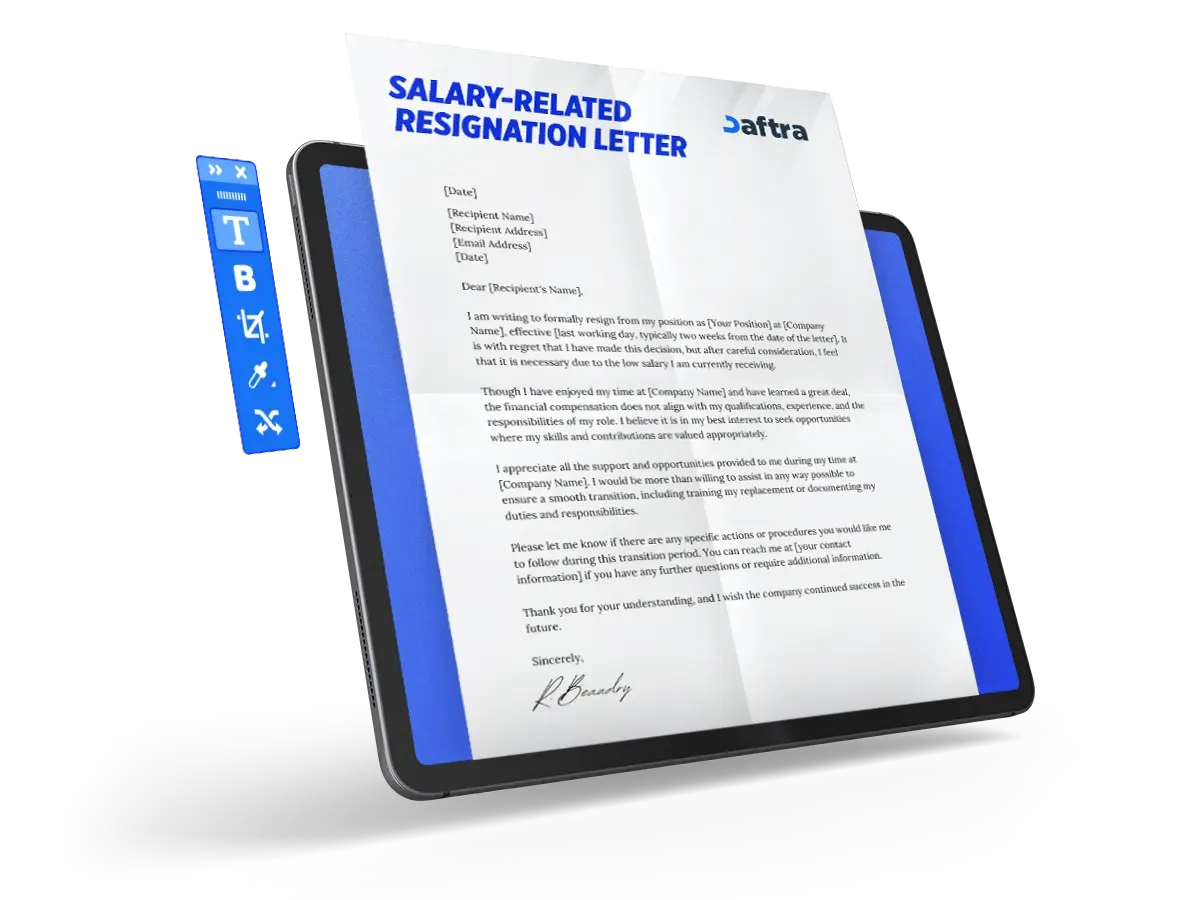
 Register with Daftra and simplify resignation requests automatically
What Is a Resignation Letter Due to Salary Template?
A Resignation Letter Due to Salary Template is an important document an employee uses when they decide to end the employment relationship because of salary-related issues. It serves as formal resignation notice, helps document the employee's position, and protects the employee's rights by ensuring they receive entitlements if any salary-related disputes arise.
Why Is a Resignation Letter Due to Salary Template Important?
A resignation letter due to salary helps the employee officially document the decision to leave, explain the reason professionally, and protect financial rights and entitlements during the transition.
What Are the Elements of a Resignation Letter Due to Salary Template?
- Employee information: This includes the first name, job title, phone number, and email address.
- Date of writing the letter: The date on which the resignation letter is written.
- Company and recipient information: This includes the company name and the name of the direct manager or HR department.
- Letter title (optional): This may be written as: "Resignation from My Position Due to Salary."
- Formal greeting: For example: "Dear Mr./Ms. [Name]" or "To Whom It May Concern."
- Opening statement: A clear statement of the intention to resign and the expected last working day.
- Reason for resignation: A professional explanation that the current salary does not meet the employee's needs, along with a reference to seeking an opportunity with a higher salary. Other relevant factors may also be mentioned professionally.
- Gratitude and appreciation: A statement acknowledging positive experiences, skills gained, and appreciation for the guidance and support received from colleagues or management.
- Offer to assist during the transition: For example, helping transfer tasks and responsibilities to ensure work continues smoothly until the last working day.
- Closing and signature: A formal closing such as "Sincerely" or "Best regards," followed by the signature and full name.
Related Templates:
How to Create a Resignation Letter Due to Salary Template
If you are considering leaving your job because of a low salary, you can follow these steps to write a professional resignation letter:
1- Clearly Define Your Reasons
Before writing the letter, make sure you have a clear and concise reason for resigning. Identify the minimum salary you expect and justify why you chose that amount. This shows seriousness and helps the employer understand your financial situation.
2- Start with a Formal Greeting
Address your manager or the HR department politely. Use a greeting such as "Dear Mr./Ms. [Name]," "Dear HR Department," or "To Whom It May Concern" if you are not sure who the recipient is.
3- Write a Clear Opening Statement
At the beginning of the letter, state your intention to resign and specify your last working day. This gives the reader clear context for the rest of the information in the template.
4- Explain the Reasons Behind Your Decision
In the following paragraph, explain the reason for your resignation professionally. State that your current salary does not meet your needs and that you are seeking a higher salary, while still highlighting the positive aspects of your current role. If other factors influenced your decision, you may mention them briefly while avoiding negative details or comparisons with offers from other companies.
5- Express Gratitude and Close Professionally
Show appreciation for the positive experiences you gained during your work, such as developing skills and building good professional relationships. Close the letter with a professional sign-off such as "Sincerely" or "Best regards."
How Is a Resignation Letter Due to Salary Template Used?
Use a resignation letter due to salary when your current salary doesn't cover your expenses or when your employer has reduced it. First, try to request a salary review and raise by discussing it with management.
If that attempt is unsuccessful, you can use the template to inform your employer of your decision to leave the company to pursue an opportunity with better compensation.
Who Benefits from a Resignation Letter Due to Salary Template?
The main beneficiaries of a resignation letter due to salary are:
- The employee: It helps the employee officially document the decision and protect their financial and professional rights.
- Company management: It provides a clear record of the reasons for resignation, which can help improve the work environment in the future.
- The HR department: It makes it easier to follow exit procedures and settle final entitlements in an organized way.





 Invoicing
 POS
 Offers
 Installments
 Sales Commission
 KSA E-Invoice Software
 EGY E-Invoice Software
 JO E-Invoice Software
 E-Invoice Software
 Chart of Accounts
 Asset Management
 Cost Centers
 Expenses
 Cheque Cycle
 UAE VAT-Tax
 Product Management
 Purchases
 Purchase Cycle
 Suppliers
 Requisitions
 Stocktaking
 Organizational Structure
 Personnel Management
 Attendance and Leave
 Contracts
 Payroll
 Requests
 Work Orders
 Booking Management
 Rental and Unit Management
 Time Tracking
 Work Flow
 Lease Contracts
 Manufacturing Management
 Client Follow-Up
 Loyalty Points
 Points and Credits
 Memberships
 Insurance Management
 Daftra ERP Full App
 Point of Sales App
 Point of Sales for Desktop – Support Offline Mode
 AI Expenses Scanner App
 Employee Attendance, Sign & ESS App
 E-invoice Reader App
 Inventory Stocktaking App