


Posted on 29 September 2026
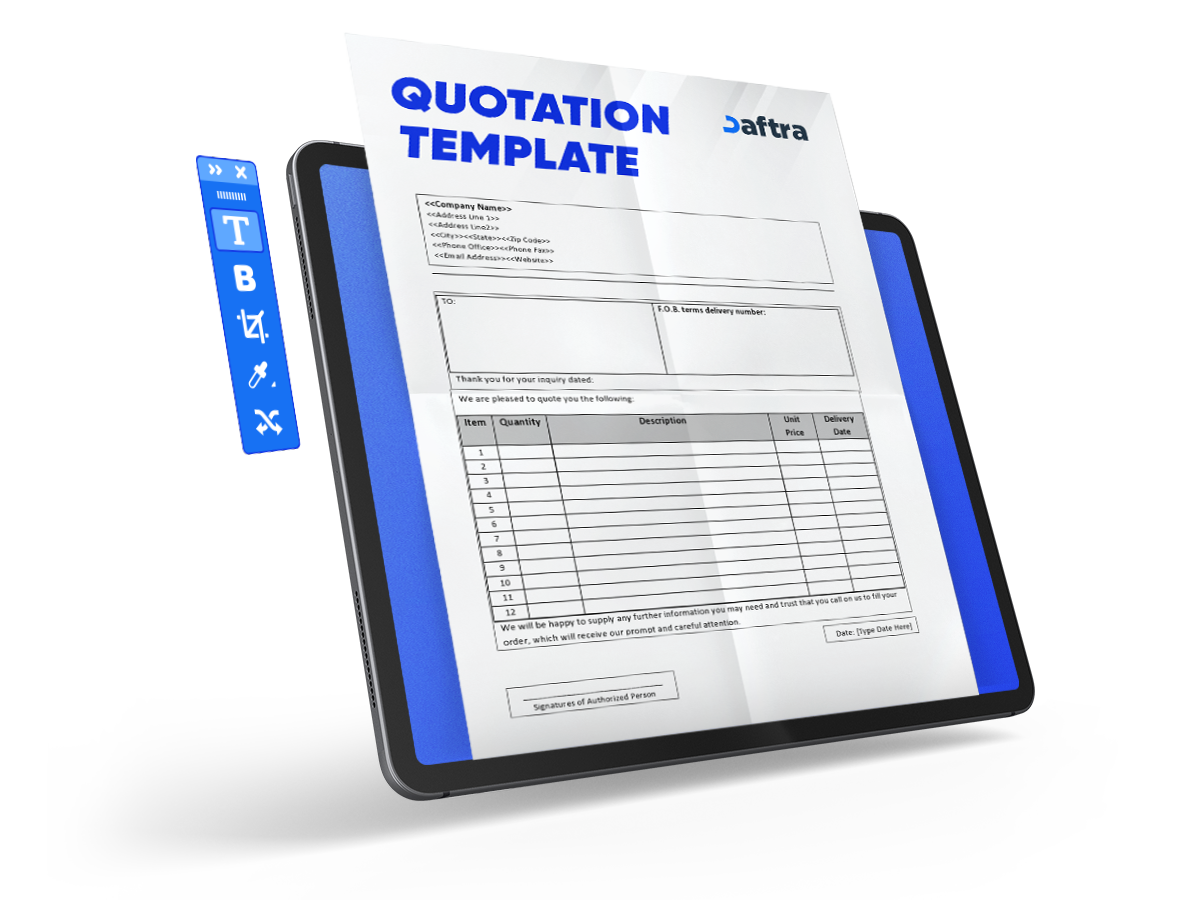
Price Quotation Template
- A price quotation is one of the core documents a seller or service provider presents to a prospective client after the negotiation stage.
- A price quotation differs from an invoice: the invoice is issued after the client accepts the quotation.
- A price quotation differs from a cost estimate, the quotation sets a fixed cost for each line item, whereas the estimate is used for large projects that are subject to cost changes during implementation.


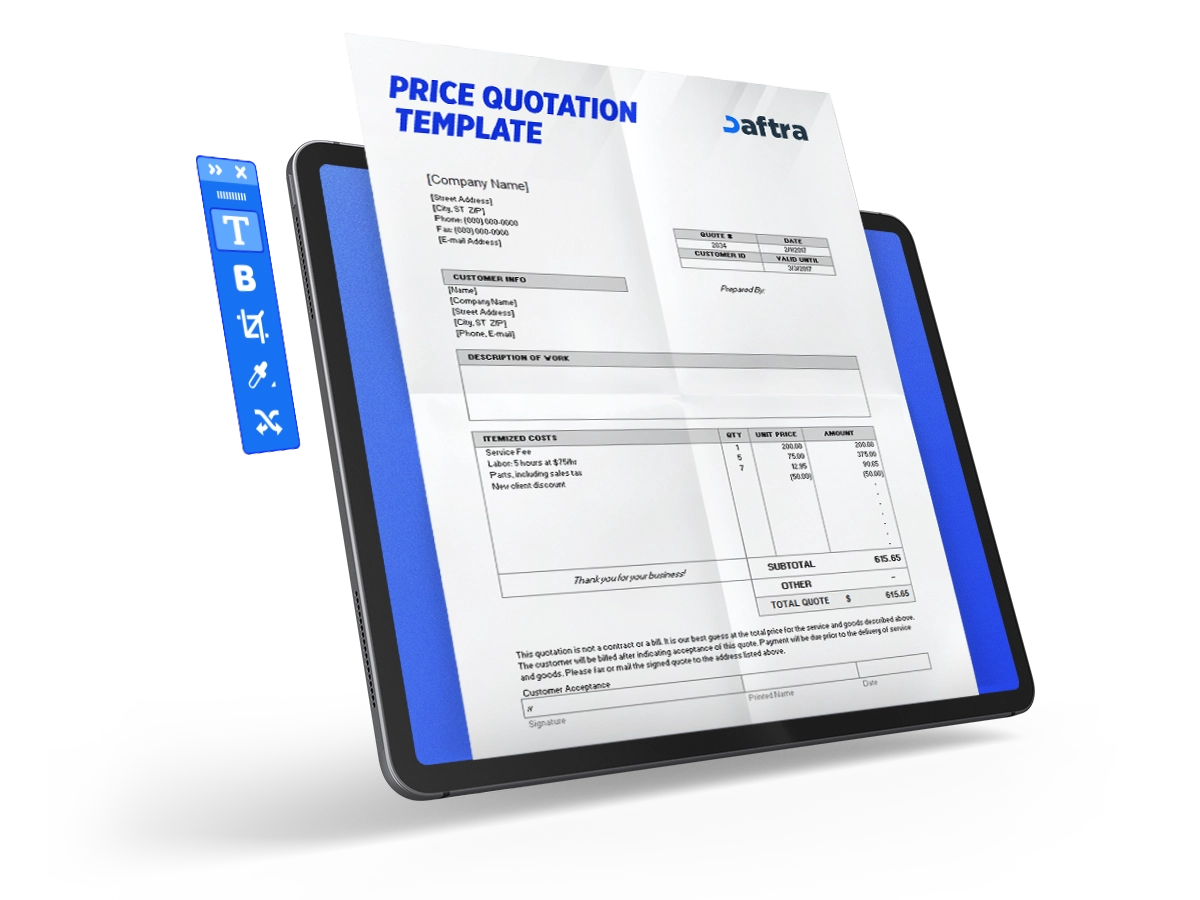
 Create Quotations Automatically with Daftra
What Is a Price Quotation?
A price quotation is a document you provide, as a seller or service provider, to a client who intends to do business with your company. It forms part of the negotiation process and is one of the ways to demonstrate transparency in the sale. If the client accepts the quotation, you then send them an invoice.
What Are the Components of a Price Quotation?
The components of a price quotation are:
- Your company details: Because the quotation is sent to a client, whether an individual or a company, the document should include all of your company's details, such as its name and contact information.
- Client details: The quotation should include the details of the client it will reach, the decision-maker's name, job title, and contact number, along with the company name, address, and contact information.
- Description of the product/service offered: This element covers the essential details of the product or service your company provides to clients.
- Quantity / scope of work: This part describes the volume of goods or services the client expects based on their request. A quotation might cover a quantity of 500 kg of flour, or it might be supervisory services for developing a website.
- Unit price: If your company provides goods rather than services, you should specify the unit price so the client can verify the total cost of the number of units they need.
- Line item total: The total is calculated by multiplying the unit cost by the number of units. Once the total for each line item is set, you can establish the overall cost of all items.
- Discounts and taxes (if any): Goods and services are subject to government-imposed taxes such as value-added tax (VAT). The client has the right to know that this tax applies, since it is added to the amount they are expected to pay. The client may also receive a special discount that encourages them to make the purchase decision.
- Issue date and validity period: Although a price quotation demonstrates transparency in the sale, it is also an indirect way of prompting clients to decide quickly, before the quoted cost changes. For this reason, the quotation includes an issue date and a validity period, after which the offer is no longer available to the client.
Why Is a Price Quotation Template Important?
A price quotation can be treated as a commercial document that serves both parties, your company (the seller) and the client, because it ensures the following:
- Easier comparison between competing offers: A price quotation makes comparing offers faster and simpler once the client has shortlisted the companies whose products and services fit their needs. Even so, one final step remains: identifying the single best offer that most closely matches their expectations.
- Budget planning based on the quotation: A client may set a specific budget for a project. Accepting your company's offer, or any other, helps them manage the remaining budget and allocate it across the channels they need to deliver the project.
- An opportunity for your company to provide more clarity: A price quotation is not just a number you send to the client; it is a breakdown of the service you will deliver, whether in the form of responsibilities or goods.
- An opportunity to build long-term client relationships: Not every prospect you send a quotation to will accept it, but they will learn the cost of the processes and steps your company undertakes to reach the desired goal. At that point, the comparison is no longer about price alone; it also covers the method of execution. So even if a prospect declines today, they may return later and accept a higher-priced offer once they understand the details of the work.
How Do You Prepare a Price Quotation the Client Will Accept?
You can readily present an offer the client will accept if you follow these tips:
- Create a document that reflects your understanding of the client: From your discussions with the client, by phone, email, or otherwise, you should have enough insight to identify what they are looking for and the elements they firmly reject. Design the line items so the offer aligns with the client's expectations.
- Don't lose sight of prevailing market rates: This is a reminder worth flagging. Some companies undersell themselves and price their quotations far below competitors; they may be trying to win a client, but they can't sustain this approach; they will either cut quality or go out of business. At the same time, don't price a quotation above normal market rates, as that can drive the client away before they even begin their journey with your company.
You May Also Download
What Is the Difference Between a Price Quotation and an Invoice?
A price quotation is issued at an early stage of the deal, before the client accepts the price; the sales representative then begins negotiating with the client using the quotation as the basis. An invoice, by contrast, is issued once the client has accepted the service, or is awaiting payment of the amount due in order to receive it.
What Is the Difference Between a Price Quotation and a Cost Estimate?
Both documents are issued at the same stage of the deal. However, a price quotation is defined by its fixed commitment: all figures are locked and do not change throughout the validity period. A cost estimate, by contrast, is a preliminary projection of the costs of the project or service the client requests. Many external and internal factors, such as timing and market needs, may cause the estimate to change.






 Invoicing
 POS
POS Offers
 Installments
 Sales Commission
 KSA E-Invoice Software
 EGY E-Invoice Software
 JO E-Invoice Software
 E-Invoice Software
 Chart of Accounts
 Asset Management
 Cost Centers
 Expenses
 Cheque Cycle
 UAE VAT-Tax
 Product Management
 Purchases
 Purchase Cycle
 Suppliers
 Requisitions
 Stocktaking
 Organizational Structure
 Personnel Management
 Attendance and Leave
 Contracts
 Payroll
 Requests
 Work Orders
 Booking Management
 Rental and Unit Management
 Time Tracking
 Work Flow
 Lease Contracts
 Manufacturing Management
  Client Follow-Up
 Loyalty Points
 Points and Credits
 Memberships
 Insurance Management
 Daftra ERP Full App
 Point of Sales App
 Point of Sales for Desktop – Support Offline Mode
 AI Expenses Scanner App
 Employee Attendance, Sign & ESS App
 E-invoice Reader App
 Inventory Stocktaking App