


Your Complete Guide to The Additional Number in Saudi Arabia

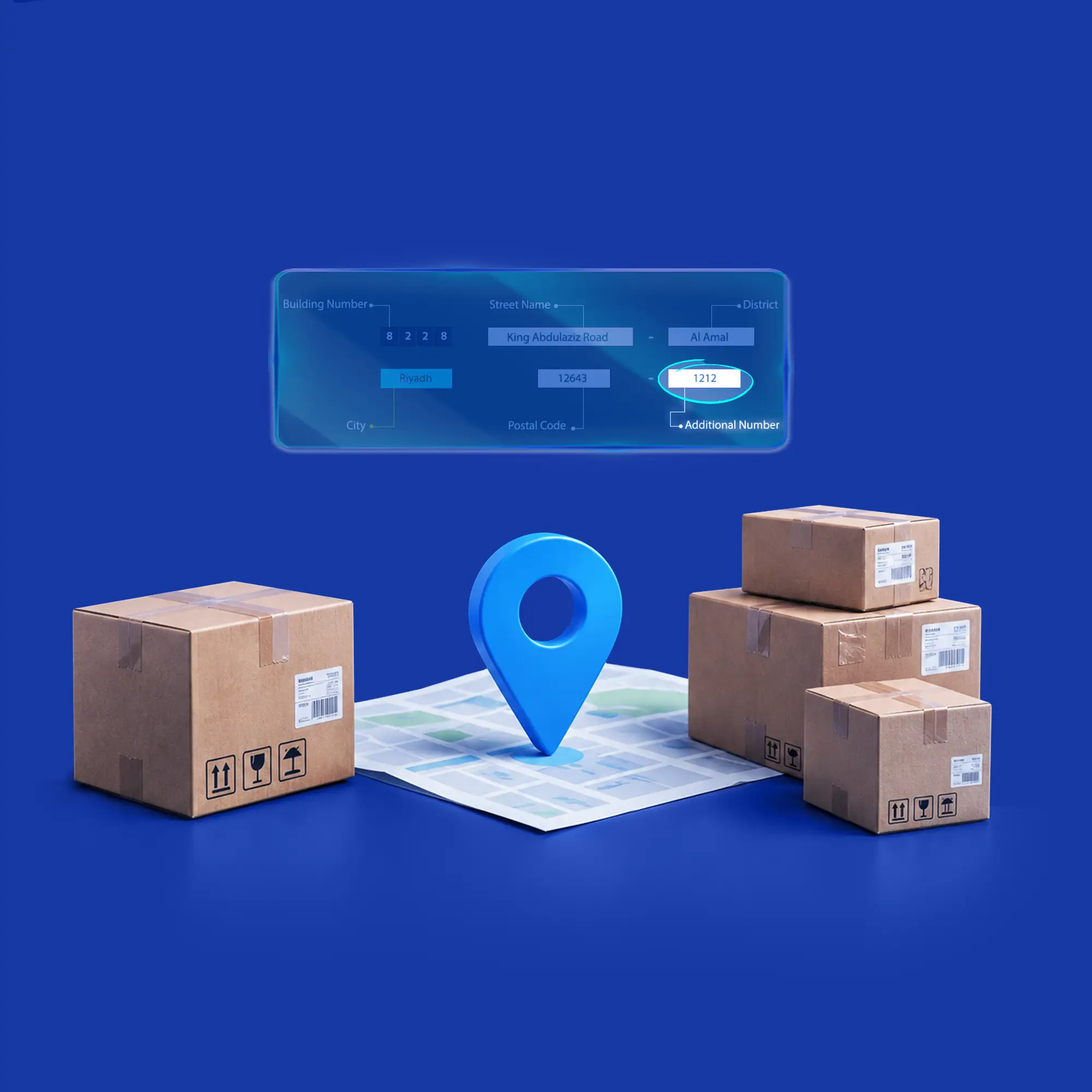
Table of contents:
- Key Summary
- What Is the Additional Number in An Address?
- Importance of The Additional Number in Saudi Arabia
- Uses of The Additional Number in Saudi Arabia
- How Do I Find My Additional Address Number?
- Common Mistakes with The Additional Number
- The Additional Number & ZATCA Phase 2 Compliance
- The Additional Number for Main Saudi Cities
- Additional Number & Building Number & Postal Code
- How Does Daftra Handle the Additional Number for E-Invoices?
- Conclusion
Imagine an address like "Al Yarmouk District, Riyadh"; now imagine pinpointing that exact building on a map. That precision comes from the additional number, a new piece of Saudi Arabia's National Address System that's replacing the old PO box (Post Office Box). Think of it as the final digit in a building's unique digital fingerprint.
But how does this additional number tie into ZATCA's Phase 2 e-invoicing requirements? And can a missing one actually get an invoice rejected? This guide explains what the additional number is, why it matters, how to get one, and how to add it correctly to your e-invoices for full ZATCA compliance.
What Is the Additional Number in An Address?
The additional number in the Saudi National Address consists of four digits. It is also known as a "secondary number." Its primary use is to distinguish a specific unit or building within the same plot of land or postal code, especially in areas with multiple buildings sharing the same building number or postal code.
The additional number in a building's address is part of the National Address System developed by Saudi Post (SPL) to accurately locate any building in the Kingdom to within 10 meters.
Cabinet Resolution No. (252) dated 24/7/1434 AH (corresponding to 3/6/2013 AD), which approved the mandatory standardization of the National Address format for regulating official transactions between citizens, residents, and companies with the public and private sectors in Saudi Arabia.

In this context, it's important to distinguish between the additional number and the unit or apartment number; the two are not interchangeable. The additional number pinpoints the building's exact location on the map, while the unit number identifies a specific apartment or office within that building.
You can clarify this distinction by asking the following questions:
- The additional number answers: Where exactly is the building located on the map?
- The unit number answers: Which apartment or office is located within this building?
Importance of The Additional Number in Saudi Arabia
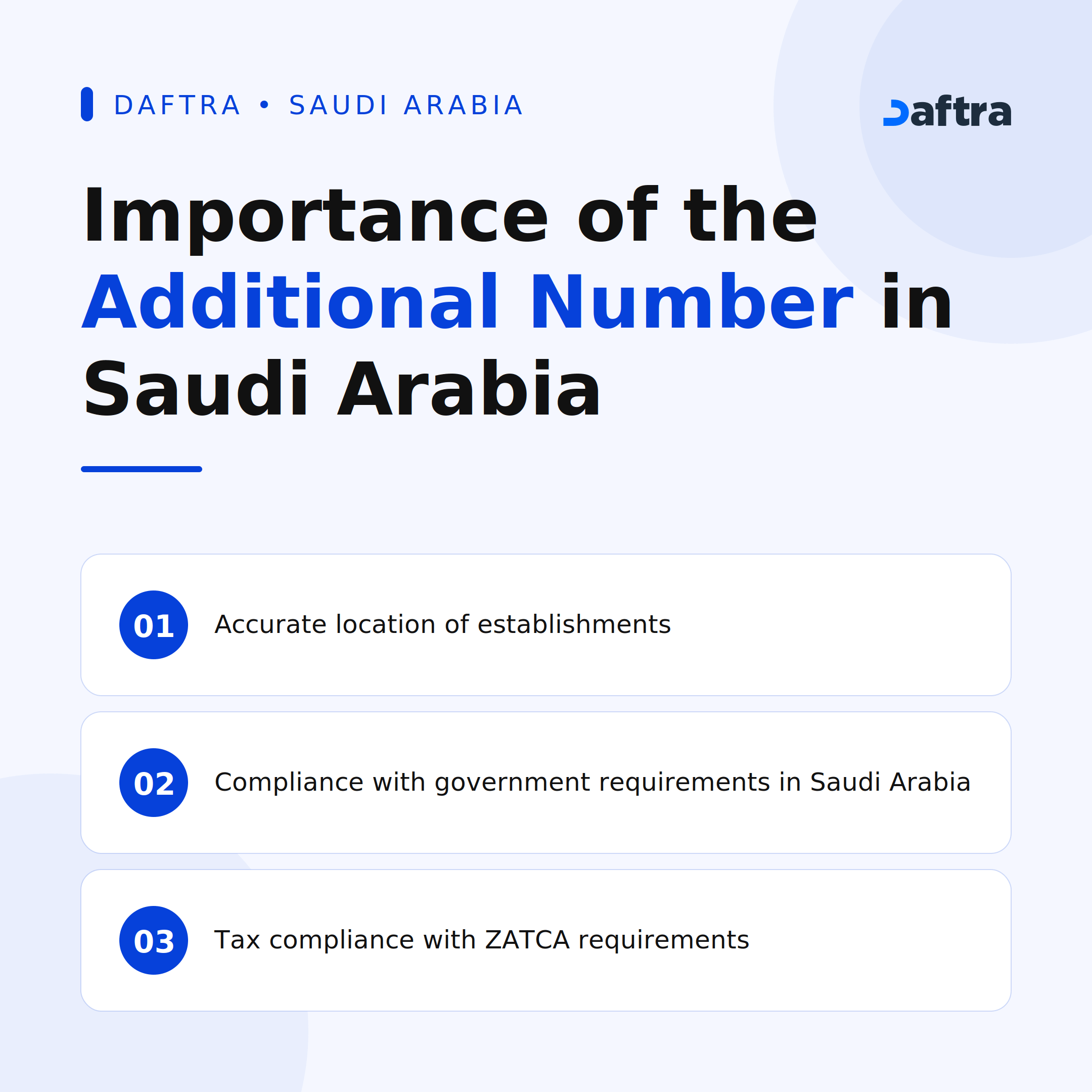
The importance of the additional number in Saudi Arabia is particularly evident in areas where streets and neighborhoods do not yet have clearly defined names, such as new urban developments. Its importance extends beyond this, however. Despite being a small, four-digit number, it has become an indispensable requirement for many governmental and commercial transactions within the Kingdom.
The following are the most prominent factors that illustrate the importance of the additional number in Saudi Arabia:
1- Accurate Location of Establishments
Building numbers and postal codes often repeat across multiple locations within the same neighborhood. This is where the additional number becomes crucial, serving as a distinguishing factor that accurately differentiates buildings and expedites the delivery of shipments and correspondence with greater precision and efficiency.
2- Compliance with Government Requirements in Saudi Arabia
Many government and commercial entities in the Kingdom require the additional number in the national address when issuing invoices, opening bank accounts, registering commercial records, renewing licenses, or even when dealing with shipping and delivery companies. In some cases, missing this number can lead to rejection or suspension of the transaction.
3- Tax Compliance with ZATCA Requirements
The additional number is an essential piece of information required in the national address on the electronic tax invoice between the seller and the buyer.
Uses of The Additional Number in Saudi Arabia
The additional number is used in Saudi Arabia by many entities in various transactions, including:
1- Electronic and Home Shipping
Shipping companies and delivery personnel rely on the additional number in the address to reach the correct building accurately and on time, especially in large neighborhoods or expansive residential complexes in the Kingdom.
2- Utility Bills, Records, and Government Correspondence
The additional number appears on electricity, water, and telecommunications bills, as well as in official records issued by government agencies. This helps government agencies accurately identify the building's location and ensures bills, correspondence, and services such as emergency services, ambulance teams, and civil defense are delivered to the correct address as quickly as possible.
3- Opening Bank Accounts for Businesses
Banks and commercial entities require the full national address, including the additional number, when opening an account or registering a business. This confirms the customer's identity and actual location and links the business or account to one official national address, preventing confusion with similar addresses.
How Do I Find My Additional Address Number?
You can find your additional address number in a few simple steps through the "SPL" platform of Saudi Post, the official entity authorized to manage all national address details in the Kingdom, or through the government's National Address Portal by logging in via the National Unified Access (using the same Absher account credentials).
Here are the steps to find your additional address number on the SPL platform:
- Log in with your email address. If you don't have a registered national address yet, you will first need to register on the SPL platform by entering your personal information and location on the map. A complete national address, including the additional address number, will then be automatically assigned to you.
- Enter your username, national ID or residency number, and password.
- Go to the Address Management section from the main menu.
- Click on "Address Management" or "My Address."
- Click on "My National Address" to view the details of the address registered in your name.
- The additional address number will appear among the components of the national address, along with the building number, postal code, and neighborhood name. You can use a "short address" without fully logging in to some services. It consists of four letters and four numbers (such as RHMA3184) for quick querying of all address details, including the additional number.
Common Mistakes with The Additional Number
Many people seeking to find the additional number frequently make mistakes when extracting or entering it into government systems and electronic billing, whether due to a lack of understanding of the service terms or overlooking some technical details related to the service.
Using an inaccurate number may lead to delivery errors, rejection of official transactions, or even rejection of the company's invoice by the Zakat, Tax and Customs Authority (ZATCA), even if the rest of the statement is correct. Therefore, we review below the most prominent of these mistakes, with solutions to avoid them:
| Common mistakes related to the additional number | Solutions |
| Confusing the additional number with the building number, or transposing the digits. | Before entering any number, verify its official source through the Sabl app or website, and clearly distinguish between the two fields (building number and additional number) instead of relying on memorization or random copying. |
| Using an outdated additional number after updating the address. | Immediately generate a new additional number after updating your address through the Sabl platform, the Tawakkalna app, or Absher, and update it in all related systems such as the billing program and commercial registration, instead of relying on a previously saved copy. |
| Registering the facility's data and leaving the additional number field blank, even though it is mandatory, which will later appear as an error when issuing electronic invoices. | Treat the additional number field as mandatory data from the outset, and ensure it is completed in all government and commercial forms before saving or approving any data. |
| Relying on unofficial sources when searching for the additional number through websites or applications not affiliated with Sabl or the National Platform. | Rely on official channels such as the Sabl app, the National Address website, the Absher platform, or the Tawakkalna app. |
| Entering the additional number with fewer than four digits. | Always enter the number as a full four-digit number, exactly as officially registered, without omitting any leading zeros. |
| Using Arabic numerals (0123) instead of Latin numerals (0123) when filling in the additional number field in electronic systems, which causes a technical error. | Check your keyboard or system settings before entering, and verify that all numbers entered are in Latin characters, not Arabic. |
| Using the head office address on invoices for a different branch. | Register a separate national address for each branch on the SPL platform, and ensure that each branch is linked to its correct address in the electronic billing system. It is not permissible to repeat the main branch address on the invoices of other branches. |
The Additional Number & ZATCA Phase 2 Compliance
We worked with a supplier who owns a specialty coffee shop in Jeddah's Al-Aziziyah district. He's registered with the Zakat and Tax Compliance Agency, holds a CSID certificate, and has integrated his accounting system with e-invoicing. While preparing his first tax invoice for a major commercial client that ordered a large quantity of coffee beans, his software, Daftra, didn't wait for the Fatora platform to reject the invoice. Instead, it caught the missing national address data and halted the process right away, in line with Phase 2 e-invoicing requirements.
He opened his establishment settings and found the "additional number" field empty. He'd entered the rest of the address details when registering, but had left that one out, assuming it was just a secondary field. So he went to the SPL platform, added the additional number, and saved his data. The invoice was now complete and fully compliant with ZATCA's requirements.
The Additional Number for Main Saudi Cities
If you're searching for the additional number for Riyadh, Jeddah, Dammam or any other city in Saudi Arabia, you should know that no single, unified additional number applies across all cities in the Kingdom of Saudi Arabia. As explained above, this number varies by location and is determined by the building’s geographic coordinates within the postal range of the region it falls under.
Additional Number & Building Number & Postal Code
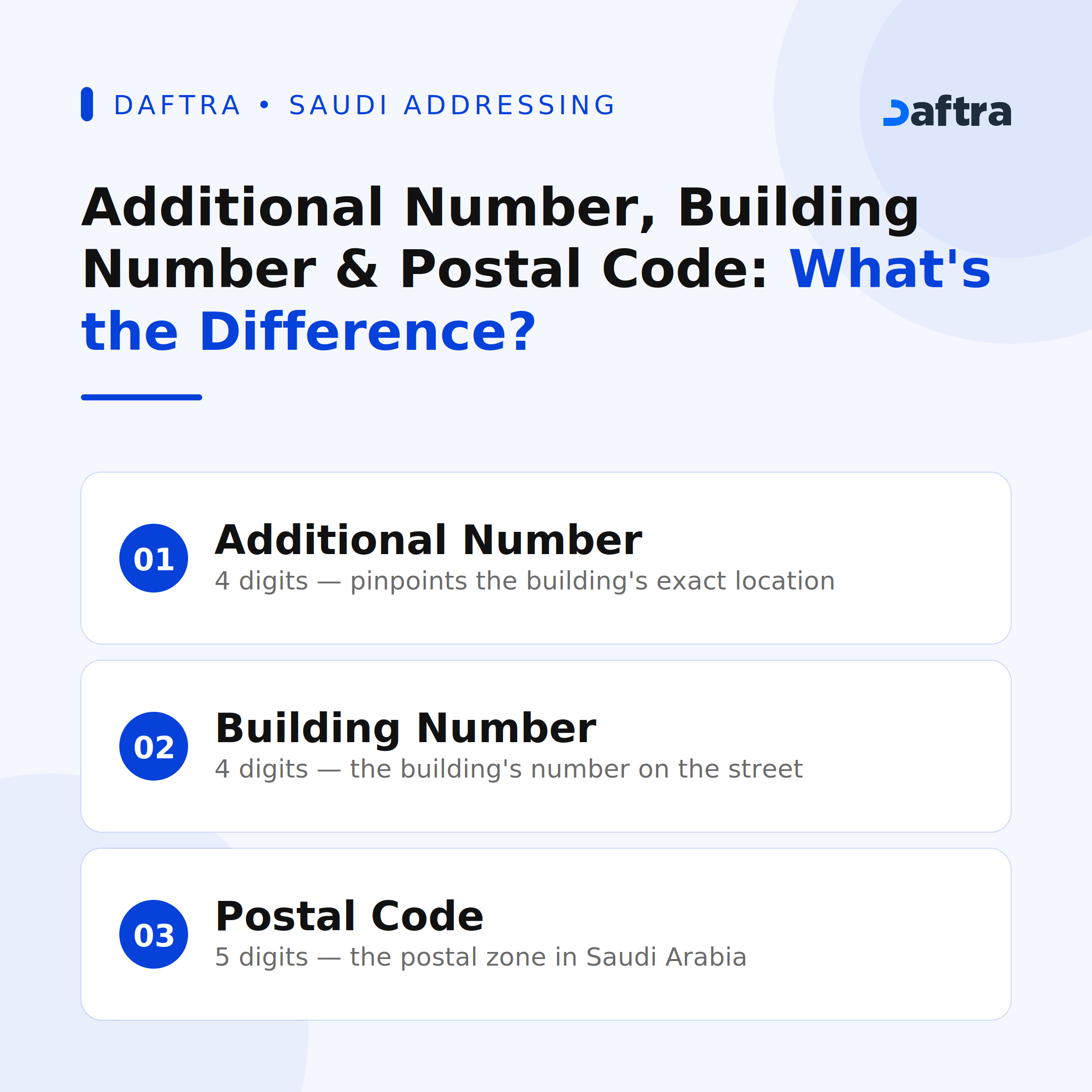
Many people confuse the additional number with the building number and postal code, but there are key differences between them, which we explain in the comparison table below:
How Does Daftra Handle the Additional Number for E-Invoices?
Daftra E-Invoicing Software manages the additional number in electronic invoices in a certified and compliant manner. As a cloud-based accounting system approved by the Zakat, Tax and Customs Authority (ZATCA) and listed as a Phase 1 and 2 e-invoicing service provider, Daftra requires the user to enter the complete national address, including the additional number, within the basic establishment data before linking it to ZATCA.
Furthermore, the system verifies the completeness of the national address fields (building number, district, city, postal code, and additional number) before attempting to issue any invoice. It prevents the issuance process if the data is incomplete. The system also displays a simplified message in Arabic directing the user directly to the missing field, instead of displaying technical XML codes.
Check our knowledge base: National Address & E-Invoicing Requirements
Finally, once the additional number is registered in the establishment settings, Daftra automatically inserts it, without manual intervention, into the correct code format required to generate the invoice file in UBL 2.1 format, in accordance with ZATCA's requirements and conditions for electronic invoicing.
Conclusion
In conclusion, after covering everything related to the additional number in the national address and its importance and uses in Saudi Arabia, we can say that the additional number is your digital fingerprint that pinpoints your location as a business owner on the map of the Kingdom. Our final piece of advice to you: don't be lazy or hesitant about spending a few minutes on the SPL platform to find out your additional number, following the steps outlined earlier, in order to turn your address from a general description into one distinct point that helps you successfully complete all your commercial and official transactions in Saudi Arabia.








 Invoicing
 POS
POS Offers
 Installments
 Sales Commission
 KSA E-Invoice Software
 EGY E-Invoice Software
 JO E-Invoice Software
 E-Invoice Software
 Chart of Accounts
 Asset Management
 Cost Centers
 Expenses
 Cheque Cycle
 UAE VAT-Tax
 Product Management
 Purchases
 Purchase Cycle
 Suppliers
 Requisitions
 Stocktaking
 Organizational Structure
 Personnel Management
 Attendance and Leave
 Contracts
 Payroll
 Requests
 Work Orders
 Booking Management
 Rental and Unit Management
 Time Tracking
 Work Flow
 Lease Contracts
 Manufacturing Management
  Client Follow-Up
 Loyalty Points
 Points and Credits
 Memberships
 Insurance Management
 Daftra ERP Full App
 Point of Sales App
 Point of Sales for Desktop – Support Offline Mode
 AI Expenses Scanner App
 Employee Attendance, Sign & ESS App
 E-invoice Reader App
 Inventory Stocktaking App