


Posted on 3 November 2026
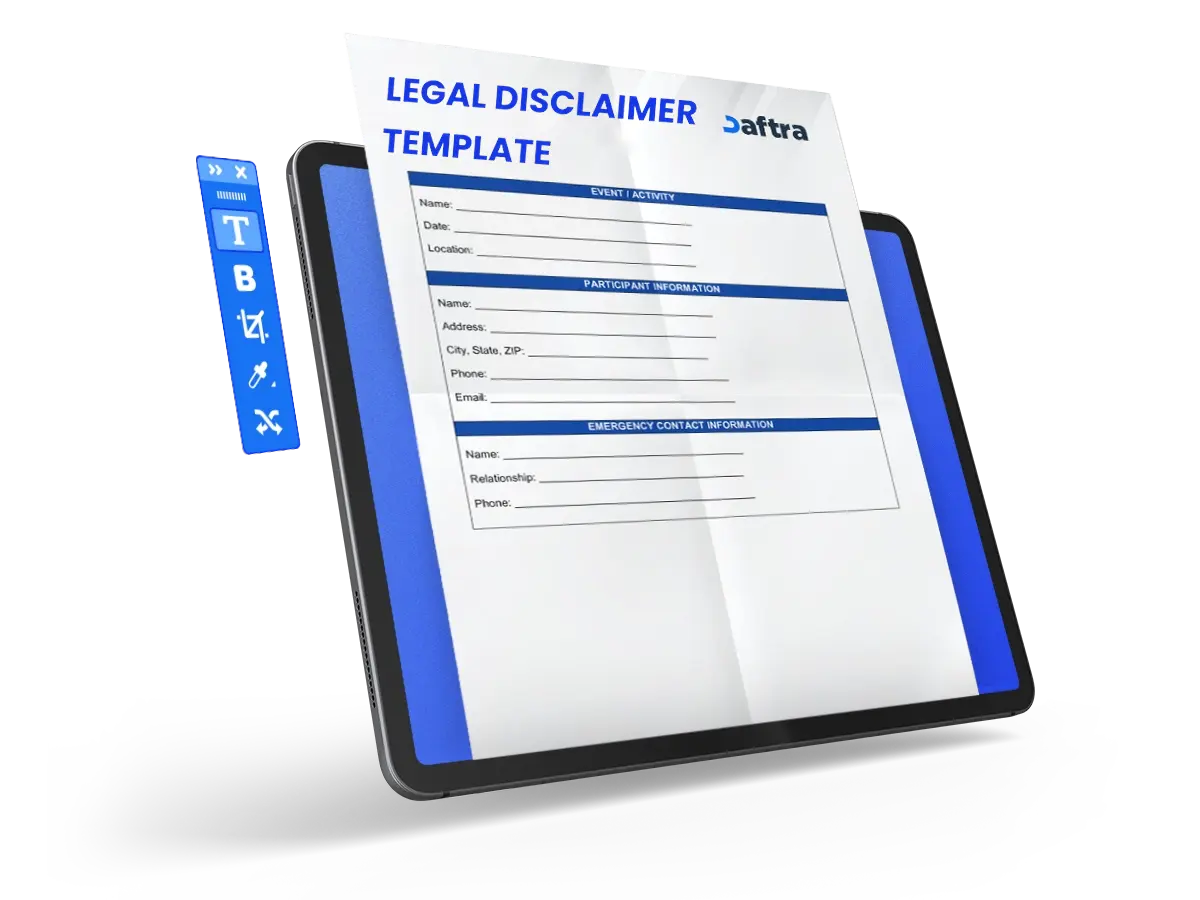
Legal Disclaimer Template
- A Legal Disclaimer Template is a statement that protects a company from legal liability for risks or claims resulting from the use of its products or services, or from dealings with external parties.
- A Legal Disclaimer Template protects the company from legal risks, defines responsibilities, preserves rights and reputation, and clarifies the limits of liability toward employees and third parties.
- One of the main beneficiaries of a Legal Disclaimer Template is the company itself, as it protects the company from legal claims and risks associated with the use of its products or services.


 Register with Daftra and maintain full HR legal compliance automatically
What Is a Legal Disclaimer Template?
A Legal Disclaimer Template is a legal statement designed to limit the legal liability borne by the company. It provides protection against claims that may arise from risks associated with users or external parties.
Why Is a Legal Disclaimer Template Important?
The main reasons why a Legal Disclaimer Template is important include the following:
- Protecting rights: A disclaimer helps protect commercial materials, business data, and intellectual property rights, and prevents others from using them without permission.
- Defining responsibilities: It clarifies the limits of the company's responsibility for the use of products or information, and protects the company from legal claims resulting from misuse.
- Disclaimer toward third parties: It states that the company is not responsible for the errors of suppliers or partners, and does not guarantee the quality or accuracy of their services.
- Protecting reputation: It separates the company's positions from the personal opinions of employees or partners, helping protect the company from negative impact.
- Holding employees responsible for their actions: It clarifies that employees' statements represent them personally, and helps prevent the company from bearing legal responsibility for those statements where appropriate.
What Are the Elements of a Legal Disclaimer Template?
The content of a disclaimer depends on the nature of your company's activity and the risks you want to protect it from. The following are the most common clauses usually included in disclaimers:
- Accuracy of information: The disclaimer should clarify that the company is not responsible for any errors in the information provided. Even information that appears accurate may be incorrect or may become incorrect later. This clause protects the company from claims resulting from reliance on inaccurate information, and places responsibility on users to verify information before relying on it.
- Liability for physical products: If you sell physical products, whether you are the manufacturer or only the seller, customers should be warned that they cannot hold you liable for any injury resulting from the use of the product. It is also advisable to clarify that product specifications are provided by the manufacturer and that the product is provided "as is" without additional warranties, in order to protect the company from misunderstandings or incorrect expectations.
- Liability for services: If your company provides services or allows customers to use certain equipment, such as gyms or industrial equipment, the disclaimer should state that the use of those services or equipment involves risks, and that the company is not responsible for any injuries that occur during use.
- Copyright: Customers should be informed that the content provided is protected under copyright laws and may not be used without permission. The rights of others should also be acknowledged when using any protected third-party content, with a clear statement that such use is subject to the law.
- Third-party liability: The disclaimer should clarify that the company is not responsible for information on linked third-party websites or advertisements displayed on its platform. It may also state that the company reserves the right to delete any offensive comment and that it is not responsible for published opinions.
- Multiple content providers: If the company publishes guest articles or content from other authors, it should confirm that those opinions represent their authors only, and that the company is not responsible for any opinion or content that may be offensive or misleading. It should also clarify that the information provided by the company represents an opinion or point of view, not absolute facts.
- Compensation limits: A clause may be included to define the maximum amount that any person may claim as compensation for any injury or loss resulting from the use of the company's products or services, using clear and simple wording.
- Trademarks: If the company uses trademarks owned by others, it should clarify that there is no official relationship or endorsement between those owners and the company, even if their logos appear on the platform or store.
How to Create a Legal Disclaimer Template
Writing an effective disclaimer requires balancing clarity and accuracy. The following steps can help you create one correctly:
1- Assess the Risks
Identify the potential risks associated with your business, whether they relate to products, services, or operational procedures. Focus on the areas where the company may bear responsibility, such as customer use of products or reliance on the information provided. For example, if your company provides fitness advice, state clearly that the company is not responsible for any injuries resulting from following that advice.
2- Use Clear and Simple Language
Write in language that is understandable and accessible, and avoid complex legal terminology.
3- Be Specific and Detailed
Address the risks specific to your field of business accurately. For example, a financial consulting company may clarify that it is not responsible for investment losses resulting from market volatility. Specific wording strengthens the credibility of the disclaimer and supports its legal position.
4- Include Illustrative Examples
Use practical examples to explain the scope of the disclaimer. For example: "We are not responsible for any delays caused by external payment processors."
5- Consult Legal Professionals
Consulting a lawyer helps ensure that the disclaimer complies with the laws and regulations relevant to your sector and accurately reflects the potential risks.
6- Focus on Key Points
Use formatting tools such as headings, bullet points, or bold text to highlight important elements in the disclaimer, making it easier for customers to understand them quickly.
7- Update the Disclaimer Regularly
Review the disclaimer regularly to keep pace with changes in your business, the addition of new services or products, or expansion into other markets, while also considering any legal or regulatory changes.
You Can Also Download
How Is a Legal Disclaimer Template Used?
A Legal Disclaimer Template defines the scope of your company's responsibilities and what it does not assume responsibility for. This reduces your exposure to legal consequences while also improving transparency and trust with your audience.
This template also helps protect against potential claims, especially in fields where information or services may be misunderstood or involve high risk.
Who Benefits from a Legal Disclaimer Template?
- The company itself: A disclaimer protects the company from legal claims related to damages, injuries, or misuse of products or services, and reduces its legal risk exposure.
- Customers and consumers: It clarifies the limits of the company's responsibility and defines what they may rely on and what they may not hold the company responsible for, helping prevent misunderstandings.
- Employees: It clarifies that their personal statements or actions do not necessarily represent the company's opinion, and therefore transfers some legal responsibility to them where necessary.
- Partners or suppliers (third parties): It states that the company is not responsible for their errors or the quality of their services, which helps protect business relationships and limit potential legal disputes.





 Invoicing
 POS
 Offers
 Installments
 Sales Commission
 KSA E-Invoice Software
 EGY E-Invoice Software
 JO E-Invoice Software
 E-Invoice Software
 Chart of Accounts
 Asset Management
 Cost Centers
 Expenses
 Cheque Cycle
 UAE VAT-Tax
 Product Management
 Purchases
 Purchase Cycle
 Suppliers
 Requisitions
 Stocktaking
 Organizational Structure
 Personnel Management
 Attendance and Leave
 Contracts
 Payroll
 Requests
 Work Orders
 Booking Management
 Rental and Unit Management
 Time Tracking
 Work Flow
 Lease Contracts
 Manufacturing Management
 Client Follow-Up
 Loyalty Points
 Points and Credits
 Memberships
 Insurance Management
 Daftra ERP Full App
 Point of Sales App
 Point of Sales for Desktop – Support Offline Mode
 AI Expenses Scanner App
 Employee Attendance, Sign & ESS App
 E-invoice Reader App
 Inventory Stocktaking App