


Posted on 1 October 2026
Cash Receipt Template
- A cash receipt is a document that proves the customer has paid the amount due for a service or product in cash.
- There is no major difference between one type of receipt and another, except that this type of receipt clearly states that the payment method was cash.
- A cash receipt helps your company maintain accurate records of cash transactions and serves as an important reference in the future.


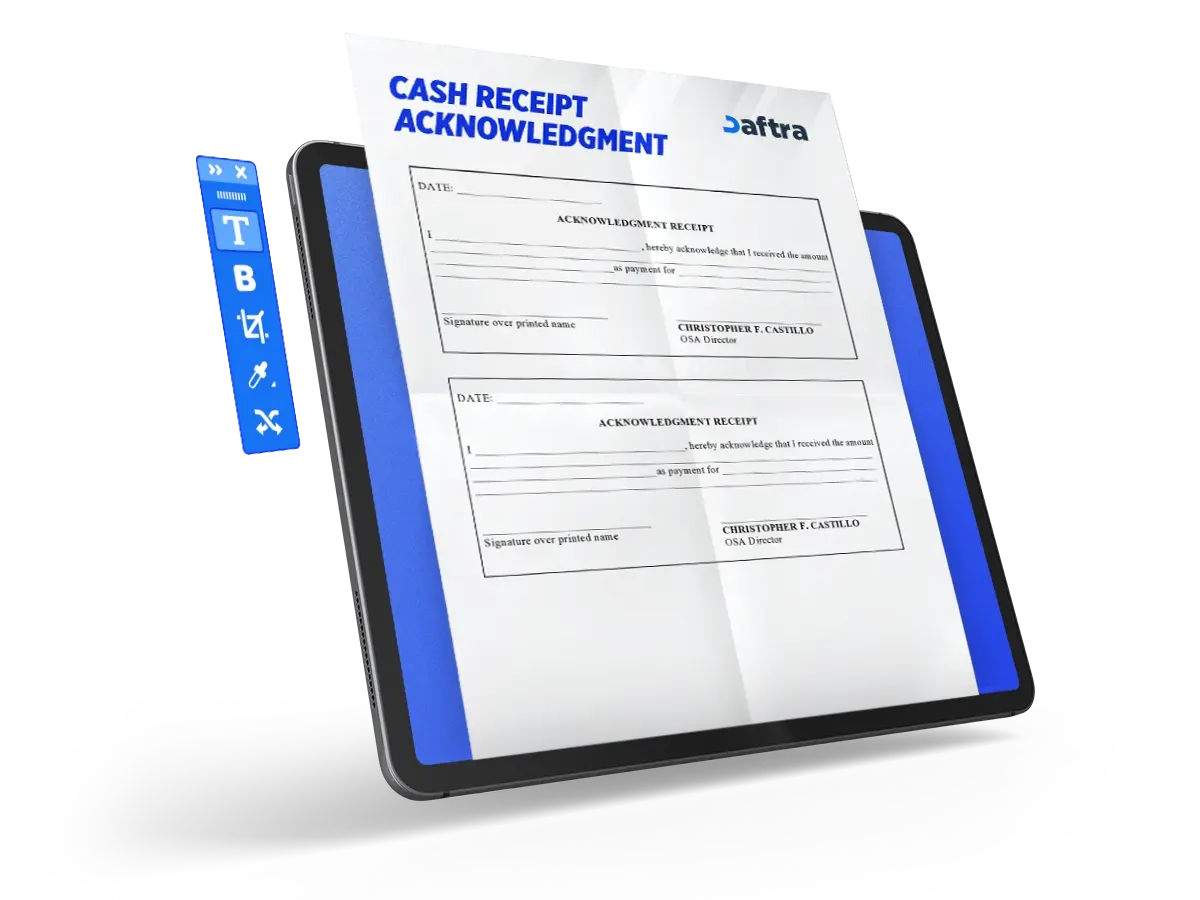
 Register with Daftra and generate cash receipt automatically
What Is a Cash Receipt?
A cash receipt is proof that the customer has paid the agreed amount to your company in cash in exchange for receiving a service or product from your company. The receipt may be created digitally and printed each time a buyer completes a cash payment.
Each cash receipt indicates an increase in the company cash account, which is recorded as a debit, and a decrease in accounts receivable when the payment relates to an outstanding customer balance.
Use the VAT calculator for Saudi Arabia to calculate any VAT percentage automatically and for free.
Why Is a Cash Receipt Important?
A cash receipt is highly important in business operations and financial management because it:
- Helps the business track financial transactions, especially revenue collected in cash.
- Helps your company identify the amount collected in cash and available within the business.
- Supports regular cash flow monitoring and helps determine the appropriate action when decisions require financial resources.
- Helps resolve disputes between the seller and buyer if the buyer claims that payment was made or the other party claims that payment was not received.
- Providing the customer with a copy of the receipt supports customer service and helps create a transparent and clear business environment.
- Helps customers complete product returns if a manufacturing defect is discovered or if the product does not match the required specifications.
- Supports tax accounting processes, which track revenue, including amounts collected in cash and documented through cash receipts.
What Are the Elements of a Cash Receipt?
Every cash receipt should include the following essential elements:
- Receipt number: Receipts should be arranged using sequential numbers to make them easy to reference.
- Business name and contact details: This includes company information such as the company name, logo, email address, and phone number.
- Transaction date: This indicates the date on which the receipt was issued to the customer and the cash amount was received.
- The phrase "Cash Receipt": This phrase is important because it classifies the receipt received by the customer and identifies the payment method used.
- Description and quantity of items sold: This field includes the number, quantities, sizes, or weights of goods sold. For services, it may include specific service items listed on the receipt.
- Price of each item: The price of each item should be stated, especially when the receipt includes more than one product or good. This allows the customer to multiply price by quantity and verify the total cost of each item.
- Sales tax: Sales tax, including VAT or any other applicable tax, has become a key component in many countries. The customer pays the tax, while the seller is responsible for remitting it to the tax authority.
- Total amount: This is the total value of the goods or products purchased by the customer and paid for in cash.
- Applicable sales terms and conditions: These terms draw the customer's attention to specific policies, such as warranty, return policy, and other applicable procedures.
- Names of the receiver and customer representative: The receipt should include the name and signature of the person who received the cash amount, as well as the name of the customer representative who paid the due amount.
How Can Cash Receipts Be Recorded in the Financial Statements?
Cash receipts can be recorded in the financial statements through the following three steps:
1- Record the Total Amount Collected
Record the total amount received, which increases the company's cash balance. If the cash receipt relates to payment of an outstanding invoice, the cash account is debited, and accounts receivable is credited. If it relates to an immediate cash sale, the cash account is debited, and sales revenue is credited.
2- Record Inventory-Related Transactions Where Applicable
If the transaction relates to a product manufactured or sold by the company, the related inventory and cost entries should be recorded according to the timing of delivery and sale. When the sale occurs, the cash receipt increases the cash account, while the inventory and cost of goods sold entries reflect the movement of goods.
3- Record Returns Where Applicable
For returns, the accounting entries should reflect the reversal of the sale or cash receipt as applicable, while also updating the inventory records and customer balance according to the company return policy and accounting treatment.







 Invoicing
 POS
POS Offers
 Installments
 Sales Commission
 KSA E-Invoice Software
 EGY E-Invoice Software
 JO E-Invoice Software
 E-Invoice Software
 Chart of Accounts
 Asset Management
 Cost Centers
 Expenses
 Cheque Cycle
 UAE VAT-Tax
 Product Management
 Purchases
 Purchase Cycle
 Suppliers
 Requisitions
 Stocktaking
 Organizational Structure
 Personnel Management
 Attendance and Leave
 Contracts
 Payroll
 Requests
 Work Orders
 Booking Management
 Rental and Unit Management
 Time Tracking
 Work Flow
 Lease Contracts
 Manufacturing Management
  Client Follow-Up
 Loyalty Points
 Points and Credits
 Memberships
 Insurance Management
 Daftra ERP Full App
 Point of Sales App
 Point of Sales for Desktop – Support Offline Mode
 AI Expenses Scanner App
 Employee Attendance, Sign & ESS App
 E-invoice Reader App
 Inventory Stocktaking App