


Posted on 24 November 2026
Inventory Movement Template
- Used to monitor and analyze inventory movement, helping warehouses maintain organized and accurate inventory management.
- Supports better financial decisions by identifying costs accurately and avoiding unnecessary spending on excess inventory.
- Improves inventory planning and forecasting by identifying items that may run out faster than usual, making it easier to determine demand and replenishment levels accurately.


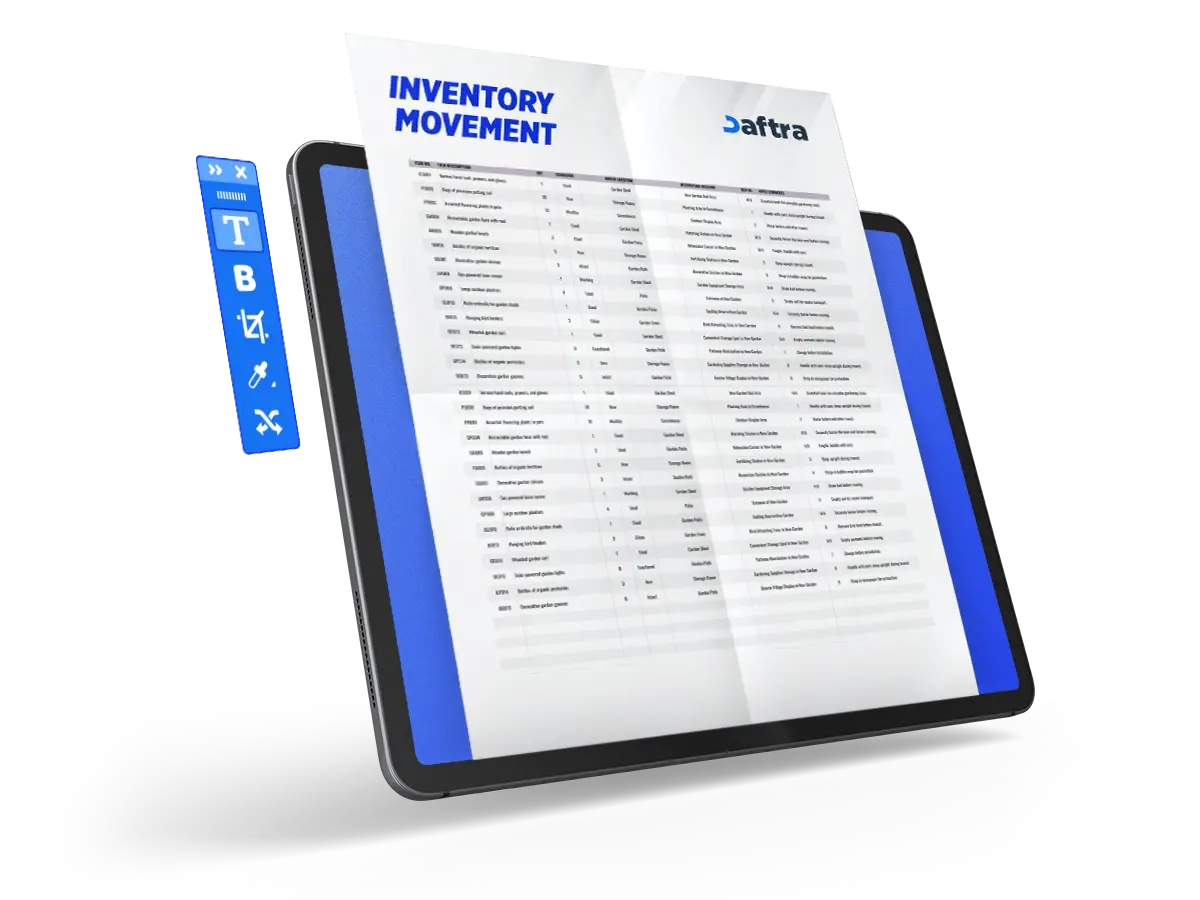
 Track Stock Levels and Transactions with Daftra

What Is an Inventory Movement Template?
An Inventory Movement Template is an essential report for companies and warehouse operators. It tracks and monitors inventory movements within a business by recording each transaction in detail, from quantities and receipt and storage activities to product descriptions and prices. This supports accurate and organized warehouse management and helps prevent issues caused by excess or insufficient stock.
What Does an Inventory Movement Template Include?
The template consists of three main tables containing detailed information to support a professional and controlled workflow, including:
Administration and Approvals Information Table
This table contains information about the department responsible for inventory requests, including the contact person’s name, contact number, and email address. It also records the required department-head approval, budget approval, and the name of the person who received the inventory, helping support transparency.
Transaction Dates Table
This table identifies the timeline associated with the transaction, including the request date, approval date, and receipt date, creating an accurate record of the process.
Products and Quantities Table
This table lists products with their descriptions, quantities, and unit prices, along with a subtotal for the total cost.
Notes Section
The final section of the template is used to record any additional information or important notes that are not included in the other sections.
Why Is an Inventory Movement Template Important?
An Inventory Movement Template is an essential tool for effective inventory management and contributes to several important areas, including:
Preventing Inventory Issues
Warehouse managers face significant inventory-management challenges and may encounter unexpected problems, such as differences between the quantities shown in the system and the stock physically available. These discrepancies can disrupt operations and create substantial losses. The template records each inventory movement accurately, supporting organized warehouse management and reducing the risks associated with excess or insufficient stock.
Ensuring Transparency
Inventory manipulation is a major concern for warehouse operators and businesses, especially when unexplained shortages occur. The template supports transparency by maintaining a detailed record of transaction information that can be reviewed easily and traced back to the recipient or transaction supervisor, significantly reducing the risk of manipulation.
Performance Analysis
The template helps warehouse managers monitor and analyze inventory movements accurately and understand product-consumption patterns. This makes it easier to identify inventory trends over time and improve purchasing and storage strategies.
Managing Financial Expenses
Effective inventory management allows a company to purchase the quantities it actually needs without tying up funds in excess stock. This makes the business more flexible and supports faster, better financial decisions.
You May Also Download
Incoming & Outgoing Tracker Template
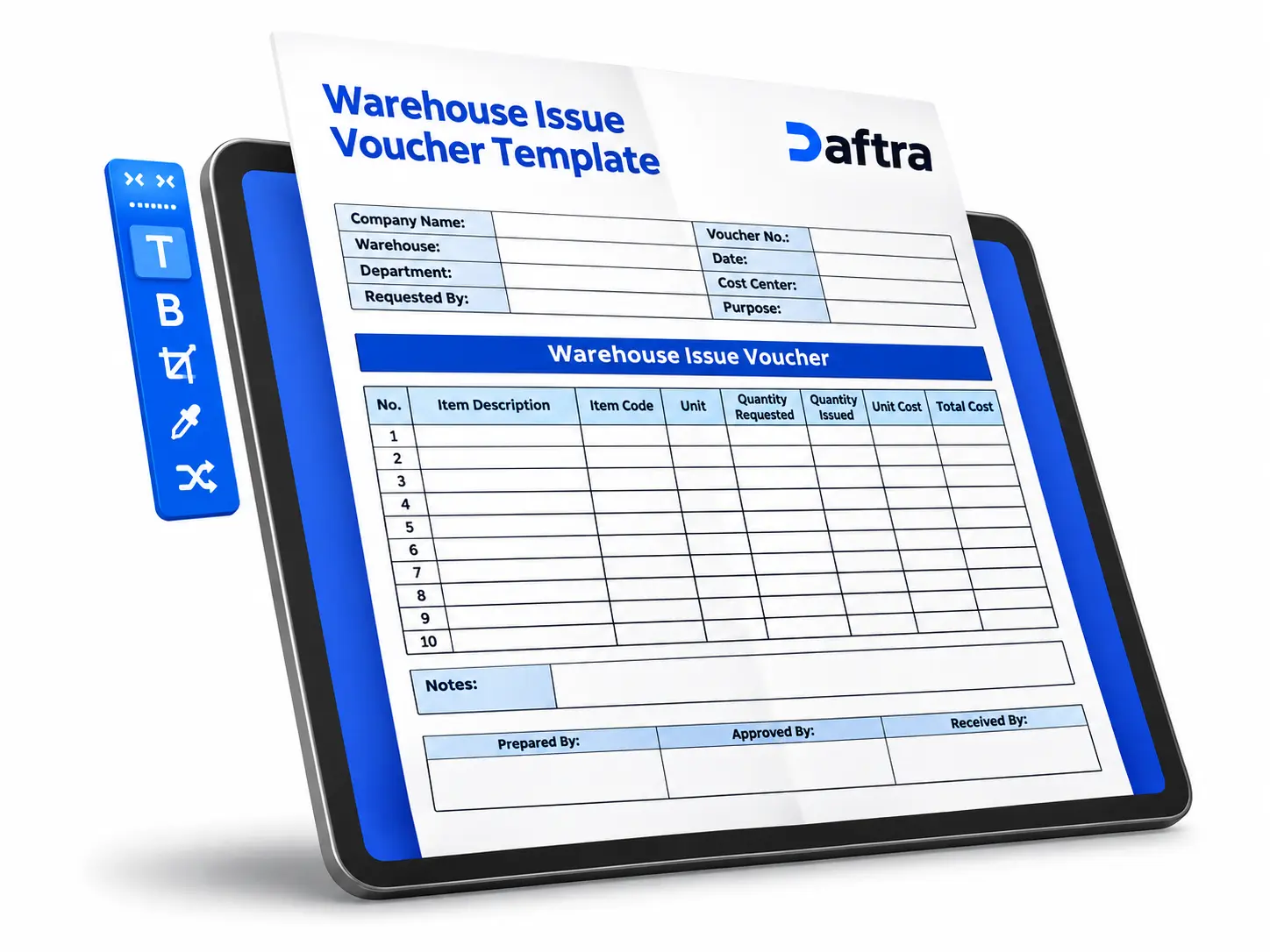
Warehouse Stock Issue Voucher Template
Inventory Count Report Template
How Do You Use an Inventory Movement Template?
The template helps monitor and analyze warehouse performance by recording transactions in detail through the following steps:
Gather Data
Collect all inventory-related data, including a detailed description of the movement type and quantity. Also gather information about the responsible department, such as the primary contact person and the approval and receipt dates.
Identify Inventory Items
Classify inventory items into groups based on category, type, item number, and price.
Enter the Data
After gathering the information, enter it in the relevant tables in the template.
Review and Analyze the Data
Review the data to verify its accuracy and record any additional information or important notes that are not covered in the other sections under Notes. Then analyze the information and results to understand inventory performance and make appropriate decisions.
Who Benefits from an Inventory Movement Template?
The Inventory Movement Template provides useful functions for several groups, including:
Business Owners
The template gives business owners a clear view of inventory movement and operational workflow, helping them understand inventory management, identify areas for improvement, and make better decisions.
Warehouse Managers
Warehouse managers rely on the template to manage warehouses and monitor inventory continuously, helping prevent problems caused by excess or insufficient stock.
Accountants
Accountants use the template to analyze costs and identify inventory-related expenses, helping reduce unnecessary spending and improve financial efficiency.
Sales Team
The sales team can use the template to follow inventory movement and plan orders more effectively, helping ensure products are available when needed.







 Invoicing
 POS
 Offers
 Installments
 Sales Commission
 KSA E-Invoice Software
 EGY E-Invoice Software
 JO E-Invoice Software
 E-Invoice Software
 Chart of Accounts
 Asset Management
 Cost Centers
 Expenses
 Cheque Cycle
 VAT & Tax Compliance
 Product Management
 Purchases
 Purchase Cycle
 Suppliers
 Requisitions
 Stocktaking
 Organizational Structure
 Personnel Management
 Attendance and Leave
 Contracts
 Payroll
 Requests
 Work Orders
 Booking Management
 Rental and Unit Management
 Time Tracking
 Work Flow
 Lease Contracts
 Manufacturing Management
 Client Follow-Up
 Loyalty Points
 Points and Credits
 Memberships
 Insurance Management
 Daftra ERP Full App
 Point of Sales App
 Point of Sales for Desktop – Support Offline Mode
 AI Expenses Scanner App
 Employee Attendance, Sign & ESS App
 E-invoice Reader App
 Inventory Stocktaking App