


Posted on 21 November 2026
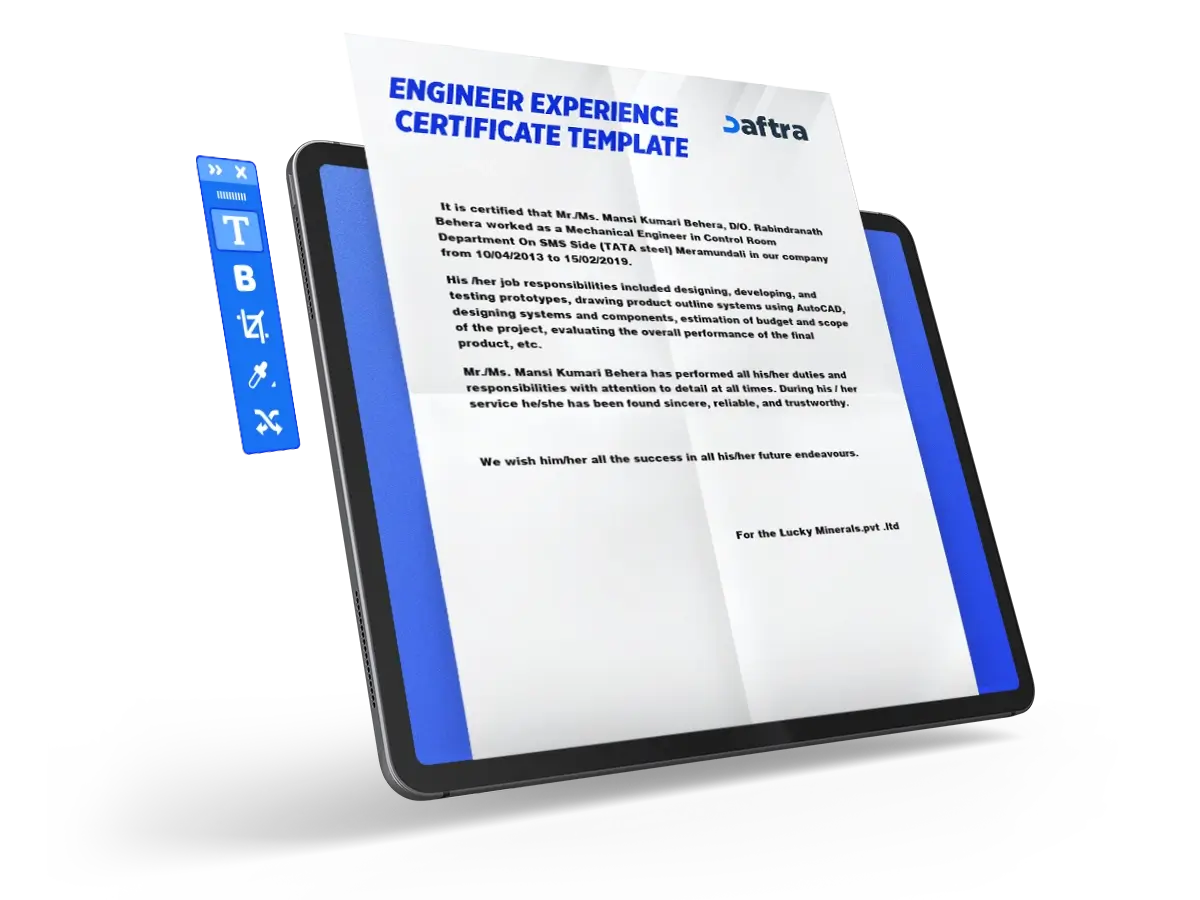
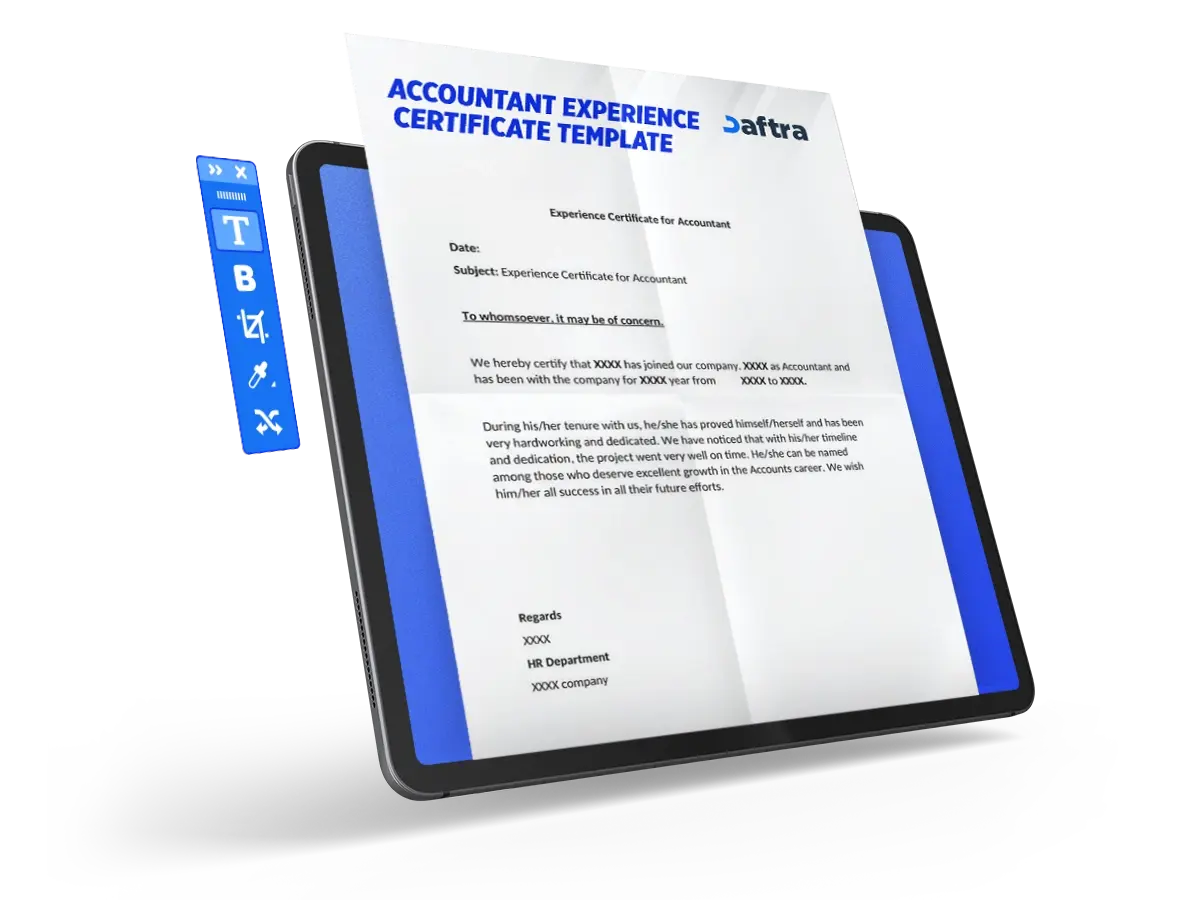
Engineer Experience Certificate Template
- An Engineer Experience Certificate is a formal document used to verify an engineer's professional experience and responsibilities during their employment with a particular organization.
- The certificate is important because it strengthens the engineer's professional credibility and provides evidence of their competence to employers and professional bodies.
- The engineer is the primary beneficiary of this certificate, as it supports career development and can improve access to future employment opportunities.


 Sign up for Daftra to manage your team's records.

What Is an Engineer Experience Certificate Template?
An Engineer Experience Certificate is an official document issued by a current or former employer. It confirms the engineer's employment period, engineering responsibilities, and key achievements during their service. The certificate serves as an important reference for future employers by verifying that the engineer has the technical skills and practical experience required to perform their role effectively.
The certificate is typically prepared by the HR Manager or the engineer's direct manager upon request. In smaller companies or engineering consultancy firms, it may be issued directly by the employer or business owner.
Why Is an Engineer Experience Certificate Important?
An Engineer Experience Certificate is important for several reasons:
1- Verify Professional Experience
The certificate provides formal evidence that the engineer worked for a company, engineering firm, or consultancy during a specified period. It records the length of service, job title, and technical responsibilities, helping demonstrate the engineer's practical experience and professional standing.
2- Strengthen Professional Credibility
An experience certificate adds credibility when dealing with prospective employers or official organizations because it confirms that the engineer's stated skills and experience are genuine and can be verified.
3- Support Professional Accreditation and Licensing
Experience certificates are often required when applying for membership, accreditation, or licensing with engineering councils, associations, or professional bodies. They may also be required for postgraduate programs or international job applications.
4- Support Career Advancement
An experience certificate can support promotion, career moves, or international opportunities by documenting the engineer's career history and demonstrating the verified experience required for more senior roles.
What Should an Engineer Experience Certificate Include?
An Engineer Experience Certificate should include several essential elements to make it credible and professionally useful, including:
1- Engineering Job Title
The certificate should clearly state the engineer's job title, such as Civil Engineer, Architect, Electrical Engineer, Mechanical Engineer, or another relevant engineering role. Where appropriate, it should also identify the projects, departments, or areas in which the engineer worked.
2- Employment Start Date
The start date is an essential element because it establishes when the engineer joined the organization and helps determine the length of professional experience.
3- Technical Responsibilities and Experience
The certificate should describe the engineer's key technical duties and responsibilities, such as design, supervision, or project management, and highlight the technical skills they developed or applied during their employment.
4- Employment End Date
The end date confirms when the engineer's employment or service with the organization ended and is necessary for accurately determining the total period of experience.
5- Certificate Issue Date
The certificate should include its date of issue to strengthen its validity and usefulness for official organizations and prospective employers.
How Do You Prepare an Engineer Experience Certificate?
Preparing an accurate and professional experience certificate is important because it represents the engineer's technical background and supports their career. The following points should be considered when preparing the certificate:
- Use Professional Language: Keep the wording formal, clear, and professional, as the certificate represents the employer and reflects its credibility to other organizations.
- Use Official Company Letterhead: Prepare the certificate on the company's or engineering firm's official letterhead and include the issue date, company name, and relevant business information.
- Include the Engineer's Key Details: State the engineer's full name, job title (for example, Civil Engineer, Architect, or Electrical Engineer), and period of employment with the company.
- Describe Duties and Responsibilities: Include the main projects or assignments in which the engineer participated, the responsibilities they handled, and the technical skills they acquired or applied during their employment.
- Add Professional Remarks or a Recommendation: The certificate may include positive comments about the engineer's competence and commitment or a professional recommendation that supports future opportunities.
How Is an Engineer Experience Certificate Used?
An Engineer Experience Certificate can be used in several situations, including:
- When Applying for New Jobs: To verify professional experience and technical competence for prospective employers.
- When Applying for Professional Accreditation or Licensing: It may be required by engineering councils, professional associations, accreditation bodies, or licensing authorities.
- For Study or Employment Abroad: It can support immigration applications, international employment applications, or admission to advanced academic programs.
- For Promotion or Internal Transfer: It can document relevant experience when an engineer is being considered for promotion or new responsibilities within the same organization.
- For Personal Professional Records: It provides an official reference that can be retained as part of the engineer's professional portfolio.
Who Benefits from an Engineer Experience Certificate?
The main beneficiaries of an Engineer Experience Certificate include:
- The Engineer: The certificate strengthens the engineer's CV and supports applications for employment, promotion, accreditation, and other professional opportunities.
- Prospective Employers: Employers can use the certificate to assess and verify the engineer's previous responsibilities, skills, and professional experience before making a hiring decision.
- Official and Professional Bodies: Engineering associations, accreditation bodies, and licensing authorities may use the certificate to verify the engineer's professional experience.





 Invoicing
 POS
 Offers
 Installments
 Sales Commission
 KSA E-Invoice Software
 EGY E-Invoice Software
 JO E-Invoice Software
 E-Invoice Software
 Chart of Accounts
 Asset Management
 Cost Centers
 Expenses
 Cheque Cycle
 VAT & Tax Compliance
 Product Management
 Purchases
 Purchase Cycle
 Suppliers
 Requisitions
 Stocktaking
 Organizational Structure
 Personnel Management
 Attendance and Leave
 Contracts
 Payroll
 Requests
 Work Orders
 Booking Management
 Rental and Unit Management
 Time Tracking
 Work Flow
 Lease Contracts
 Manufacturing Management
 Client Follow-Up
 Loyalty Points
 Points and Credits
 Memberships
 Insurance Management
 Daftra ERP Full App
 Point of Sales App
 Point of Sales for Desktop – Support Offline Mode
 AI Expenses Scanner App
 Employee Attendance, Sign & ESS App
 E-invoice Reader App
 Inventory Stocktaking App